
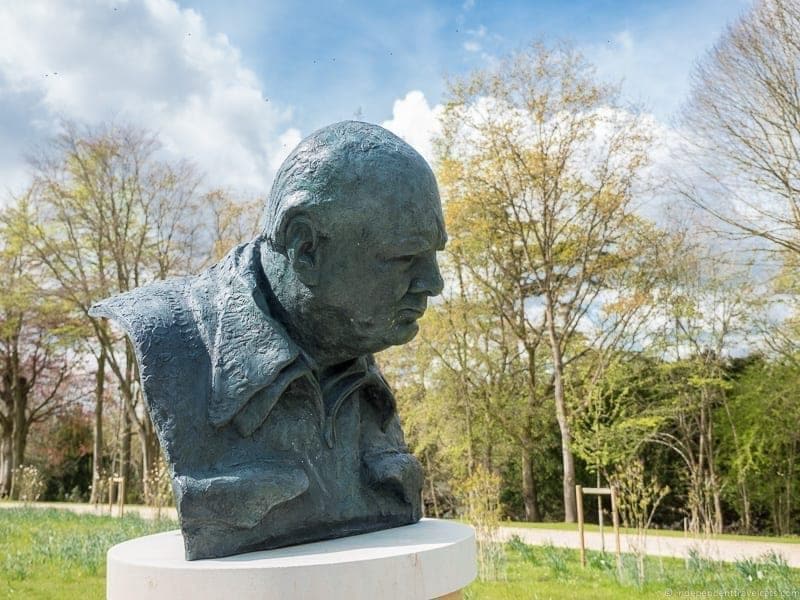
We have put together a list of the top Winston Churchill sites in England and tips on visiting each of these places. As admirers of Winston Churchill ourselves, we know that many people want to visit places associated with Churchill during their travels in England.
Best known for his powerful speeches and role in leading Britain victoriously through World War 2, Winston Churchill led a complex and extraordinary life that affected people from all over the world. He served in the military, spent over 50 years serving as a Member of Parliament with two terms as Prime Minister, won the Nobel Prize in Literature, and was even awarded the first honorary United States citizenship.
There are thousands of buildings, sites, statues, memorials, plaques, and museum exhibits associated with Winston Churchill throughout England and the United Kingdom, but we’ve narrowed it down to the top 8 places we think were most significant to Winston Churchill. These include his birthplace, where he got married, where he served as a parliamentarian and Prime Minister, where he ran the country during World War II, his favorite home, and his place of burial.
We’ll provide the history of each site and its association with Churchill, as well as tips and advice on visiting based on our own visits to each of these Winston Churchill sites in England.
Top Winston Churchill Sites in England
As noted, there are thousands of places associated with Winston Churchill throughout England, but we’ve narrowed it down to the top 8 recommended places we think were most significant to Winston Churchill. All of these places can be visited by the public and each helps tell the story of one of the most significant men in contemporary British history. We provide the history of each site and its association with Churchill, as well as tips and advice on visiting.
We have ordered this list of Winston Churchill sites in England in relation to their chronological importance in Churchill’s life from birth to death. However, this ordering may not make sense from a travel viewpoint. So for those wanting to visit all these places, I’ve included all the addresses as well as marked them on a map below so you can place them in the best order based on your own travel itinerary.
If you are planning base yourself in London, Blenheim Palace (and nearby Bladon) and Chartwell can easily be visited as day trips or overnight trips from London. Group and private day tours are also available to both of these attractions. In addition to these top Winston Churchill sites in England, we also urge you to add and discover some of your own!
If you are wanting to visit all these sites as part of a guided tour, the only tour that we know of that we think includes them all is this 3-day guided tour from London that is focused on Winston Churchill’s life and achievements and spends time in London, Oxfordshire, and Kent.
1. Blenheim Palace
A good place to start you visit of Winston Churchill sites in England is Blenheim Palace, Churchill’s birthplace. Blenheim Palace is one of England’s largest country houses, and serves as the principal residence of the dukes of Marlborough. The Palace was built between 1705 and 1722 in the English Baroque style, and was designated a UNESCO World Heritage Site in 1987. Today it is still used as a residence by the current Duke’s family, but is open to the public for tours and events.
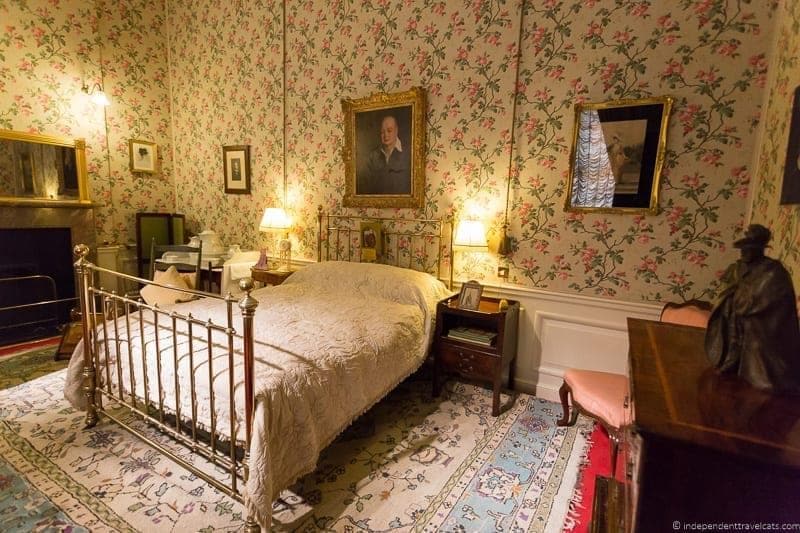
Winston Churchill was born on November 30, 1874 at Blenheim Place. His mother, American-born Jennie Churchill (née Jerome), and his father, Lord Randolph Churchill, had been at Blenheim visiting family and attending a ball. Churchill was born a few weeks earlier than expected so the birth was a bit of a surprise for the family. This was not his intended birthplace, and the bedroom he was born in had been used that evening as a cloakroom for guests.
Winston Churchill would never live at Blenheim Palace as his father was the third son of the 7th Duke of Marlborough and neither his father nor himself would inherit the dukedom or the house. However, Churchill liked Blenheim and would visit often both as a child and as an adult and was close friends with his cousin “Sunny” who would become the 9th Duke of Marlborough.
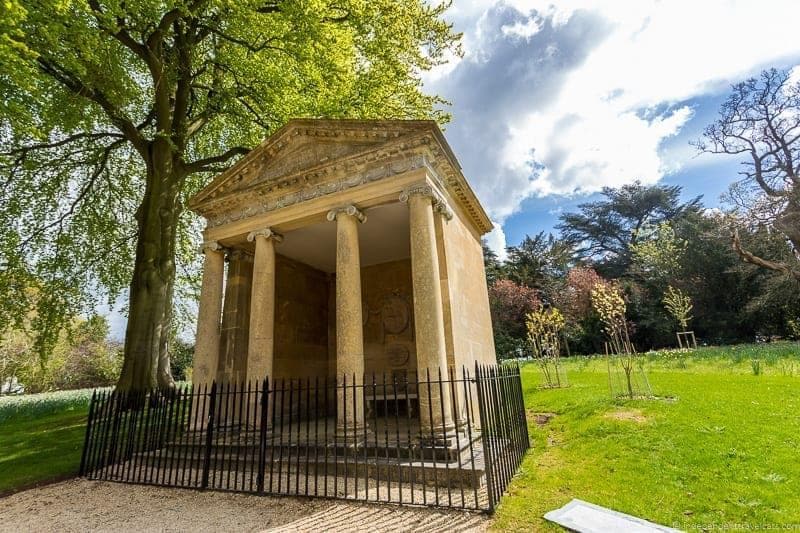
Perhaps the most significant event at Blenheim Palace for Churchill was asking Clementine Hozier to be his wife. Churchill had asked Clementine to visit him at Blenheim with the goal of proposing. But it was not until her third visit that he mustered the courage to ask, which required some urging from his cousin Sunny. He asked her to marry him while the pair took shelter from the rain in the small Temple of Diana in the gardens. She of course accepted his proposal.
Over the years, Churchill would also use Blenheim as a place to write and he and Clementine would spend the first days of their honeymoon here before going on to Italy.
Blenheim is a spectacular country house filled with great art and furniture, and the gardens are beautiful and worth taking time to explore. In relation to Winston Churchill at Blenheim Palace you can visit the room of his birth, a small exhibition on his life that includes some childhood artifacts, and stroll the gardens and see the Temple of Diana where he proposed to Clementine. There is a cafe, restaurant, and gift shops at the palace.
Located in Woodstock in Oxfordshire, Blenheim Palace is a short distance from Oxford and about 2 hours from London. You can read more about recommended things to do in Oxford and also read about planning a London day trip to Blenheim Palace.
Address: Blenheim Palace, Woodstock, Oxfordshire OX20 1PP
Getting here: By car, it is about 25 minutes from central Oxford or 1.5 to 2 hours from London. Free parking is available at the palace for visitors.
By train, you’ll want to head to Oxford and then get a bus or taxi to the palace. Bus services from Oxford run to Blenheim Place from Oxford train station, Oxford’s Gloucester Green bus station, and Oxford Parkway.
You can also join a group tour bus or private tour that stops at Blenheim Palace from either London or Oxford.
Admission Fee?: Yes. Tickets can be booked online in advance or purchased in-person at the palace entrance on arrival.
Things Churchill admirers should Not Miss: Bedroom birthplace, Winston Churchill exhibition, and Temple of Diana. There are also a few busts of Churchill on the property, at least one was on display in the house and one was in the garden when we visited.

2. St. Margaret’s Church
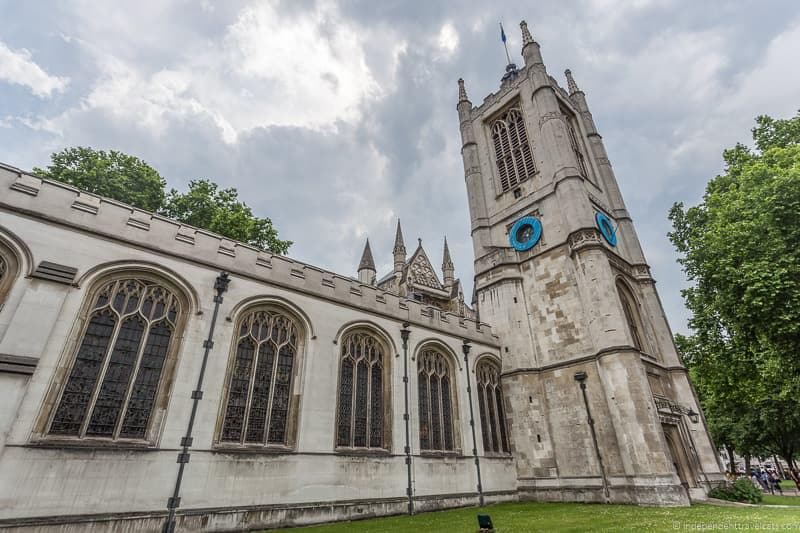
St. Margaret’s Church is the site of several happy and significant events in Winston Churchill’s life, including his wedding. The church, founded in the 11th or 12th century but later rebuilt from 1486 to 1523, is located next to Westminster Abbey on Parliament Square.
The Anglican church has a strong history of ministering to Members of both Houses of Parliament and is often called the “parish church of the House of Commons”. It was designated as a UNESCO World Heritage Site in 1987 along with Westminster Abbey and the Palace of Westminster.
On September 12, 1908, Winston Churchill and Clementine Hozier were married at St. Margaret’s Church. Churchill was 33 years old and Clementine was 23, 10 years his junior. Churchill would write to his mother from Blenheim the following day: “What a relief to have got that ceremony over! & so happily”. The Churchill marriage would be a strong one despite a multitude of stressors and would last until Winston’s death.
Other members of Churchill’s family would also get married at the church. Churchill’s eldest daughter, Diana, married her first husband, John Milner Bailey, here in December 1932. Unlike her parents’ marriage, Diana’s first marriage was not a happy one and they divorced in 1935. Churchill’s youngest daughter Mary Churchill would marry Christopher Soames at St. Margaret’s in February 1947. Their marriage was a successful one, lasting until his death in 1987.
In addition to the Churchill family weddings, the church was associated with the House of Commons, where Churchill would serve for over 50 years, and was often used to celebrate important Parliamentary events.
For instance at the end of World War I, Prime Minister David Lloyd George gave a short address about Germany’s signing of the armistice and surrender on November 11, 1918 to the House of Commons. His address in the House of Commons included the infamous words: “I hope that we may say that thus, this fateful morning, came to an end all wars.” He then moved to adjourn and the Members of Parliament (MPs) went to St. Margaret’s Church for a service of thanksgiving.
Winston Churchill was one of those present during David Lloyd George’s 1918 German surrender statement. After the fighting in Europe ended in World War II on May 8, 1945 (VE Day), Churchill would similarly address the House of Commons and then lead a procession MPs to a thanksgiving service at St Margaret’s church.
Address: St Margaret Street, Westminster, London SW1P 3JX
Getting here: Located in central Westminster next to Westminster Abbey and Parliament Square. Easy to reach by bus or metro from throughout London.
Admission Fee?: No. Free to visit, although closed to visitors for services and special events. Worshippers can attend services here each Sunday and on holidays.
Things Churchill admirers should Not Miss: You’ll find a memorial plaque to World War I and World War II in this historic church as well as traces of bombing damage from World War II, but there are no specific Churchill related items inside the church.
Heading next door to Westminster Abbey?: If you also plan to visit Westminster Abbey, be sure to take a look at the Winston Churchill green marble memorial stone on the floor just inside the west entrance, near the grave of the Unknown Warrior. He’s not buried here, but the stone was laid as a memorial in 1965. There is an admission fee to visit Westminster Abbey, and entry is included if you are using a London Pass.
3. Houses of Parliament
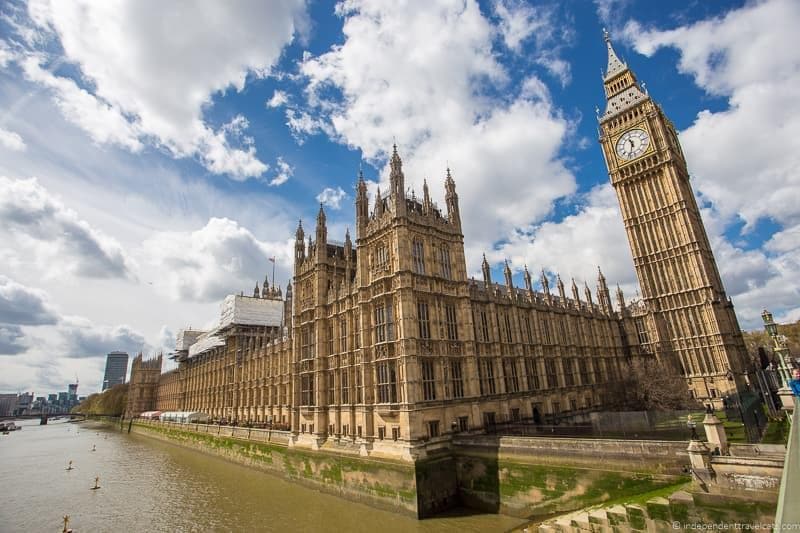
Across from St. Margaret’s church, you’ll find the Palace of Westminster which is home to the Houses of Parliament. This iconic building is the main government building in the UK and here you’ll find the Elizabeth Tower with its famous bell, Big Ben. You can get great views of the outside of the building from Parliament Square (don’t forget to stop to see the Winston Churchill statue here) as well as from Westminster Bridge.
There are few places in London that reverberate more with the memory of Churchill than the Houses of Parliament. I would suggest that Winston Churchill’s main professional ambitions in life lay in two areas: publishing his writings and serving in Parliament. Churchill would serve in Parliament for over 50 years with his public career in politics spanning from 1900 to 1964.
He held numerous ministerial offices in the cabinet, including First Lord of the Admiralty, Home Secretary, Chancellor of the Exchequer, and of course two terms as Prime Minister from May 1940 to July 1945 and from October 1951 to April 1955. Churchill would begin his political career within the Conservative party like his father, but would “cross the floor” not once but twice to join the Liberals and then return to the Conservatives.
Politics are in the family blood, and Winston Churchill’s grandfather, father, son, and grandson all served in the British Parliament. Winston Churchill left politics in 1964 due to poor health and made his final visit to the House of Commons on July 27, 1964.
In January 1965 his body would return here for a lying in state in Westminster Hall for three days. Hundreds of thousands of people would visit to see the coffin and pay their respects before the state funeral took place at St. Paul’s Cathedral on January 30, 1965 followed by his burial in Bladon.
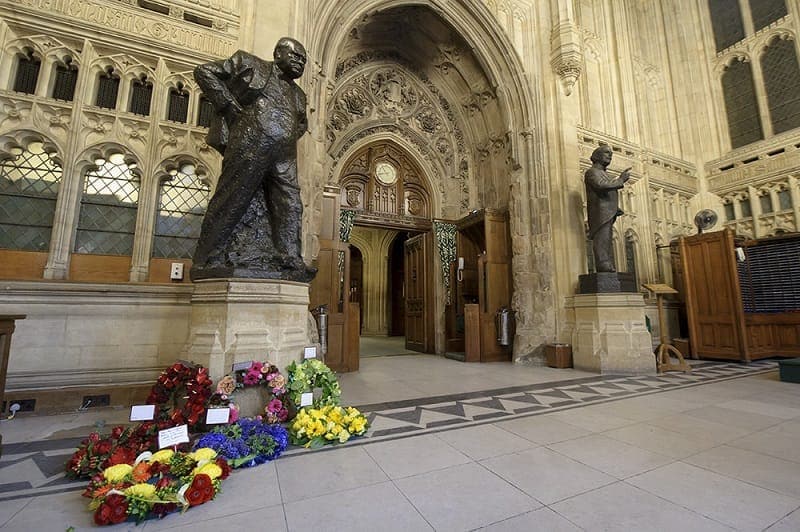
The Victorian House of Commons where Churchill would have spent most of his career was destroyed by an air raid bombing and fire in 1941 during WW2. It was rebuilt and reopened in 1950. At Churchill’s suggestion the Commons archway was rebuilt from the damaged stonework of the original arch to symbolize the continuity of the old chamber to the new. The arch was renamed the Churchill Arch and today a bronze statue of Churchill stands to one side.
The Houses of Parliament is an active government building so it is not always open to the public and there is airport-style security screening for visitors. The public can visit the Houses of Parliament on certain dates, and debates are free for the public to watch. But if you want to actually tour the building, tours are available on certain days of the week.
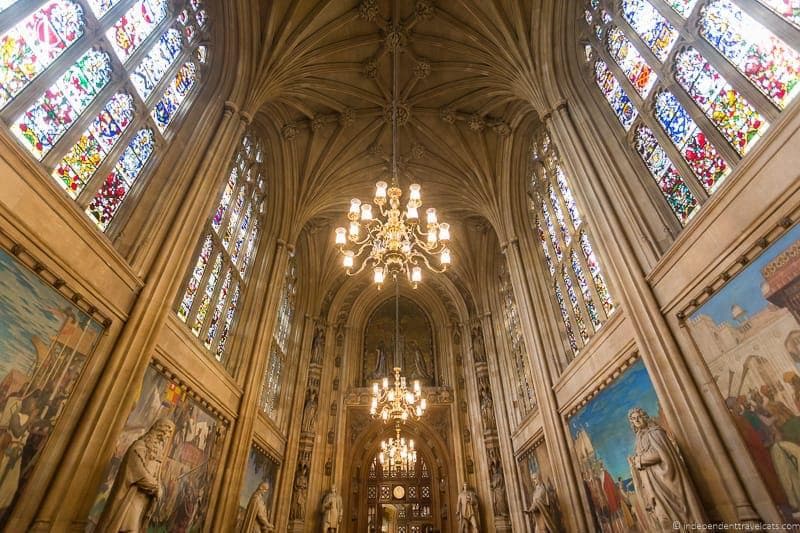
UK residents can contact their local MP or a Member of the House of Lords to request and arrange a free tour. Otherwise, you can book a tour ticket online for a self-guided audio tour or guided tour. Tours normally include (barring security or renovation closures) visits to a number of the most significant rooms, including Westminster Hall, St. Stephens Hall, Commons Chamber, and the Lords Chamber. We did a guided tour plus a Thames-side afternoon tea here and really enjoyed being able to finally see inside this iconic building!
Address: Palace of Westminster, Westminster, London SW1A 0AA
Getting here: Located in central Westminster next to Westminster Abbey and Parliament Square. Easy to reach by bus or metro from throughout London.
Admission Fee?: Yes, and you must book a tour in advance. UK residents can contact their local MP or a Member of the House of Lords to request and arrange a free tour. Both self-guided and guided tours are available, and you can also book to have afternoon tea here.
Things Churchill admirers should NOT Miss: The memorial plaque for Churchill’s lying in state on the floor in Westminster Hall, the Churchill statue in the Members’ Lobby, the Churchill Arch as you leave the Members’ Lobby to enter the House of Commons, and the House of Commons chamber. Also, don’t miss the giant Winston Churchill statue outside in Parliament Square!

4. Churchill War Rooms
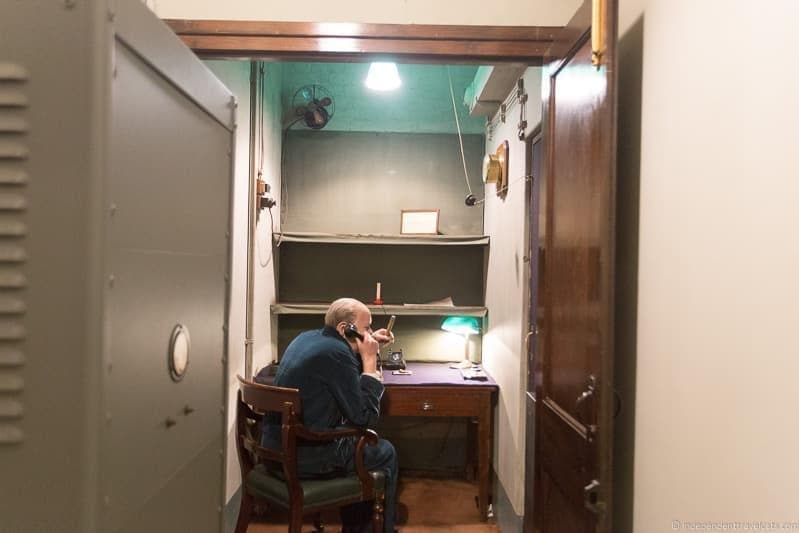
One of the most interesting and informative Churchill sites in England is the Churchill War Rooms run by the Imperial War Museums. It was here in a series of underground rooms beneath the Treasury building that Churchill and his war cabinet ran the war efforts from August 1939 to August 1945.
The then secret underground bunker was chosen as a safe place for the Cabinet to meet during air raids, although it is believed that the basement rooms would not likely have survived a direct hit. Luckily it never sustained a direct hit and served as the British government command center throughout World War 2.
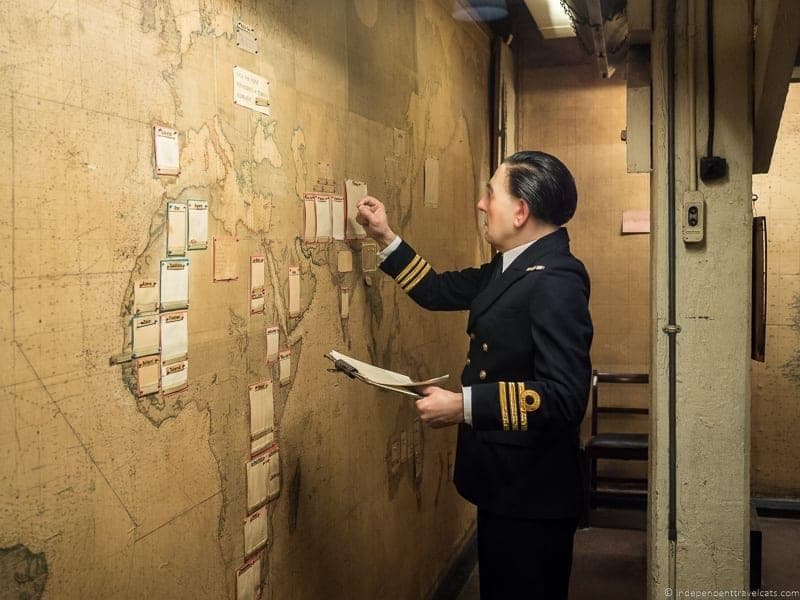
Today, you have a chance to visit the interesting maze of rooms to see where communications and strategizing happened as well as where staff ate, slept, and cooked during WW2. These include the famous Map Room and the Transatlantic Call Room (where Churchill would make calls to Roosevelt) as well as rooms for typists and switchboard operators, bedrooms, dining areas, kitchens, and offices. Most of the rooms look as they would have done during WW2, and many of the artifacts were the items left behind when the rooms were shut down in August 1945.
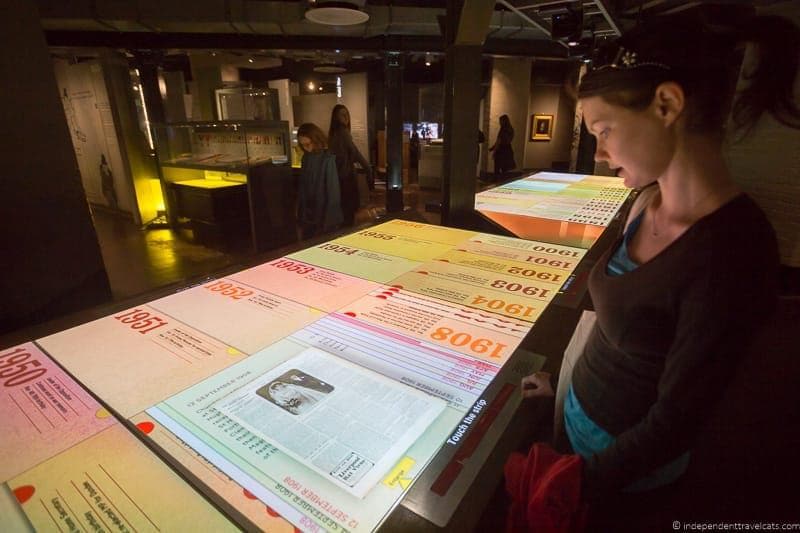
In addition to the secret underground bunker rooms where Churchill and his staff worked, there is a large museum area devoted to Winston Churchill’s life. The Churchill Museum has the best collection of information and exhibits on Churchill I have visited, and it covers his life from birth to death, not just the war years. There is an interactive table that includes information, records, letters, and films organized by date from his birth to his death so you could spend months reading it all!
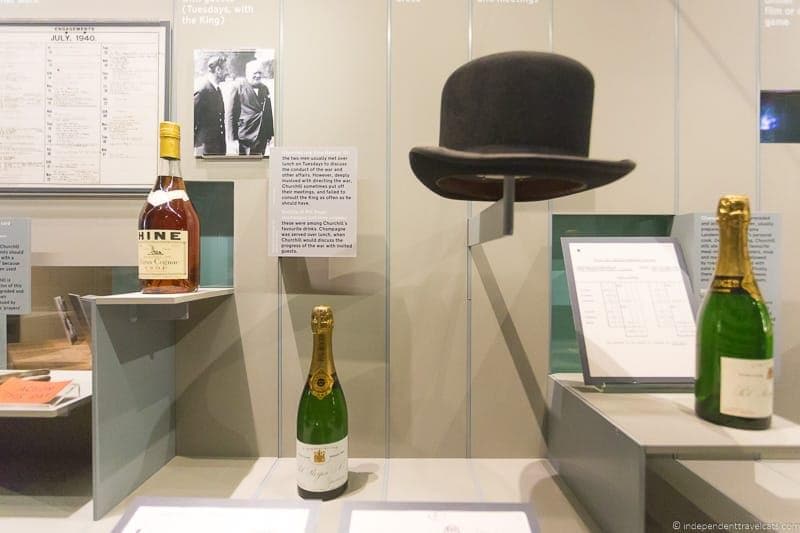
Displayed artifacts include everything from photos of Churchill, clothing he wore, cigars he smoked, letters he wrote or received, paintings he painted, military uniforms, and even the door of No. 10 Downing Street from the time he was Prime Minister. If there is one must-visit place in London for Churchill fans (or those interested in British WW2 history), the Churchill War Rooms would be it!
Visits to the Churchill War Rooms are self-guided with an audioguide. For those interested in exploring the Churchill War Rooms with a guide, private tours are possible with museum staff that allow you to get behind the ropes and step into a few of the Cabinet War rooms to hear stories by the staff. These private tours start at £500 for a group of up to 10 people and must be booked well in advance.
For those with an interest in Churchill and the London Blitz, we can also recommend this Churchill and the Blitz tour by Context Travel which includes a guided visit to the Churchill War Rooms as well as a guided tour of parts of London related to the Blitz. You can join a small group tour or request a private tour.
Address: Clive Steps, King Charles Street, Westminster, London SW1A 2AQ
Getting here: Located in central Westminster, the Churchill War Rooms are a short walk from Westminster Abbey, the House of Parliament, or the Horse Guards Parade.
Admission Fee?: Yes. Tours are self-guided and there is an audioguide included for the Cabinet War Rooms section of the visit.
Visiting Tips: This is a popular tourist attraction, and it can get crowded, particularly during summer afternoons. The best times to visit to avoid crowds are near opening or later in the afternoon. If you arrive during a particularly crowded time, visit the Churchill Museum section first (as it is usually much less crowded then the War Rooms) and then head into the Cabinet War Rooms later. If you arrive and it is not too crowded, visit the Cabinet War Rooms first and then visit the Churchill Museum.
Things Churchill admirers should NOT Miss: There are numerous Churchill-related things to see here (just about everything!) and I’d plan to spend at least 3 hours here (some may want to block off half a day) to fully explore the Cabinet War Rooms, the Churchill Museum, and browse the gift shop.


















 London visitor