

I Love London!

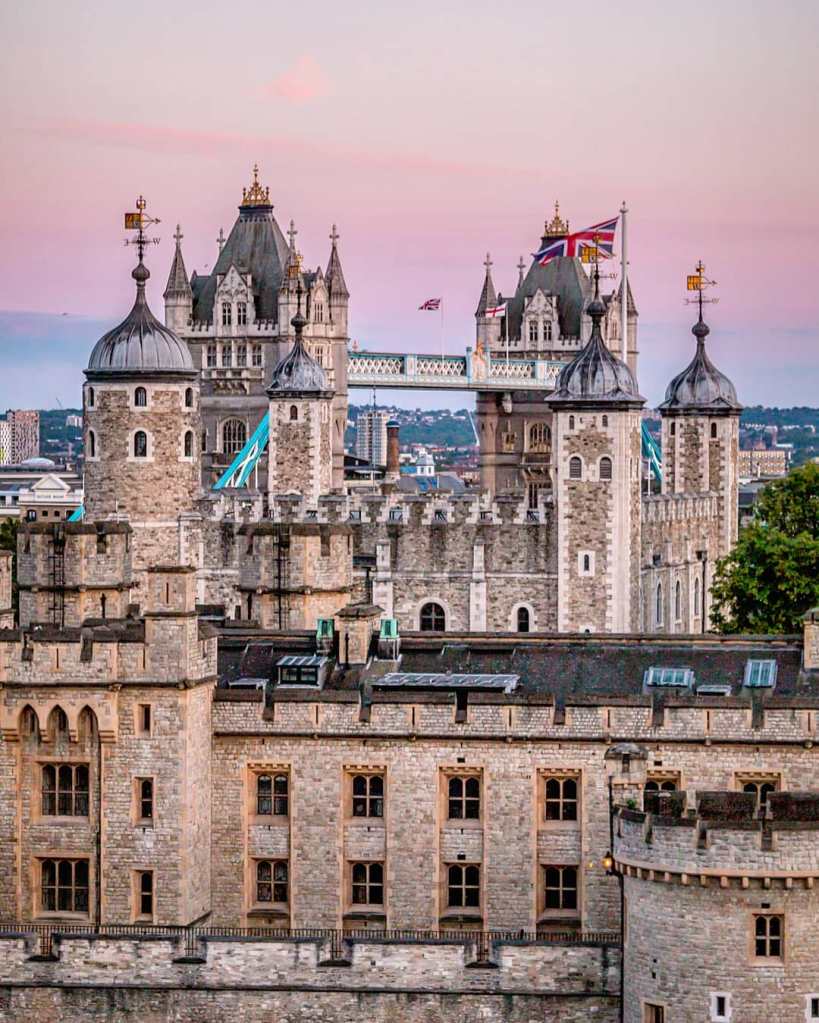
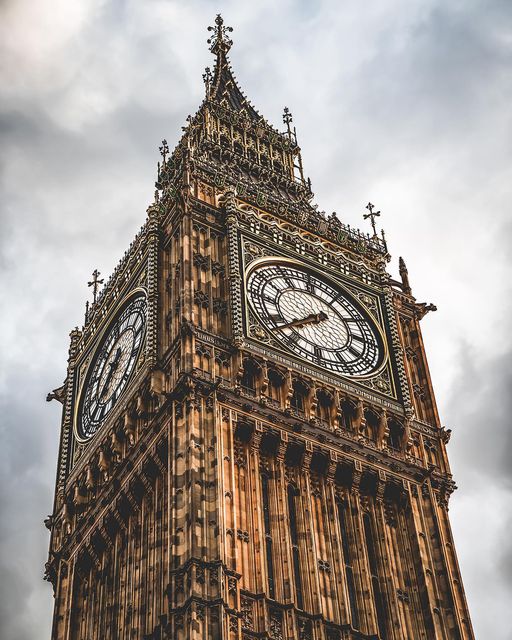
The top half of Elizabeth Tower which houses Big Ben is slowly being revealed, and the scaffolding is slowly being taken down over the coming weeks!  The lower half of the tower will stay covered as the renovations continue and are supposed to be finalised in 2021. But at least very soon, we will finally be able to lay our eyes on on this icon once more!
  It’s been a challenging project, and they’ve encountered many challenges such as discovering huge amounts of asbestos which has to be carefully and safely removed. But it will be worth the wait. Believe me. So keep your eyes peeled over the coming weeks!


I don’t normally post about other social media influencers but this one is so amazing, I had to share!
So, we’re all missing London a lot right now. It’s going to be a LONG time until those of us outside the UK are going to be able to go to London. Well into 2021 at least (we’re hoping to go October 2021 at this point).
But we can go there virtually right now thanks to an incredible YouTube channel I discovered. Watched Walker is a chap who lives in London and has a steady camera setup that allows him to film walks around London. And that’s what he does. He uploads several a week.
Want to walk around the West End in the rain?
Want to walk around Highgate in the high summer?
Want to enjoy London’s parks?
You can, virtually and in 4k resolution. There’s no commentary, no music, just the sights and sounds of London as the creator goes on his walks. The video is steady using the rig he uses for filming (though it can bounce a bit).
I’ve watched several of these. They’re amazing. Relaxing to watch. I like to turn them on in the background while I work on my laptop. Bonus if you have an extra-large TV, it’s like looking through a window to what London is right at this very moment.
highly recommend subscribing to his channel and giving it a go!
The Grade II listed Georgian property is spread over 7 floors and is in the heart of Westminster.
The former home of music icon Sting has come onto the market, offering us a glimpse at the Grade II listed Georgian townhouse’s grand interiors.
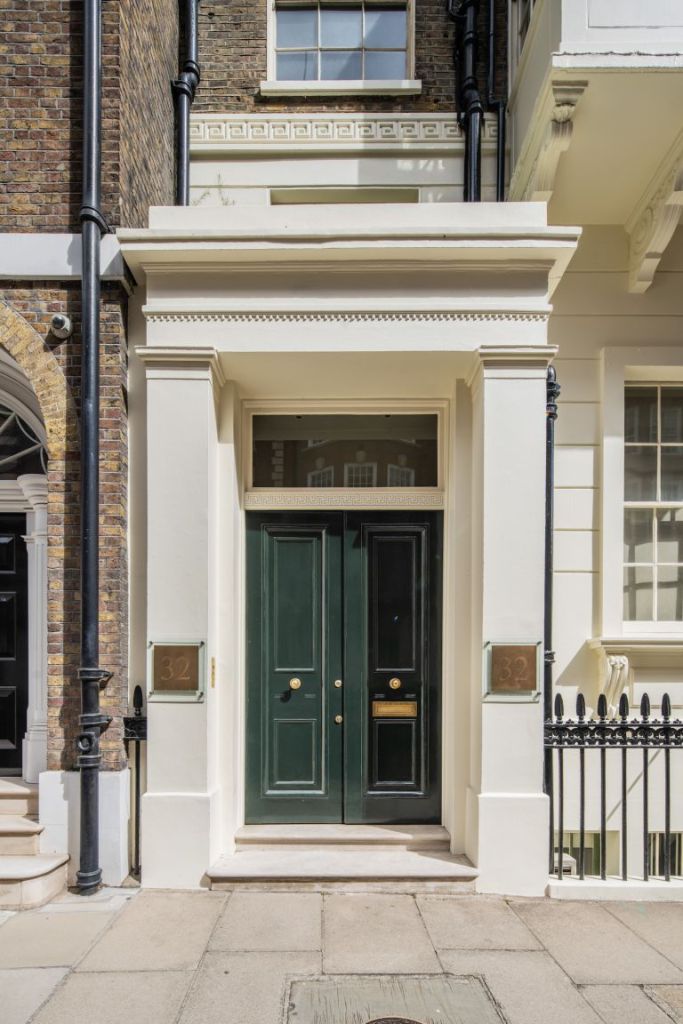
The townhouse sits on Old Queen Street, SW1, and has a smart brick façade with a Doric portico porch. Past residents including politicians, apothecaries and affluent families. The Westminster townhouse is for sale with Beauchamp Estates for a cool £12.95 million.
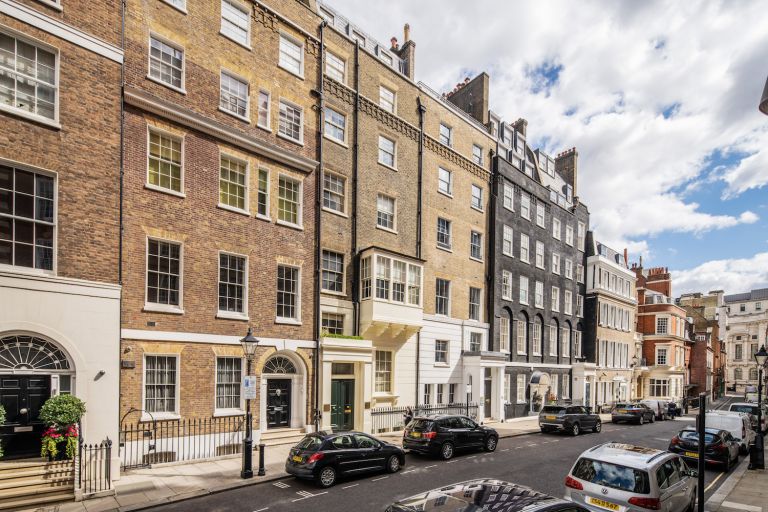
Sting, whose song “Every Breath You Take” is the most played song in radio history, rented this property with his wife for just over 2 years.
The elegant Grade II home — which was originally built in 1775 and holds records of a mansion on site since the 1690s — spreads across seven floors, accessed by both a sweeping staircase and a lift.
The grand home encompasses grand drawing and reception rooms, a contemporary kitchen, a more traditional looking dining room, a home office, two roof terraces, a private garden, and a stunning master suite.
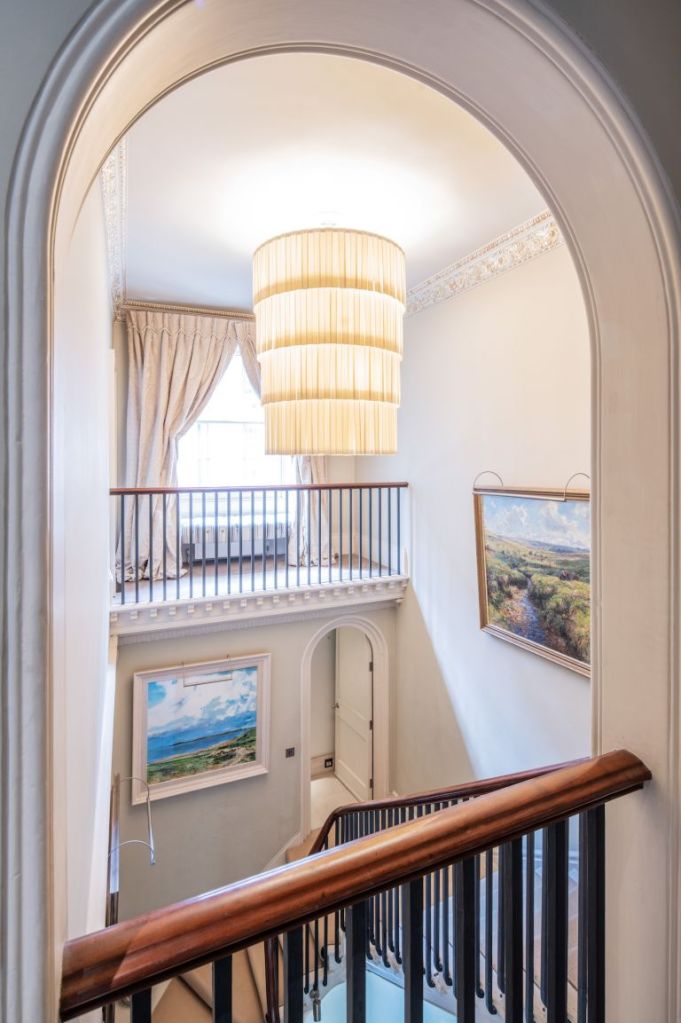
Original Georgian detailing has been preserved, and the home features lots of interesting and characterful touches, from arched doorways, half levels and internal balconies to smaller detailing like the intricate cornicing.
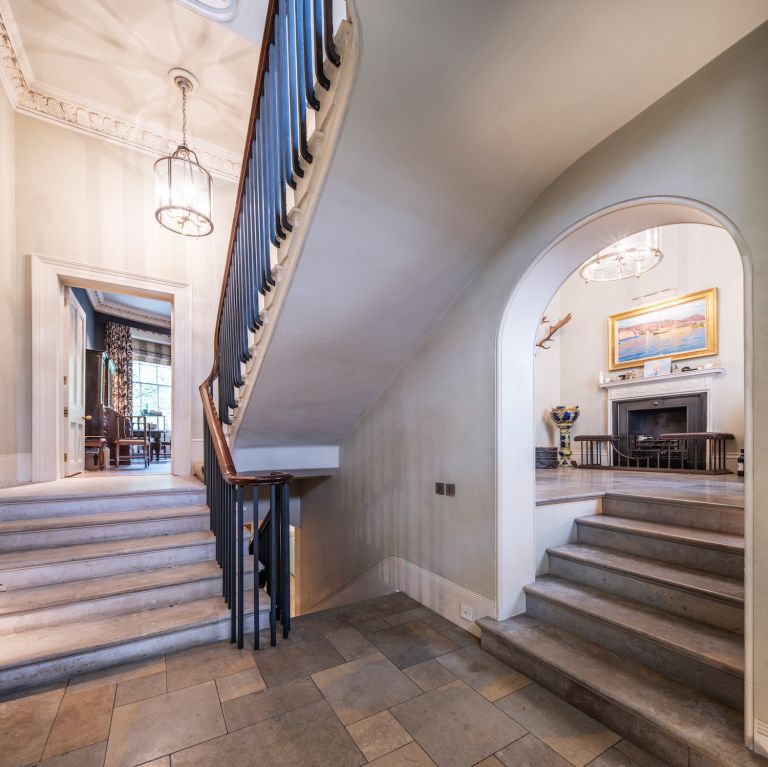
It’s easy to see why Sting and his wife Trudie Styler chose to rent this mansion for the two and half years while their nearby property on Queen Anne’s Gate was being renovated.
Aside from the ideal location (it’s a two minute walk to their Queen Anne’s Gate property), the vast 5,901 sq. ft. townhouse features stunning period details, including several marble fireplaces and intricate cornicing, with high ceilings and plenty of natural light from the Georgian sash windows.
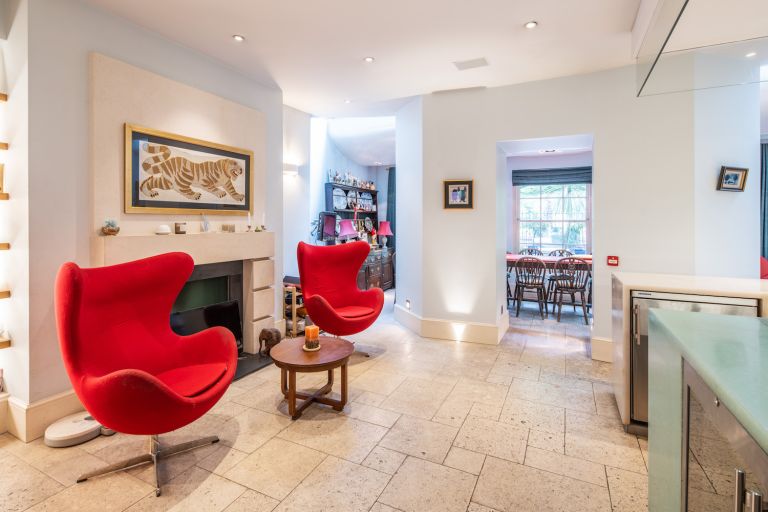
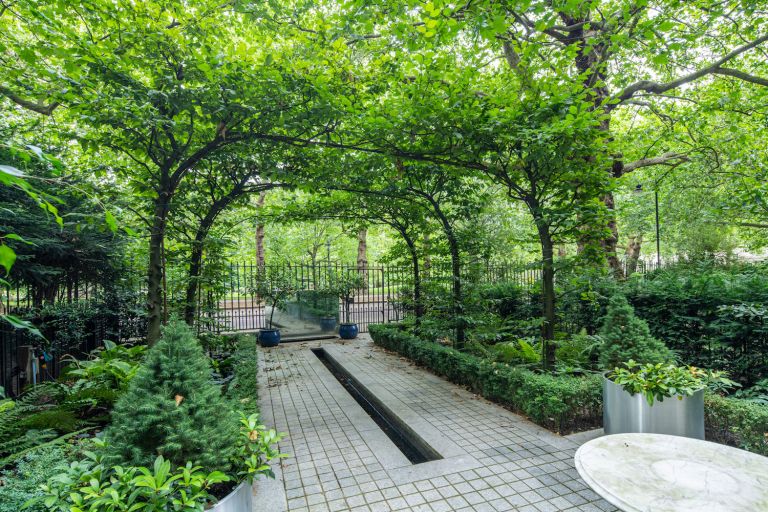
Downstairs is a relatively contemporary kitchen at lower ground level, with an informal dining area that opens onto the private rear garden with gate access to Birdcage Walk and St James’s Park behind.
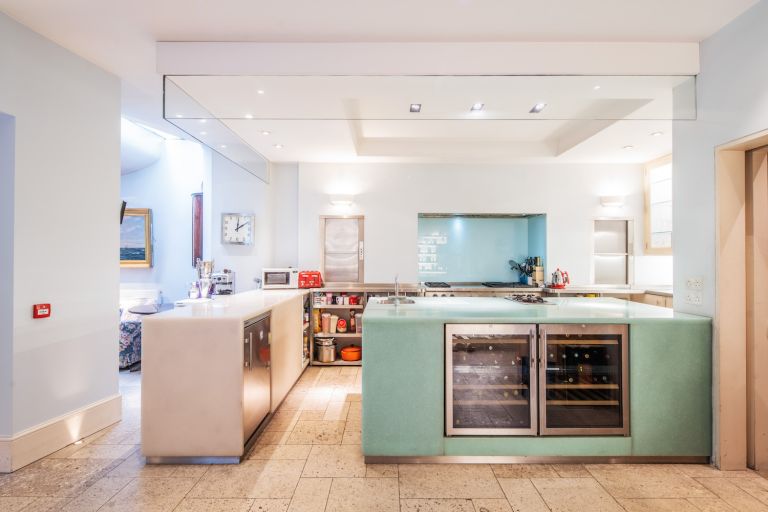
The kitchen features a kitchen island with built-in wine fridges (we’d loved to have been a fly on the wall when Sting entertained guests here), as well as other integrated appliances.
The large formal dining room is upstairs on the first floor, with a ten-seater dining table and grand marble fireplace, with doors leading onto a private terrace.
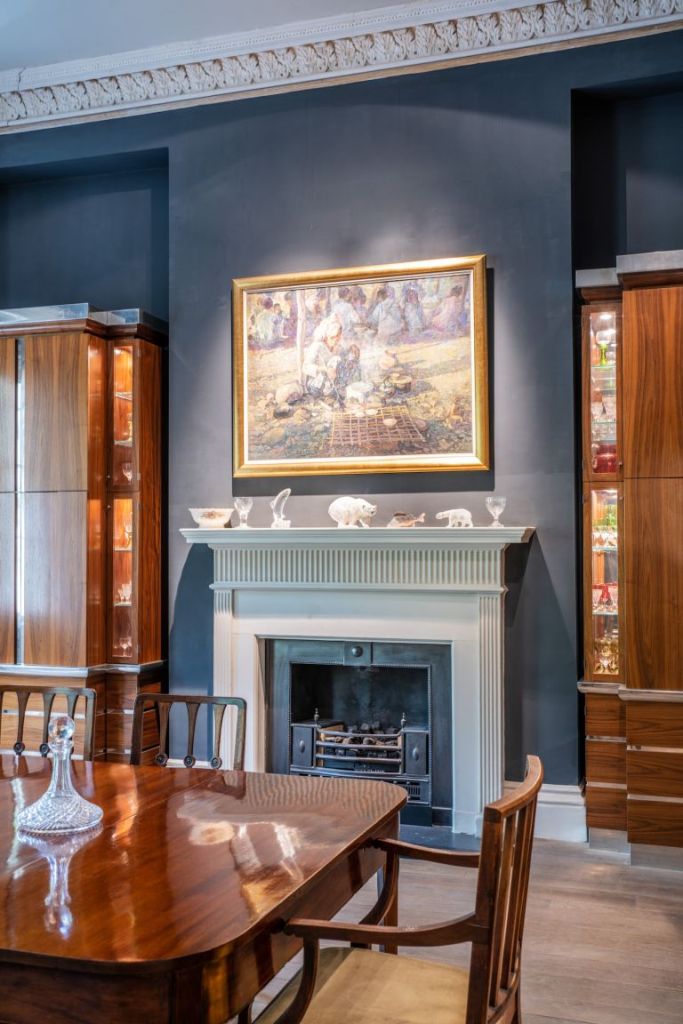
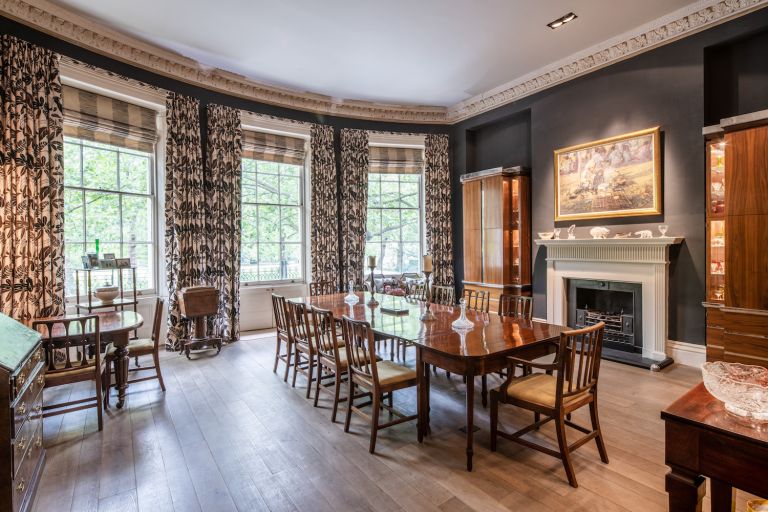
Next door to it is a reception room overlooking the quiet street, while the traditional drawing room is on the ground floor, with three large sash windows overlooking St James’s Park and a historic green marble fireplace.
There’s a separate study for home-working, featuring a striking blue colour scheme.

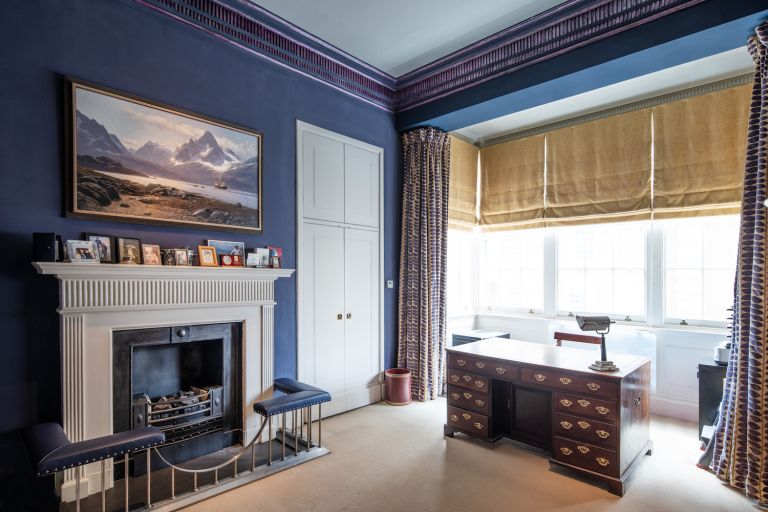
But the piece de resistance is surely the master suite, with a spacious bedroom overlooking the park, with window seats, a Juliet balcony (with views of the Big Ben), wall panelling, parquet flooring and two reading nooks.
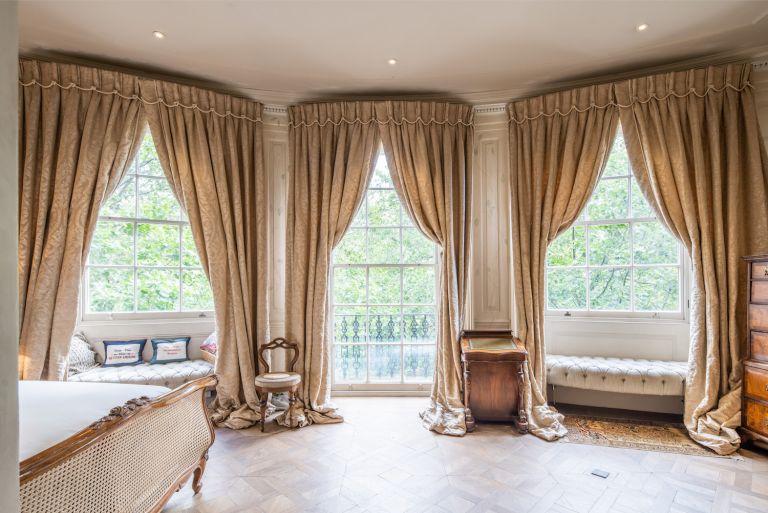

The en suite bathroom is finished in a delicate wallpaper with panelling and a grand freestanding bathtub.
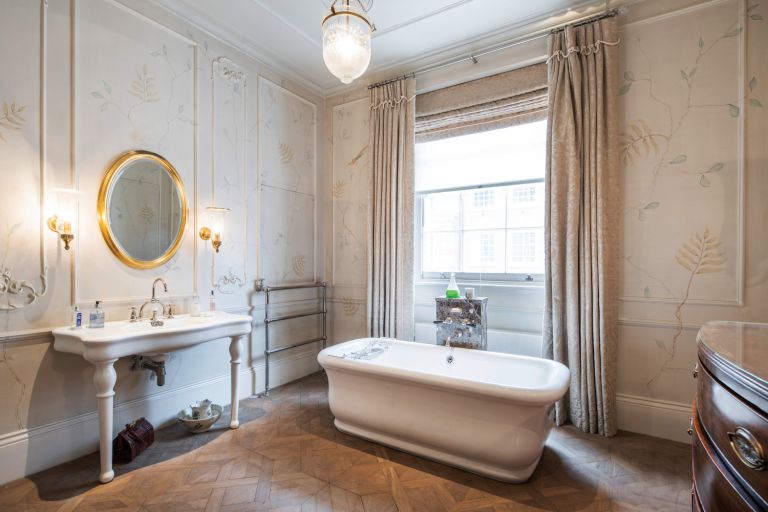
Aside from this stunning master suite, there are also four guest bedrooms, two of which have an ensuite, plus a play room and a roof terrace.
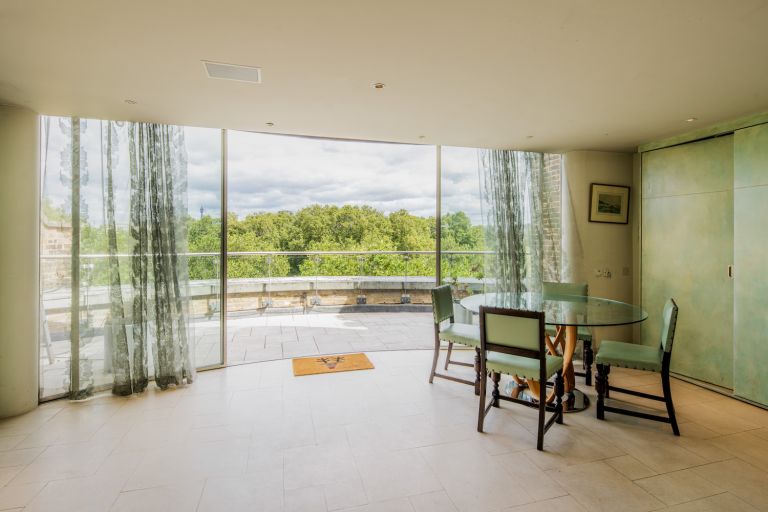
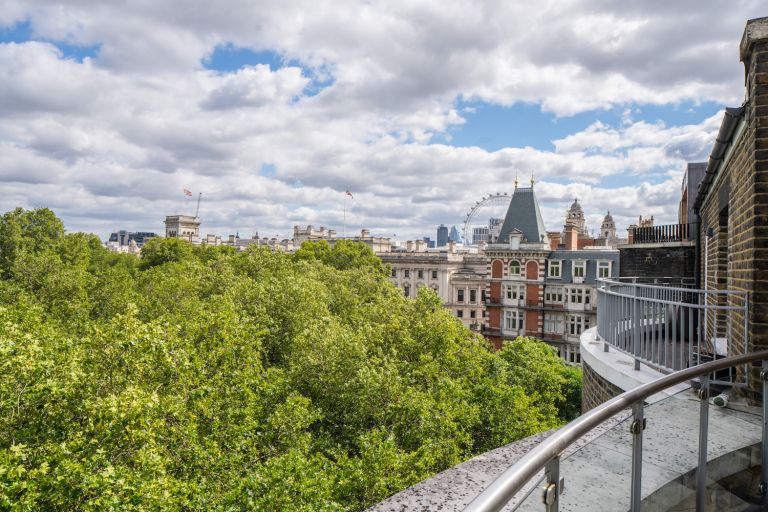
And while the townhouse might be smack bang in the middle of the city centre, it has its own secluded private rear garden with direct access to Birdcage Walk and St James’s Park.
Gary Hersham, Founding Director of Beauchamp Estates, tells us: ‘Old Queen Street is a beautiful Georgian townhouse with elegant living space and great acoustics, the perfect home for any music mogul or performer looking for exceptional entertaining space.’
Old Queen Street is for sale exclusively through Beauchamp Estates for £12,950,000.

First licensed in 1738, it was rebuilt in 1933 and has an imposing mock-Tudor exterior. Inside, the pub is tiny and the atmosphere traditional, with wooden beams and panelling.
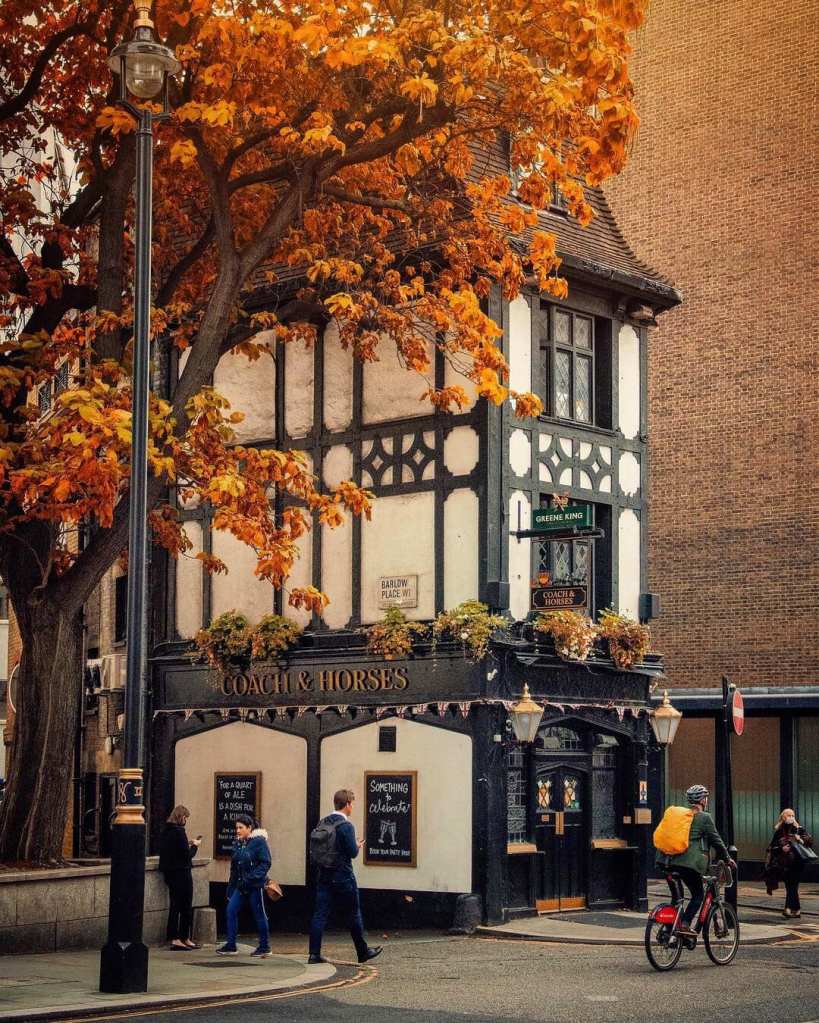

Link to website, tap on photos for more views of this gorgeous building!
The staircase in the St. Pancras Renaissance Hotel in London was built between 1865-1876
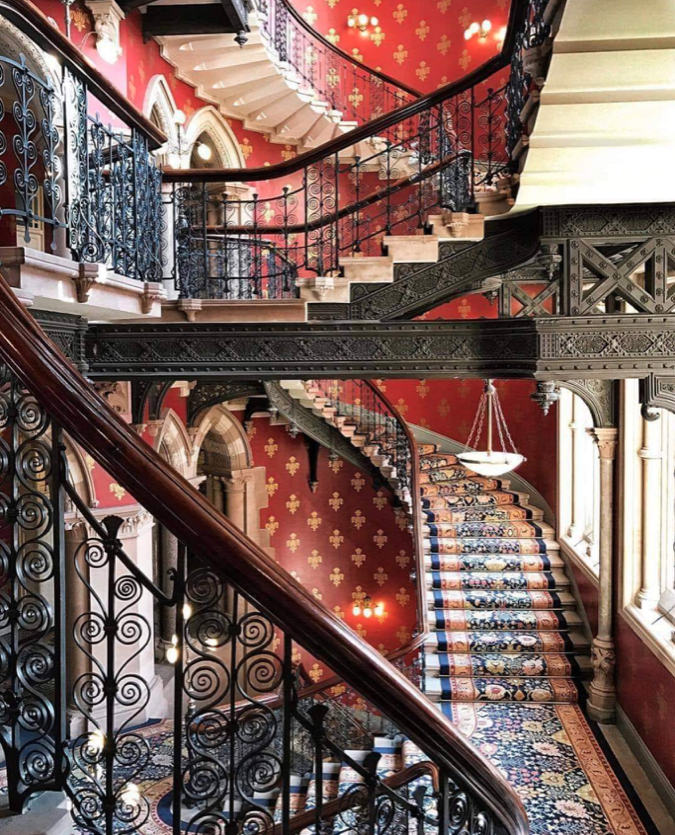
Churchill spent most of his life in London. It was here that he would live with his parents for some time as a child, go to school, sit at Parliament, marry, live as Prime Minister, and coordinate much of the war effort during WW2.
We have chosen to highlight a few places in London (e.g., Houses of Parliament, St. Margaret’s Church) in this article that we think are particularly important Winston Churchill sites, but if you have more time there are hundreds of other places you can visit in London with a Winston Churchill connection.
In London, you can see his former homes and private members clubs (from the outside), stay at one of his favorite hotels (e.g., Claridge’s), eat at restaurants and pubs he frequented, shop for his favorite clothing, cigars and food brands, see the door of 10 Downing Street (official resident of the British Prime Minister), and tour the State Rooms of Buckingham Palace (summer only).
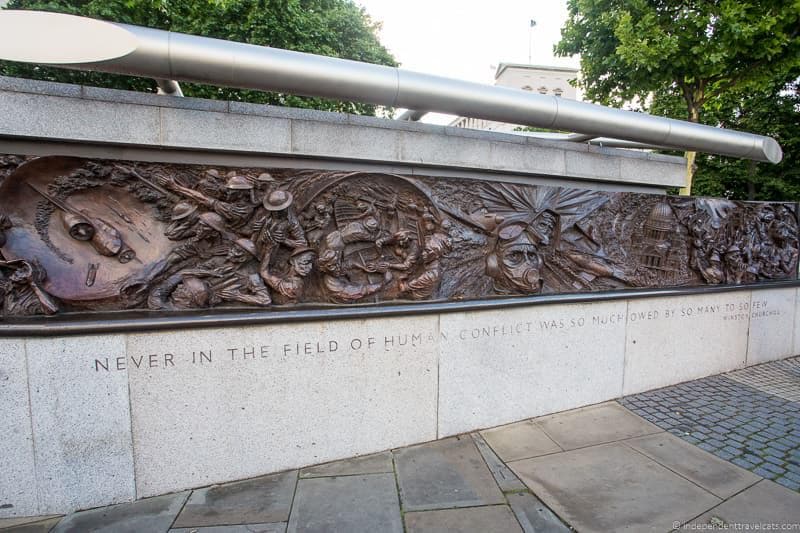
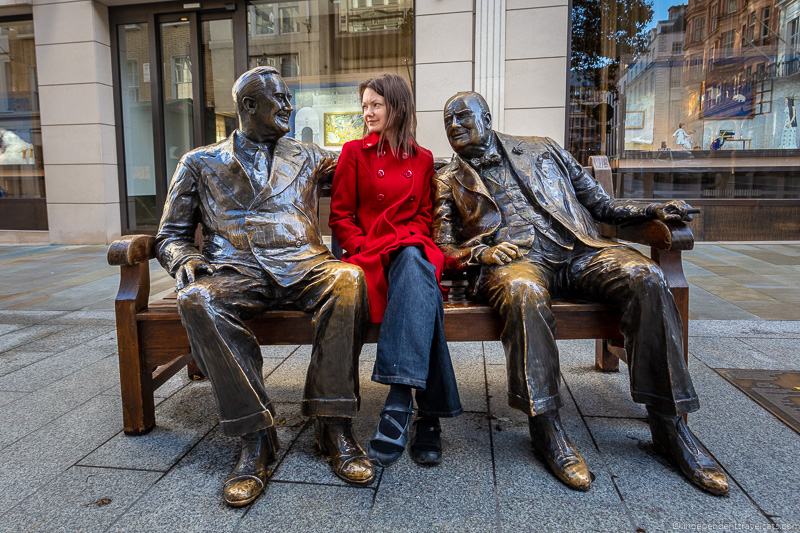
You can also see his portraits in the National Gallery, visit the Allies statue in Mayfair, visit WW2 memorials such as the Battle of Britain Monument near the Thames, have a drink in the Churchill Arms pub, and take a selfie with his wax figure at Madame Tussauds. There are hundreds of places in London with a Churchill connection and you can build you own itinerary depending on your interests!
Address: All over London.
Getting here: Almost any place in London can be visited by using London public transportation such as the Underground (the “Tube”) and bus system. If you plan to use public transportation a lot during your trip, you may want to consider getting an Oyster Card.
Admission Fee?: Many of the places listed are free to see or visit (e..g, statues, National Gallery, monuments), whereas others (e.g., Buckingham Palace and Madame Tussauds) charge an entry fee.


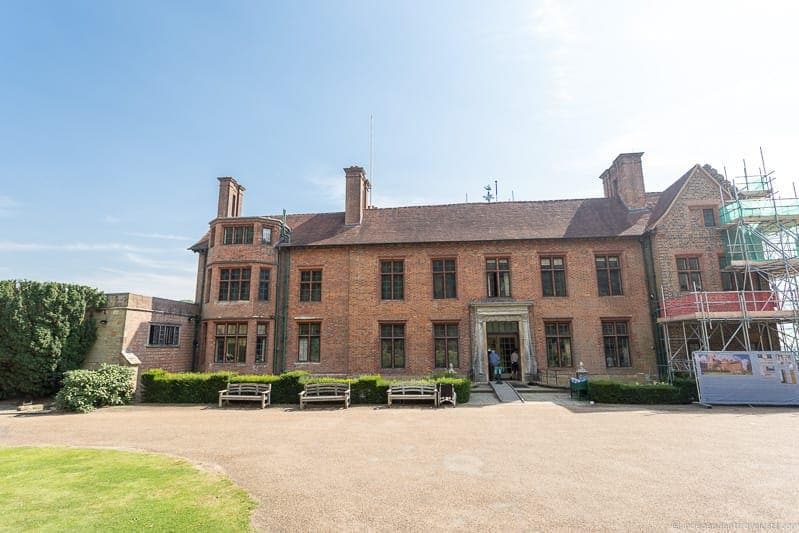
Chartwell is a country house located near Westerham, England that the Churchills purchased in 1922. The Churchills would substantially rebuild and extend the existing house and do extensive work to the gardens during their tenure. In the summer of 1923, Churchill would stay at a nearby house, Hosey Rigge, where he would supervise the rebuilding and decorating at Chartwell.
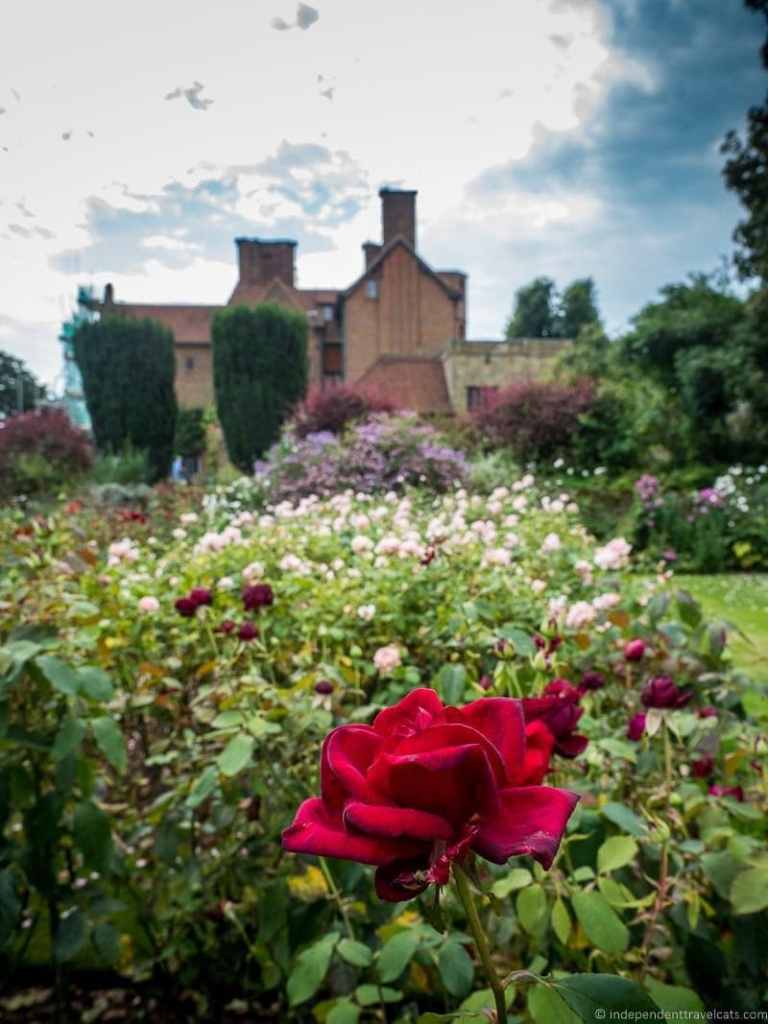
Winston Churchill loved Chartwell and used it as a refuge and a place to write, compose his speeches, paint, play with his children, recuperate, and entertain. He was very proud of the grounds and gardens, where he organized the building of walls, ponds, and dams, and he enjoyed showing visitors around his estate.
At first, Chartwell was only sporadically lived in by the Churchills. It became a place where Churchill would visit to seek solitude and recuperation during times of disappointment, stress, or poor health (lost elections, tense wartime periods, strokes). After Winston Churchill resigned as Prime Minister in 1955, it became a regular residence for the Churchills with the couple splitting time between Chartwell and their London house in Hyde Park Gate.
Despite her husband’s love for their home, Clementine was never keen on living at Chartwell, thinking it as expensive and too far from London. Clementine worried about the cost of upkeep of Chartwell and perhaps with good reason, as the Churchills were close to selling or losing Chartwell on a few occasions.
In 1937, after the crash of the American stock market where the Churchills lost a lot of money, the couple discussed selling the house to help stabilize their financial situation. Then again in 1946, Churchill felt that he needed to sell Chartwell as his income was not sufficient to maintain the upkeep any longer.
However, his friend Lord Camrose and a number of his friends helped raise money to purchase the house from Churchill for £50,000 (a fortune at the time) with the stipulation that it would be left to the National Trust after Churchill’s death as a memorial. Churchill was charged only a nominal annual rent and could live happily at Chartwell for the rest of his life without worrying about its cost.
He was grateful for his friend’s kind intervention and vowed to leave the house in great shape and to leave lots of documents and personal effects at Chartwell for the National Trust. He would write to Lord Camrose in 1945: “You may be sure that Clemmie and I will do our utmost to invest the house and gardens with every characteristic and trophy that will make it of interest in the future.” After Churchill’s death, Clementine would move out and leave the house to the Trust, and it would open to the public for the first time in 1966.
Today, Chartwell is still maintained by the National Trust and it has become one of the Trust’s most popular properties. Visitors can see many of the Churchills’ private rooms decorated as they would have been in the 1930’s, visit a museum exhibit that contains a number of significant objects such as Churchill’s Nobel Prize in Literature medallion, visit his studio that has a large collection of his paintings, and stroll the grounds and gardens.
If you are a cat lover, keep an eye out for Jock, an orange cat with white feet and chest, as the Churchill family requested that a marmalade cat name Jock always be present at Chartwell. The original Jock was one of Churchill’s last pets before his death, a gift from his personal secretary Sir John “Jock” Colville.
Self-guided visits of the Chartwell are timed, so you’ll want to book in advance or arrive in the morning to be guaranteed a visit to the house. A cafe is also on site if you are hungry after your visit.
Address: Mapleton Road, Westerham, Kent, TN16 1PS
Getting here: Chartwell is easy to reach by car, and is located a 5 minute drive from the town of Westerham. There is parking at Chartwell although there is a small fee to park.
You can also travel here by bus (can check the National Express website), although you will likely need to stop at a nearby village and take a taxi to reach Chartwell. The 246 London Bus route from Bromley North stops at Chartwell but generally only on Sundays in the summer months and holidays.
If you are traveling by train, the nearest stations are at Edenbridge, Oxted, and Sevenoaks, and then you’ll need to take a taxi to Chartwell.
Admission Fee?: Yes. There is an admission fee and small parking fee. Free entry and parking for National Trust pass holders. Since entry into the house is limited and timed, we recommend pre-booking your ticket or arriving early to guarantee entry into the house.
Things Churchill admirers should Not Miss: There are loads of things to see here which include the rooms of the house and the museum exhibits in the house which contain some priceless Churchill objects like his Nobel Prize medallion, manuscripts, and gifts sent to him from dignitaries around the world.
Don’t forget to check out the detached studio which contains a number of Churchill’s paintings and to wander around the estate. Outside there is a large bronze statue by Oscar Nemon of Winston and Clementine near the main lake. You’ll want to spend at least 2 hours here.
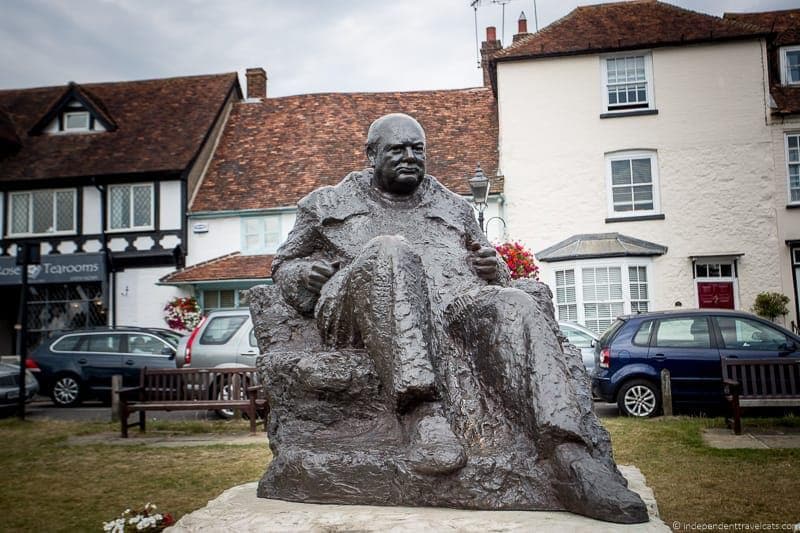
If you stop in Westerham, there is a statue of Churchill there as well on the village green.
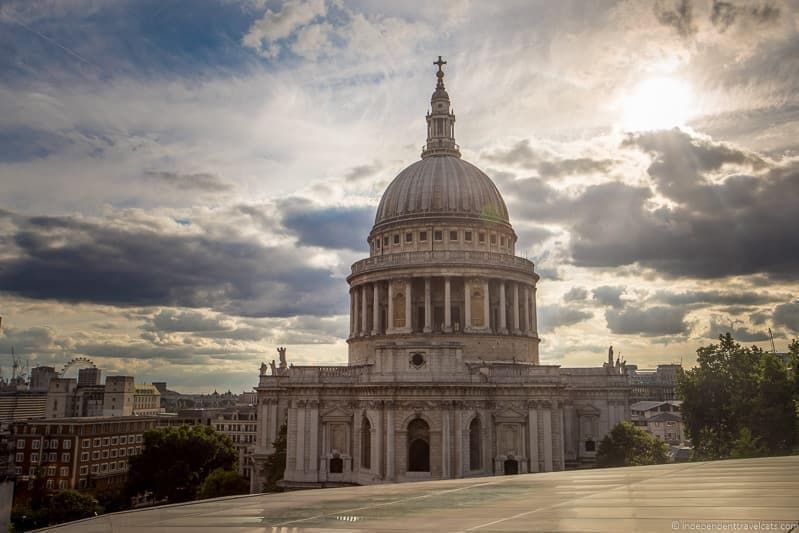
St Paul’s Cathedral is an Anglican church in London designed by Sir Christopher Wren in the English Baroque style. The present church was consecrated in 1697; however, it sits on the same site as the former medieval church of the same name which was badly damaged by fire. Today it is the seat of the Bishop of London and one of the most important churches in London, sometimes called the religious soul of the city.
The Cathedral has been the site of many famous services and events, including the state funerals of Lord Nelson and Winston Churchill, jubilee celebrations for both Queen Victoria and Queen Elizabeth II, and royal weddings such as that of Prince Charles to Princess Diana. The Cathedral can be seen from many places in London and is one of the most recognizable places on the city skyline.
During World War 2, St. Paul’s Cathedral became a symbol of resilience and resistance as despite heaving bombing by the Germans during the Blitz, the Cathedral famously survived although it was damaged. Churchill would give orders to the fire brigade to try to protect the church at all costs as he knew how important it was symbolically to the morale of Londoners in the dark days of the Blitz.
There was one night when there were so many bombs and incendiaries that one American reporter described it as the “Second Great Fire of London” and it was only with the help of a vigilant crew of volunteers that St. Paul’s was able to escape significant damage. There are some amazing photos, particularly “St. Paul’s Survives” by Herbert Mason, of the Cathedral’s recognizable dome peering out from the wreckage of a fiery and smoldering London after nights of severe bombing.
After the war, Churchill and Clementine would attend a thanksgiving service at St. Paul’s Cathedral on May 13, 1945 to celebrate VE day.
Probably the event most associated with Churchill is that his funeral service that was held here. On January 30, 1965, Winston Churchill’s funeral was held at St. Paul’s Cathedral. Churchill was given a State Funeral, a significant honor normally only reserved for the monarch, and which must be approved by both the monarch and the Parliament. Churchill’s funeral service included dignitaries from over 100 countries, including Queen Elizabeth II (her first non-royal funeral attendance), French President Charles de Gaulle, and former U.S. President Dwight Eisenhower.
Queen Elizabeth II in her address to Parliament would call him, her first Prime Minister, “a national hero” and former Prime Minister Clement Attlee would describe him as “the great Englishmen of our time—I think the greatest citizen of the world of our time.” As of now, Churchill is the last person to receive a state funeral in the UK.
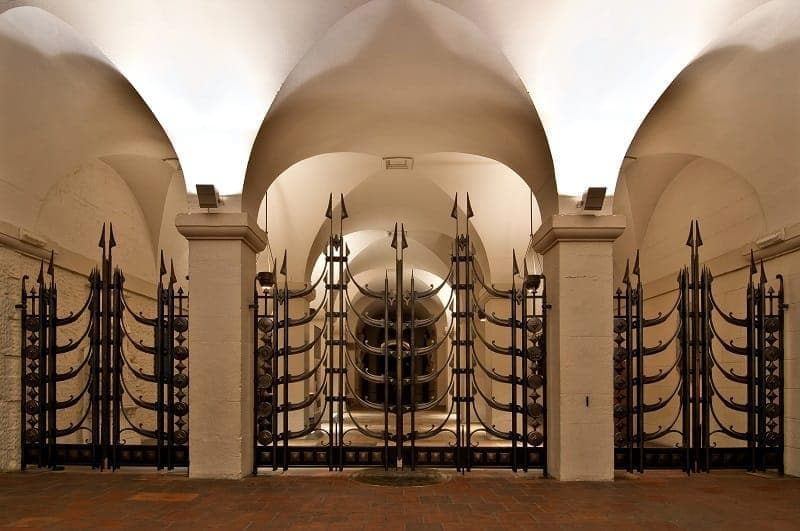
Churchill’s state funeral is commemorated in St Paul’s by a bronze memorial plaque designed by John Skelton and set before the choir steps which reads: “The catafalque of Sir Winston Churchill stood here at his state funeral on 30 January 1965”. Then in 2004 the Winston Churchill Memorial Screen was added, commissioned by the Cathedral Chapter and designed and made by the blacksmith James Horrobin. The steel and bronze memorial screen is currently located in the crypt.
Today St. Paul’s is both an active church and a busy tourist attraction. You can visit the church on a self-guided visit with an audioguide or you can join a guided tour of the church. St. Paul’s Cathedral is a busy tourist attraction so be sure to allot enough time, especially if you want to climb the steps to the dome which can have a long line. Visitors usually spend about 2 hours visiting the church. Note that the church is closed to visitors during worship services and special events.
Address: St Paul’s Churchyard, London, EC4M 8AD
Getting here: Located in central London, in the City of London, it is easy to reach by public transportation from throughout the city. It is within walking distance of the Tate Modern, Shakespeare’s Globe, and the Museum of London..
Admission Fee?: Yes. Free entry is included if you are using a London Pass. Tours are self-guided with an audioguide or you can join a guided tour at the church (check schedule). Worshippers attending a church service or wanting to pray in one of the side chapels can enter for free.
hings Churchill admirers should Not Miss: The bronze memorial plaque and Churchill Memorial Screen. Americans, in particular, may want to visit the American Memorial Chapel at the east end of the cathedral, a part of the Cathedral destroyed during the Blitz. Here the 28,000 Americans who gave their lives while stationed in the UK during World War II are commemorated in a Remembrance Book.
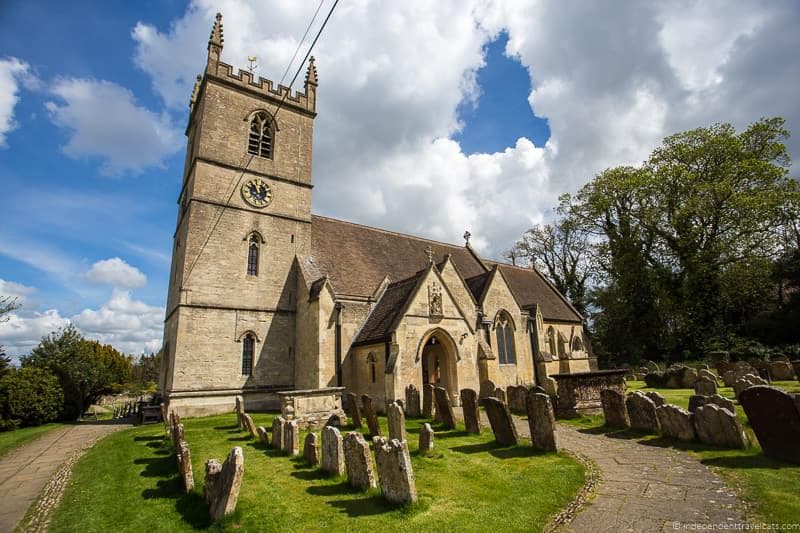
Although many people would guess that Churchill is buried at Blenheim, Chartwell, or one of London’s grand churches, you’ll actually find his grave in the churchyard of a small Anglican parish church in Oxfordshire. St. Martin’s Church covers the parish that includes Blenheim Palace, and as the family seat of the dukes of Marlborough most of the non-titled members of the family are buried there. Most of the dukes and duchesses, with a few exceptions, are buried at Blenheim Palace chapel instead of St. Martin’s Church.
It is believed that a church has existed at the site since the 11th or 12th century with much of the current St Martin’s Church dating from 1891. The church is still an active church and holds a weekly Sunday service (visitors welcome) as well as special ceremonies.
In 2015, the church added a Churchill Memorial Window, a beautiful stained glass window dedicated to Churchill designed by artist Emma Blount.
Unlike most people’s funerals, Winston Churchill’s funeral was thought of long before it happened and was extremely well-planned. Codenamed Operation Hope Not, the planning began in the 1950’s and was headed by the Earl Marshal, Bernard Fitzalan-Howard, the Duke of Norfolk. Churchill’s funeral would include 3 days of lying in state at Westminster Hall, an elaborate procession through London with his coffin on a gun-carriage, a funeral ceremony at St. Paul’s Cathedral, a river transfer aboard the Havengore, a military fly by, the dipping of cranes along the Thames, and then a transfer at Waterloo Station to a special train that took the coffin to Bladon.
The Churchill funeral train was pulled by the Churchill locomotive (currently preserved and often on display at the National Railway Museum in York) and most of the train cars have been preserved. At least one of the Pullman carriages (Perseus) is in operation as part of the Belmond British Pullman train which we have ridden.
At Bladon he was buried at a private ceremony attended by only family and friends on January 30, 1965.
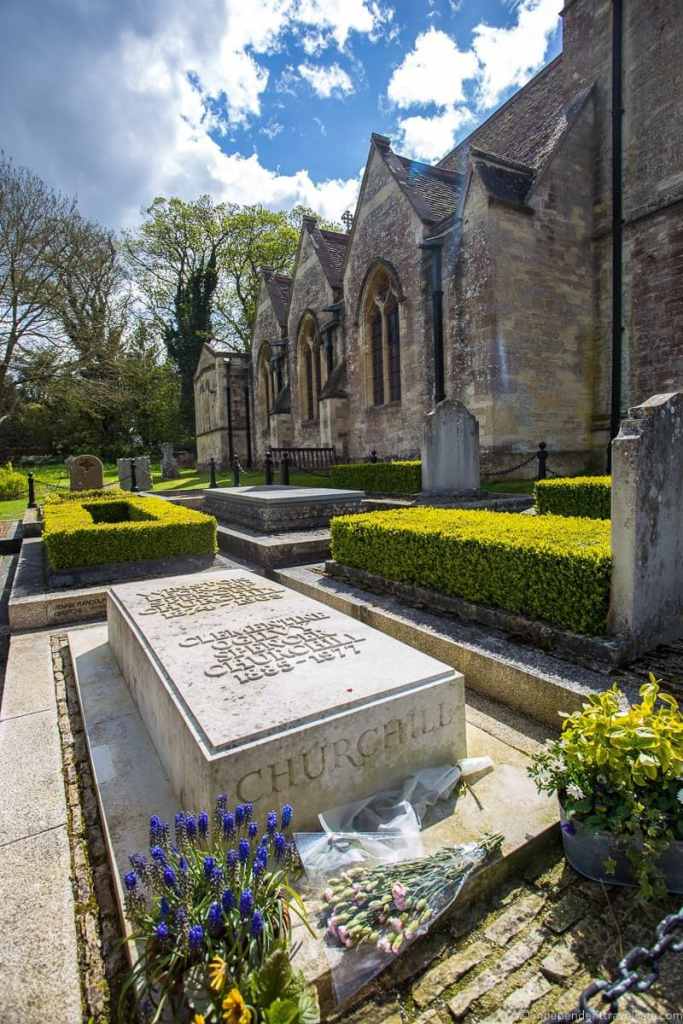
Winston Churchill is buried next to his wife Clementine (who would pass away in 1977) and near other Churchill-Spencer family members. In the churchyard, you’ll also find the graves of his parents, brother Jack, children, Consuelo Vanderbilt, and other relations.
Sadly, Churchill’s original tombstone has had to be replaced because of damage by visitors. Please be respectful when visiting the churchyard as St. Martin’s is an active church and graveyard.
Address: Church St., Bladon, Woodstock OX20 1RS
Getting here: It is located about 2 miles from Blenheim Palace so a short drive (parking within village) or you can take a local public bus from Oxford or Blenheim Palace to Bladon and then walk to the church. Best to combine with your visit to Blenheim Palace.
Admission Fee?: No, it is free to visit St. Martin’s Church and churchyard, although the church interior is not always open. If you want to make sure you get to see the interior, visit on a Sunday after services (services every Sunday morning) or call ahead.
Things Churchill admirers should Not Miss: The grave of Winston Churchill, his wife, parents, children, brother, and other Spencer-Churchill family members. They are all located outside in the small graveyard behind the church. If the church is open, you’ll want to go inside to see the Churchill Memorial Window and small exhibition.
Tips for Visiting: There is only a small amount of parking at the church itself so you may need to park on a street nearby (free) and walk up to the church. Please be respectful when visiting by not walking on, touching, or leaving things at the graves as visitors have done significant damage in the past. Here are some words from the church: “We ask all visitors to remember that, although in a public place, Sir Winston’s grave is a private grave, maintained by a family trust – so we ask you not to leave memorabilia or flowers of your own. Fresh flowers are always placed on the grave every week, the cost being met by the trust and members of Sir Winston’s family.”
 London visitor