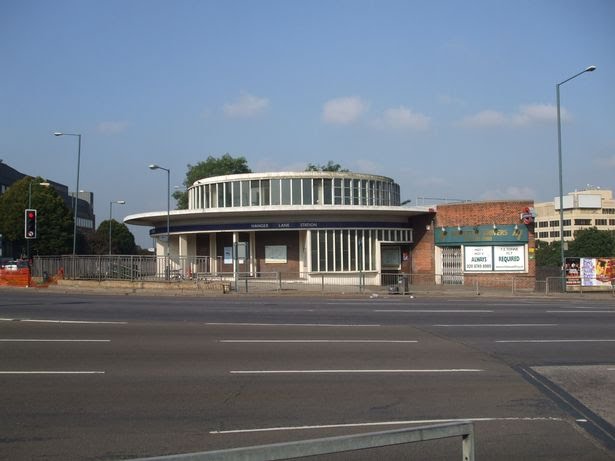
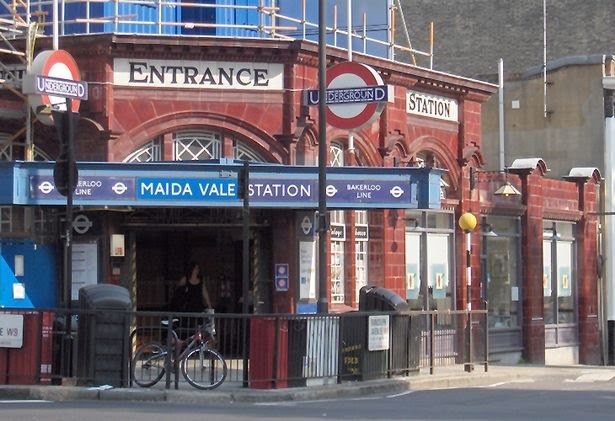
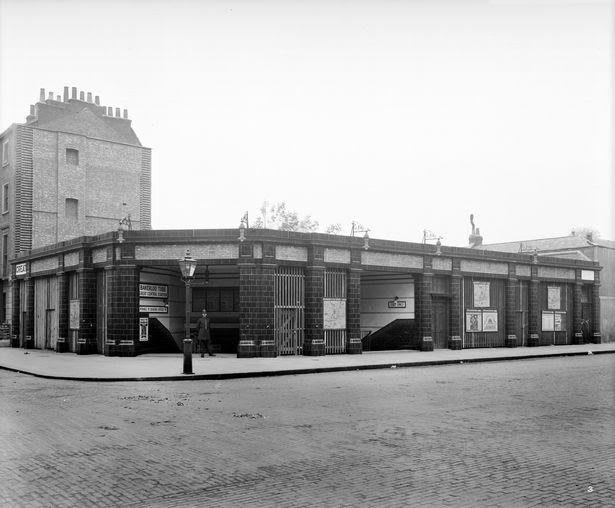
City shots, London, River Thames.


Link to website, tap on photos for more views of this gorgeous building!
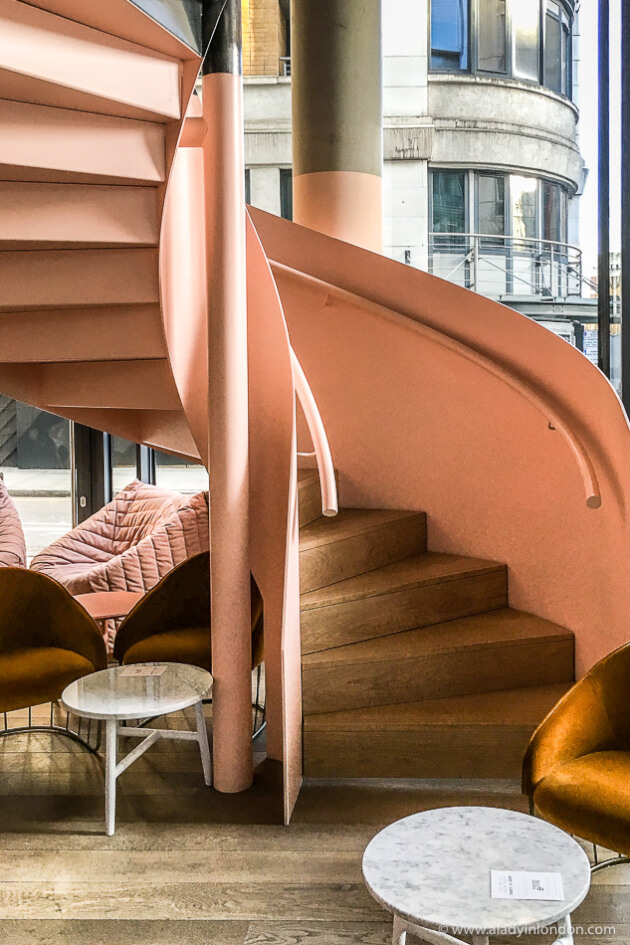
The staircase in the St. Pancras Renaissance Hotel in London was built between 1865-1876

Churchill spent most of his life in London. It was here that he would live with his parents for some time as a child, go to school, sit at Parliament, marry, live as Prime Minister, and coordinate much of the war effort during WW2.
We have chosen to highlight a few places in London (e.g., Houses of Parliament, St. Margaret’s Church) in this article that we think are particularly important Winston Churchill sites, but if you have more time there are hundreds of other places you can visit in London with a Winston Churchill connection.
In London, you can see his former homes and private members clubs (from the outside), stay at one of his favorite hotels (e.g., Claridge’s), eat at restaurants and pubs he frequented, shop for his favorite clothing, cigars and food brands, see the door of 10 Downing Street (official resident of the British Prime Minister), and tour the State Rooms of Buckingham Palace (summer only).
You can also see his portraits in the National Gallery, visit the Allies statue in Mayfair, visit WW2 memorials such as the Battle of Britain Monument near the Thames, have a drink in the Churchill Arms pub, and take a selfie with his wax figure at Madame Tussauds. There are hundreds of places in London with a Churchill connection and you can build you own itinerary depending on your interests!
Address: All over London.
Getting here: Almost any place in London can be visited by using London public transportation such as the Underground (the “Tube”) and bus system. If you plan to use public transportation a lot during your trip, you may want to consider getting an Oyster Card.
Admission Fee?: Many of the places listed are free to see or visit (e..g, statues, National Gallery, monuments), whereas others (e.g., Buckingham Palace and Madame Tussauds) charge an entry fee.


Chartwell is a country house located near Westerham, England that the Churchills purchased in 1922. The Churchills would substantially rebuild and extend the existing house and do extensive work to the gardens during their tenure. In the summer of 1923, Churchill would stay at a nearby house, Hosey Rigge, where he would supervise the rebuilding and decorating at Chartwell.
Winston Churchill loved Chartwell and used it as a refuge and a place to write, compose his speeches, paint, play with his children, recuperate, and entertain. He was very proud of the grounds and gardens, where he organized the building of walls, ponds, and dams, and he enjoyed showing visitors around his estate.
At first, Chartwell was only sporadically lived in by the Churchills. It became a place where Churchill would visit to seek solitude and recuperation during times of disappointment, stress, or poor health (lost elections, tense wartime periods, strokes). After Winston Churchill resigned as Prime Minister in 1955, it became a regular residence for the Churchills with the couple splitting time between Chartwell and their London house in Hyde Park Gate.
Despite her husband’s love for their home, Clementine was never keen on living at Chartwell, thinking it as expensive and too far from London. Clementine worried about the cost of upkeep of Chartwell and perhaps with good reason, as the Churchills were close to selling or losing Chartwell on a few occasions.
In 1937, after the crash of the American stock market where the Churchills lost a lot of money, the couple discussed selling the house to help stabilize their financial situation. Then again in 1946, Churchill felt that he needed to sell Chartwell as his income was not sufficient to maintain the upkeep any longer.
However, his friend Lord Camrose and a number of his friends helped raise money to purchase the house from Churchill for £50,000 (a fortune at the time) with the stipulation that it would be left to the National Trust after Churchill’s death as a memorial. Churchill was charged only a nominal annual rent and could live happily at Chartwell for the rest of his life without worrying about its cost.
He was grateful for his friend’s kind intervention and vowed to leave the house in great shape and to leave lots of documents and personal effects at Chartwell for the National Trust. He would write to Lord Camrose in 1945: “You may be sure that Clemmie and I will do our utmost to invest the house and gardens with every characteristic and trophy that will make it of interest in the future.” After Churchill’s death, Clementine would move out and leave the house to the Trust, and it would open to the public for the first time in 1966.
Today, Chartwell is still maintained by the National Trust and it has become one of the Trust’s most popular properties. Visitors can see many of the Churchills’ private rooms decorated as they would have been in the 1930’s, visit a museum exhibit that contains a number of significant objects such as Churchill’s Nobel Prize in Literature medallion, visit his studio that has a large collection of his paintings, and stroll the grounds and gardens.
If you are a cat lover, keep an eye out for Jock, an orange cat with white feet and chest, as the Churchill family requested that a marmalade cat name Jock always be present at Chartwell. The original Jock was one of Churchill’s last pets before his death, a gift from his personal secretary Sir John “Jock” Colville.
Self-guided visits of the Chartwell are timed, so you’ll want to book in advance or arrive in the morning to be guaranteed a visit to the house. A cafe is also on site if you are hungry after your visit.
Address: Mapleton Road, Westerham, Kent, TN16 1PS
Getting here: Chartwell is easy to reach by car, and is located a 5 minute drive from the town of Westerham. There is parking at Chartwell although there is a small fee to park.
You can also travel here by bus (can check the National Express website), although you will likely need to stop at a nearby village and take a taxi to reach Chartwell. The 246 London Bus route from Bromley North stops at Chartwell but generally only on Sundays in the summer months and holidays.
If you are traveling by train, the nearest stations are at Edenbridge, Oxted, and Sevenoaks, and then you’ll need to take a taxi to Chartwell.
Admission Fee?: Yes. There is an admission fee and small parking fee. Free entry and parking for National Trust pass holders. Since entry into the house is limited and timed, we recommend pre-booking your ticket or arriving early to guarantee entry into the house.
Things Churchill admirers should Not Miss: There are loads of things to see here which include the rooms of the house and the museum exhibits in the house which contain some priceless Churchill objects like his Nobel Prize medallion, manuscripts, and gifts sent to him from dignitaries around the world.
Don’t forget to check out the detached studio which contains a number of Churchill’s paintings and to wander around the estate. Outside there is a large bronze statue by Oscar Nemon of Winston and Clementine near the main lake. You’ll want to spend at least 2 hours here.
If you stop in Westerham, there is a statue of Churchill there as well on the village green.


St Paul’s Cathedral is an Anglican church in London designed by Sir Christopher Wren in the English Baroque style. The present church was consecrated in 1697; however, it sits on the same site as the former medieval church of the same name which was badly damaged by fire. Today it is the seat of the Bishop of London and one of the most important churches in London, sometimes called the religious soul of the city.
The Cathedral has been the site of many famous services and events, including the state funerals of Lord Nelson and Winston Churchill, jubilee celebrations for both Queen Victoria and Queen Elizabeth II, and royal weddings such as that of Prince Charles to Princess Diana. The Cathedral can be seen from many places in London and is one of the most recognizable places on the city skyline.
During World War 2, St. Paul’s Cathedral became a symbol of resilience and resistance as despite heaving bombing by the Germans during the Blitz, the Cathedral famously survived although it was damaged. Churchill would give orders to the fire brigade to try to protect the church at all costs as he knew how important it was symbolically to the morale of Londoners in the dark days of the Blitz.
There was one night when there were so many bombs and incendiaries that one American reporter described it as the “Second Great Fire of London” and it was only with the help of a vigilant crew of volunteers that St. Paul’s was able to escape significant damage. There are some amazing photos, particularly “St. Paul’s Survives” by Herbert Mason, of the Cathedral’s recognizable dome peering out from the wreckage of a fiery and smoldering London after nights of severe bombing.
After the war, Churchill and Clementine would attend a thanksgiving service at St. Paul’s Cathedral on May 13, 1945 to celebrate VE day.
Probably the event most associated with Churchill is that his funeral service that was held here. On January 30, 1965, Winston Churchill’s funeral was held at St. Paul’s Cathedral. Churchill was given a State Funeral, a significant honor normally only reserved for the monarch, and which must be approved by both the monarch and the Parliament. Churchill’s funeral service included dignitaries from over 100 countries, including Queen Elizabeth II (her first non-royal funeral attendance), French President Charles de Gaulle, and former U.S. President Dwight Eisenhower.
Queen Elizabeth II in her address to Parliament would call him, her first Prime Minister, “a national hero” and former Prime Minister Clement Attlee would describe him as “the great Englishmen of our time—I think the greatest citizen of the world of our time.” As of now, Churchill is the last person to receive a state funeral in the UK.
Churchill’s state funeral is commemorated in St Paul’s by a bronze memorial plaque designed by John Skelton and set before the choir steps which reads: “The catafalque of Sir Winston Churchill stood here at his state funeral on 30 January 1965”. Then in 2004 the Winston Churchill Memorial Screen was added, commissioned by the Cathedral Chapter and designed and made by the blacksmith James Horrobin. The steel and bronze memorial screen is currently located in the crypt.
Today St. Paul’s is both an active church and a busy tourist attraction. You can visit the church on a self-guided visit with an audioguide or you can join a guided tour of the church. St. Paul’s Cathedral is a busy tourist attraction so be sure to allot enough time, especially if you want to climb the steps to the dome which can have a long line. Visitors usually spend about 2 hours visiting the church. Note that the church is closed to visitors during worship services and special events.
Address: St Paul’s Churchyard, London, EC4M 8AD
Getting here: Located in central London, in the City of London, it is easy to reach by public transportation from throughout the city. It is within walking distance of the Tate Modern, Shakespeare’s Globe, and the Museum of London..
Admission Fee?: Yes. Free entry is included if you are using a London Pass. Tours are self-guided with an audioguide or you can join a guided tour at the church (check schedule). Worshippers attending a church service or wanting to pray in one of the side chapels can enter for free.
hings Churchill admirers should Not Miss: The bronze memorial plaque and Churchill Memorial Screen. Americans, in particular, may want to visit the American Memorial Chapel at the east end of the cathedral, a part of the Cathedral destroyed during the Blitz. Here the 28,000 Americans who gave their lives while stationed in the UK during World War II are commemorated in a Remembrance Book.


Although many people would guess that Churchill is buried at Blenheim, Chartwell, or one of London’s grand churches, you’ll actually find his grave in the churchyard of a small Anglican parish church in Oxfordshire. St. Martin’s Church covers the parish that includes Blenheim Palace, and as the family seat of the dukes of Marlborough most of the non-titled members of the family are buried there. Most of the dukes and duchesses, with a few exceptions, are buried at Blenheim Palace chapel instead of St. Martin’s Church.
It is believed that a church has existed at the site since the 11th or 12th century with much of the current St Martin’s Church dating from 1891. The church is still an active church and holds a weekly Sunday service (visitors welcome) as well as special ceremonies.
In 2015, the church added a Churchill Memorial Window, a beautiful stained glass window dedicated to Churchill designed by artist Emma Blount.
Unlike most people’s funerals, Winston Churchill’s funeral was thought of long before it happened and was extremely well-planned. Codenamed Operation Hope Not, the planning began in the 1950’s and was headed by the Earl Marshal, Bernard Fitzalan-Howard, the Duke of Norfolk. Churchill’s funeral would include 3 days of lying in state at Westminster Hall, an elaborate procession through London with his coffin on a gun-carriage, a funeral ceremony at St. Paul’s Cathedral, a river transfer aboard the Havengore, a military fly by, the dipping of cranes along the Thames, and then a transfer at Waterloo Station to a special train that took the coffin to Bladon.
The Churchill funeral train was pulled by the Churchill locomotive (currently preserved and often on display at the National Railway Museum in York) and most of the train cars have been preserved. At least one of the Pullman carriages (Perseus) is in operation as part of the Belmond British Pullman train which we have ridden.
At Bladon he was buried at a private ceremony attended by only family and friends on January 30, 1965.
Winston Churchill is buried next to his wife Clementine (who would pass away in 1977) and near other Churchill-Spencer family members. In the churchyard, you’ll also find the graves of his parents, brother Jack, children, Consuelo Vanderbilt, and other relations.
Sadly, Churchill’s original tombstone has had to be replaced because of damage by visitors. Please be respectful when visiting the churchyard as St. Martin’s is an active church and graveyard.
Address: Church St., Bladon, Woodstock OX20 1RS
Getting here: It is located about 2 miles from Blenheim Palace so a short drive (parking within village) or you can take a local public bus from Oxford or Blenheim Palace to Bladon and then walk to the church. Best to combine with your visit to Blenheim Palace.
Admission Fee?: No, it is free to visit St. Martin’s Church and churchyard, although the church interior is not always open. If you want to make sure you get to see the interior, visit on a Sunday after services (services every Sunday morning) or call ahead.
Things Churchill admirers should Not Miss: The grave of Winston Churchill, his wife, parents, children, brother, and other Spencer-Churchill family members. They are all located outside in the small graveyard behind the church. If the church is open, you’ll want to go inside to see the Churchill Memorial Window and small exhibition.
Tips for Visiting: There is only a small amount of parking at the church itself so you may need to park on a street nearby (free) and walk up to the church. Please be respectful when visiting by not walking on, touching, or leaving things at the graves as visitors have done significant damage in the past. Here are some words from the church: “We ask all visitors to remember that, although in a public place, Sir Winston’s grave is a private grave, maintained by a family trust – so we ask you not to leave memorabilia or flowers of your own. Fresh flowers are always placed on the grave every week, the cost being met by the trust and members of Sir Winston’s family.”


We have put together a list of the top Winston Churchill sites in England and tips on visiting each of these places. As admirers of Winston Churchill ourselves, we know that many people want to visit places associated with Churchill during their travels in England.
Best known for his powerful speeches and role in leading Britain victoriously through World War 2, Winston Churchill led a complex and extraordinary life that affected people from all over the world. He served in the military, spent over 50 years serving as a Member of Parliament with two terms as Prime Minister, won the Nobel Prize in Literature, and was even awarded the first honorary United States citizenship.
There are thousands of buildings, sites, statues, memorials, plaques, and museum exhibits associated with Winston Churchill throughout England and the United Kingdom, but we’ve narrowed it down to the top 8 places we think were most significant to Winston Churchill. These include his birthplace, where he got married, where he served as a parliamentarian and Prime Minister, where he ran the country during World War II, his favorite home, and his place of burial.
We’ll provide the history of each site and its association with Churchill, as well as tips and advice on visiting based on our own visits to each of these Winston Churchill sites in England.
As noted, there are thousands of places associated with Winston Churchill throughout England, but we’ve narrowed it down to the top 8 recommended places we think were most significant to Winston Churchill. All of these places can be visited by the public and each helps tell the story of one of the most significant men in contemporary British history. We provide the history of each site and its association with Churchill, as well as tips and advice on visiting.
We have ordered this list of Winston Churchill sites in England in relation to their chronological importance in Churchill’s life from birth to death. However, this ordering may not make sense from a travel viewpoint. So for those wanting to visit all these places, I’ve included all the addresses as well as marked them on a map below so you can place them in the best order based on your own travel itinerary.
If you are planning base yourself in London, Blenheim Palace (and nearby Bladon) and Chartwell can easily be visited as day trips or overnight trips from London. Group and private day tours are also available to both of these attractions. In addition to these top Winston Churchill sites in England, we also urge you to add and discover some of your own!
If you are wanting to visit all these sites as part of a guided tour, the only tour that we know of that we think includes them all is this 3-day guided tour from London that is focused on Winston Churchill’s life and achievements and spends time in London, Oxfordshire, and Kent.
A good place to start you visit of Winston Churchill sites in England is Blenheim Palace, Churchill’s birthplace. Blenheim Palace is one of England’s largest country houses, and serves as the principal residence of the dukes of Marlborough. The Palace was built between 1705 and 1722 in the English Baroque style, and was designated a UNESCO World Heritage Site in 1987. Today it is still used as a residence by the current Duke’s family, but is open to the public for tours and events.
Winston Churchill was born on November 30, 1874 at Blenheim Place. His mother, American-born Jennie Churchill (née Jerome), and his father, Lord Randolph Churchill, had been at Blenheim visiting family and attending a ball. Churchill was born a few weeks earlier than expected so the birth was a bit of a surprise for the family. This was not his intended birthplace, and the bedroom he was born in had been used that evening as a cloakroom for guests.
Winston Churchill would never live at Blenheim Palace as his father was the third son of the 7th Duke of Marlborough and neither his father nor himself would inherit the dukedom or the house. However, Churchill liked Blenheim and would visit often both as a child and as an adult and was close friends with his cousin “Sunny” who would become the 9th Duke of Marlborough.
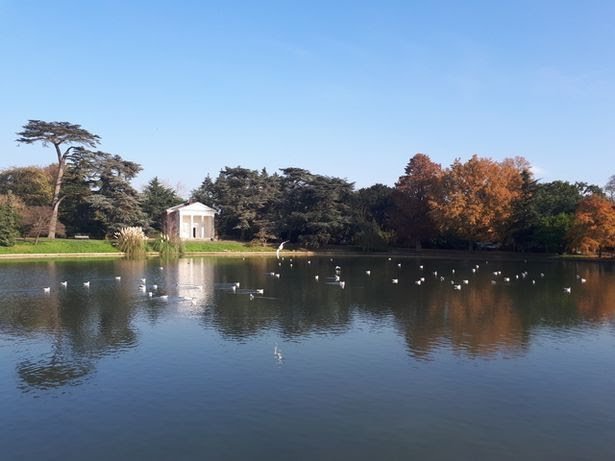
Perhaps the most significant event at Blenheim Palace for Churchill was asking Clementine Hozier to be his wife. Churchill had asked Clementine to visit him at Blenheim with the goal of proposing. But it was not until her third visit that he mustered the courage to ask, which required some urging from his cousin Sunny. He asked her to marry him while the pair took shelter from the rain in the small Temple of Diana in the gardens. She of course accepted his proposal.
Over the years, Churchill would also use Blenheim as a place to write and he and Clementine would spend the first days of their honeymoon here before going on to Italy.
Blenheim is a spectacular country house filled with great art and furniture, and the gardens are beautiful and worth taking time to explore. In relation to Winston Churchill at Blenheim Palace you can visit the room of his birth, a small exhibition on his life that includes some childhood artifacts, and stroll the gardens and see the Temple of Diana where he proposed to Clementine. There is a cafe, restaurant, and gift shops at the palace.
Located in Woodstock in Oxfordshire, Blenheim Palace is a short distance from Oxford and about 2 hours from London. You can read more about recommended things to do in Oxford and also read about planning a London day trip to Blenheim Palace.
Address: Blenheim Palace, Woodstock, Oxfordshire OX20 1PP
Getting here: By car, it is about 25 minutes from central Oxford or 1.5 to 2 hours from London. Free parking is available at the palace for visitors.
By train, you’ll want to head to Oxford and then get a bus or taxi to the palace. Bus services from Oxford run to Blenheim Place from Oxford train station, Oxford’s Gloucester Green bus station, and Oxford Parkway.
You can also join a group tour bus or private tour that stops at Blenheim Palace from either London or Oxford.
Admission Fee?: Yes. Tickets can be booked online in advance or purchased in-person at the palace entrance on arrival.
Things Churchill admirers should Not Miss: Bedroom birthplace, Winston Churchill exhibition, and Temple of Diana. There are also a few busts of Churchill on the property, at least one was on display in the house and one was in the garden when we visited.


St. Margaret’s Church is the site of several happy and significant events in Winston Churchill’s life, including his wedding. The church, founded in the 11th or 12th century but later rebuilt from 1486 to 1523, is located next to Westminster Abbey on Parliament Square.
The Anglican church has a strong history of ministering to Members of both Houses of Parliament and is often called the “parish church of the House of Commons”. It was designated as a UNESCO World Heritage Site in 1987 along with Westminster Abbey and the Palace of Westminster.
On September 12, 1908, Winston Churchill and Clementine Hozier were married at St. Margaret’s Church. Churchill was 33 years old and Clementine was 23, 10 years his junior. Churchill would write to his mother from Blenheim the following day: “What a relief to have got that ceremony over! & so happily”. The Churchill marriage would be a strong one despite a multitude of stressors and would last until Winston’s death.
Other members of Churchill’s family would also get married at the church. Churchill’s eldest daughter, Diana, married her first husband, John Milner Bailey, here in December 1932. Unlike her parents’ marriage, Diana’s first marriage was not a happy one and they divorced in 1935. Churchill’s youngest daughter Mary Churchill would marry Christopher Soames at St. Margaret’s in February 1947. Their marriage was a successful one, lasting until his death in 1987.
In addition to the Churchill family weddings, the church was associated with the House of Commons, where Churchill would serve for over 50 years, and was often used to celebrate important Parliamentary events.
For instance at the end of World War I, Prime Minister David Lloyd George gave a short address about Germany’s signing of the armistice and surrender on November 11, 1918 to the House of Commons. His address in the House of Commons included the infamous words: “I hope that we may say that thus, this fateful morning, came to an end all wars.” He then moved to adjourn and the Members of Parliament (MPs) went to St. Margaret’s Church for a service of thanksgiving.
Winston Churchill was one of those present during David Lloyd George’s 1918 German surrender statement. After the fighting in Europe ended in World War II on May 8, 1945 (VE Day), Churchill would similarly address the House of Commons and then lead a procession MPs to a thanksgiving service at St Margaret’s church.
Address: St Margaret Street, Westminster, London SW1P 3JX
Getting here: Located in central Westminster next to Westminster Abbey and Parliament Square. Easy to reach by bus or metro from throughout London.
Admission Fee?: No. Free to visit, although closed to visitors for services and special events. Worshippers can attend services here each Sunday and on holidays.
Things Churchill admirers should Not Miss: You’ll find a memorial plaque to World War I and World War II in this historic church as well as traces of bombing damage from World War II, but there are no specific Churchill related items inside the church.
Heading next door to Westminster Abbey?: If you also plan to visit Westminster Abbey, be sure to take a look at the Winston Churchill green marble memorial stone on the floor just inside the west entrance, near the grave of the Unknown Warrior. He’s not buried here, but the stone was laid as a memorial in 1965. There is an admission fee to visit Westminster Abbey, and entry is included if you are using a London Pass.

Across from St. Margaret’s church, you’ll find the Palace of Westminster which is home to the Houses of Parliament. This iconic building is the main government building in the UK and here you’ll find the Elizabeth Tower with its famous bell, Big Ben. You can get great views of the outside of the building from Parliament Square (don’t forget to stop to see the Winston Churchill statue here) as well as from Westminster Bridge.
There are few places in London that reverberate more with the memory of Churchill than the Houses of Parliament. I would suggest that Winston Churchill’s main professional ambitions in life lay in two areas: publishing his writings and serving in Parliament. Churchill would serve in Parliament for over 50 years with his public career in politics spanning from 1900 to 1964.
He held numerous ministerial offices in the cabinet, including First Lord of the Admiralty, Home Secretary, Chancellor of the Exchequer, and of course two terms as Prime Minister from May 1940 to July 1945 and from October 1951 to April 1955. Churchill would begin his political career within the Conservative party like his father, but would “cross the floor” not once but twice to join the Liberals and then return to the Conservatives.
Politics are in the family blood, and Winston Churchill’s grandfather, father, son, and grandson all served in the British Parliament. Winston Churchill left politics in 1964 due to poor health and made his final visit to the House of Commons on July 27, 1964.
In January 1965 his body would return here for a lying in state in Westminster Hall for three days. Hundreds of thousands of people would visit to see the coffin and pay their respects before the state funeral took place at St. Paul’s Cathedral on January 30, 1965 followed by his burial in Bladon.
The Victorian House of Commons where Churchill would have spent most of his career was destroyed by an air raid bombing and fire in 1941 during WW2. It was rebuilt and reopened in 1950. At Churchill’s suggestion the Commons archway was rebuilt from the damaged stonework of the original arch to symbolize the continuity of the old chamber to the new. The arch was renamed the Churchill Arch and today a bronze statue of Churchill stands to one side.
The Houses of Parliament is an active government building so it is not always open to the public and there is airport-style security screening for visitors. The public can visit the Houses of Parliament on certain dates, and debates are free for the public to watch. But if you want to actually tour the building, tours are available on certain days of the week.
UK residents can contact their local MP or a Member of the House of Lords to request and arrange a free tour. Otherwise, you can book a tour ticket online for a self-guided audio tour or guided tour. Tours normally include (barring security or renovation closures) visits to a number of the most significant rooms, including Westminster Hall, St. Stephens Hall, Commons Chamber, and the Lords Chamber. We did a guided tour plus a Thames-side afternoon tea here and really enjoyed being able to finally see inside this iconic building!
Address: Palace of Westminster, Westminster, London SW1A 0AA
Getting here: Located in central Westminster next to Westminster Abbey and Parliament Square. Easy to reach by bus or metro from throughout London.
Admission Fee?: Yes, and you must book a tour in advance. UK residents can contact their local MP or a Member of the House of Lords to request and arrange a free tour. Both self-guided and guided tours are available, and you can also book to have afternoon tea here.
Things Churchill admirers should NOT Miss: The memorial plaque for Churchill’s lying in state on the floor in Westminster Hall, the Churchill statue in the Members’ Lobby, the Churchill Arch as you leave the Members’ Lobby to enter the House of Commons, and the House of Commons chamber. Also, don’t miss the giant Winston Churchill statue outside in Parliament Square!


One of the most interesting and informative Churchill sites in England is the Churchill War Rooms run by the Imperial War Museums. It was here in a series of underground rooms beneath the Treasury building that Churchill and his war cabinet ran the war efforts from August 1939 to August 1945.
The then secret underground bunker was chosen as a safe place for the Cabinet to meet during air raids, although it is believed that the basement rooms would not likely have survived a direct hit. Luckily it never sustained a direct hit and served as the British government command center throughout World War 2.
Today, you have a chance to visit the interesting maze of rooms to see where communications and strategizing happened as well as where staff ate, slept, and cooked during WW2. These include the famous Map Room and the Transatlantic Call Room (where Churchill would make calls to Roosevelt) as well as rooms for typists and switchboard operators, bedrooms, dining areas, kitchens, and offices. Most of the rooms look as they would have done during WW2, and many of the artifacts were the items left behind when the rooms were shut down in August 1945.
In addition to the secret underground bunker rooms where Churchill and his staff worked, there is a large museum area devoted to Winston Churchill’s life. The Churchill Museum has the best collection of information and exhibits on Churchill I have visited, and it covers his life from birth to death, not just the war years. There is an interactive table that includes information, records, letters, and films organized by date from his birth to his death so you could spend months reading it all!
Displayed artifacts include everything from photos of Churchill, clothing he wore, cigars he smoked, letters he wrote or received, paintings he painted, military uniforms, and even the door of No. 10 Downing Street from the time he was Prime Minister. If there is one must-visit place in London for Churchill fans (or those interested in British WW2 history), the Churchill War Rooms would be it!
Visits to the Churchill War Rooms are self-guided with an audioguide. For those interested in exploring the Churchill War Rooms with a guide, private tours are possible with museum staff that allow you to get behind the ropes and step into a few of the Cabinet War rooms to hear stories by the staff. These private tours start at £500 for a group of up to 10 people and must be booked well in advance.
For those with an interest in Churchill and the London Blitz, we can also recommend this Churchill and the Blitz tour by Context Travel which includes a guided visit to the Churchill War Rooms as well as a guided tour of parts of London related to the Blitz. You can join a small group tour or request a private tour.
Address: Clive Steps, King Charles Street, Westminster, London SW1A 2AQ
Getting here: Located in central Westminster, the Churchill War Rooms are a short walk from Westminster Abbey, the House of Parliament, or the Horse Guards Parade.
Admission Fee?: Yes. Tours are self-guided and there is an audioguide included for the Cabinet War Rooms section of the visit.
Visiting Tips: This is a popular tourist attraction, and it can get crowded, particularly during summer afternoons. The best times to visit to avoid crowds are near opening or later in the afternoon. If you arrive during a particularly crowded time, visit the Churchill Museum section first (as it is usually much less crowded then the War Rooms) and then head into the Cabinet War Rooms later. If you arrive and it is not too crowded, visit the Cabinet War Rooms first and then visit the Churchill Museum.
Things Churchill admirers should NOT Miss: There are numerous Churchill-related things to see here (just about everything!) and I’d plan to spend at least 3 hours here (some may want to block off half a day) to fully explore the Cabinet War Rooms, the Churchill Museum, and browse the gift shop.


England is back in lockdown, with pubs, restaurants and non-essential shops closed.
Here are nine things that are different from the March lockdown.
In March, you could only meet others from outside your household in a very limited set of circumstances.
Meeting another person socially wasn’t allowed until May.
This time, you can catch up with a friend in an outdoor public place, like a park or beach, as long as you socially distance and neither of you is self-isolating.
And this time, children of pre-school age are not included in the two-person limit, so those looking after youngsters can still have social contact.
The government has emphasised that it is prioritising education — so schools, colleges and universities will all remain open, as will nurseries and other childcare.
They closed back in March and while studies continued online, many students did not return in person until September.

In the summer, scientists had warned that pubs and other activities might have to close for schools to remain open in the second wave.
»We cannot let this virus damage our children’s futures even more than it has already,» Prime Minister Boris Johnson said, adding that clinical advice is for young people to be in school.
The government has specifically said that public toilets can remain open.
This also applies at visitor attractions like gardens and castles, if they are normally available to the public and are sufficiently separate.

During the last lockdown, many councils did not reopen their public toilets when allowed.
People with young children and long-term health conditions were particularly affected, and with pubs and restaurants closed, many complained they were forced to relieve themselves in public places.
Many people are going into this lockdown as part of a support «bubble», a concept which didn’t exist back in March.
It means that an adult living alone or a single parent family can mix freely with one other nominated household of any size.
A household with children under 13 can also form a childcare bubble with another household to help with informal (unpaid and unregistered) childcare. This must always be between the same two households.However, the Cabinet Office has been unable to confirm to the BBC whether one or more people from the second household can provide the childcare — so in the case of grandparents, for example, whether only one of them can do it.
Bubbles will continue during the lockdown.
Non-essential shops are closing once again, but this time click and collect — where customers order products online and go to pick them up — will be allowed.
Click and collect involves minimal contact, and could help shops to keep more workers employed.
Garden centres can also stay open this time, as can waste and recycling tips.
In the early days of lockdown, sitting on a bench could be interpreted as breaking coronavirus rules — unless the person was taking a break from exercising. Sunbathing or reading outdoors were also not permitted.

This time, the government has not placed any time limit on recreational activities, with the prime minister suggesting that meeting a friend in the park for a walk or sitting on a bench and eating a sandwich was perfectly fine.
The message is very different now to March, when people were told to take only one form of exercise outdoors a day.

The government is mindful of obesity, mental health and other problems caused by lockdown inactivity, and the risks of coronavirus transmission are generally higher indoors.

The new lockdown guidance says «you can and should still travel to… spend time or exercise outdoors. This should be done locally wherever possible, but you can travel to do so if necessary».
Only essential travel was permitted in the spring, but this was open to interpretation, with one police force criticised for sharing drone footage of ramblers online.
Dentists and opticians were only open for emergency appointments at the start of the last lockdown.
But they can open as usual this time, as can chiropractors and osteopaths.
Boots Opticians and Specsavers say they will operate as normal, while the British Dental Association has confirmed that dental services will be available.
An alarming side-effect of the last lockdown was missed medical appointments, as many worried about burdening the health service or being exposed to the virus.
This has potentially led to thousands of missed diagnoses and treatments.
Mr Johnson stressed it is »really important» to »get your scans, turn up for your appointments and pick up your treatments», during this lockdown and all winter.
About two million vulnerable people had to shield in the last lockdown, meaning they stayed at home.
Many found this advice »very restrictive,» the government says.
The aim is to strike a balance between practical measures to keep people safe, while reducing the harm caused to their wellbeing and mental health.
«I know how tough shielding was, and we will not ask people to shield again in the same way,» Mr Johnson said.
However, the «clinically extremely vulnerable», including organ transplant patients and people with certain cancers, have been told to take extra care to minimise contact with others, including working from home.
They have been advised not to go to shops, but can still exercise and go to school.

Another confusing bit of history here, one born out of the marriage of the Metropolitan Railway and the District Railway (see if you can guess which Tube lines they became…), which completed the so-called inner circle: now the modern Circle line.
Mark Lane was opened in 1884, to replace a short-lived station to the east known as Tower of London station, which operated for two glorious years before it was decided the site needed a larger station.Mark Lane was then renamed Tower Hill station in 1946, which is no relation to the modern Tower Hill Tube station – they are (unsurprisingly, given the shenanigans we’ve witnessed thus far) completely different stations that were built next to one another. It was eventually closed in 1967 due to the influx of passengers and the impossibility of expansion. The coup de grace? The Tower Hill station we use today actually uses the same site of the original Tower of London station – yup, the very same one Mark Lane was built to replace. It’s at this point that you begin to suspect the Underground is trolling us, TBH.

You can still see part of Mark Lane today, especially if you frequent the All Bar One on Byward Street. An old entrance to Mark Lane is hidden in one of the arches next door, sealed off by a gate (although if you look on Google Maps, the gate has been somewhat alarmingly left open…).

Ongar has had a strange old existence as abandoned Tube stations go, with both a pre- and post-Underground life. From opening in 1865, it was under the control of the Great Eastern Railway, and mainly used to ferry agricultural products from the farmlands of Essex to the fringes of London. In 1949, it was poached by the Underground and became the easternmost point of the Central line – although British Rail continued to run steam trains on the line until it was electrified in 1957.

The Central line beyond Epping wasn’t especially busy, with Ongar’s neighbour Blake Hall being the least used station on the entire network – reportedly just six passengers a day by the time it closed in 1981. Ongar finally got the chop in 1994 due to cost-cutting measures and low usage, but has lived on as the northern terminus of the extremely cute Epping-Ongar railway, which reopened in 2012 after a previous stint from 2004-2007. It’s one of the few abandoned Tube stations which still welcomes trains, and with four steam trains in operation on the line, it’s one we’d advise you visit!

There’s just something about the Piccadilly line and abandoned Tube stations, because here’s a fourth one. Once nestled between Knightsbridge and South Kensington, it suffered a similar fate to Down Street, in that it was too close its neighbours to ever be truly successful. When the General Strike hit in 1926, Brompton Road shut down for five months, and eventually closed in 1934 after the modernisation of Knightsbridge station.

By the time of the Second World War, Brompton Road had been pressed into service as a Ministry of Defence site, with the upper levels serving as the command centre of the 26th London Anti-Aircraft Brigade (the platforms were bricked up around the same time, so there’s little to see from a modern Piccadilly line trip). Though you can still see the side entrance and bespoke tiling from Cottage Place, Brompton Road has suffered a fate sadly known to many London historical sites: being converted into fancy flats.

Time for a crossover episode now, as the old British Museum stop is the only one of our abandoned Tube stations to also appear on our list of London’s most haunted Tube stations. Spooky stuff, indeed, but first, a little history.
British Museum station stood on the opposite side of High Holborn to the modern Holborn Tube station, and was opened in 1900. British Museum was run by the Central London Railway, and Holborn was run by the Great Northern, Piccadilly, and Brompton Railway, and whilst the two would ideally have been connected, they weren’t, due to tunnel alignment problems arising from the latter’s route to another of London’s now abandoned Tube stations: Aldwych, once again ruining things for everyone.
The low-key rivalry meant, in a Highlander-esque twist, there could be only one, and since Holborn was the better connected station, British Museum shut in 1933 – with Holborn joining the Central line the following day. Possibly in an act of retribution, the ghost of the Egyptian god Amun-ra is said to haunt British Museum, with a rumoured tunnel giving him access from the museum to the trains – one which he supposedly used in 1935 to kidnap two women from Holborn station. Very unlikely, but still quite bone-chilling, so maybe avoid this one if you ever go in search of the city’s abandoned Tube stations…
Off to the Metropolitan line now, where we could have picked from three abandoned Tube stations: Lord’s, Marlborough Road, and the original Swiss Cottage. All were formerly on the Metropolitan line between Finchley Road and Baker Street, and all closed in 1939-1940 when a new stretch of the Bakerloo opened up a route to Stanmore (now the northern end of the modern Jubilee line), thus easing congestion on the line.

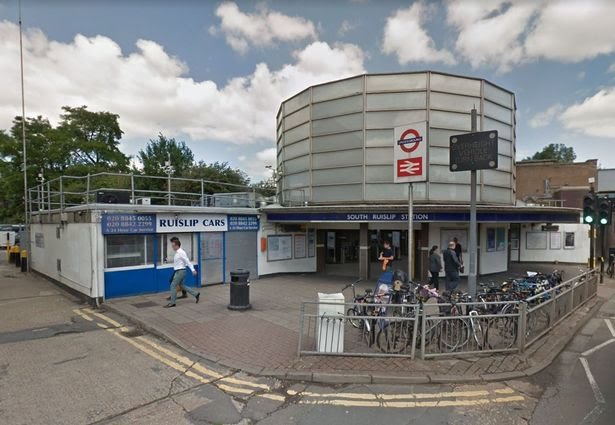
Only Marlborough Road still stands today, a fairly blank building on the corner of Finchley Road and Queen’s Grove. Now used as a power substation to support the newer S stock Metropolitan line trains, I think I preferred it in its previous guise as a Chinese restaurant.

Yes, Charing Cross is not technically one of the city’s abandoned Tube stations. Not all of it, at least. But like Aldwych, you’re likely to have seen the deserted parts of this one on the silver screen, so we just had to include it. The history of Charing Cross station is a tangled web which includes dalliances with Embankment station, the takeover of the Bakerloo’s Trafalgar Square station, and the takeover of a Northern line station known as Strand – which, just to make matters more murky, is not anything to do with Aldywch’s past life as Strand station. Blimey.
Charing Cross joined the Jubilee line in 1979, and acted as the southern terminus of the line until 1999. Plans were afoot to extend the line to Lewisham from an early stage, so Charing Cross was never intended as the final stop – indeed, the tunnels continue almost as far as Aldwych, which gives you an idea of where the route would have headed. However, as the Docklands and the East End began a regeneration in the 1980s, the decision was taken to reroute the line from Green Park (the stop before Charing Cross), and curve it south of the river to Waterloo, London Bridge, and back out towards Greenwich and Stratford.
This left Charing Cross’ Jubilee platforms out in the cold, but the station’s loss is our gain; since it’s been shuttered for only 20 years, the platforms are both modern and well-preserved, making it an excellent filming location. The likes of 28 Weeks Later, Skyfall, Creep, and Spooks have all been filmed down here, giving the place a nice job in the afterlife of an abandoned Tube station.

I think it’s clear from the sheer number of articles we’ve written about it that we’re quite fascinated with the Tube. How could you not, when there are doggos, dancers, trouserless riders, and even ghosts on the line? (We’ll ignore the strikes, delays, heat, and smells for now.) However, not every part of the Tube is equally successful, which is why some of the older bits of the network have fallen into disuse and ruin – giving rise to some downright spooky abandoned Tube stations.Some were showing their advancing age, some just weren’t necessary anymore, but all have a story behind them. Though some 40 Underground stations have been abandoned or relocated in their time, we’ve selected eleven that are still at least mostly standing, and sport the most interesting tales – all to uncover a little hidden history of the capital’s favourite transport network. They lie forgotten beneath our feet for now, but here’s a little peek inside…

Once part of the Great Northern Piccadilly and Brompton Railway – which gave rise to the modern Piccadilly line – Down Street station was closed in 1932, a mere twenty-five years after opening. Squashed quite closely between Hyde Park Corner and Dover Street (now known as Green Park), it suffered from low passenger numbers due to both the proximity of its neighbours, and the wealth of its local residents, who could afford more comfortable means of transport.

Down Street wasn’t out of action for too long, however; in 1939, it was earmarked for use during the war effort. Once the platforms were bricked up, it was home to the Railway Executive Committee, before playing host to Winston Churchill and his War Cabinet before the Cabinet War Rooms were built – Churchill was known to affectionately refer to it as “The Barn”. There was no further use for it after the war, which means Down Street has stood empty ever since – with a 2015 TfL call for commercial use proposals apparently going nowhere. Now, the London Transport Museum’s occasional Hidden London tours are the only way into the station.

Before there was the most pointless Tube journey in London, there was the Holborn to Aldwych branch – the OG of nonsensical Tube journeys. But first, some extremely confusing background!

Aldwych was opened as Strand station in 1907, and was a project of the Great Northern Piccadilly and Brompton Railway, which had itself grown out of the merger of the Great Northern and Strand Railway (mooted to run from Wood Green to Strand) and the Brompton and Piccadilly Circus Railway (which would run from Angel out past South Kensington). Their eventual marriage made it convenient to connect the two lines, by linking Piccadilly Circus and Holborn via Leicester Square and Covent Garden. Strand was therefore left stranded as the only station on a weird southern spur of the Piccadilly line, with plans to link it to Fleet Street and the City of London in 1903 being swiftly nixed.

The station was renamed as Aldwych in 1915, and somehow survived nearly another 80 years despite being almost wholly redundant. You’d have to change at Holborn and take a one-stop train just to get there, and with the station located almost on top of Temple station, it wasn’t as if the area was poorly served by the Tube. From 1958, it ran only during peak hours on weekdays, before being finally, mercifully put out of its misery in September 1994 – and then only because it was too expensive to replace the lifts. Really, by far its most important use during its working life was to house the Elgin Marbles, which were stored in the tunnels between Holborn and Aldwych during The Blitz.

Nowadays (yes, we’re not done yet), the Grade-II listed façade looks out over the Strand as a reminder of the station’s former use. Down on the tracks sits a 1972 Northern line train, which has been used along with the station for filming on productions including Sherlock, V for Vendetta, Fast & Furious 6, Atonement, and Darkest Hour. Unless you plan on being cast in something soon, Hidden London remains your best way to see it.

Frankly, this place was doomed from the start. It had been planned, designed, and executed under the name Castle Road to serve what is now the Northern line, but a few weeks before opening in 1907, the powers that be reversed their decision on the name – a costly volte-face which meant painting over the bespoke tiles they’d already installed. South Kentish Town was dogged by low passenger numbers from the very start, and as quickly as 1908, drivers began ignoring the need to stop there.

A power outage caused by a strike at Chelsea’s Lots Road Power Station in 1924 closed the station temporarily, but when the power came back on, the decision was taken not to bother reopening it. That’s about the most damning indictment of one’s usefulness imaginable, really. South Kentish Town is now home to tricky escape room Mission: Breakout, where you can puzzle out the mystery of a passenger who disappeared from the station in 1924. Knowing South Kentish Town as we do, someone probably just locked up and forgot about them…

Another station that was marked for closure early on, City Road opened in 1901 and weathered calls to shutter as early as 1908. Again, low passenger numbers were the killer, as its lack of use meant that the cost of upgrading the station and expanding the platforms couldn’t be justified. Its closure in 1922 explains, amongst other things, why there’s such an interminable gap between Angel and Old Street on the Northern line.
Though most of the station was demolished in the 1960s, the lift shaft stood standing until 2017, when it was torn down and replaced with an energy centre. There’s good news to come out of this, though, for the centre helps funnel the ungodly heat of the tunnels towards warming up homes in Islington – a nice legacy for a recent disappearance amongst our abandoned Tube stations.

Back on the Piccadilly line now, and as one door opens, another closes – for York Road shuttered on the same day in 1932 that the Finsbury Park to Arnos Grove section of the line opened. It was an inauspicious end to a typically gorgeous Leslie Green-designed station, which had opened in 1906. With Kings Cross being so close, passenger numbers plummeted, and rumours of the station’s closure circulated for years before it was finally shuttered.

It remains one of London’s most complete abandoned Tube stations, with the oxblood tiling remarkably well preserved – and there’s a slight chance we could yet see the rebirth of York Road. An empty stretch of town for a while, the area has now been transformed by the redevelopment of Coal Drops Yard, Granary Square, and Kings Cross in general. This has given rise to the possibility of reopening the station, although TfL remains sceptical, reportedly scared off by increasing journey times on the Piccadilly line.

Author: Elizabeth Young
Unmarried and thirty, Sophy is far less troubled about her situation than her mother is. To silence her mum’s lectures, she invents a boyfriend named Dominic – but it backfires when her sister gets married and she needs to find someone to fill the role.
Desperate, Sophy hires a handsome London escort. The lies quickly spiral out of control and she realises she’s actually quite fond of her pretend Dominic…but can she make it work with a man she’s hired as an escort?

Author: Clare Pooley
Julian Jessop doesn’t believe people are truly honest with each other, so he starts writing the truth of his own life in a journal he leaves in a local cafe. Soon, others are adding entries and lives are connected in strange and wonderful ways.

Author: Anna Maxted
When a young woman’s best friend “leaves her” to get married, she panics. This 2002 novel focuses on what she does next – and it’s chaos. Between the breakdown of her relationship, a totally unsuitable affair, and all manner of family drama, it’s a light, fun read for those who want to step back to the innocent days of early 2000s London.

Author: Madeleine Wickham
Madeleine Wickham is the pen name of Shopaholic author Sophie Kinsella, and she uses the name for books that feature ensemble casts and slightly darker or edgier themes than what you’d normally see in “chick lit” or traditional romcoms.
This particular novel follows three women and the secrets they share over monthly drinks – from secret lovers to the struggles of motherhood to ghosts from the past. If typical romcoms are just a little sweeter than you like, these books may be just the thing for you.

Author: Mhairi McFarlane
Anna Alessi is a thirtysomething history expert with a generally good adult life, but her childhood was full of bullying. When a man who once humiliated her shows up in her life, everything is turned upside down. She’s reminded of all those old feelings – but at the same time, James seems like a changed man. He’s polite, mature, and maybe just the slightest bit appealing. Can she trust him?

Author: Michele Gorman
When 26-year-old American Hannah moved to London on a whim, she was hit by major culture shock before she even got over her jet lag. Now, she has to figure out how to find a job, make friends, meet men, and actually build the life she wants.

Author: Elizabeth Grey
Violet Archer has a glamorous job at a London ad agency and a cute co-worker who makes every day a little bit better. Unfortunately, one crazy night out leaves all the great things in her life in jeopardy – plus, Violet begins to realise she has actual feelings for her co-worker.
This is the first book in a series set in London, and if you’re not a fan of swearing and a bit of sex, you may want to avoid this one.
When we think about British rom com novels (aka chick lit), Helen Fielding’s Bridget Jones’s Diary is generally held up as the gold standard. Aside from being enormously popular as books, they were also made into a series of films starring Renée Zellweger, Colin Firth, and Hugh Grant.
Not too far behind, we find Sophie Kinsella’s Shopaholic series. Though not quite as successful and timeless as the Bridget Jones series, it was made into a film starring Isla Fisher and Hugh Dancy.
What a lot of people don’t realise, though, is that the world of British rom coms is remarkably deep, with all sorts of books to choose from. In this post, we’ll specifically limit ourselves to those romantic comedy novels set in London. So – if you’re looking for a great, light-hearted novel about love in London, keep reading.

Author: Josie Silver
Laurie is sure love at first sight doesn’t exist – until it does. One snowy December day in London, she spots the man she’s sure is the one. Sadly, the bus drives off and he’s lost to her. After a year of scanning every inch of London for him, they reunite at a party when she’s introduced as her best friend’s boyfriend.

Author: Rachel Winters
Evie Summers is tasked with getting screenwriter Ezra Chester to complete a contactually-obligated romcom for her company. Unfortunately, he’s decided romcoms are totally unrealistic, and he refuses to put pen to page until she proves it’s possible to meet a man like they do on screen.Now, she’s desperately wandering London in an effort to set up her own meet cutes – spilling orange juice on strangers and leaving her number in books all over the city.

Author: Alexandra Potter
We all have advice we’d love to give our younger selves – much of it involving hairstyles and fashion choices – but in this book, Charlotte Merryweather doesn’t have to imagine. She’s given the opportunity to turn back the clock.

Author: Carole Matthews
Four London women share a passion for chocolate, and whenever times get tough, they meet at a cafe called Chocolate Heaven to help each other out – whether it’s a cheating boyfriend, a flirtatious boss, or a gambling husband. The women are all very different, but they share a love of chocolate and each other, supporting one another through the best and worst of times.

Author: Christine Riccio
Eager for a change, Shane signs up for a semester abroad in London to help undo some of her university mistakes. A new life outside her comfortable bubble won’t come easy – but with a bit of luck, it will be worth it.This one may appeal more to younger readers, as the character is quite young and there’s a definite feeling of immaturity throughout.

Author: Hester Browne
For all her talents and social skills, Melissa can’t seem to find love. After she loses yet another job, she decides to market herself to single men who need help shopping, entertaining, and navigating social situations.Since her father is an MP and she doesn’t want to embarrass him, she assumes the identity of Honey, wearing a blonde wig to help her clients. Before too long, one man in particular has become a repeat customer – and her identities are in danger of blurring.

Author: Jane Green
As director of a magazine, Vicky’s glamorous London life seems perfect. Still, she longs for the comfort and security of a husband, kids, and a house in the country. Across the pond, Amber has a lovely Connecticut home, two kids, and a nanny – but she occasionally longs for a bit more excitement.
When the two decide to swap lives, they find the grass isn’t always greener.

A view of Tower Bridge (1894) on the River Thames from The Tower of London, founded in 1066 as part of the Norman Conquest of England.