Ten Interesting Facts about Rowan Atkinson

In the pantheon of British comedy legends alongside the likes of Peter Cook, Dudley Moore, Peter Sellers, and the Monty Python troop is Rowan Atkinson.  For years, Atkinson has perfected various forms of comedy, from the slapstick of Mr. Bean to the sardonic wit of Blackadder.  He’s also had quite a prolific turn at standup with several TV specials from the Secret Policeman’s Ball to Rowan Atkinson Live!  Having entered showbusiness in 1978, 2023 marks the 45th year Atkinson’s illustrious career with no sign of slowing down.  If you have a favorite Atkinson show, film, or special, you can share that with us in the comments after you read these ten interesting facts.
Petrol Head

For a man who’s known for being rather goofy, you could forgive yourself for not knowing that Rowan Atkinson is a huge car fanatic.  Not only has he had a fabulously impressive car collection, but he has also written for CAR Magazine and posted the second-highest lap time for the “Star in a Reasonably-Priced Car” segment when he appeared on Top Gear.  What’s more, he has a commercial driver’s license, which he gained while a young actor to ensure some form of employment.

No Comment

Rowan Atkinson doesn’t give many interviews, in part due to a slight stammering problem that he lived with for years.  Performing comes much more naturally to him than extemporaneous speaking.

Take It for a Drive

Such is Atkinson’s fandom for cars that during the filming of Johnny English Reborn, he pulled some strings and got to borrow the Rolls Royce Phantom used as his character’s car in the movie.  Atkinson used his own Aston Martin for the first Johnny English film. 

Starring

Rather fittingly as the title character, Rowan Atkinson is the only actor to appear in every episode of Blackadder.  Tony Robinson, who plays Baldrick, does not appear in the pilot.  Atkinson, Robinson, and Tim McInnerny are the only three actors to appear in every series. 

Friends in High Places

Rowan Atkinson is a frequent guest at Royal Family events, from weddings to parties.  It certainly helps that he has a very influential friend in King Charles III.  His humor has been littered with soft jabs at the monarchy for decades, but he has explained that he does it out of love and wouldn’t want his work to be seen as discrediting the Royals. 

Classmates

Rowan Atkinson attended Cathedral Chorister School in Durham at the same time as former Prime Minister Tony Blair, who was two years above Rowan. 

Actually, I am Him

While some actors might shy away from their best-known roles to cite their long body of work, Atkinson has been on record saying that Mr. Bean is his favorite character.  In a 2022 interview, Atkinson said of Bean that “he’s the furthest away from my own character.”  In addition to his own show, cartoon show, and web series, Atkinson has made numerous appearances on shows around the world in character.  He’s also done a safety video for British Airways and appeared as Mr. Bean in the opening ceremony of the 2012 London Olympics. 

No Pressure

Mr. Bean was conceived when Atkinson had to come up with five-minute act on stage during his first term at Oxford.  He had only 48 hours to develop the material, so he stood in front of a mirror making faces at himself until inspiration struck. 

A Wise Guy, Eh?

Rowan Atkinson studied Electrical and Electronic Engineering at Newcastle University, then went onto earn his masters at Oxford University.  His masters thesis involved self-tuning control systems.  Atkinson would have continued his studies by pursuing a doctorate, but opted to go into acting after a command performance as part of the Oxford Revue at the Edinburgh Fringe Festival. 

Never Stop Never Stopping

Rowan Atkinson nearly gave up on Blackadder after the first series.  He wasn’t terribly thrilled at how it worked out and Michael Grade, then Controller of the BBC, wasn’t a fan either.  However, writer Richard Curtis convinced Atkinson and Grade to stick with it and the show became a huge success starting in its second series. 
Paul McCartney announces an AI-assisted final Beatles song

In 1995, The surviving members of The Beatles got back together just long enough to work on The Beatles Anthology. The miniseries had a set of three two-disc albums’ worth of alternates, outtakes, and two new songs. The first two volumes started off with one of John’s unreleased piano demos, which Paul, George, and Ringo would turn into a full-blown song. The first volume had “Free as a Bird.”

The Second volume had “Real Love.”

But there was no new song to kick off the last volume. Reportedly, the song they had in mind, “Now and Then,” had some serious issues that made it impossible to finish. And according to Jeff Lynne, “The song had a chorus but is almost totally lacking in verses. We did the backing track, a rough go that we really didn’t finish.” Here’s the original demo. Or at least what I think is the original demo.

But now it looks like it might be finished after all.

The New Recordings

I’ve mentioned before about how miraculous the Beatles: Get Back miniseries was. Peter Jackson brought material few believed would ever be officially released back to the public, obliterated the traditional narrative behind the sessions, and even created some new revelations even for this lifelong fan. He even restored the 50-year-old footage and sound engineer Emile de la Rey used AI to isolate the ancient tape recordings, which impressed Macca enough that he decided to use it to get the band back together just one more time. 

In a recent Radio 4 interview, Paul said “We had John’s voice and a piano and he could separate them with AI. They tell the machine, ‘That’s the voice. This is a guitar. Lose the guitar.’ So when we came to make what will be the last Beatles’ record, it was a demo that John had [and] we were able to take John’s voice and get it pure through this AI. Then we can mix the record, as you would normally do. So it gives you some sort of leeway. We just finished it up and it’ll be released this year.”

Admittedly, Paul has yet to confirm exactly which song he’s using, but circumstantial evidence seems to heavily imply that it is “Now and Then.” Of course, they tried to finish the song in 1995, but circumstances, from the technical problems Jeff Lynne mentioned, as well as George allegedly not liking the recording, prevented its release. Hopefully, Olivia Harrison will allow Paul and Ringo to use George’s recordings from the original sessions, or maybe engage in some Xenochrony.

The Future?

Though, despite this helpful use of AI, Paul McCartney has some misgivings about the technology, with him saying ““I’m not on the internet that much [but] people will say to me, ‘Oh, yeah, there’s a track where John’s singing one of my songs’, and it’s just AI, you know? It’s kind of scary but exciting, because it’s the future. We’ll just have to see where that leads.” At least it helped with his recent performances of “I’ve Got a Feeling.”

And talking about the future and AI, I’m reminded of something. Black Mirror Series Six is dropping on Thursday, and I plan to cover it soon. Here’s hoping I have it all down in time to cover both that and Glasto.

Chuffed to Bits: Most Loved British Slang Terms Revealed in New Study

Slang reveals much about a country’s ever-evolving culture and language. And this rings true in the UK where slang makes up a large part of the vocabulary. Britain’s most loved and hated slang has been revealed in a new study. Details below.

With dozens of British slang being used today, how does the world feel about them?

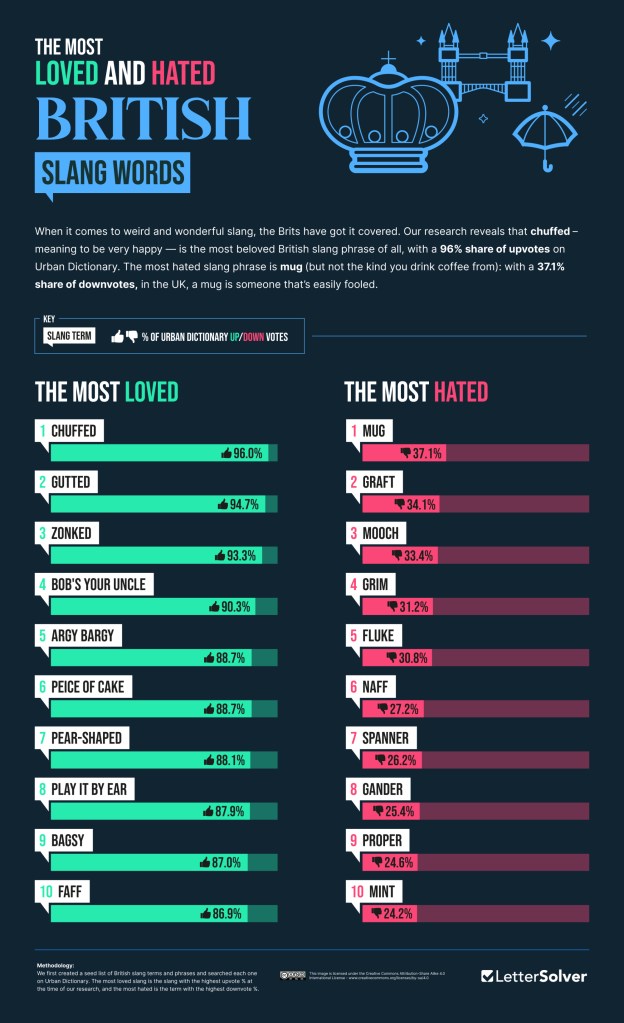
To find out, word experts at Letter Solver turned to Urban Dictionary to determine the most loved and hated British slang based on user votes.

The study found that ‘chuffed‘ is the most loved relationship slang of all, while ‘mug‘ is the most disliked term. Check out the graphic they sent us below:

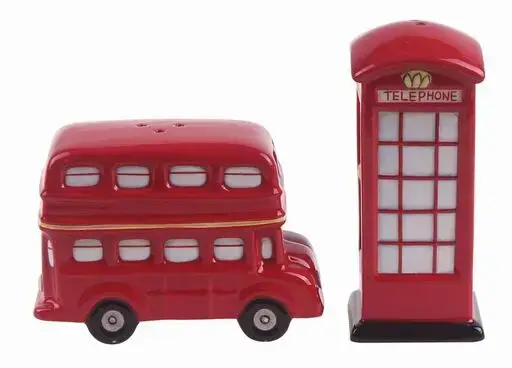
NEW PRODUCT – London Red Bus and Phone Box Collectable Ceramic Salt and Pepper Set

These exclusive collectable ceramic salt and pepper shakers are a must-have for any lover of London’s iconic landmarks. The set features a red London bus shaker and a London red phone box shaker, both of which are beautifully crafted and painted with intricate details. The bus shaker is perfect for seasoning your favorite meals with a dash of salt while the phone box shaker is ideal for adding a touch of pepper. These shakers are not only functional but also decorative and will add a touch of London charm to any dining table or kitchen counter. They make a perfect gift for anyone who loves London or British culture.

Ten Interesting Facts about Eastenders

The other major soap opera in the United Kingdom, Eastenders, is set in the fictional borough of Walford in East London. Though not as long-running as other soap operas, Eastenders is probably the third-longest British soap opera since it began in 1985 and was created by the BBC as its answer to both Coronation Street and Emmerdale at ITV. With its own colorful cast of city characters, the show has largely focused on several groups of families, including the Beales, Brannings, Mitchells, Slaters, and Watts. This long history and large cast mean that there have been plenty of drama over the last thirty-eight years, producing plenty of interesting facts.

Watered Down Drinks

While the Rovers’ drinks are intentionally weak for the actors, they are at least somewhat the real thing. Eastenders’ Queen Vic, on the other hand, uses water for vodka, water with burnt sugar for whiskey, and watered-down apple juice for white wine. However, the QV has it over on Coronation Street in that the beer pulls are functional, serving up actual ale. Post-lockdown, the show added a beer garden to the famous fictional pub as it keeps up with the times.

Scene of the Crime

The outside of the Queen Vic has seen more murders than the rest of the fictional borough over the show’s history. Might not want to stay out after closing time.

Bargain Wardrobe

Dot Cotton’s clothes on the show were mostly from charity shops. Her character also famously wears the same dress every Christmas and said dress is quite possibly the oldest piece of clothing on the show.

The Oner

Dot Cotton is also the first character on the show to have an entire episode to herself. The episode “Pretty Baby” aired in 2008 and featured Dot recording a voice message for her husband who is in the hospital recovering from a stroke. Actress June Brown was nominated for a BAFTA for Best Actress for the episode, the first time a soap opera actress was nominated since 1988.

Expensive Taste

In contrast to Dot’s spendthrift attire, Peggy Mitchell has one of the more expensive wardrobes of any Eastenders character. This is arguably due to the fact that actress Barbara Windsor had a lot to say in what Peggy wore each episode.

The Real Places

Eastenders is based on the experiences of the show’s creators, Julia Smith and Tony Holland, who grew up in East London. The name “Walford” is a portmanteau of “Walthamstow” and “Stratford” where they were born, respectively. As such, many places from the show are based on real-life parts of East London. Albert Square, for example, was based upon Fassett Square in the Dalston area of Hackney.

Carrying the Torch

As part of the leadup to the 2012 Summer Olympics in London, the Olympic torch actually went through Walford. It was carried by the character Billy Mitchell (actor Perry Fenwick) as an official torch bearer. Roughly seven minutes of live footage of Billy running with the torch was used for the episode.

We’re Live!

The Olympics episode isn’t the only time the show has ever gone live. In 2010, “Eastenders Live” was broadcast as a 25th Anniversary special. The filming of the episode involved fifty-one different characters who were part of the cast.

Theme Music

Pat Butcher and Peggy Mitchell are the only two characters in the show to have their own theme music. It makes sense, considering what utter pillars of the fictional community they are.

Don’t Use My Real Name

Much like filmmakers will use “Alan Smithee” to distance themselves from terrible works, Eastenders as “Julia Honour”. The idea for the name is that a script is so horrendously bad that it necessitates a complete rewrite to protect “Julia’s honour”. This happened roughly 54 times between 1998 and 2018.

TEN INTERESTING FACTS ABOUT CORONATION STREET

Running for over sixty-three years, Coronation Street is the longest-running soap opera show in British television history. The show takes place in the fictional Manchester suburb of Weatherfield, which was based on the real-life community of Salford. Featuring a number of down-to-Earth people using local accents instead of the “Queen’s English” (or Received Pronunciation), the show was a hit with viewers shortly after it debuted and remains a ratings juggernaut today. Granada Television produced the show for the first forty-six years of its run before they were succeeded by ITV, the network on which the soap opera airs. Such a long-running program is full of fascinating facts that we look forward to sharing with you.

BIG BIG NUMBERS

Owing to its long-running status, Coronation Street has aired over 10,000 episodes since it premiered.

IF I FITS, I SITS

Coronation Street has re-filmed its opening titles several times over its history. Starting in the mid-1970s, no one noticed a cat curled on top of the roof. No one except producer Bill Podmore, who insisted that any future titles also include a cat on the roof.

GUEST STARRING

It’s not unusual for shows such as Coronation Street to play hosts to a number of famous guest stars, though rarely do the celebrities get to appear as themselves. Some notable exceptions have been This Morning hosts Philip Schofield and Holly Willoughby, the band Status Quo, and King Charles III (HRH having appeared on the show’s 40th anniversary when he was still Prince of Wales.

UPSTAGED

One might be willing to believe that King Charles’s walk-on role was his most-watched television appearance. By contrast, his wedding to Queen Consort Camilla had about 13 million viewers in the United Kingdom, while an episode of Coronation Street airing later in the day got 17 million viewers to see character Ken Barlow remarry his ex-wife Deidre Rachid.

555-5555?

A 2010 episode’s story required male escort Archie’s ad to appear in “The Lady” magazine. ITV actually got a few angry calls because the contact information in the ad was fake.

PULLING PINTS

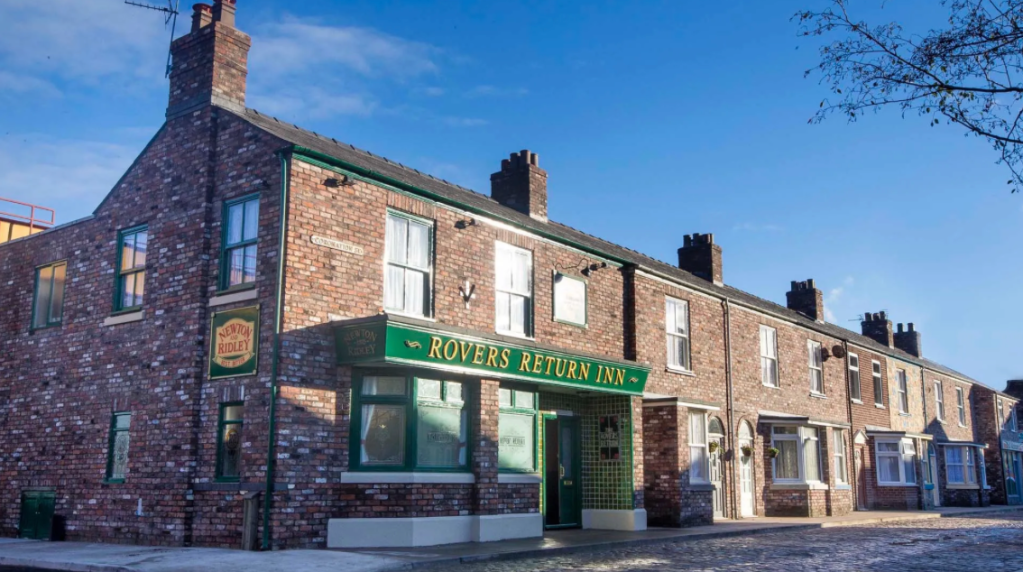
The Rovers Return Inn is quite possibly the most popular location on the show and where a bulk of the action happens. Naturally, there are a lot of drinks slung, and crisps served on a regular basis. Annually, the pub serves roughly 1,440 pints, 100 gin and tonics, 84 hotpots, and 2,500 bags of crisps. Unfortunately (or maybe fortunately) for the actors, the pints are often a watered-down shandy, and the gin and tonics are little more than fizzy water and lime.

MONKEYS ON TYPEWRITERS

The show has eighteen writers in total. Every three weeks, they meet up for two days to hash out plot details and write stories. They produce fifteen scripts total (five episodes per week for three weeks), and each writer gets to contribute to an episode.

THEY LIVE ON IN OUR HEARTS (AND ON OUR SCREENS)

Nearly a dozen actors have died during the show’s run. Their characters were often written out either at the time of the actor’s death or later in the show’s run. Perhaps the most prominent loss was Rovers Return Inn landlady Betty Williams, played until her death at 91 by Betty Driver. Shortly after Driver’s/Williams’s passing, a picture of her was placed in the pub and remains there today.

ANOTHER REAL-LIFE TRIBUTE

Roy Cropper, the owner of Roy’s Rolls, is hardly ever seen without his shopping bag. The bag itself came from Roy’s actor, David Neilson, who began carrying it around in-character as the bag had belonged to his late mother.

THE SHOW’S GETTING A WIDER AUDIENCE

Coronation Street went from 4:3 aspect ratio to widescreen in 2002, which caused a bit of a technical problem. The increased size of the screen meant the show had to CGI in some more houses for the neighborhood before the opening titles were reshot. The program went high definition in 2010.

POLL REVEALS 100 GREATEST CHILDREN’S BOOKS EVER INCLUDING MATILDA AND THE HOBBIT

Where The Wild Things Are has topped a poll of the 100 greatest children’s books, with classics including Matilda, The Hobbit and Alice’s Adventures In Wonderland also making the list.

Maurice Sendak’s beloved story about a little boy called Max, who visits an island inhabited by monsters, simply called the Wild Things, came top in a poll run by BBC Culture, which asked children’s authors, illustrators, publishers, academics and people from across the world to vote for their top 10 favourite children’s books from a selection of more than 1,000.

Lewis Carroll’s Alice’s Adventures In Wonderland came second, while Astrid Lindgren’s book Pippi Longstocking placed third.

Joining these books were The Little Prince by Antoine de Saint-Exupery, which came fourth, and JRR Tolkien’s book The Hobbit, which came fifth.

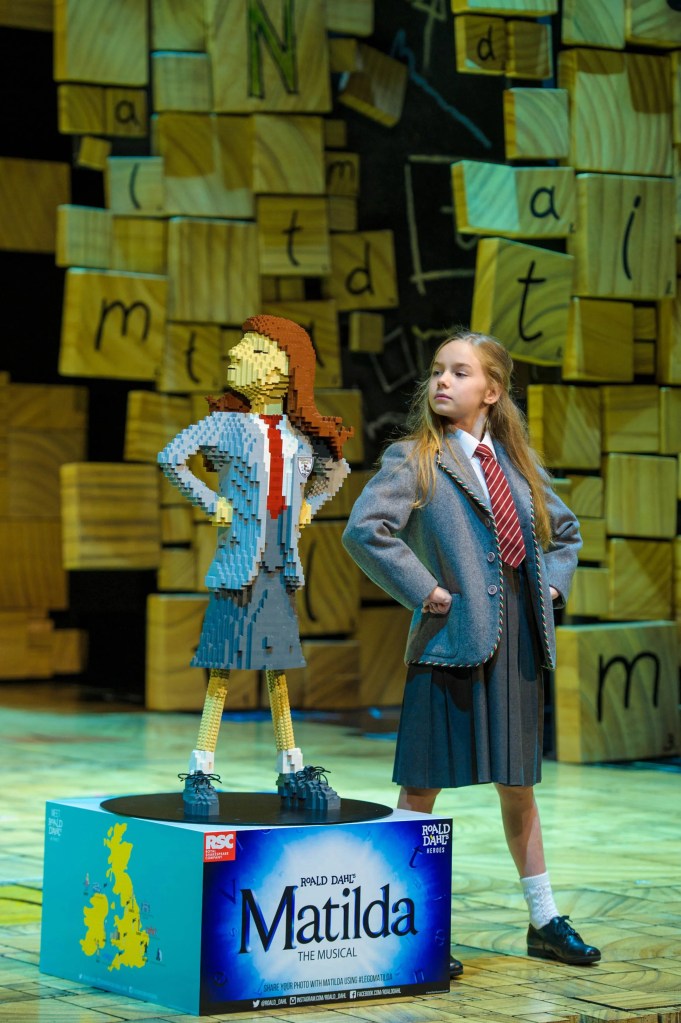
The Royal Shakespeare Company staging Matilda The Musical (Anthony Upton/PA)

Northern Lights by Philip Pullman was in sixth place and was followed by The Lion, The Witch And The Wardrobe, from CS Lewis’s series The Chronicles Of Narnia.

Author AA Milne and illustrator EH Shepard were famous for bringing Winnie-The-Pooh into the world, and their beloved storybook came eighth in the poll, while Charlotte’s Web, by EB White and illustrator Garth Williams, placed ninth.

Matilda was judged to be the tenth best children’s book of all time, with six other Roald Dahl books featuring in the top 100 list.

Other books in the top 100 include The Snowman by Raymond Briggs, The Lord Of The Rings by JRR Tolkien and Harry Potter And The Philosopher’s Stone by JK Rowling.

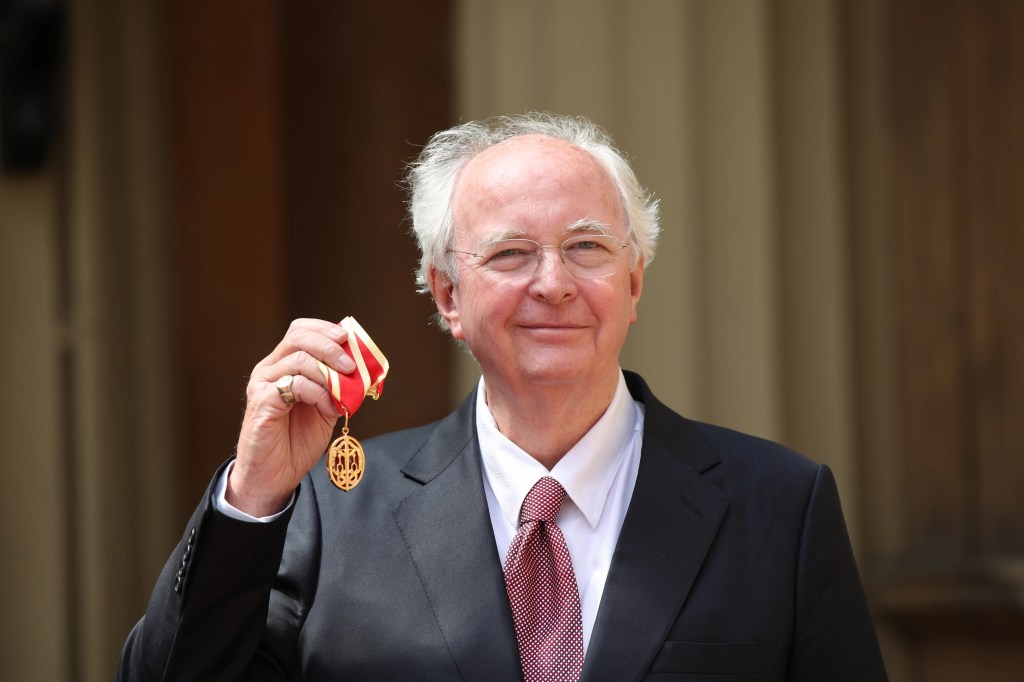
Author Philip Pullman with his knighthood (Yui Mok/PA)

Pullman was the highest ranking living author on the list and said that he was “delighted” at the results of the poll.

“It has taken me completely by surprise, and I’m not entirely sure I can find the words to respond to it,” he said.

“Children’s books are important because we still think about them when we’re grown up, because they have an effect on our way of seeing the world and our way of thinking about other people.

“They provide us with models of bad behaviour and good behaviour.

“People who we would like to have as friends behaving generously, being kindly, being brave, in difficult circumstances.

“That’s why they’re important to grown-ups as well as to children, and that’s why the best grown-up books are important, for the same sorts of reasons I think.”

Elle McNicoll, author of A Kind Of Spark, which was number 75 on the list, said: “It’s so astounding to see A Kind Of Spark on this list.

“It’s been the highest joy and relief to see so many children, especially children on the margins, falling in love with Addie and her story, but to be recognised in this way is truly incredible.

“Proud to be the youngest as well. I hope I haven’t peaked.”

The poll respondents came from 56 different countries and voted for books that had been written in English, Arabic, German, Danish, Korean, Sanskrit, Uzbek and a variety of other languages.

BBC Culture has run similar polls before, including a poll of the 100 greatest TV series of the 21st century, which was judged to be The Wire, followed by Mad Men and then Breaking Bad.

The top 10 children’s books from the list:

1. Where The Wild Things Are (Maurice Sendak, 1963)

2. Alice’s Adventures In Wonderland (Lewis Carroll, 1865)

3. Pippi Longstocking (Astrid Lindgren, 1945)

4. The Little Prince (Antoine de Saint-Exupery, 1943)

5. The Hobbit (JRR Tolkien, 1937)

6. Northern Lights (Philip Pullman, 1995)

7. The Lion, The Witch And The Wardrobe (CS Lewis, 1950)

8. Winnie-The-Pooh (AA Milne and EH Shepard, 1926)

9. Charlotte’s Web (EB White and Garth Williams, 1952)

10. Matilda (Roald Dahl and Quentin Blake, 1988)

SHORTLIST ANNOUNCED FOR ART FUND MUSEUM OF THE YEAR

Five institutions from across the UK engaged in “vital issues of today” have been shortlisted for the £120,000 Museum Of The Year prize.

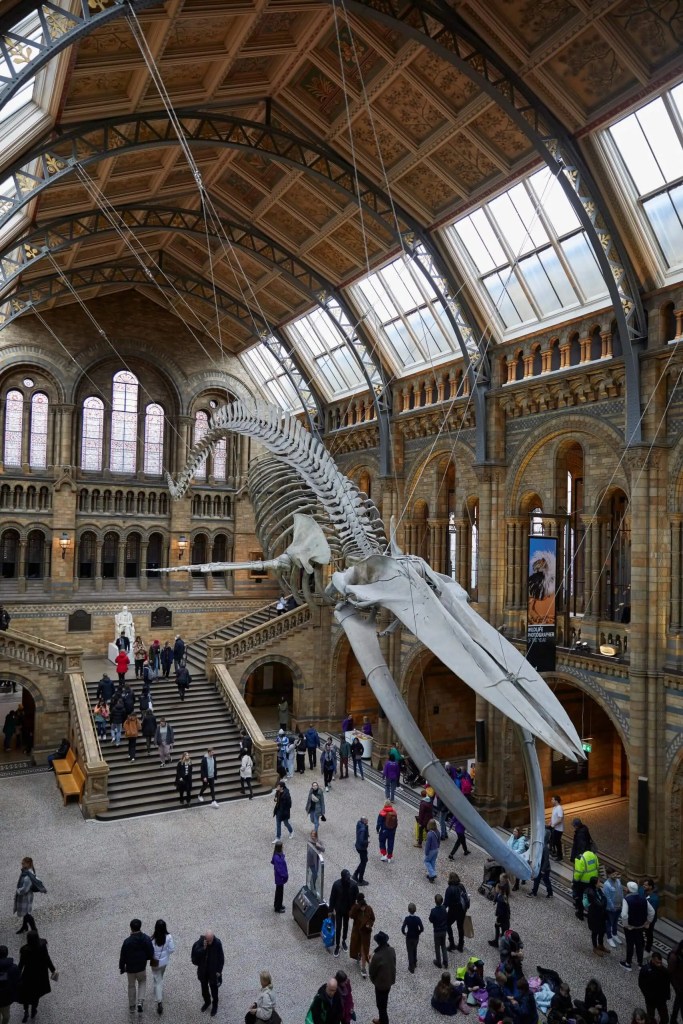
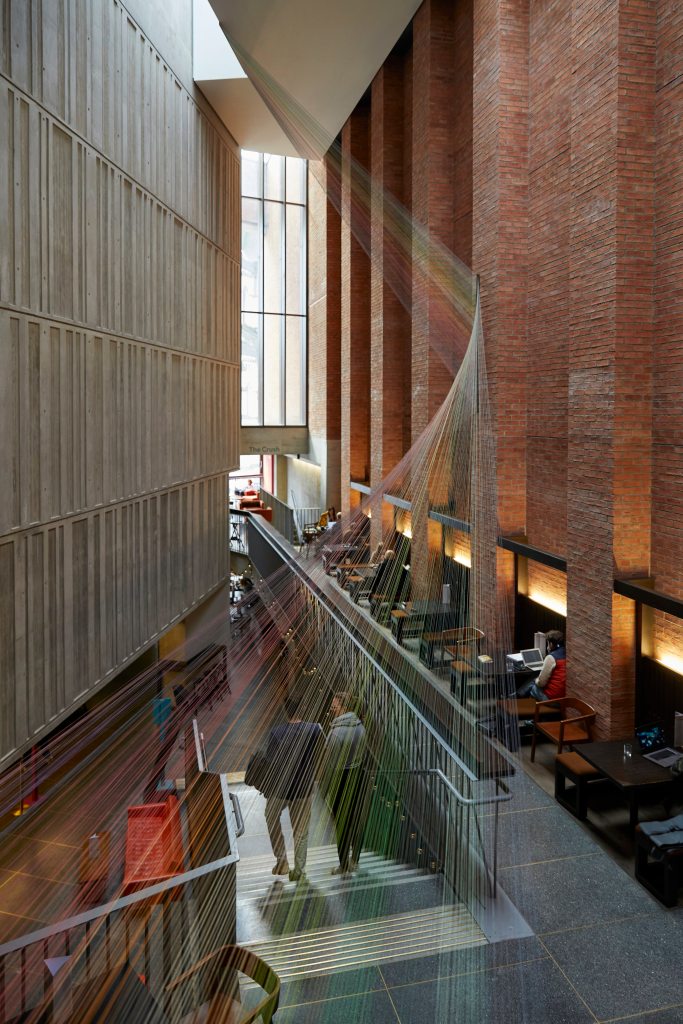
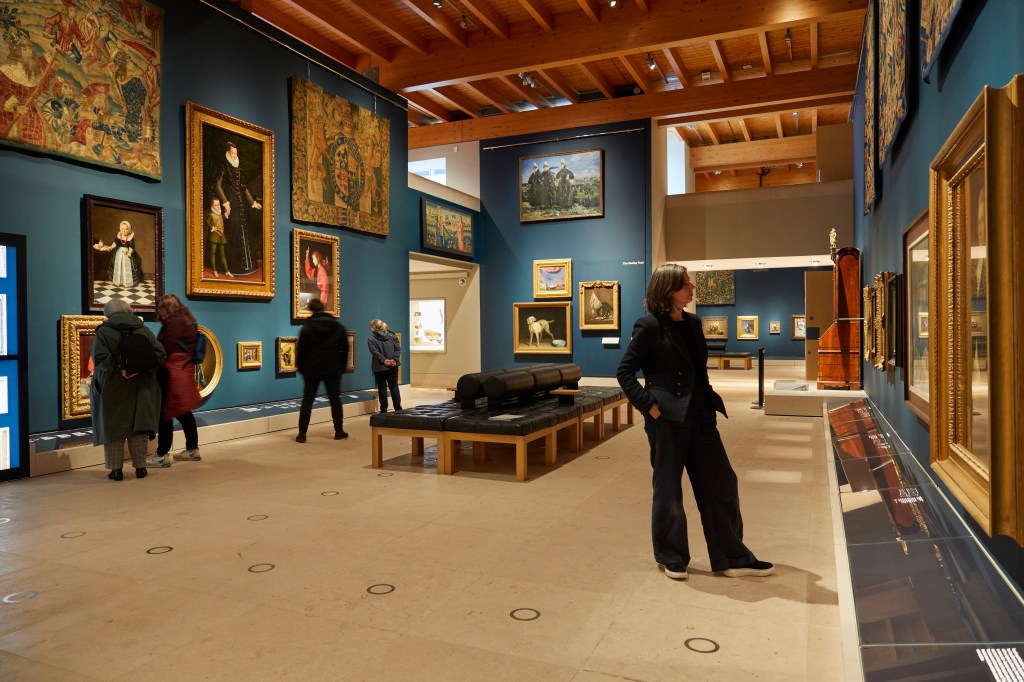
The Natural History Museum in London, The Metropolitan Arts Centre (MAC) in Belfast and Glasgow’s The Burrell Collection are among those competing in the 10th year of the world’s largest museum prize.

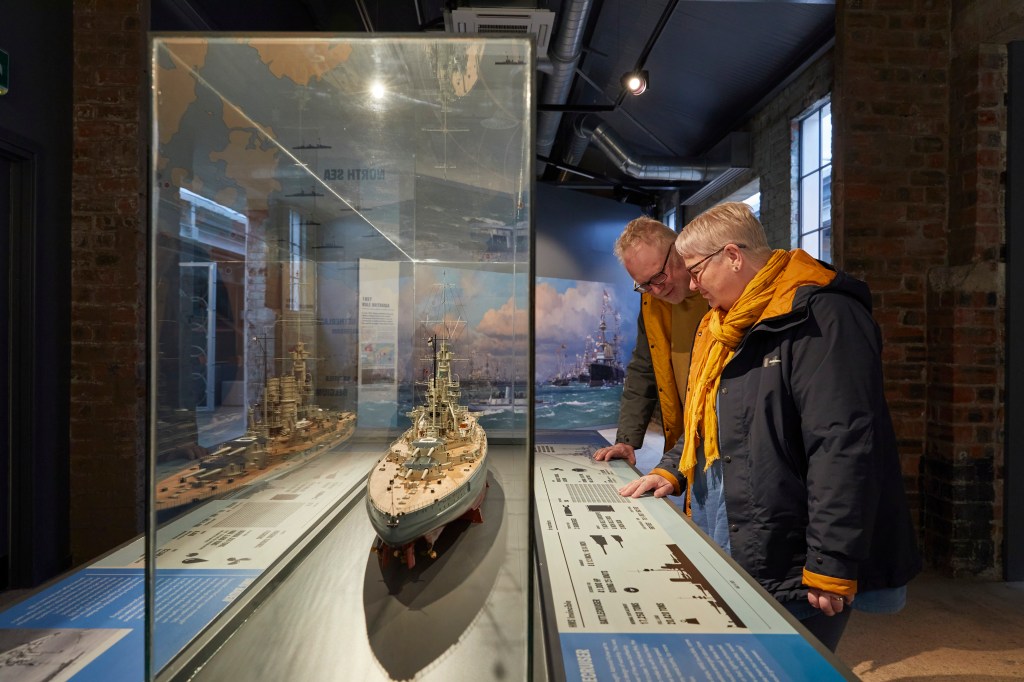
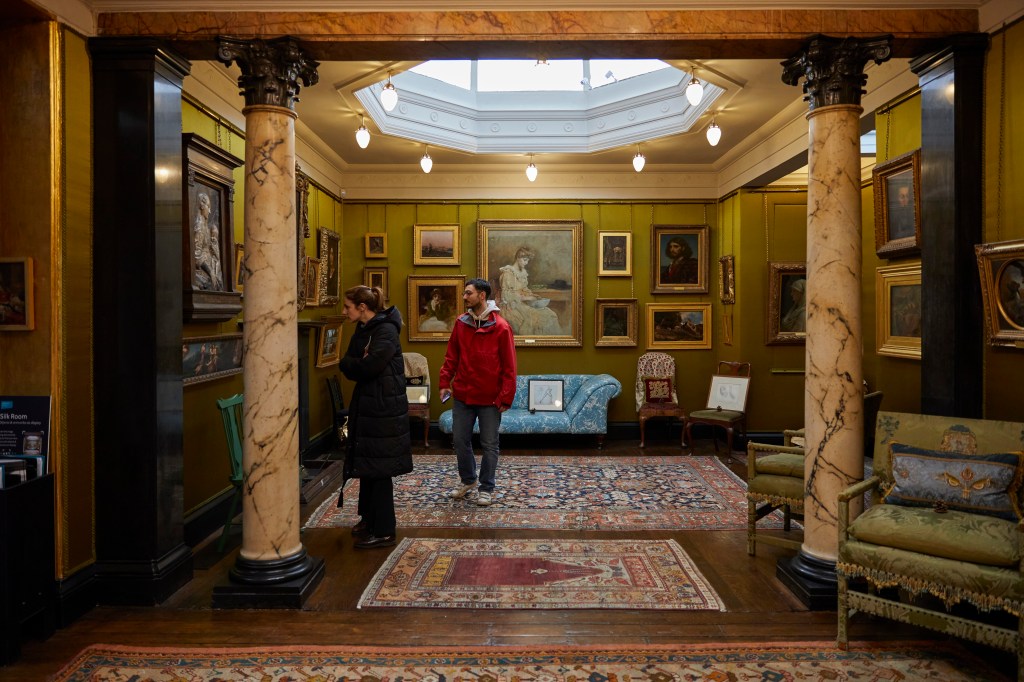
Scapa Flow Museum in Orkney and Leighton House in London complete the list of finalists for the Art Fund award, which celebrates the resilience, creativity and imagination of UK museums.

Leighton House (Janie Airey/Art Fund/PA)

Organisers said the nominees “demonstrate transformational impact, redeveloping their offers with diverse and inspiring stories at their heart and responding to vital issues of today”.

The Natural History Museum is known for showcasing some of the country’s best collections of science and nature, while The MAC homes evolving exhibitions and theatre performances.

The Scapa Flow Museum tells the story of the area’s role during the two world wars – and Leighton House is the former home and studio of the leading Victorian artist Lord Frederic Leighton.

Scapa Flow Museum (Janie Airey/Art Fund/PA)

The Burrell Collection also holds the art collection of Sir William Burrell and his wife Lady Constance.

Speaking on behalf of the judges, Jenny Waldman, the director of the Art Fund, said: “The five Art Fund Museum of the Year 2023 finalists are at the top of their game, offering inspirational collections and programmes for their communities, for visitors from across the UK and around the world.

“From transformational redevelopment to community involvement to addressing the major issues of today, the shortlisted museums may operate at very different scales, but all show astonishing ambition and boundless creativity.

“Each is a blueprint for future innovation in museums. Visit them if you possibly can.”

The Burrell Collection (Janie Airey/Art Fund/PA)

Alongside Ms Waldman, the panel also includes artist Larry Achiampong, historian and broadcaster Dame Mary Beard, author Abadesi Osunsade, and Laura Pye, the director of National Museums Liverpool.

The judges will visit each of the finalists to inform their decision-making, while each museum will make the most of being shortlisted over the summer through events and activities for new and current visitors.

2023 marks 10 years of the prize, which is grounded in 50 years of championing the UK’s 2,500 museums, galleries and heritage sites.

Leighton House (Janie Airey/Art Fund/PA)

This year the prize fund has been increased by £20,000 from the past £100,000 amount to mark 120 years of the Art Fund supporting museums.

The other nominees will each be given £15,000.

The winning museum will be announced at a ceremony at the British Museum in London on July 12.

Last year, The Horniman Museum and Gardens in London was crowned museum of the year.

PRINCESS OF WALES PRAISES MENTAL HEALTH CHARITY’S ‘INSPIRATIONAL’ ANXIETY TOOLKIT

The Princess of Wales has praised as inspirational a new “anxiety toolkit” developed by a leading mental health charity after collaborating with schoolchildren.

Kate visited the Anna Freud Centre to learn about the project, launched on Thursday by the research and development organisation, and meet some of the children who helped develop the initiative.

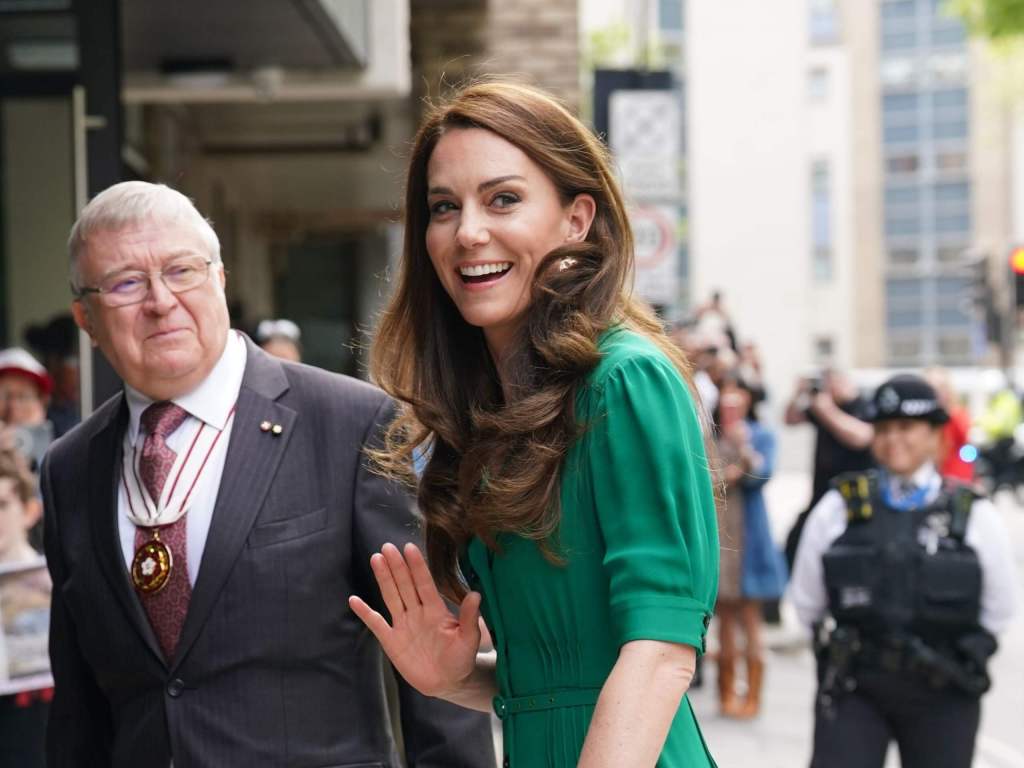
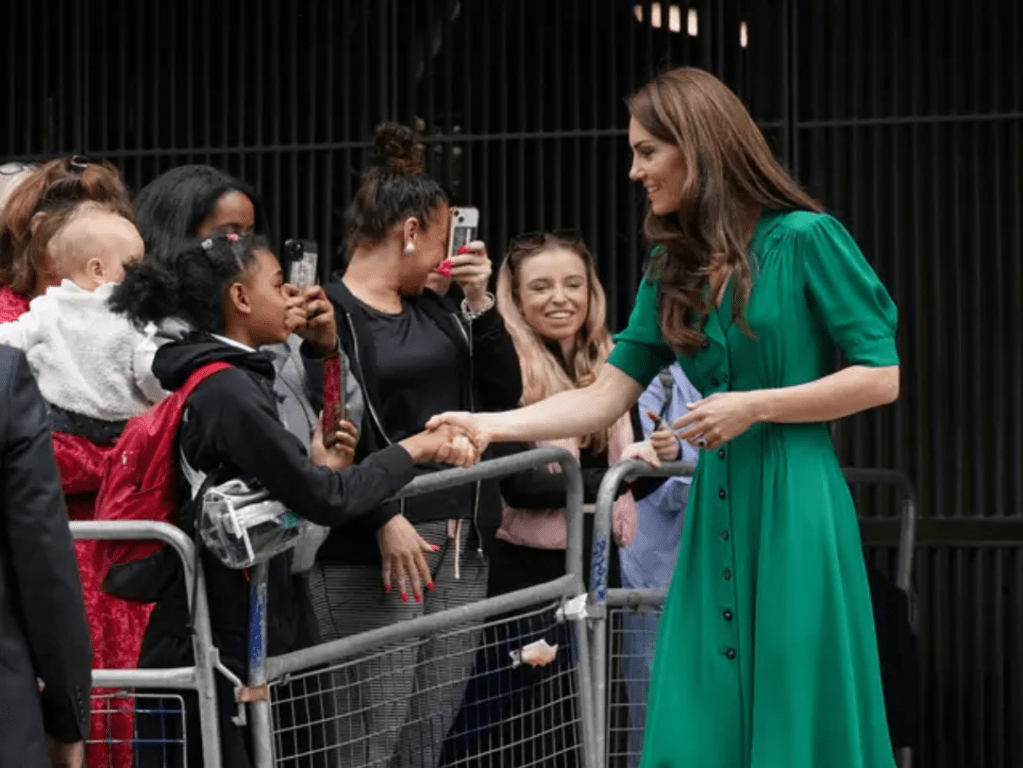
She wore a green Suzannah tea dress after the Mental Health Foundation encouraged people to dress in clothes of the same colour on Thursday to raise awareness about mental wellbeing, as the date fell within Mental Health Awareness Week.

When the princess went on a brief walkabout after leaving the institution, based in central London, she met a group of children and their parents outside and told them: “I’m leaving feeling inspired – I’ve learned lots from young people.”

The princess then sat down with pupils from St Richard’s Catholic College, Bexhill on Sea, and was shown a range of activity cards that provide practical advice to youngsters who may be affected by issues like anxiety.

The children helped to develop Anna Freud’s “let’s talk about anxiety” new animation and teacher toolkit, which typifies the charity’s vision to empower young people with the knowledge, confidence and skills to manage their mental wellbeing.

The Princess of Wales spoke to young people during a visit to the Anna Freud Centre

When one of the pupils mentioned her interest in sport, Kate replied: “So much in sport is mental as well as the physical skills and abilities, to have these sort of skills and these sorts of things in your toolbox will really help you, probably not just in school but home life and school life and other things as well.”

Kate also joined a series of round table discussions with health professionals and academics from Anna Freud, which Kate supports as patron, and those from the wider community with experience of mental health.

The Princess of Wales met with schoolchildren to talk about mental wellbeing and spoke of the importance of sport

Among the group was Tom Chapman, a Torquay-based barber who founded the Lion’s Barber Collective in 2015, a group of international barbers who raise awareness about mental health and provide training for barbers to engage with customers at a low ebb.

He said after the visit: “I found out recently, it seems 2% of people who end their life have had no contact with mental health services in the 12 months before they died.

“I think that they’ve probably had a haircut or beauty treatment or gone to the pub – it’s about providing as many opportunities as possible for these conversations and interventions to happen.”

SIR WALTER SCOTT’S DESK SEAL EXPECTED TO FETCH UP TO £18,000 AT AUCTION

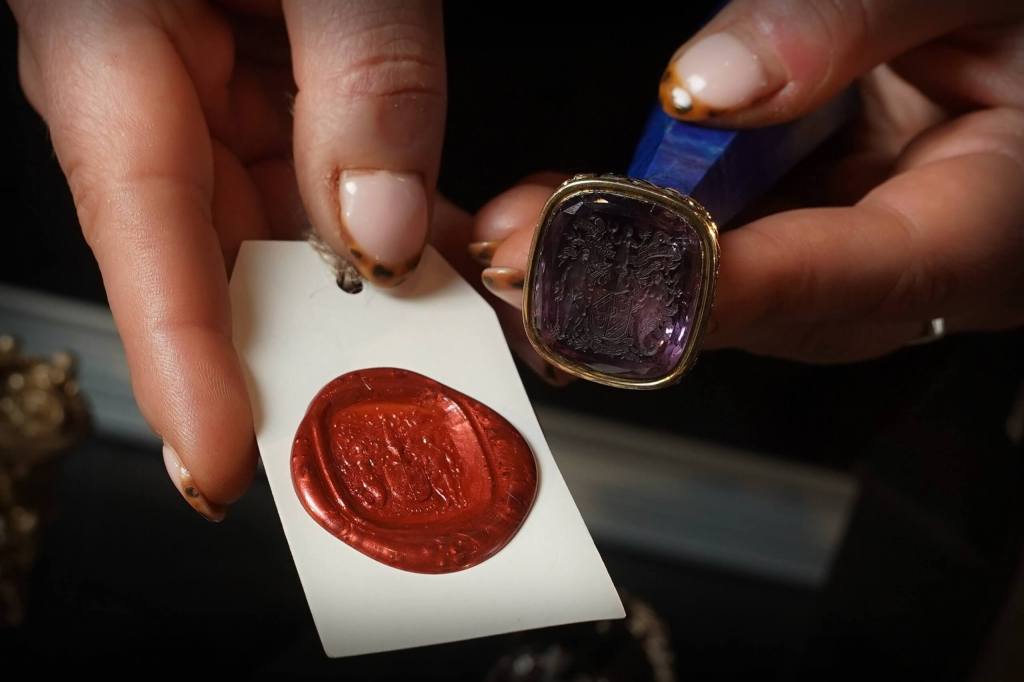
Sir Walter Scott’s desk seal, likely to have been the one used in correspondence to King George IV, is to go under the hammer this week where it could sell for as much as £18,000.

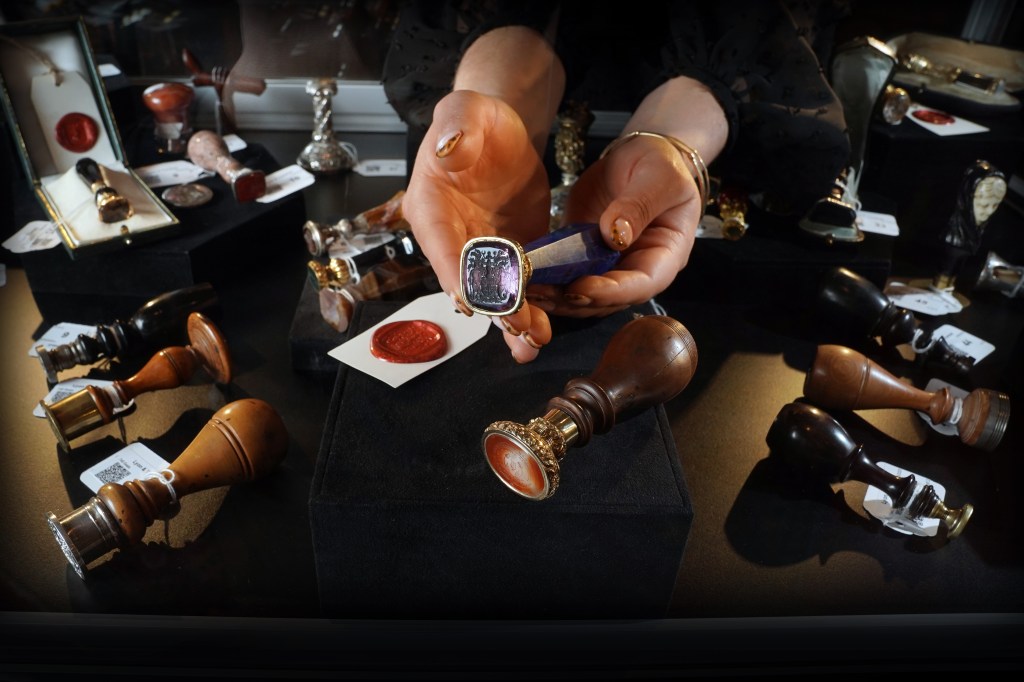
The item is just one of the 100 seals with Scottish connections set to be sold off by Edinburgh-based auction house Lyon & Turnbull on Friday.

Sir Walter’s personal desk seal from Abbotsford House in the Scottish Borders has been valued by auctioneers as being worth between £12,000 and £18,000.

The finely carved hand seal is believed to date to Sir Walter’s knighthood in 1820. Set in lapis lazuli, gold and amethyst stones, it bears the Scott family armorial.

A private collection of seals including, Sir Walter Scott’s desk seal, is set to go under the hammer later this week

Sir Walter was a prolific letter writer, and the Ivanhoe author will have sent off many a note to the great and good of society which were sealed with the tool.

And it was likely it was used for letters penned to George IV which helped to pave the way for the reigning monarch’s return to Scotland – the first since 1650 when Charles II stayed in Holyroodhouse.

Sir Walter helped organise the royal visit, which was just two years after the Scottish insurrection of 1820, and the King’s arrival was complete with tartan pageantry which is said to have helped secure the kilt’s place as the country’s national dress.

The seals are part of the Matrix Collection, which were gathered over several decades by the late David Morris.

Other notable items in the collection include an unusual desk seal in gilt and metal in the shape of an armoured arm wielding a dagger, which belonged to the Wallace family, the seal of Archbishop John Spottiswoode, and Lady Mary Douglas Hamilton’s desk seal.

Kier Mulholland, of the auction house, said it was “an exceptional collection of historic and elegant objects”.

“David Morris went to great lengths to acquire these significant works, which offer a glimpse into a time when family crests and armorials were of great importance,” the auctioneer said.

“Perhaps most tantalising is that each piece tells us a different story, which is the reason they were collected by Mr Morris.”

Wax seals were widely used from the Middle Ages until the 19th century when letters could be safely sealed with glue.

As well as becoming elegant and prestigious objects to own, they had a practical use too by making a unique impression when dipped in hot wax to prove authenticity and to prevent letters from being opened.