The mews house is a unique and charming architectural feature of many British cities, particularly London. The term ‘mews’ originally referred to the stables and carriage houses that were once located in the back alleys of grand townhouses. Over the years, these stables were converted into homes and became known as mews houses.
What exactly are mews houses? The history of mews houses can be traced back to the 18th and 19th centuries. During this time, the wealthy aristocracy in London owned large townhouses in the city center. These townhouses often had stables and carriage houses located behind them, on a separate street, known as a mews. The word ‘mews’ comes from the French word ‘mue’, meaning to molt, as the hawks that were once kept in the mews would molt their feathers before being used for hunting.
The mews were originally intended for the horses and carriages of the wealthy townhouse owners. However, as the popularity of the automobile grew in the early 20th century, the need for horse-drawn carriages decreased. Many of the mews were then converted into garages for cars, and some were even used as workshops for artisans and craftsmen.
In the mid-20th century, as the popularity of cars continued to grow, many of the mews were abandoned and fell into disrepair. However, in the 1960s and 1970s, there was a renewed interest in mews houses as unique and desirable properties. Many of the mews were converted into homes, and their distinctive features, such as high ceilings, exposed brickwork, and large windows, made them popular with buyers.
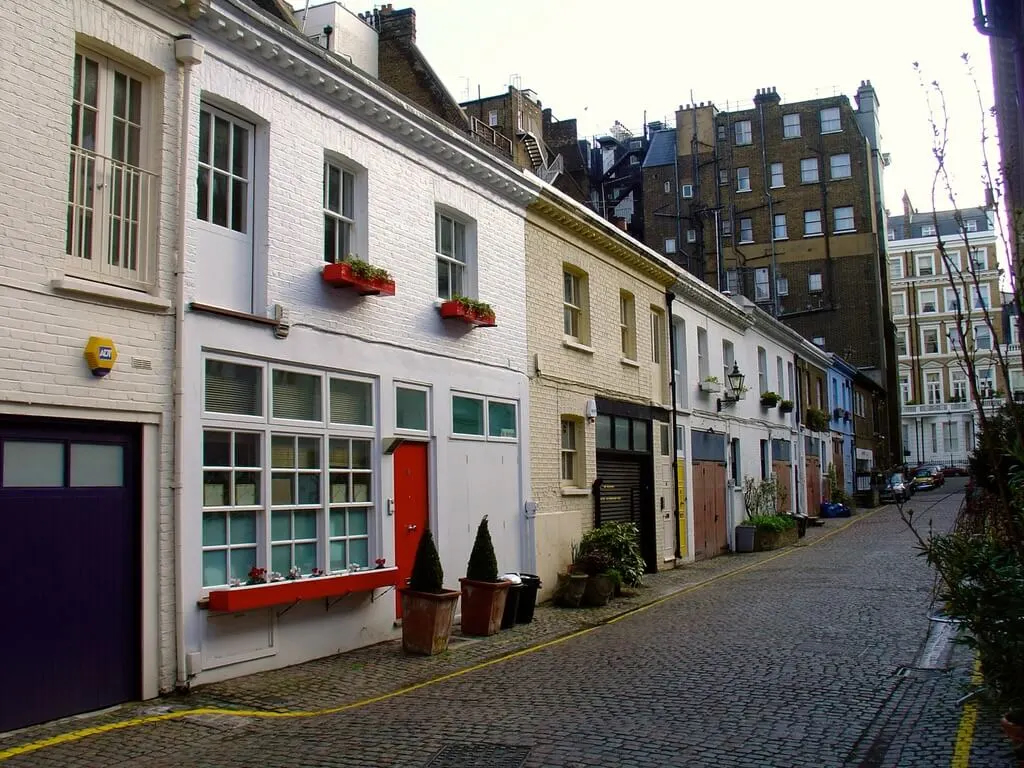
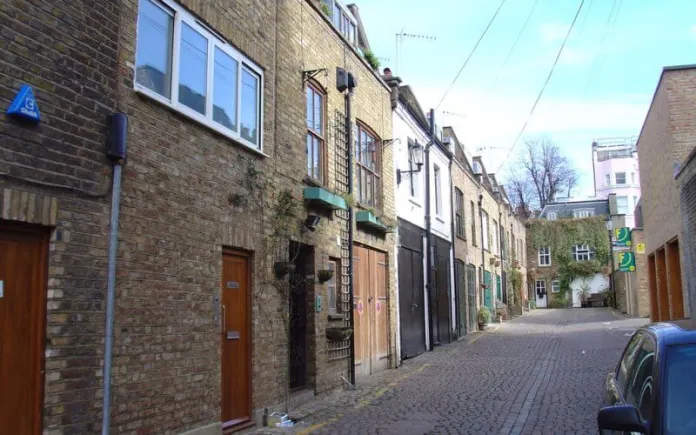
Today, mews houses are highly sought-after properties, particularly in London. They are typically located in the back alleys of grand townhouses, and many are hidden away from the main street, providing a sense of privacy and seclusion. Mews houses are often characterized by their charming cobbled streets, narrow alleyways, and distinctive architectural features. Because of their location and size, mews houses do not usually have gardens (but there are always exceptions).
Mews block in Notting Hill
The popularity of mews houses as desirable properties has led to a surge in their value. Many mews houses have been renovated and modernized, and their unique features have been preserved and enhanced. The conversion of mews houses into valuable homes has been a boon for the property market, particularly in London, where space is at a premium.
Mews houses are often located in some of the most desirable neighborhoods in London, including Mayfair, Belgravia, and Notting Hill. They are often tucked away in quiet backstreets, providing a sense of privacy and seclusion while still being within easy reach of the amenities and attractions of the city center.
The conversion of mews houses into valuable homes has been a fascinating journey through the history of British architecture. From their humble beginnings as stables and carriage houses to their modern-day incarnation as desirable homes, mews houses have been an integral part of the fabric of British cities. Their unique features and charm have made them highly sought-after properties, and their value is only set to increase in the years to come.
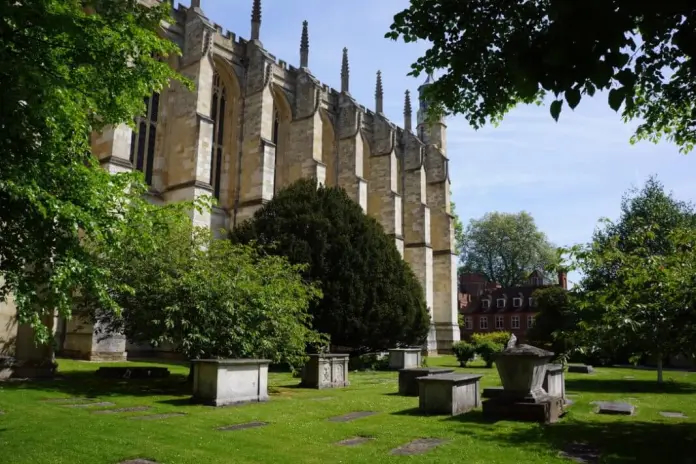
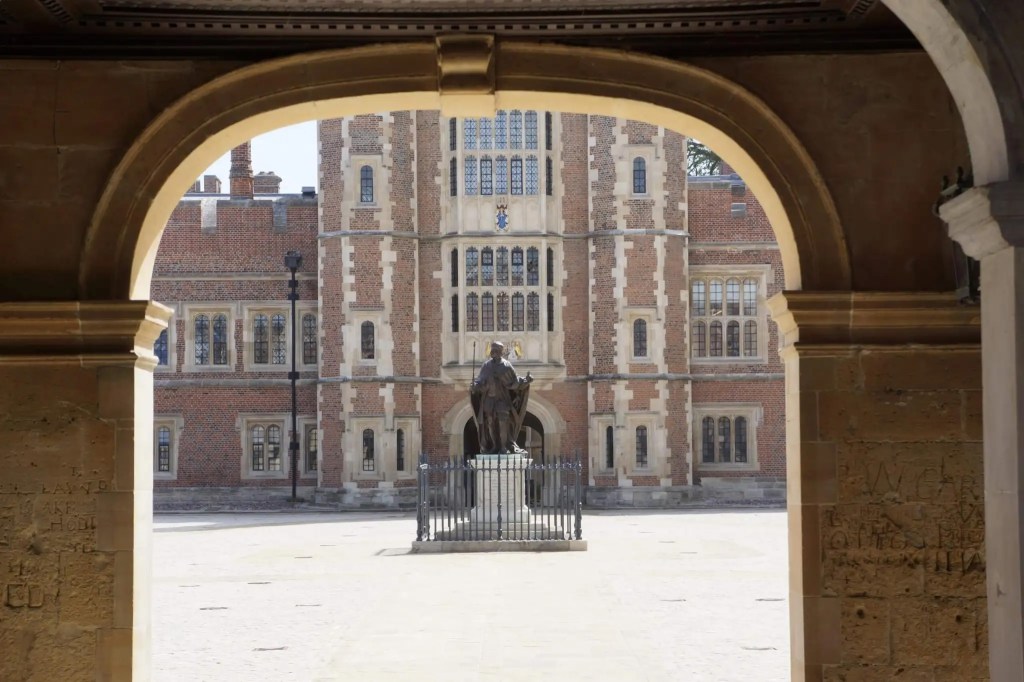
Eton College, situated near Windsor, holds a storied history dating back to its foundation by King Henry VI in 1440. Initially established to provide free education to poor scholars, Eton evolved into one of the most prestigious and exclusive public schools in England. Its imposing architecture, rich traditions, and distinguished alumni have helped cement its reputation as a bastion of privilege and excellence. Eton’s culture is steeped in tradition, with students participating in rituals such as the “Eton Wall Game,” a unique form of football played against a wall, and the “Fourth of June,” an annual celebration of the birthday of King George III, complete with processionals and cricket matches. The school’s rigorous academic curriculum, combined with its emphasis on character development and leadership, prepares students for success in both academia and beyond.
Harrow
Founded in 1572 under a royal charter granted by Queen Elizabeth I, Harrow School has a rich history and a distinguished list of alumni. Perched atop a hill overlooking London, Harrow’s iconic buildings and sprawling grounds provide a picturesque backdrop for its academic and extracurricular activities. The school’s culture is defined by its emphasis on tradition, discipline, and service, with students adhering to a strict code of conduct and participating in rituals such as “Chapel,” a daily service held in the school’s historic chapel, and “Speech Room,” where students showcase their oratorical skills. Harrow’s academic program is rigorous and challenging, with a strong emphasis on critical thinking, creativity, and independent inquiry. Beyond the classroom, students are encouraged to pursue their passions and interests through a wide range of extracurricular activities, including sports, music, drama, and community service.
Winchester
Winchester College, founded in 1382 by William of Wykeham, is one of the oldest and most prestigious public schools in England. Nestled in the historic city of Winchester, the school’s ancient buildings and tranquil surroundings provide an inspiring setting for learning and personal growth. Winchester’s culture is steeped in tradition, with students participating in rituals such as “Div,” a daily gathering in the school’s medieval hall, and “Election,” where students are chosen to hold positions of responsibility within the school community. The school’s academic program is rigorous and intellectually stimulating, with a strong emphasis on classical studies, literature, and the humanities. Winchester also boasts a rich tradition of music and the arts, with students participating in choirs, orchestras, and theatrical productions. Additionally, the school places a strong emphasis on community service and social responsibility, instilling in students a sense of duty and compassion for others. One recent notable pupil was current British Prime Minister Rishi Sunak, who attended as a ‘dayboy’ (i.e. he was not a boarding student).
Wells Cathedral School
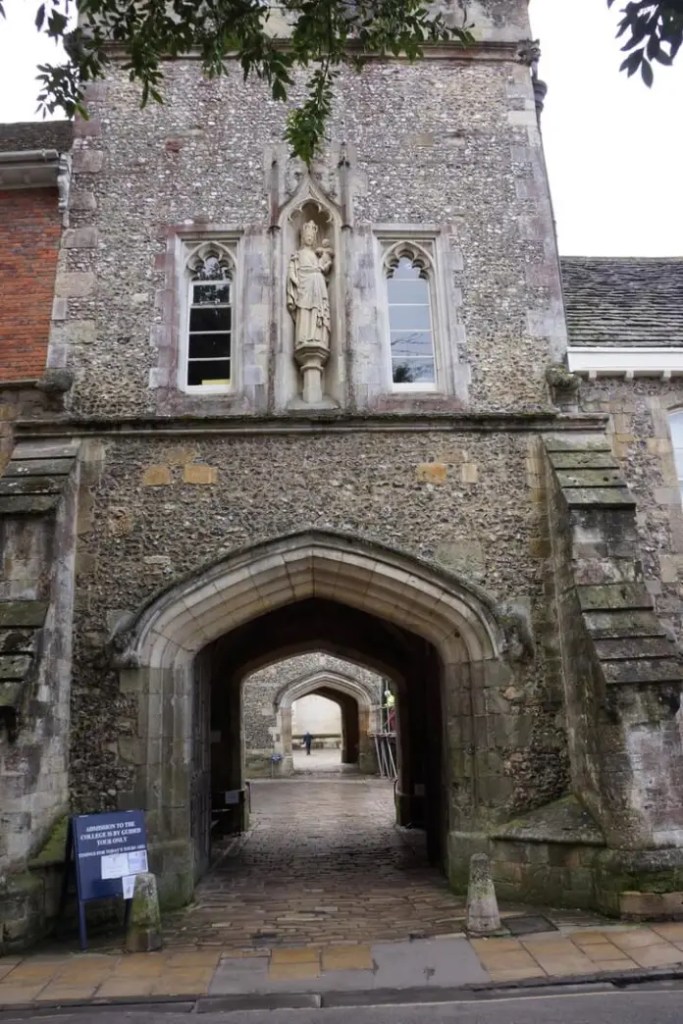
Wells Cathedral School, situated in the historic city of Wells, Somerset, has a rich heritage dating back over 1,100 years. Founded as a choir school in the 10th century, it is one of the oldest continuously operating schools in the world. The school’s close association with Wells Cathedral has shaped its culture, with music playing a central role in its identity. Students at Wells Cathedral School receive a unique education that combines academic rigor with intensive musical training. The school’s renowned music program offers instruction in a wide range of instruments and vocal techniques, with students participating in regular performances and concerts. In addition to music, Wells Cathedral School provides a comprehensive academic curriculum, with a strong emphasis on creativity, critical thinking, and personal development. The school’s picturesque campus, nestled in the shadow of the historic cathedral, provides an inspiring setting for learning and artistic expression.
Ampleforth
Ampleforth College, located in the scenic countryside of North Yorkshire, is a leading Catholic boarding school with a rich tradition of academic excellence and spiritual development. Founded in 1802 by a community of Benedictine monks, the school’s ethos is rooted in the Benedictine values of prayer, work, study, and community. Ampleforth’s culture is characterized by its strong sense of community, with students and staff living and working together in a supportive and nurturing environment. The school’s academic program is rigorous and challenging, with a strong emphasis on intellectual inquiry, moral development, and social responsibility. In addition to academics, students at Ampleforth participate in a wide range of extracurricular activities, including sports, music, drama, and community service. The school’s stunning campus, nestled in the picturesque Howardian Hills, provides an idyllic setting for learning, reflection, and personal growth.
Stowe
Stowe School, situated in the heart of Buckinghamshire, is renowned for its stunning Palladian architecture, landscaped gardens, and innovative approach to education. Founded in 1923 by Sir Richard Temple-Grenville, Stowe was conceived as a progressive alternative to traditional public schools, with an emphasis on individualism, creativity, and self-expression. The school’s culture is characterized by its commitment to innovation and experimentation, with students encouraged to explore their interests and pursue their passions. Stowe’s academic program is broad and flexible, allowing students to tailor their studies to suit their strengths and aspirations. In addition to academics, students at Stowe participate in a wide range of extracurricular activities, including sports, music, drama, and outdoor pursuits. The school’s stunning campus, with its neoclassical buildings and expansive grounds, provides an inspiring setting for learning, discovery, and personal development.
Westminster School
Westminster School, located in the heart of London near Westminster Abbey, boasts a rich history dating back over a millennium. Founded in the 12th century by Benedictine monks, Westminster has long been associated with academic excellence, intellectual inquiry, and civic engagement. The school’s close proximity to the seat of political power has shaped its culture, with students benefiting from access to the resources and opportunities afforded by the vibrant capital city. Westminster’s culture is characterized by its commitment to scholarship, leadership, and service, with students encouraged to excel academically while also contributing to the wider community. The school’s rigorous academic program is complemented by a rich array of extracurricular activities, including sports, music, drama, and debating. Westminster’s historic campus, with its iconic buildings and sweeping views of the River Thames, provides an inspiring backdrop for learning, reflection, and personal growth.
Charterhouse
Charterhouse, situated in the picturesque Surrey countryside, is one of England’s oldest and most prestigious public schools. Founded in 1611 by Thomas Sutton, the school has a long and distinguished history, with alumni including prime ministers, poets, and Nobel laureates. Charterhouse’s culture is defined by its commitment to academic excellence, character development, and social responsibility. The school’s rigorous academic program is complemented by a wide range of extracurricular activities, including sports, music, drama, and community service. Charterhouse’s historic campus, with its stunning Tudor architecture and landscaped grounds, provides an idyllic setting for learning, personal growth, and self-discovery. The school’s strong sense of tradition, combined with its forward-thinking approach to education, ensures that students receive a well-rounded and enriching educational experience that prepares them for success in college and beyond.
Benenden School
Benenden School, located in the picturesque Kent countryside, is one of England’s leading independent girls’ schools. Founded in 1923, the school has a rich tradition of academic excellence, leadership development, and personal growth. Benenden’s culture is characterized by its commitment to empowering young women to achieve their full potential and make a positive impact on the world. The school’s rigorous academic program is complemented by a wide range of extracurricular activities, including sports, music, drama, and community service. Benenden’s stunning campus, with its historic buildings and landscaped gardens, provides an inspiring setting for learning, reflection, and personal development. The school’s supportive and nurturing environment, combined with its strong sense of community, ensures that students receive the guidance, support, and encouragement they need to thrive academically, socially, and emotionally.
St. Paul’s School
St. Paul’s School, situated in the heart of London, has a rich heritage dating back to its foundation in 1509 by John Colet, Dean of St. Paul’s Cathedral. The school’s close association with the cathedral has shaped its culture, with students benefiting from its central location and access to the cultural and intellectual riches of the capital city. St. Paul’s culture is characterized by its commitment to academic excellence, intellectual curiosity, and social responsibility. The school’s rigorous academic program is complemented by a wide range of extracurricular activities, including sports, music, drama, and community service. St. Paul’s historic campus, with its iconic dome and elegant Georgian buildings, provides an inspiring backdrop for learning, personal growth, and self-discovery. The school’s strong sense of tradition, combined with its innovative approach to education, ensures that students receive a well-rounded and enriching educational experience that prepares them for success in college and beyond.
Hogwarts
Oh wait, this one’s not real, but probably the best known one (despite being in Scotland).
In the annals of British education, the term “public school” holds a unique and distinguished place. These exclusive institutions have played an integral role in shaping British society, culture, and history. Most of them are known as boarding schools, where children are sent away from home and their parents to be educated in a certain way. Among these, Eton College and Harrow School stand out as bastions of tradition, excellence, and privilege. However, there are several other notable public schools scattered across England, each with its own rich history, illustrious alumni, and contributions to the fabric of the nation. The idea of English public schools endures in the popular imagination thanks to the Harry Potter film and book series. The reality is that these places can often be terrible environments for children, with mixed results (but many have modernized and are excellent places to live and be educated).
Public Versus Private
First, here is a quick definition of what a ‘public school’ is in the British context because it seems like a contradiction in terms. In America, we call them private schools. In Britain, private schools are called ‘public’ schools because they are generally open to anyone who can pay the fees (there are a lot of caveats here; each school is different). State schools are schools run and managed by the British government (but England, Scotland, Wales, and NI all have different systems). Church schools are schools run by the Church of England (or other denominations). While most public schools are boarding schools, not all board students, and some may also accept ‘day’ students, which are students who do not live there but attend classes daily. One size doesn’t fit all here!
The Role in British History
The origins of English public schools can be traced back centuries, with many of them founded during the medieval period. Initially established to educate the sons of the elite and provide a classical education rooted in Latin and Greek literature, these schools evolved over time to become centers of academic excellence and breeding grounds for the country’s future leaders. Their influence on British history cannot be overstated, as generations of statesmen, writers, scientists, and thinkers have passed through their hallowed halls, leaving an indelible mark on the nation and the world.
Public schools played a pivotal role in shaping the values and ethos of the British ruling class, instilling ideals of duty, honor, and service to the nation. The success here, varies. The connections forged within their walls often proved instrumental in the corridors of power, with alumni forming influential networks that extended across politics, business, and culture. Moreover, the curriculum and traditions of these schools helped to perpetuate a sense of continuity and tradition, reinforcing the social hierarchy and reinforcing the notion of an educated ruling elite.
I would like to give you an example of one particular English public school-educated pupil – Winston Churchill. As the son of a ‘second son’ of a prominent aristocratic family (the Spencer-Churchills), Churchill was destined to go to a public school. He attended two boarding schools, first St. George’s School in Berkshire, then Harrow. But by all measures, he was a terrible student and spent most of his time pleading for positive attention from his awful parents. He did, however, show aptitude in history and English, but he was an otherwise unremarkable student. Harrow did not instil a love of reading and education in Churchill. He cultivated that himself after he left and later became a writer. His father pushed him to train for the military, so he was diverted to Harrow’s Army program. Eventually, he finished his schooling at the Sandhurst Military Academy (but it took him three tries to pass the entrance exams). He never attended university, which is quite something when you consider that he eventually won the Nobel Prize for literature (amongst other achievements). Despite his poor education, his time in public schools taught him HOW to be an English aristocrat; it gave me the bearings and attitudes in life he would need to succeed as an upper-class aristo (and how to interact with other people like him, who ran Britain and its empire). It taught him to be a citizen of the empire, to be loyal to the reigning monarch and to defer authority when necessary. Did it work? Well, you be the judge of that.
Locations
Eton College, perhaps the most famous of all English public schools, is situated in the picturesque town of Eton, near Windsor, in the county of Berkshire. Its sprawling campus overlooks the River Thames and boasts a history dating back to the 15th century. Harrow School, another iconic institution, is located in the leafy suburb of Harrow-on-the-Hill, northwest of London. Its hilltop location offers stunning views of the capital and provides a fitting backdrop for its centuries-old traditions.
In addition to Eton and Harrow, England is home to a plethora of other public schools, scattered throughout the country. From Winchester College in Hampshire to Rugby School in Warwickshire, these institutions are synonymous with academic excellence, sporting prowess, and a sense of tradition that transcends generations.
Notable Students
The list of notable alumni who have passed through the gates of Eton and Harrow reads like a who’s who of British history and culture. From prime ministers and monarchs to poets and playwrights, the roll call of distinguished graduates is truly impressive.
Eton College has 19 British prime ministers among its alumni, including Sir Robert Walpole, the first holder of office, and David Cameron, who served as prime minister from 2010 to 2016. Other notable Etonians include writers such as George Orwell and Ian Fleming, as well as actors like Eddie Redmayne and Damian Lewis.
Harrow School boasts an equally impressive roster of alumni, including seven British prime ministers, such as Winston Churchill and Jawaharlal Nehru, the first Prime Minister of India. The school has also produced renowned writers like Lord Byron and Anthony Trollope, as well as actors like Benedict Cumberbatch and James Blunt.
Beyond Eton and Harrow, many other public schools have produced their fair share of notable alumni. For example, Winchester College counts among its former students the likes of Lord Alfred Tennyson, the Victorian poet laureate, and Hugh Bonneville, star of the television series Downton Abbey. Similarly, Rugby School can claim Thomas Hughes, author of the classic novel Tom Brown’s School Days, and Lewis Carroll, the creator of Alice’s Adventures in Wonderland, among its illustrious alumni.
Enduring Traditions: An Insight into the Fascinating Customs of English Public Schools
One of the enduring aspects of English public schools is their rich tapestry of traditions, many of which have been upheld for centuries. These rituals and customs serve not only to foster a sense of belonging and identity among students but also to connect them with the storied history of their alma maters. From formal ceremonies to quirky rituals, these traditions add color and character to the educational experience and help to distinguish public schools from other institutions. Many of America’s own academic traditions have roots in the English public school tradition (school spirit, robes, sports, etc).
Eton College, for example, is renowned for its unique terminology, which includes terms like “fagging” (a system where younger students serve as personal assistants to older ones) and “Pop” (a secret society that dates back to the 18th century). The school also has a long-standing tradition of “Montem,” a biennial procession to the nearby village of Salt Hill, where students collect money for charity while dressed in elaborate costumes.
Similarly, Harrow School has its own set of traditions, including the annual “Speech Day” ceremony, where prizes are awarded to students for academic and extracurricular achievements. Another notable custom is the “Field Day,” an inter-house competition that culminates in a series of athletic contests and displays of skill.
Winchester College, one of the oldest public schools in England, is famous for its “elections,” where students are chosen to hold various positions of responsibility within the school community. These include the “captain of the school,” who serves as the head student, and the “prefects,” who assist with the day-to-day running of the school.
Rugby School is perhaps best known for its association with the sport of rugby football, which was reputedly invented by a pupil named William Webb Ellis in the early 19th century. To this day, the school maintains a strong emphasis on sportsmanship and athleticism, with rugby playing a central role in its ethos.
British Actor David Payne, also famous for his CS Lewis one-man show, wrote a Churchill paly during the pandemic, and has been performing it in cities all over the USA since. This was the first I’d heard of it. So, I was delighted when a cohort of people from the Chicago chapter of the International Churchill Society wanted to get together and go as a group.
The play is being performed in the Broadway Playhouse, located at Water Tower Place in downtown Chicago (it used to be the Drury Lane Theatre, I believe). I’ve never been to this particular venue, so I was interested to check it out. I arrived early and was a bit disappointed to see that Water Tower Place was not what it used to be – half the stores appeared to be empty, most of the restaurants were gone, and it felt like a bit of a ghost town. Things were never the same after Macy’s (and previously Marshall Field’s) left.
The Chicago Churchillians met at the Harry Caray’s bar for quick drinks and nibbles before the show (food and drinks were lovely). Many of us were meeting for the first time, so that was fun to get to know everyone (waves hi to everyone if you’re reading this!).
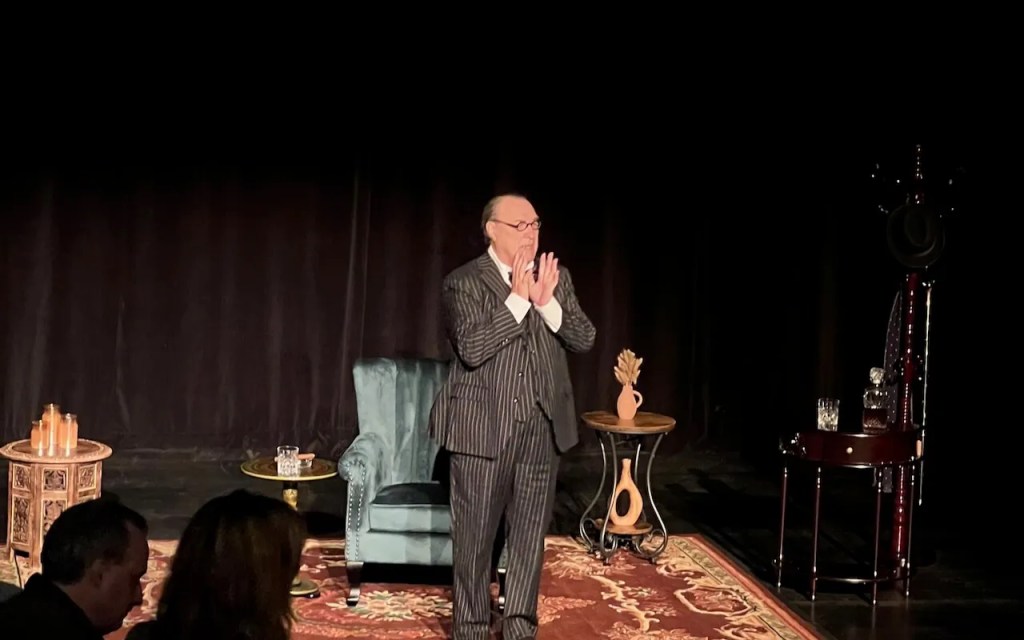
The venue is a small intimate theatre, perfect for a one-man show. The stage was set with a chair and a few other items.
The plot is simple. Winston Churchill has just been awarded honorary US citizenship by President John F. Kennedy. In recognition of this unprecedented occasion, The American-Oxford Society has asked the former Prime Minister to address them and discuss what this honor means to him at Blenheim Palace. What follows is Churchill giving a talk to this audience, in which he shares some interesting anecdotes about his life and times. It’s very much an elder statesman reflecting on his life in the context of this award.
I must say, the play was very enjoyable. Payne has a commanding presence, and he portrays Churchill with perfection and vigor. He even managed to replicate Churchill’s speech impediment. The play was written by Payne himself, and the stories he told were a mix of well-worn tales of his youth and some stories I was not familiar with (and a few that perhaps are probably not true). As the ‘audience’ of his speech is Americans, the play itself is very much designed to appeal to Americans, and many of the anecdotes include American political and entertainment figures.
There is much to like here—even if you’re not that interested in Churchill as a person. There is a lot of interesting history that intersects with American history. He performed for about an hour, then there was a short intermission, and then he went on for almost another hour. When the play was over, he gave a quick talk about it and mentioned that he’s now 80 years old, so he doesn’t know how long he’ll keep doing these one-man shows.
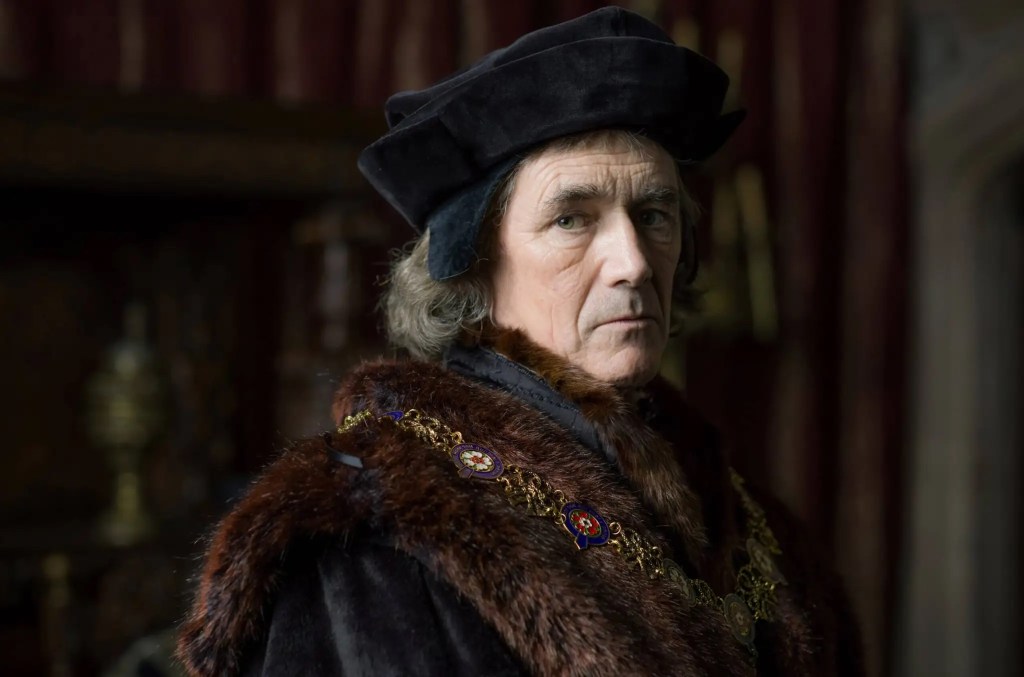
MASTERPIECE Wolf Hall: The Mirror and the Light Coming in 2025 on PBS The follow-up to the award-winning and critically acclaimed miniseries, Wolf Hall. Based on the novel by Hilary Mantel, the series charts the end of Thomas Cromwell’s story. Mark Rylance and Damian Lewis return as Cromwell and King Henry VIII. Shown: Thomas Cromwell (Mark Rylance) For editorial use only.
Masterpiece PBS and the BBC have released a tantalizing glimpse into the highly anticipated series “Wolf Hall: The Mirror and the Light,” the adaptation of Hilary Mantel’s acclaimed trilogy and sequel to the previous PBS production Wolf Hall. As filming wraps up, the first-look images promise a riveting continuation of Thomas Cromwell’s saga.
The newly released pictures unveil the stellar cast lineup, featuring Mark Rylance reprising his role as Thomas Cromwell, alongside Damian Lewis as King Henry VIII, and Kate Phillips as Jane Seymour. The ensemble also includes Jonathan Pryce, Harriet Walter, and Timothy Spall, among others, breathing life into the iconic characters of Tudor England.
Directed by seven-time BAFTA award winner Peter Kosminsky and adapted for television by Academy Award nominee Peter Straughan, “Wolf Hall: The Mirror and the Light” reunites the creative minds behind the previous installment, ensuring a seamless transition for fans of the series. Produced by Colin Callender’s Playground and Company Pictures, the production promises the same high-quality storytelling that captivated audiences before.
Set in the turbulent period of May 1536, the series delves into the aftermath of Anne Boleyn’s execution and Cromwell’s ascension to power. Faced with political intrigue, religious upheaval, and the whims of Henry VIII, Cromwell’s journey becomes more perilous as he navigates the treacherous waters of court politics.
Despite the challenges, Cromwell remains determined to reshape England’s future, envisioning a nation ripe for innovation and reform. But with enemies lurking in the shadows and Henry’s unpredictable nature, Cromwell’s survival hangs in the balance, posing the ultimate question of how long anyone can withstand the king’s scrutiny.
“Wolf Hall: The Mirror and the Light” promises to be a gripping conclusion to Cromwell’s story, tracing his transformation from a self-made man to one of the most influential figures of his time. With its rich storytelling and complex characters, the series is poised to captivate audiences once again.
Produced in collaboration with Playground and Company Pictures for BBC and Masterpiece, the series will be distributed internationally by Banijay Rights. Executive producers include Colin Callender, Peter Kosminsky, and Lucy Richer, among others, ensuring a seamless blend of talent and expertise.
Fans can look forward to catching “Wolf Hall: The Mirror and the Light” on Masterpiece PBS and streaming platforms like the PBS App and PBS.org, promising an immersive viewing experience for history enthusiasts and drama aficionados alike. PBS Masterpiece also plans to re-air the first series of Wolf Hall this autumn ahead of the new season so fans can watch it all in one go!
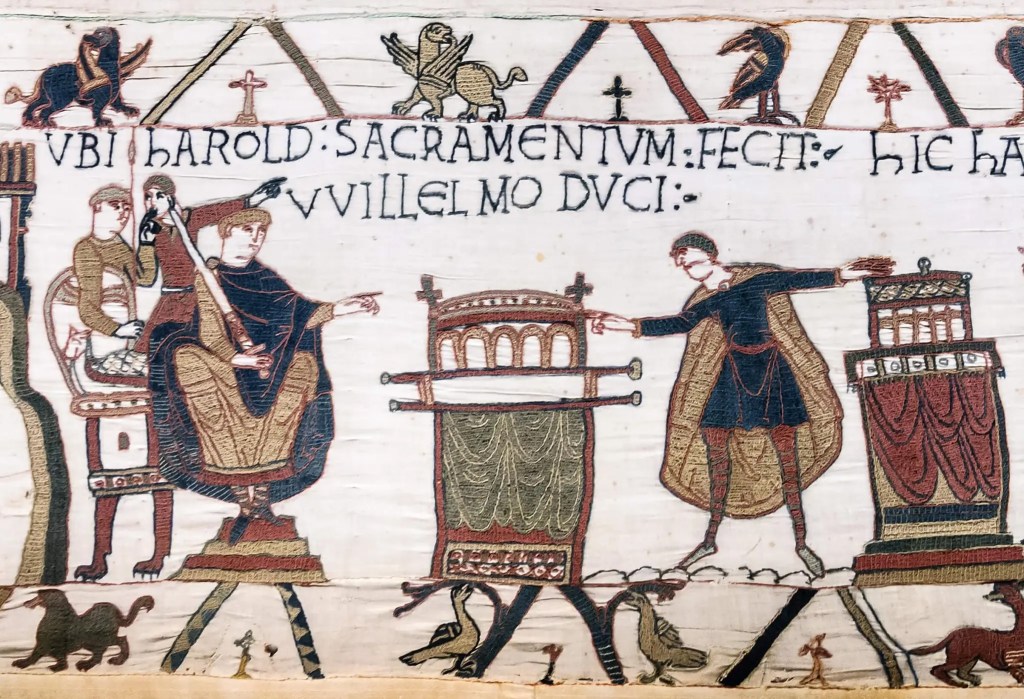
Tapisserie de Bayeux — Scène 23 : Harold prête serment à Guillaume
Harold Godwinson, also known as Harold II, was the last Anglo-Saxon king of England before the Norman Conquest. He reigned for less than a year, from January to October 1066, but his reign was marked by a series of significant events that shaped the course of English history. In this article, we will take a closer look at the life and legacy of Harold Godwinson.
Key Facts about Harold Godwinson
Harold Godwinson, also known as Harold II, was the last Anglo-Saxon king of England before the Norman Conquest.
Harold was born in Wessex, England, in 1022 or 1023, the second son of Godwin, who was an influential noble and the Earl of Wessex.
Harold’s rise to power was not without controversy, as he was accused of kidnapping the wife of a Welsh prince in 1051.
Harold was chosen by the English nobility to succeed King Edward the Confessor, and he was crowned king on January 6, 1066.
Harold’s reign was challenged by two other claimants to the throne: Harald Hardrada, the King of Norway, and William, Duke of Normandy, who emerged victorious at the Battle of Hastings and marked the end of Anglo-Saxon rule in England.
Early Life and Career
Harold was born in Wessex, England in 1022 or 1023. His father, Godwin, was an influential noble who had risen to become the Earl of Wessex, the most powerful earldom in England. Harold was the second son of Godwin and his wife Gytha Thorkelsdóttir. He had several brothers and sisters, including Sweyn, Tostig, and Edith.
Harold grew up in a family that was intimately involved in the politics of England. His father and his brothers were close advisors to King Edward the Confessor, who ruled England from 1042 to 1066. Harold himself served as an earl and military commander in his own right, and he was known for his bravery and leadership on the battlefield.
Harold’s rise to power was not without controversy, however. In 1051, he was accused of kidnapping the wife of a Welsh prince and was forced to flee to Ireland to avoid punishment. He later returned to England and regained the king’s favor, but the incident would haunt him for years to come.
Accession to the Throne
In 1066, King Edward the Confessor died without a clear heir to the throne. Harold’s brother Tostig had been banished from England a year earlier, and another claimant, William, Duke of Normandy, had his own designs on the English crown. Harold was chosen by the English nobility to succeed Edward, and he was crowned king on January 6, 1066.
Harold’s reign was immediately challenged by two other claimants to the throne. The first was Harald Hardrada, the King of Norway, who invaded England with a large army in September 1066. Harold defeated Hardrada and his army at the Battle of Stamford Bridge on September 25, but he suffered heavy losses in the process.
The second challenger was William, Duke of Normandy, who had been promised the English throne by King Edward years earlier. William invaded England with his own army in October 1066, and he met Harold’s forces at the Battle of Hastings on October 14. Harold was killed in the battle, and William emerged victorious.
Legacy
Harold’s reign was short and tumultuous, but it had a lasting impact on English history. His defeat at the Battle of Hastings marked the end of Anglo-Saxon rule in England and the beginning of Norman rule. The Normans brought with them a new language, culture, and political system that would shape England for centuries to come.
Despite his defeat, Harold is remembered as a courageous and capable leader who fought to defend his country against foreign invaders. He was also a devout Christian who was known for his piety and generosity. In the years following his death, some members of the English church venerated him as a martyr and a saint.
Harold Godwinson was a significant figure in English history who played a pivotal role in the events leading up to the Norman Conquest. While his reign was short and marked by tragedy, his legacy lives on in the memories of those who remember him as a courageous and honorable king who fought to defend his people and his country.
Cultural Depictions of Harold Godwinson
There have been various cultural depictions of Harold Godwinson, including in literature, film, and television. Some of the most notable examples include the play “Harold” by Alfred Tennyson, which portrays Harold as a tragic hero who is ultimately betrayed by his own people.
Locations Related to Harold Godwinson
Waltham Abbey, where Harold was buried before his body was moved to the church of Saint Clement Danes in Westminster.
Battle Abbey in East Sussex, the site of the Battle of Hastings where Harold was famously killed by an arrow to the eye.
Stamford Bridge, a village in East Riding of Yorkshire, where Harold defeated Harald Hardrada in the Battle of Stamford Bridge just a few days before the Battle of Hastings.
Bosham, a village in West Sussex, where Harold is said to have set sail for Normandy to negotiate with William, Duke of Normandy, who was also claiming the throne of England.
Westminster Abbey in London, where Harold was crowned King of England on January 6, 1066, following the death of King Edward the Confessor.
Nestled amidst the idyllic landscapes of the English countryside, the English cottage stands as an enduring symbol of charm, warmth, and tradition. With their quaint appearance and rich history, these cottages have captured the imagination of many, embodying a sense of rural tranquility and timeless beauty. In this exploration, we delve into the concept of the English cottage, unraveling its essence and diversity through various vernacular types.
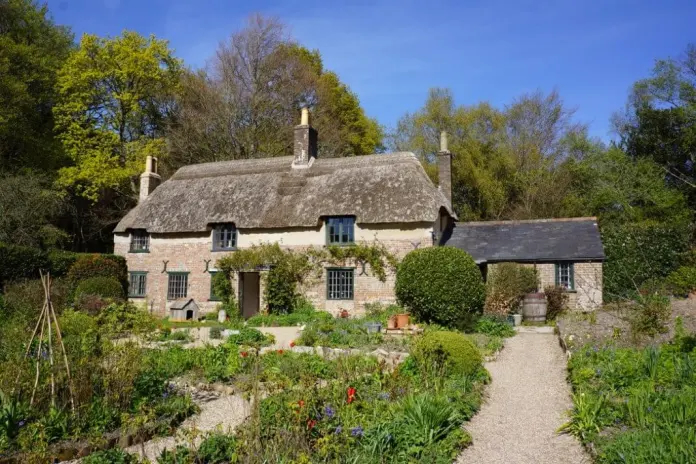
The English cottage is more than just a dwelling; it represents a way of life deeply rooted in the rural landscapes of England. Historically, cottages were the homes of agricultural workers, farmers, and laborers, reflecting the simplicity and functionality required for rural living. Over time, they evolved into symbols of rustic elegance, characterized by their thatched roofs, timber frames, and picturesque gardens.
For me, the perfect English cottage reflects what it means to be in the English countryside. When we travel, we love to stay in cottages in the countryside. There’s a certain type of peace and serenity you get in the English countryside that makes me so blissfully happy. You will find, too, that the definition of a ‘cottage’ is flexible. What some people think of as a cottage might just be a house, a parsonage, or a small manor, but they can also be cottages. Often, the idea of a cottage is in the eye of the beholder (and owner).
One of the most iconic features of English cottages is their architectural style, which varies across different regions of the country. From the charming thatched roofs of the Cotswolds to the whitewashed walls of Cornwall, each region boasts its own unique interpretation of the English cottage.
Here are a few examples of English vernacular cottages (and this is not an exhaustive list).
The Cotswold Cottage
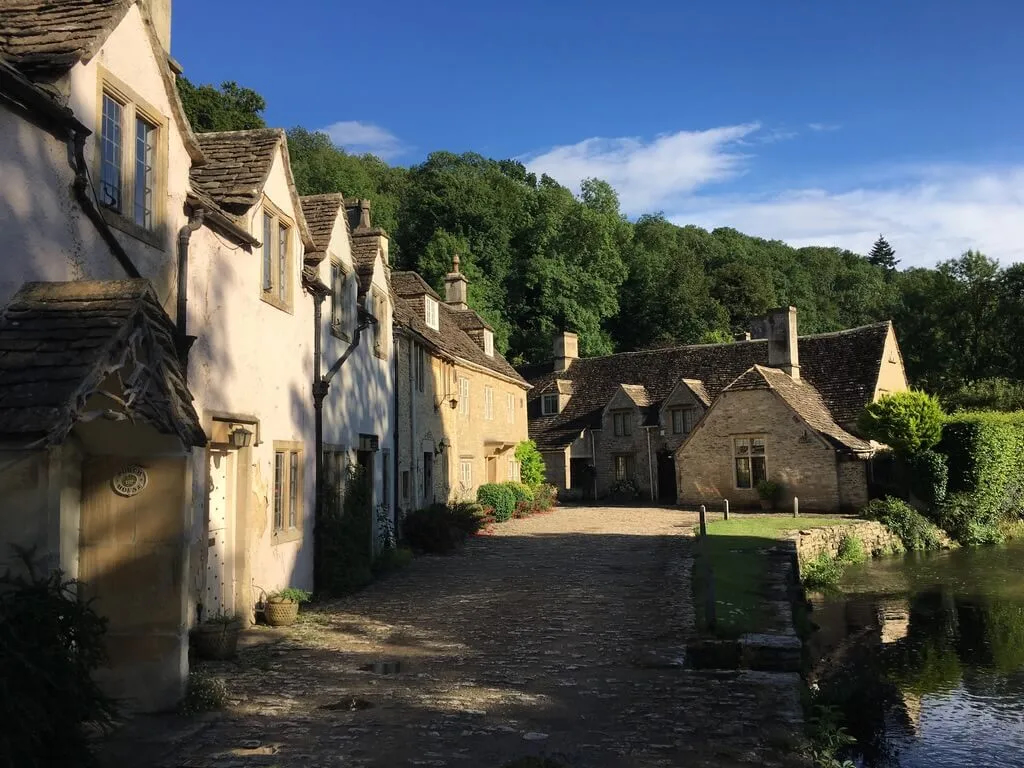
Nestled in the rolling hills of the Cotswolds, Cotswold cottages epitomize the quintessential English countryside charm. Characterized by their honey-colored limestone walls, steeply pitched roofs, and mullioned windows, Cotswold cottages exude timeless elegance. Often adorned with climbing roses and quaint gardens, these cottages offer a glimpse into a bygone era of rural tranquility.
The Thatched Cottage
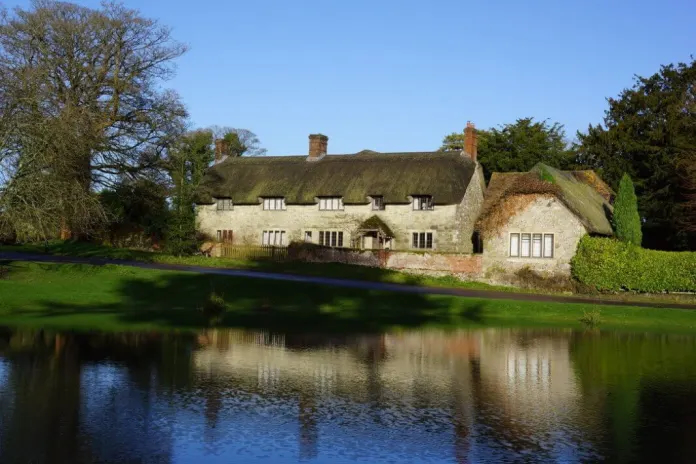
Thatched cottages evoke a sense of whimsy and nostalgia with their distinctive roofs made from straw or reeds. Found in various regions across England, thatched cottages are revered for their cozy interiors and rustic charm. The intricate craftsmanship of thatched roofs adds to their appeal, providing insulation and protection from the elements while exuding a rustic allure that is hard to resist.
The Tudor Cottage
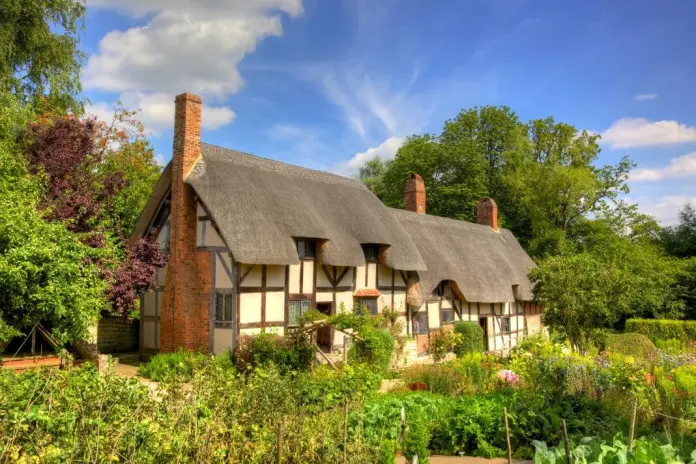
Tudor cottages are characterized by their timber-framed structures, featuring exposed beams and intricate woodwork. Originating from the Tudor period in the 16th century, these cottages reflect a rich architectural heritage influenced by medieval craftsmanship. With their half-timbered facades and leaded windows, Tudor cottages exude historic charm and timeless appeal, offering a glimpse into England’s storied past.
The Chocolate Box Cottage
Often referred to as “chocolate box cottages,” these picturesque dwellings epitomize the postcard-perfect image of English country living. With their colorful gardens, thatched roofs, and quaint picket fences, chocolate box cottages evoke a sense of nostalgia and romance. Found in villages and rural hamlets across England, these cottages are beloved for their storybook charm and photogenic appeal.
The Coastal Cottage
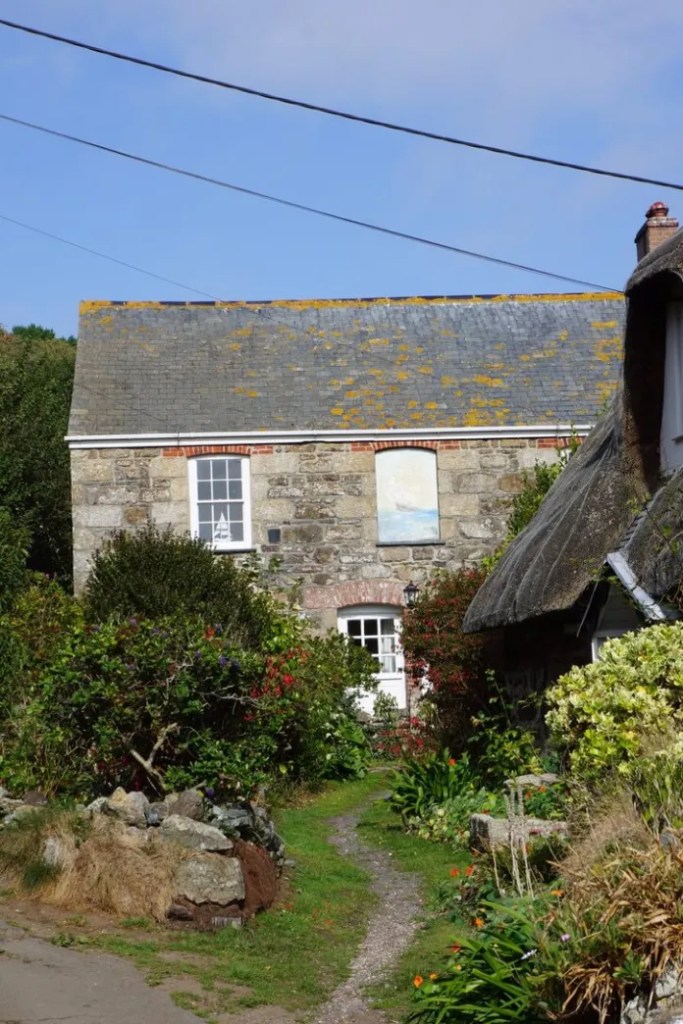
Perched along the rugged coastlines of England, coastal cottages offer a different interpretation of the English cottage aesthetic. Characterized by their weather-beaten exteriors, panoramic views, and proximity to the sea, coastal cottages exude a distinct sense of maritime charm. From quaint fishing cottages in Cornwall to elegant seaside retreats in Devon, these cottages offer a serene escape amidst the beauty of the coastline.
Despite their regional variations, English cottages share a common thread of simplicity, elegance, and connection to the land. Whether nestled in the heart of the countryside or overlooking the sea, these cottages embody a sense of place and heritage that resonates with people around the world.
The concept of the English cottage transcends mere architecture; it is a symbol of tradition, craftsmanship, and rural beauty. From the timeless charm of thatched roofs to the historic allure of Tudor timber frames, each type of English cottage offers a unique glimpse into the rich tapestry of England’s architectural heritage. As these cottages continue to inspire and enchant, they remind us of the enduring appeal of simplicity, authenticity, and the timeless beauty of rural life.
Great British Houses: The Anglophile’s Guide to Britain’s Stately Homes is a comprehensive and fascinating guide to some of the most magnificent and historically significant houses in Britain. This book takes you on a journey through the grandest and most elegant homes, castles, and manors in Britain, and provides you with a wealth of information about their history, culture, and architectural significance.
In this book, you can explore the grandeur of houses like Highclere Castle, the setting for the popular TV series Downton Abbey, or the stunning Blenheim Palace, which was the birthplace of Winston Churchill. You can also discover the majestic beauty of Chatsworth House, which was used as the setting for Pemberley in the BBC adaptation of Pride and Prejudice, and the imposing Castle Howard, which was featured in the classic TV drama Brideshead Revisited. This is just a sampling of the fifty houses in this book, each with a detailed and fascinating history. Each chapter features black and white pictures of the house (and every house has at least one picture).
This book is not only a guide to the finest stately homes in Britain, but also a fascinating insight into the history and culture of the country and a chronicle of the British aristocracy. It provides practical information on how to visit these magnificent houses, as well as a wealth of interesting facts and anecdotes about the houses and their owners, as well as their appearances in movies and TV shows.
Whether you are a history buff, an architecture enthusiast, or simply an Anglophile with a love for all things British, Great British Houses: The Anglophile’s Guide to Britain’s Stately Homes is an essential guide that will take you on a journey through some of the most breathtaking and historic homes in Britain.
A Land Rover Defender first used by the Duke of Edinburgh is heading to auction this weekend.
The Defender was registered in 2010 and used by Prince Philip after being built to his individual specification. This included being painted in the rare color of Keswick Green and finished with a black cloth interior. Heated seats and Land Rover seat covers were also fitted.
The Defender 110 County has covered just 15,623 miles and is being sold from a “significant private collection of special motor vehicles,” according to Silverstone Auctions, which is selling the Land Rover and describes it as being in a “gleaming” condition.
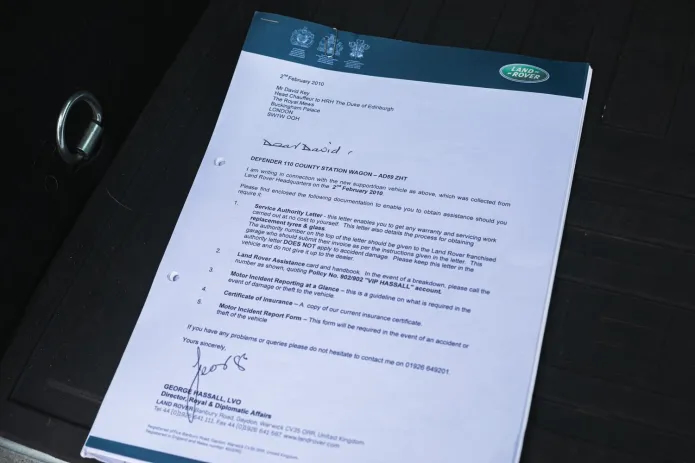
A letter from Land Rover to the Duke of Edinburgh, detailing its provenance, accompanies the sale
Accompanying the sale is a history file containing letters between George Hassall, director of royal and diplomatic affairs at Jaguar Land Rover, to David Key, head chauffeur to the Duke of Edinburgh.
While in royal possession, the Defender is believed to have been assigned the duke’s personal registration number of OXR 2.
It was sold by online auction site Collecting Cars in June 2022 for £44,000 and is now being sold by Silverstone Auctions on Saturday February 25 at its Race Retro sale at Stoneleigh Park, near Coventry, with a guide price of £50,000 to £70,000.
The Duke of Edinburgh had a strong attachment to Land Rovers
Other royal-related cars are also being auctioned, including a 2013 Bentley Mulsanne that was used for royal household duties, as well as a 1942 Ford GPW Jeep that was used by King George VI on a wartime visit to RAF Chelveston that same year.
Philip, who died in April 2021, had a strong connection with Land Rover, using green Freelanders for several years.
He also designed his own specially modified Defender to carry his coffin.
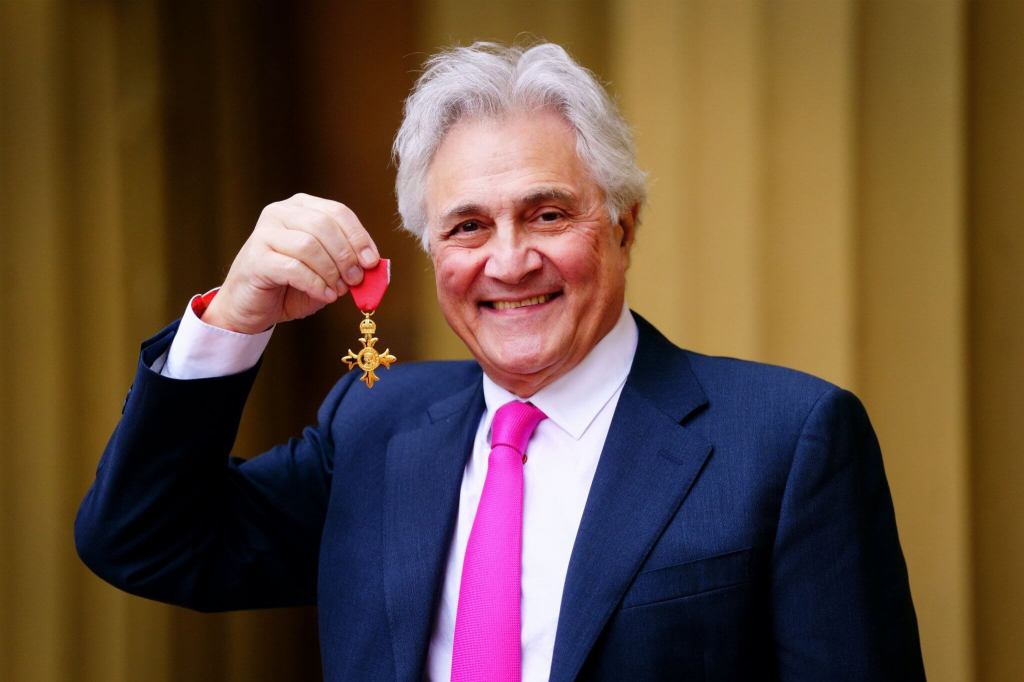
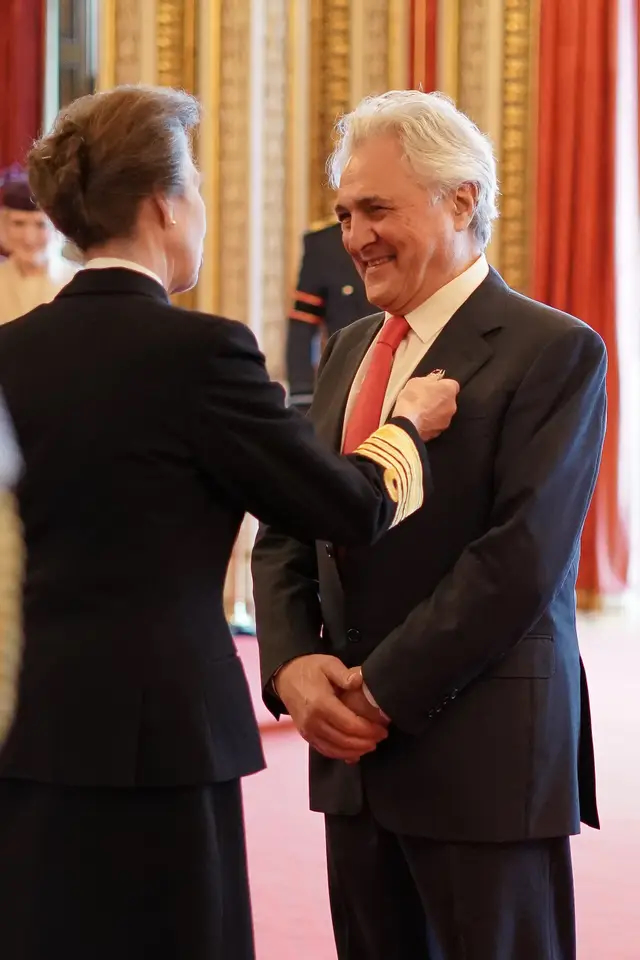
Classic FM host John Suchet highlighted music as the “greatest therapy” when it comes to helping people with dementia after being made an OBE at Buckingham Palace.
Suchet lost his first wife, Bonnie, to dementia in 2015 and is now an ambassador for the Alzheimer’s Society.
He was a journalist for 40 years – starting at Reuters before moving to ITN and becoming a newscaster in 1987, where he stayed until he retired in 2004.
In 2010, he joined the line-up of Classic FM as the new host of its Sunday afternoon program. Last year, he stepped down from hosting a regular weekday show after 12 years and now hosts special programs.
He said he has a “lifelong passion” for classical music – Beethoven in particular.
Suchet was made an OBE for services to journalism and charity on Friday and attended the ceremony with his wife, Nula.
Of his charity work, Suchet told the PA news agency: “The background is that I lost my wife to dementia, and Nula lost her husband (James) to dementia. We met when they were both in the same care home.”
Asked if he thought there was any overlap between his music and charity work, he said: “In the sense that music of any kind is something that does seem always to get through to people with dementia.
“James was an absolute Mozart fanatic and she (Nula) would play him Mozart to calm him.”
John Suchet with the Princess Royal
He continued: “Bonnie … loved Abba. I would play Abba into her headphones and she would sit back in her chair with her eyes closed and tap her feet. She was content.
“With dementia, when words no longer work, music does.”
He added: “It doesn’t cure anything, it just leads to contentment.
“Music is the greatest therapy of all.”
The former journalist wrote a book about losing his wife called My Bonnie: How Dementia Stole The Love Of My Life.
Of his marriage to Nula, Suchet told PA: “No-one would be more pleased than James and Bonnie.”
He continued: “We were able to talk to each other in a way that you can’t talk to anyone else who hasn’t experienced what you’re experiencing.
“Dementia is the cruelest disease in the world because you slowly lose the person you love and you can’t talk to them.”
His hope, as ambassador for the Alzheimer’s Society, is to support scientists to find a cure.
“You pick up the papers today, almost every day of the week, there is another study on how to avoid dementia,” Suchet said.
“One theory after another – there is no proof that any of them work. You have got to leave it to the scientists.
“Keep supporting the people who are doing the research and let’s hope sooner or later they can get to the bottom of it and find what it is that causes that to the body and prevent it happening.”
Suchet called it an “amazing honor” to be made an OBE.
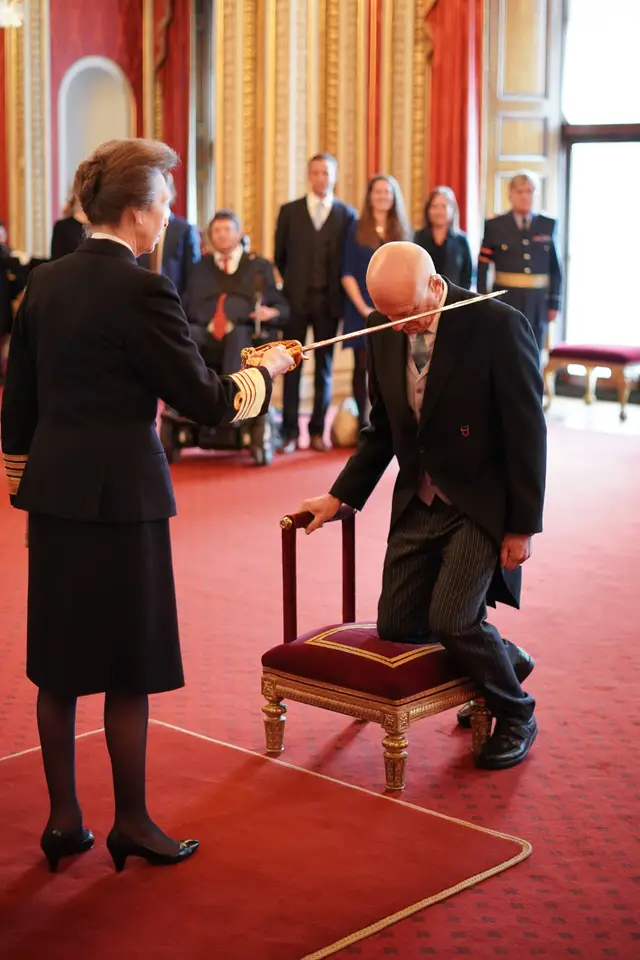
Sir David Nabarro was made a Knight Commander of the Order of St Michael and St George
David Nabarro, special envoy on Covid-19 at the World Health Organisation (WHO) and Chi-chi Nwanoku, the founder of the first professional orchestra in Europe to be made up of a majority of black and minority ethnic musicians, were also honored at Buckingham Palace on Friday.
Sir David was awarded a knighthood, while Ms. Nwanoku became a CBE.
Asked for his take on the UK government’s handling of the pandemic, Mr Nabarro said: “When I’m asked to comment on history in any government, in any country, my position at the moment is to be cautious about judgement. I have no authority to judge. There are inquiries being set up, let them do the judging.
“But I do want each government to learn and apply the learning. For me the biggest lesson of all when you have got something like Covid – the virus is the problem, people are the solution.”
Kim Little, the captain of Arsenal women’s football team, was made an MBE.
She told PA that there has been “a significant increase” in public interest in women’s football after England’s Euro 2022 victory.
Team GB wheelchair basketball player Ghazain Choudhry and celebrity hairstylist Samuel McKnight, who worked with Princess Diana for seven years, were also honored, both being made MBEs.





 London visitor