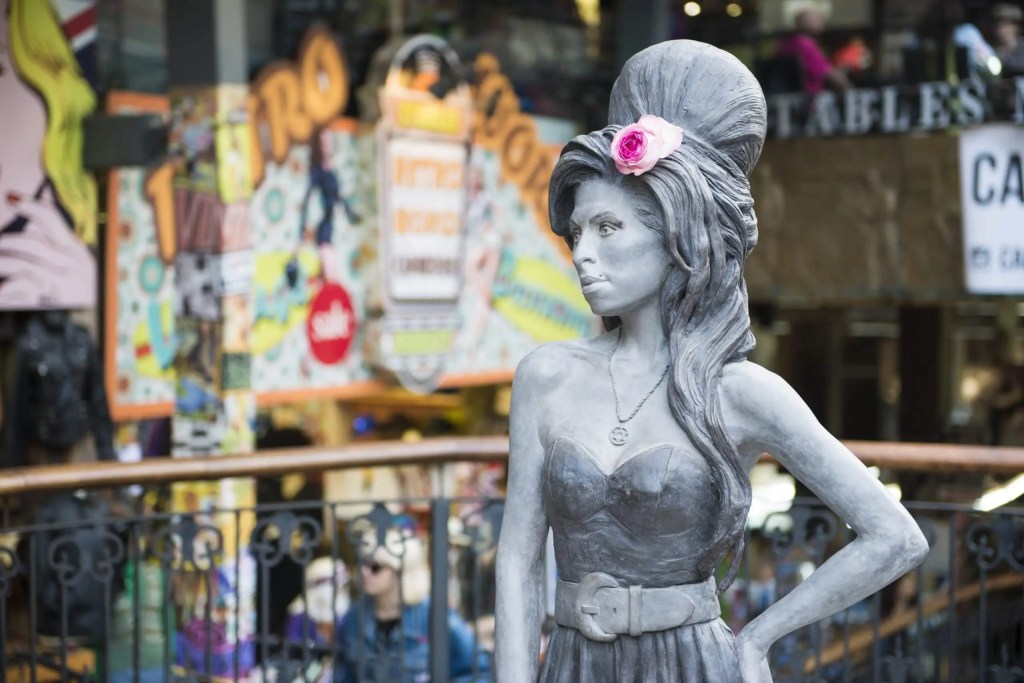
One probably wouldn’t expect for Amy Winehouse’s old band to reunite with a new singer. And yet, somehow, they’ve been touring for years with other singers, and I only just found out about it. This current iteration with Bronte Shande has been going for well over a year, and it sounds pretty good, if you ask me.
Even if the physical resemblance isn’t there, the voice sounds remarkably close to the original. And it certainly helps that the band is a slimmed-down version of the band from I Told You I Was Trouble. The only difference is that the guitarist joined the band shortly after Island immortalised those performances. Well, that and a few members of the band are evidently gone.
And it looks like things are going well enough that they’re putting on a special concert in Camden. The concert will commemorate what would have been her 40th birthday. However, they will not actually fall on that date. Tickets went on presale on September 14, which would actually have been her birthday. Why they chose to do it this way, despite the inherent logic of having a 40th birthday show on said birthday, I don’t know.
The concert will happen on December 22 at Camden’s KOKO. In addition to the band and the new singer, the concerts will also include rare footage of Amy Winehouse. And after looking at the footage I’ve seen is any indication, I can only assume this is going to be good.
If we told you that the British royal family had a hierarchy system, you may think we were pointing out the obvious. However, the truth is that the structure of authority is a bit more complicated than that, with titles to denote the ranks within “the firm” and who stands in the line of succession. These titles all have different meanings, from the Prince of Wales on down to the Earls and Dukes that make up the rest of the family. Today, we’re going to do our best to explain each of the titles in the order of succession and a little about where that title originates.
Prince of Wales
Directly under the King, the title of Prince of Wales has been historically granted to the heir apparent of the Sovereign. Prior to the 13th Century, the title was an evolution of “King of the Britons,” which had been used by Celtic Britons, the ancestors of the Welsh. Various Welsh princes used the title Prince of Wales to unite their countrymen against the English. However, that came to an end when King Edward I defeated the Welsh forces, made the country a principality of England, and gave the title to his oldest son. Prince William currently holds the title.
Duke of Sussex
After Prince William and his children, the next in the line of succession is Prince Harry, Duke of Sussex. While the Duke of Sussex may seem like a title specifically created for Harry, the first creation of the title occurred in 1801 when King George III created it for his son, Prince Augustus Frederick. The Dukedom died with him in 1843 and was not revived until Queen Elizabeth II bestowed it on Harry after his marriage to Meghan Markle.
Duke of York
Traditionally, the title of Duke of York has been bestowed upon the second son of the Sovereign but originated with the Viking Erik Bloodaxe, the last King of Jorvic (the Viking name for York). It was created as a peerage title for King Edward III’s son Edmund of Langley in 1385, then passed to his sons until his line died out. It was next created for Richard of Shrewsbury, the son of King Edward IV, who was one of the “Princes in the Tower”, then for Henry Tudor, son of King Henry VII, who eventually became King Henry VIII, and the title merged into the Crown. It was created several more times since, with the most recent title holder being Prince Andrew, who will surrender the title on his death as he has no legitimate sons.
Duke of Edinburgh
When people think of the Duke of Edinburgh, Prince Philip is probably the first person who comes to mind. However, the title is much older than that and was created for Prince Frederick by his grandfather, King George I. The title then passed to Frederick’s son, Prince George, and it merged with the Crown when George became King George III. It was created again in 1866 and then in 1947, the latter time for Philip Mountbatten when he married Princess Elizabeth (later Queen Elizabeth II). After Philip’s death, the title reverted to Prince Charles and was not bestowed again until he ascended the throne and bestowed it upon his brother, Prince Edward, in 2023.
Earl of Wessex
Earl of Wessex is a title that’s only been created twice in British history, the first time being during the Anglo-Danish period when it was bestowed on Godwin by King Cnut around 1019 AD. The title passed to Godwin’s son Harold and extinguished with Harold’s death at the Battle of Hastings in 1066. It wasn’t created again until Prince Edward married in 1999, the tradition being to grant sons of the monarch titles upon being wed. As mentioned above, Edward was styled Duke of Edinburgh after his father’s death and brother becoming king, with the title Earl of Wessex passing to Edward’s son James.
Princess Royal
Princess Royal isn’t a dukedom or earldom but instead a title normally bestowed to the monarch’s eldest daughter. It was first created in the 17th Century when Queen Henrietta Maria, wife of King Charles I, wanted to mirror the French court from which she came by having a royal title for the eldest child. The title was subsequently bestowed upon her daughter, Princess Mary, and merged with the Crown when she became Queen Mary II. It has been held six times since, with the most recent holder being Princess Anne, who will relinquish it to the Crown on her death.
Earl of Snowdon
Earl of Snowdon is one of the only titles on this list that was created in the 20th Century. Before its creation, the title of Baron Snowdon was held by the aforementioned Prince Frederick and merged with the Crown when his son became King George III. The current title was bestowed upon Antony Armstrong-Jones by Queen Elizabeth II when he married Princess Margaret and, as a life peerage, remained with him after their divorce. On his death in 2017, his son with Princess Margaret, David Armstrong-Jones, inherited the title.
Duke of Gloucester
The title Duke of Gloucester was first conferred to Thomas of Woodstock, the thirteenth child of King Edward III. It was created several more times, with the most famous (or infamous) holder being Richard of York, the future King Richard III. Its last creation was for Prince Henry, the fourth child of King George V, who passed the title to his son, Prince Richard, who still holds it today.
Earl of Ulster
Earl of Ulster is a peerage title that was originally created by King Henry II after the Norman Invasion of Ireland. It was most recently created as another title for Prince Henry and then held by his son, Prince Richard, until Richard became Duke of Gloucester. The current title holder is Richard’s son, Alexander Windsor, who uses it as a courtesy title.
Duke of Kent
The Title Duke of Kent is another that was born out of the ancient Anglo-Saxon kingdoms and was styled Earl of Kent as a subset of the Earls of Wessex. After the Norman Invasion, the title was bestowed upon several individuals until Henry Grey, the then-current earl, was styled Marquess of Kent and later elevated to Duke of Kent. It became extinct, was revived as an earldom, then went extinct again before King George V revived it for his fifth child and fourth son, Prince George, in 1934. The current title holder is his son, Prince Edward.
The king who lost the American colonies before he lost his mind, King George III, is defined by more than the American Revolutionary War and his later “madness.” He set a number of records for the monarchy and helped to further transform it into the institution that we recognize today. From a large family to the first palace Christmas tree, there’s quite a lot about King George III that you might not know. You’d be “mad” to skip this article about one of the most influential Hanoverians in the history of the Crown.
A Bit Early
Many parents know the anxiety that surrounds the premature birth of a child, and George’s parents, Frederick, Prince of Wales, and Princess Augusta of Saxe-Gotha, were no different. George arrived two months early, and it was thought that he wouldn’t survive, so his parents had him baptized the same day.
A First
George was also the first Hanoverian monarch to be born in the United Kingdom, as his grandfather and great-grandfather were both born in present-day Germany.
Skipping a Turn
While his father, Frederick, was the heir presumptive to King George II, Frederick unfortunately died from a lung abscess (caused by either a cricket ball or a tennis ball) in 1751. George inherited his father’s title of Duke of Edinburgh, and while George II had shown little interest in his grandchildren before, he became a lot more invested in his eldest grandson. He created the younger George as Prince of Wales three weeks after Frederick’s death, and when George II died in 1760, George III ascended the throne at the age of twenty-two.
A Golden Ride
King George III commissioned the Golden State Coach in 1760 at a cost of £7,562 (nearly £280,000 today). The Golden State Coach is still used by the Royal Family for official functions.
Love Makes You Crazy
As a young man, George fell for Lady Sarah Lennox—and he fell hard. In fact, he was a bit obsessed with her. When he heard she might be interested in another man, he locked himself in his room for hours. He also had trouble sleeping. It took his mother’s adviser, Lord Bute, to knock him out of it by convincing him that Lennox wouldn’t make a good match. King George II tried to pair him off with Princess Sophie Caroline of Brunswick-Wolfenbüttel, but Prince George and his mother resisted that idea. George would marry Princess Charlotte of Mecklenburg-Strelitz in 1761, with their wedding being the first time they ever met. Despite not having an extended courtship, they had quite a loving marriage that produced a total of fifteen children.
A Palace Fit for a Queen
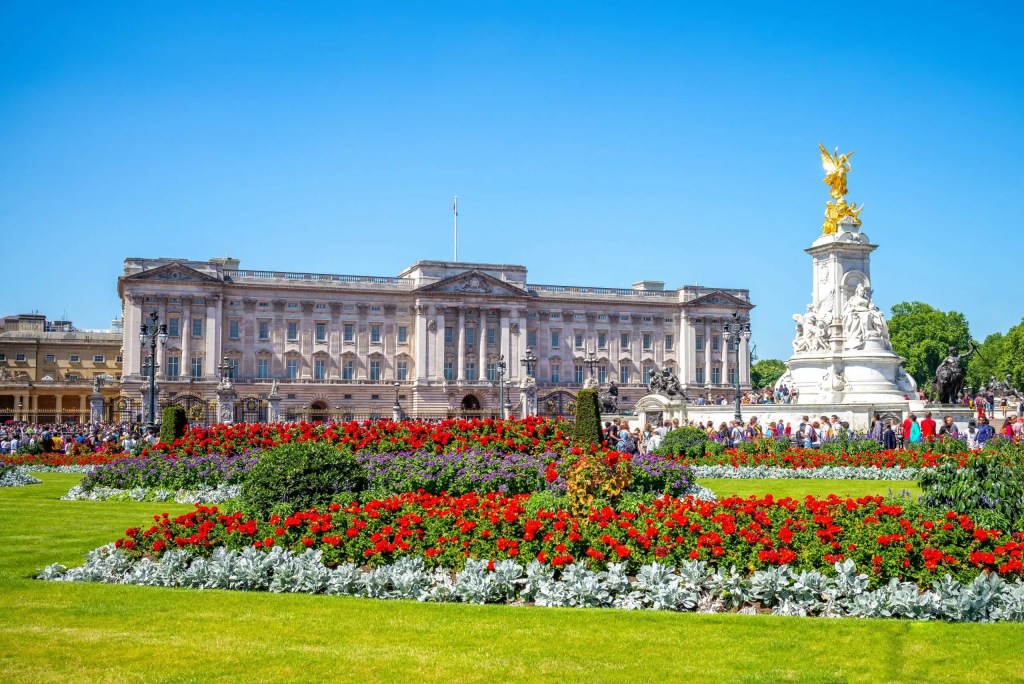
George loved Charlotte so much that he purchased Buckingham House from John Sheffield, Duke of Buckingham and Normandy, in 1761. The house was to serve as her private retreat that was close to court functions at St. James’s Palace and was known as Queen’s House while she lived there. The name Buckingham Palace was first used in 1791, and the first monarch to use it as their primary residence was Queen Victoria.
Farmer George
King George III had a great interest in agriculture and a significant library on the subject, which ended up earning him the nickname “Farmer George.”
The First Christmas Tree
While Prince Albert gets the credit for introducing the Christmas Tree to Britain, he wasn’t the first royal to bring the custom into the royal palace. Queen Charlotte actually brought the tradition into Buckingham Palace from her native Mecklenburg-Strelitz.
Mental Illness
No one really seems to know what caused George III’s bout of temporary insanity from 1788 to 1789, though theories range from genetic porphyria to arsenic, which was common in medicines and cosmetics of the time. While he recovered from this first mania in 1810, he became permanently deranged, and his son, Prince George, had to act as Prince Regent.
Long May He Reign
From 1760 to his death in 1820, King George III spent nearly 60 years on the throne, dying just a couple of months shy of his Diamond Jubilee. While Queen Victoria and Queen Elizabeth II have reigned for much longer, George III is still the longest-reigning king in the United Kingdom’s history.
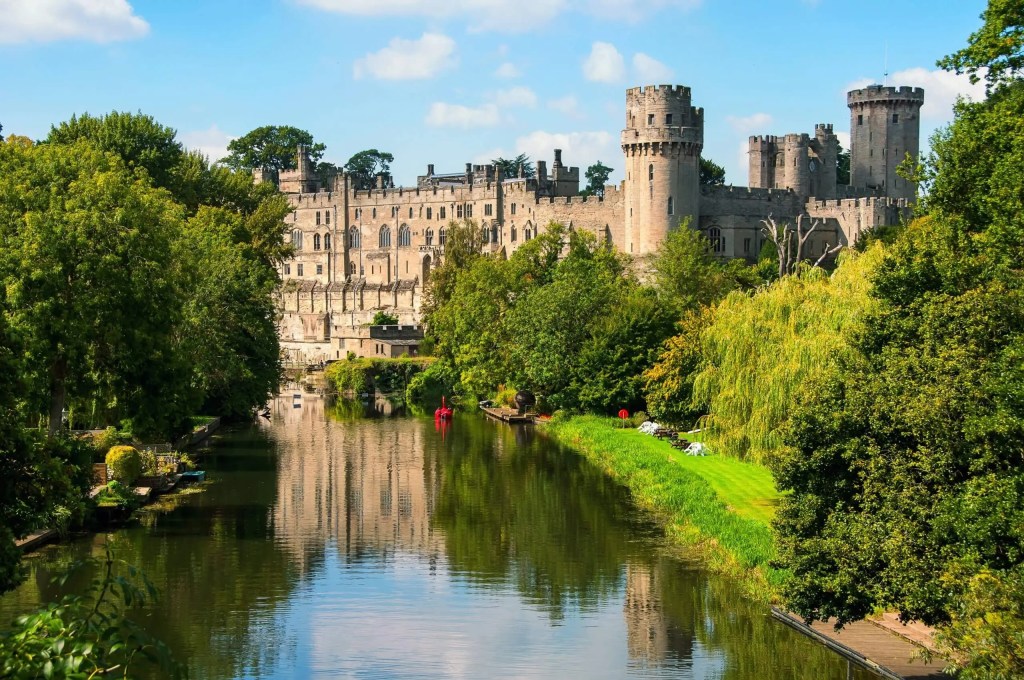
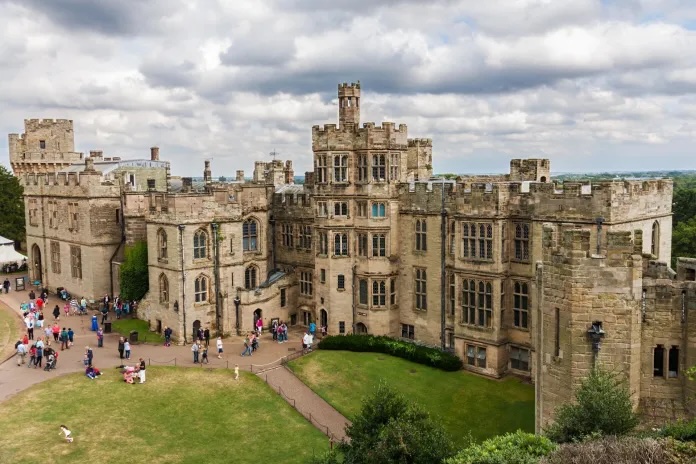
Silhouetted against the Warwick skyline, the mighty towers of Warwick Castle have born witness to over nine centuries of British history. This magnificent medieval fortress, a true symbol of power and fortification, has weathered sieges, royal ownership, and the passage of time itself to emerge as one of England’s most captivating attractions. Step across the castle threshold, and you’ll be transported to an era of chivalry, battles, and larger-than-life legends.
Five Key Facts
Originally built by William the Conqueror in 1068, Warwick Castle is one of the few castles from the Norman Conquest still largely intact.
It remained a fortified residence until the early 17th century when it was granted to Sir Fulke Greville, who converted it into a country house.
The castle boasts some of the most complete defensive architecture from the medieval period, including towers, ramparts, and a massive curtain wall.
It is famously linked to the Kingmaker, Richard Neville, whose bitter dynastic conflict with the House of York was pivotal in the Wars of the Roses.
Warwick Castle is now under the stewardship of the Tussauds Group, featuring wax figures, exhibits, shows and year-round events.
Geographic Setting
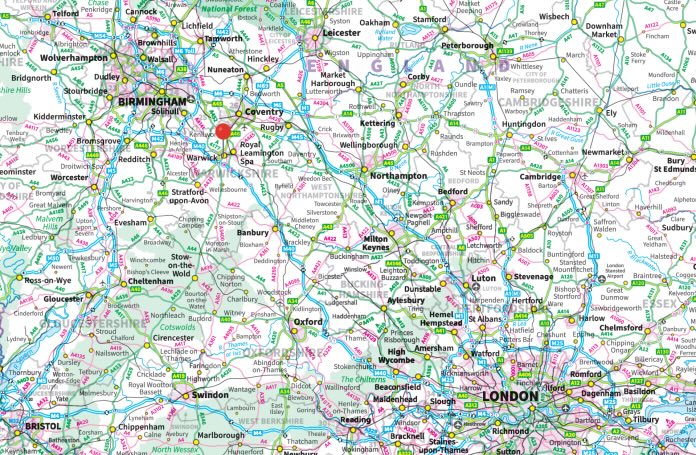
Warwick Castle commands an imposing presence on a sandstone bluff at a bend of the River Avon in the town of Warwick, England. Its elevated vantage point and proximity to the river made it a formidable defensive site in medieval times. The castle’s gray stone facades and robust architecture create a striking contrast against the idyllic Warwickshire countryside surroundings.
The Fascinating Origins of Warwick Castle
While records indicate an early fort stood on the site in the 6th century, Warwick Castle’s story begins with the Norman Conquest of 1066. William the Conqueror constructed the first castle here in 1068 as part of his campaign to control and subjugate the rebellious English following his victory at Hastings. This initial motte-and-bailey castle provided a strategic fortification along the River Avon to discourage revolt and project Norman authority into the Midlands region.
The Fortified Armaments
By the 14th century, Warwick Castle was an imposing fortress bristling with formidable defenses sculpted from the golden Warwickshire sandstone. Immense curtain walls lined with crenellations and towering gatehouses guarded the approaches. The Caesar’s Tower, one of the castle’s most iconic features, allowed archers to launch volleys of arrows upon any would-be invaders from its elevated ramparts.
Within the walls lay a defensible labyrinth – a series of killing grounds, portcullises, murder holes and gatehouses designed to entrap unlucky attackers. The entire ingenious design was reinforced by a massive 60ft wide dry moat and earthworks, becoming one of the most powerfully fortified castles of the medieval period.
The Kingmaker and Wars of the Roses
For two decades in the tumultuous 15th century, Warwick Castle was the power base of Richard Neville, the notorious “Kingmaker” whose political machinations proved pivotal in the Wars of the Roses dynastic conflict. He was one of the realm’s wealthiest and most influential figures, switching allegiances to support first the Lancastrian and then the Yorkist royal houses.
The castle hosted the ceremony where Neville removed the Lancastrian Henry VI and helped the Yorkist Edward IV take the throne in 1461. However, his excessive authority making and unmaking kings eventually led to his demise at the Battle of Barnet in 1471. The legacy of the Kingmaker casts a long shadow over Warwick’s history.
Restoration and Gardens
Over the passing centuries, Warwick Castle underwent many alterations. In the late 16th century, it was converted from a fortified castle into a lavish, unfortified mansion by Sir Fulke Greville. Remodeling by architects like Sir William Dugdale in the 1600s created more palatial interiors and landscaping.
The magnificent gardens and grounds took shape during this era under the vision of the immensely wealthy and trendsetting Earls of Warwick. The landscaping featured an array of garden “rooms” enclosed by hedgerows and walls, as well as an orangery, greenhouses, and landscaped parklands surrounding the River Avon.
Today’s Warwick Castle
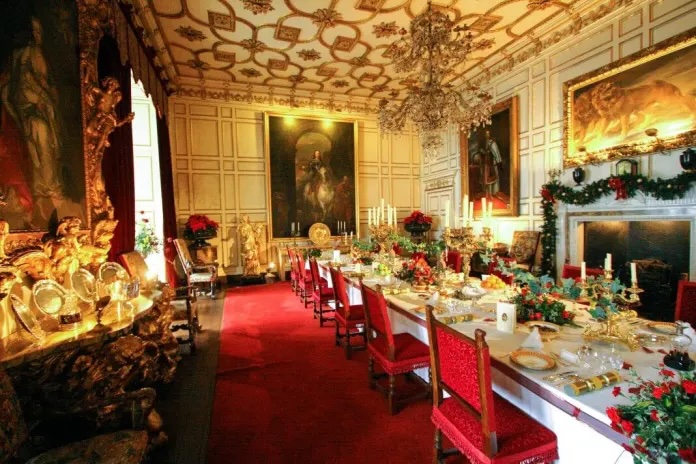
In the modern era, Warwick Castle has been restored and reimagined as one of Britain’s most acclaimed heritage sites (it is now operated by theme park operator Merlin Entertainment). Visitors can climb the ramparts, explore the lavish interiors like the gilded State Rooms and Great Hall, watch live shows reenacting medieval events or explore the Peacock Garden modeled on 17th century designs.
The legacy of Warwick Castle spans from its medieval warrior heritage to 19th-century Victorian romanticism. With its magnificent towers and fortifications still gloriously intact, this ancient castle remains an enthralling ambassador to Britain’s turbulent feudal history.
Visiting Information
Now one of the most visited and best-preserved castles in Britain, Warwick Castle offers an immersive look into medieval life. Highlights include climbing the Cesar’s Tower ramparts, exploring the Great Hall and State Rooms, witnessing thrilling shows like the “Scorched Earth” evening exhibitions, and strolling the Georgian-era grounds and gardens. Interactive exhibits, falconry displays, and daily shows bring history alive. See the official website for booking information (booking in advance is recommended and will save you a few pounds).
Recommended Reading
“Warwick Castle” by the Countess of Warwick (1903)
“Castles of England” by Sir Banister Fletcher (1987)
“Medieval Fortifications” by John Kenrick (1988)
“Warwick Castle and its Mighty Protector” by John Martin Robinson (1991)
“The Castle Builders: Masons and Builders in the Middle Ages” by Malcolm Hislop (2017)
The Channel Islands are a geographic archipelago consisting of two political organizations: the Bailiwick of Guernsey and the Bailiwick of Jersey. Both of these are crown dependencies, or self-governing positions of the United Kingdomand include numerous other islands including Herm, Sark, Borhou, and Alderney. Being so close to France, the islands have an interesting mix of English and French cultures and a fascinating history that includes English castles, French authors, and even occupation by Nazi Germany. The coastlines, mountains, wetlands, and habitats re beautiful and worth seeing. We have outlined ten things we think you should see on the Channel Islands and if you think we left something out, let us know in the comments.
La Coupee – Sark
Certainly not a walk for those afraid of heights, La Coupee can be found in the Island of Sark and connects the Big Sark and Little Sark. This causeway rises sharply and provides wonderful views of the Channel and other islands.
Shell Beach – Herm
So named for the wide variety of different shells you can find there, Shell Beach on Herm Island is one of the longest stretches of beach on any of the Channel Islands. Shell Beach measures at nearly three-quarters of a mile and offers quite a lot of space for visitors as well as necessary beach amenities from ice cream to water toys.
Hauteville House – Guernsey
Also known as the Victor Hugo House, Hauteville House was Hugo’s residence on Guernsey from 1856 to 1870 during his exile from France. Originally built by an English privateer and spent some time before Hugo acquired it empty as it was feared to be haunted. Today it is a house museum for the author and is gorgeous within and without.
Victoria Tower – Guernsey
Victoria Tower looks like the world’s biggest chess piece and was constructed in 1848 to honor Queen Victoria’s visit to the island two years earlier. For a time it was closed to the public but has been open again since 2006 and offers some spectacular views of Guernsey.
Jersey Museum and Art Gallery – Jersey
Jersey Museum and Art Gallery offers visitors a chance to engage with the history of the bailiwick as well as immerse themselves in the culture of this island. The museum’s artefacts go back 250,000 years, and the gallery includes works from local artists. You can even learn the island’s own unique blend of English and French.
World War II Sites – Multiple locations
From 1940 to 1945, the Channel Islands were the only British territories occupied by Nazi Germany. The German Occupation Museum on Guernsey is one of best overall museums of this period, though it’s also worth visiting the La Valette Underground Military Museum in St. Peter Port which was a refueling station for U-Boats, the Jersey Tunnels that operated as a German hospital, and the Lager Sylt Concentration Camp on Alderney. Each offers a different picture of what life was like for the island residents living under Nazi control.
Sausmarez Manor – Guernsey
One of the finest examples of a manor house in the Channel Islands, the Sausmarez family has been one of the most important families on the Island of Guernsey since the 12th Century. The manor house has been through several incarnations, and its current family has lived here for several generations over 600 years. House and garden tours are offered throughout the year, and there is even a ghost tour for the brave of heart.
Jersey Zoo – Jersey
The Jersey Zoo is one of the islands’ top attractions since it opened in 1959 and offers a wonderful opportunity to come into contact with a wide variety of animals, even some you won’t find anywhere else. Formerly known as Durrell Wildlife Park, it is home to gorillas, lemurs, tropical birds, meerkats, and local reptiles and amphibians.
St Peter Port – Guernsey/St Helier – Jersey
The hub of life in Guernsey, St Peter Port is the capital of the Bailiwick of Guernsey and is home to many of the attractions on this list. It also includes some great shopping and dining opportunities, making it a top destination for your trip to the islands. Likewise, St Helier, the capital of Jersey, offers numerous opportunities to engage in that island’s history and culture, starting with Liberation Square and wandering outwards from there.
Mont Ogueil Castle – Jersey
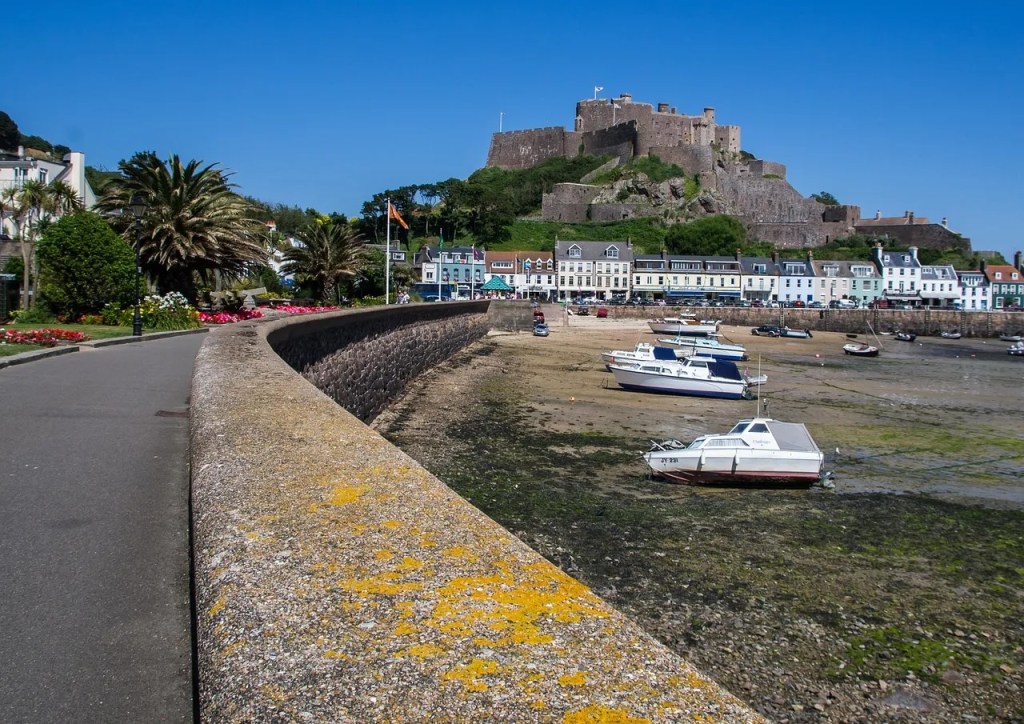
Also known as Gorey Castle, Mont Ogueil has been a defensive fort for the Island of Jersey since the time of King John. It has been a part of most of Britain’s major conflicts ever since, including World War II when German forces added modern lookout towers intended to blend in with the castle’s ancient architecture. Having seen so much use, it is incredibly well-preserved and offers tours regularly.
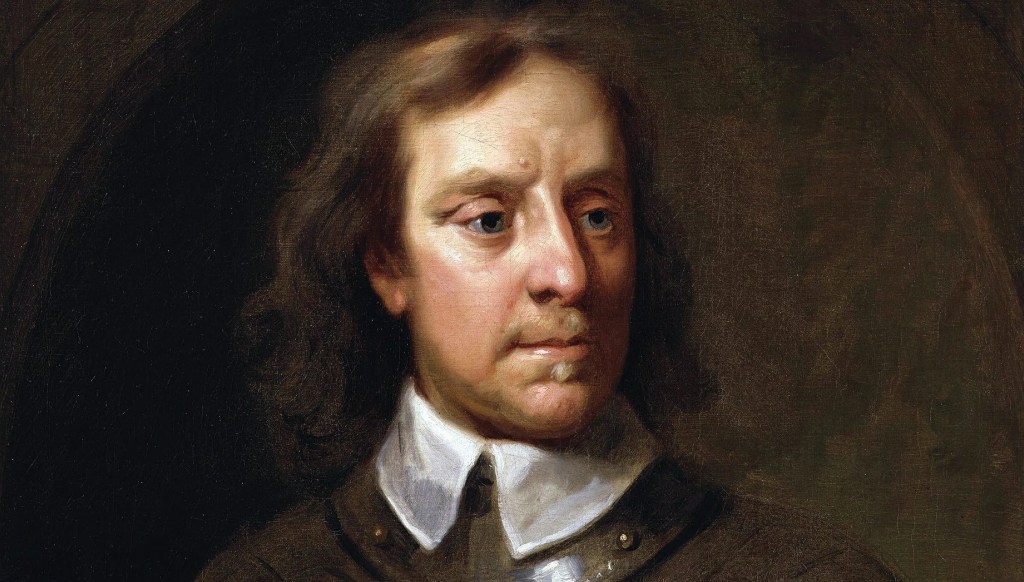
Around this time of year, stories and rumors float around on the internet about bans on Christmas, but there’s really only one time in history that the holiday was effectively canceled by a governmental authority. Some believe that Oliver Cromwell personally canceled Christmas during the Commonwealth period, but that’s not the whole of it. The banning of Christmas actually began with Puritan leaders in England long before reaching the halls of Parliament, where legislation nearly killed the holiday for good. Have a look at the circumstances that gave rise to the Puritans’ war on Christmas, how the ban manifested, and the holiday’s slow recovery.
The period of the English Civil War and the ultimate Parliamentarian victory in 1645 coincided with a growing Puritan religious movement, both of which transformed Britain’s government and culture. For decades prior, more orthodox Protestant leaders in England had preached against the celebration of holidays as doing so felt too close to Catholic ceremony as well as the potential for sin that came with making merry. As Puritan influence grew in Parliament, the first attempt at limiting Christmas celebrations came in 1643 when Parliament issued a statute that stated Christmas was meant to be a day of solemn fasting and penance. However, the decree from Parliament was widely disregarded.
The next year was a different story. Whereas King Charles I had largely allowed and promoted the celebrating of holidays, Cromwell was of the mind to clamp down on Parliament’s Act banning the holiday’s celebration, partially under his mistaken belief that Charles was a secret Papist. The 1644 ordinance reinforced the previous year’s ban and added the holidays of Easter and Whitsun (also known as Pentecost). The public did not take well to the edict, and many businesses closed in protest on Christmas Day while some that remained open in keeping with the law were attacked. Throughout England, pro-Christmas riots often resorted in violence and calls for the Restoration of the monarchy.
By the time that King Charles I was executed in 1649, enforcement of the ban was much harsher. By 1652, Parliament decreed that December 25th should not be marked by any special religious services, and soldiers stripped churches of their Christmas decorations. In 1656, armed soldiers were patrolling the streets of London, seizing food being prepared for the holiday. In 1657, a congregation was arrested in Exeter Chapel for observing the sacrament on Christmas Day. Such draconian enforcement of the law remained in place until the Restoration in 1660, when King Charles II was established as the Sovereign.
Christmas was back, but wasn’t quite the same. In the wake of the Puritan assault on the holiday, celebrations were much more subdued, and increasing urbanization saw festive celebrations move away from the city and into the countryside. Christmas as we know it today would not begin until the Victorian Period. It was during this time that Prince Albert helped popularize the German tradition of a Christmas tree (something originally begun with the Hanoverian Dynasty). Additionally, Charles Dickens’s publication of A Christmas Carol helped bring the holiday back to England’s cities as well as popularizing many Christmas traditions, including the saying of “Merry Christmas.” Dickens’s work helped to emphasize a charitable take on the holiday as well as revitalizing family gatherings, holiday meals, and fun.
So, as you sit down with your family to have Christmas dinner, sing carols, worship, and give each other gifts, remember there was a time when such traditions were not possible. It came from a group that forced a strict observance of its own orthodox views on the remainder of the country and was roundly resisted by those who felt that love for their fellow humans should be celebrated at the birth of Christ.
Whether you’re a child or a child at heart, watching cartoons can be a fun time for all. If you run out of American cartoons to watch, we can suggest a number of great British cartoons to put into your viewing queue. Perhaps not as well known as series like Danger Mouse or Shaun the Sheep, the five cartoons that we present below are no less enjoyable. From the latest TV adaptation of Paddington to a series of web-published shorts, we have identified some newer cartoons that we think you should watch and where to find them. If you have some suggestions of your own, you can share them and their viewing platforms with us in the comments.
Simon’s Cat – YouTube
Artist Simon Toefield created the animated adventures of his cat in 2008. Featured in a series of books and animated shorts, Simon’s Cat is affectionate, stubborn, and clumsy. He is almost always on the hunt for food and letting his owner, Simon, know how hungry he is (even if he’s just eaten). Many of the cartoons can be found on the animator’s website (www.simonscat.com) or on YouTube.
Thomas & Friends – Amazon Prime
If you grew up in the States, you likely remember the animated Thomas the Tank Engine cartoons from the show Shining Time Station. The American version incorporated various shorts from Thomas & Friends, which itself was based on The Railway Series of books by Reverend Wilbert Awdry. Seven seasons of the classic series and seasons 18 through 22 are available to watch through Amazon Prime, along with a number of specials. Sure, they won’t have Didi Conn, Ringo Starr, or George Carlin, but Thomas has endured since the 1980s as one of the most popular children’s animated characters for a reason.
Sarah & Duck – Tubi
This charming cartoon ran for three seasons from 2013 and featured the adventures of little Sarah and her pet duck. Throughout the series, Roger Allam provided the voice of the narrator, who would often engage Sarah & Duck in conversations and ask them questions (the narrator also isn’t above the occasional punny dad joke). The cartoon is very child-focused, with parents not appearing (though other adults do), and is animated in the style of a child’s drawings. This charming series can be found on two different platforms, notably Tubi and Pluto TV, though it’s available for purchase through several other streaming services.
Mr. Bean – Amazon Prime
If you like the classic Mr. Bean series with Rowan Atkinson, get ready for its animated counterpart. While Atkinson could have easily passed on the voice acting to another actor (a.k .a. Jackie Chan Adventures), he nonetheless voices the character himself throughout all five seasons. The show very much continues Bean’s wacky escapades, from Teddy being stolen by burglars to making his own viral video. Three seasons are available to watch courtesy of Amazon Prime through FreeVee, which is an ad-supported video streaming service.
The Adventures of Paddington – Paramount Plus
The latest animated series to adapt the works of Michael Bond, the Adventures of Paddington, started in 2019. It builds on the popularity of the more recent Paddington films and is entirely 3D animated. While hardly any of the movie cast participates in the show, Paddington Bear himself is still voiced by Ben Whishaw. The basic premise of this adaptation is that Paddington is writing letters back to his Aunt Lucy in Darkest Peru, telling her what all he has been up to on any given day. So far the series is on its second season and can be found on Paramount Plus.
The English landscape garden, also known as the English landscape park or simply the English garden, is a style of garden that emerged in the early 18th century in England and spread across Europe. This style broke away from the formal, symmetrical gardens of the past, influenced by the French and Italian traditions, and introduced a more naturalistic approach to garden design. The English landscape garden is characterized by its expansive, flowing lawns, serpentine lakes, clumps of trees, and classical architecture, all designed to create an idealized version of nature. Here’s we’ll explore the elements that make a great landscape garden, famous gardeners and some of the best gardens in England worth visiting.
The Arcadian Ideal
At the heart of the English landscape garden is the ‘Arcadian’ ideal, a concept that has its roots in ancient Greece and Rome. Arcadia was a region in the Peloponnese, celebrated in classical literature as a rural paradise where humans lived in harmony with nature. The term ‘Arcadian’ came to signify an idyllic vision of unspoiled nature, pastoral simplicity, and rustic beauty. This ideal was revived during the Renaissance and became a powerful influence on the arts and literature of the 17th and 18th centuries.
In the context of the English landscape garden, the Arcadian ideal was about creating a naturalistic landscape that evoked the pastoral scenes depicted by poets like Virgil and Theocritus and artists such as Claude Lorrain and Nicolas Poussin. These landscapes were designed to look effortlessly beautiful and harmonious, as if they were untouched by human hands, even though they were meticulously planned and maintained.
Key Features of the English Landscape Garden
The English landscape garden is defined by several key features that distinguish it from other garden styles:
Sweeping Lawns: Expansive lawns that appear to flow seamlessly into the surrounding countryside are a hallmark of the English landscape garden. These lawns create a sense of openness and freedom, blurring the boundaries between the garden and the natural landscape.
Naturalistic Planting: Unlike the formal gardens with their regimented flower beds and clipped hedges, the English landscape garden uses more naturalistic planting schemes. Trees and shrubs are often grouped in clumps or groves, with an emphasis on native species.
Serpentine Lakes and Rivers: Water features play a crucial role in the design, often in the form of sinuous lakes and winding streams that reflect the sky and surrounding foliage. These water features add movement and tranquility to the landscape.
Ha-Ha: A ha-ha is a recessed landscape design element that creates a vertical barrier while preserving an uninterrupted view of the landscape. It is a type of sunken fence that keeps livestock out of the garden without the need for visible fencing.
Classical Architecture: The inclusion of classical buildings and ruins, such as temples, follies, and bridges, is a common feature. These structures serve as focal points and enhance the romantic, Arcadian atmosphere.
Pastoral Scenes: Features that evoke pastoral life, such as sheep grazing on the lawns or a picturesque dairy, are often incorporated to reinforce the rural idyll.
Curving Paths: Meandering paths and drives are designed to lead visitors through the garden, revealing a series of carefully composed views and ‘picturesque’ scenes at every turn.
Famous Landscape Architects
Several landscape architects have made significant contributions to the development and popularity of the English landscape garden:
Lancelot ‘Capability’ Brown: Often considered the greatest of the English landscape gardeners, Brown earned the nickname ‘Capability’ because he would tell clients that their land had great capabilities for improvement. His designs emphasized smooth, rolling lawns, serpentine lakes, and clumps of trees, creating a naturalistic and harmonious landscape. Notable examples of his work include Blenheim Palace, Chatsworth House, and Stowe.
William Kent: An early pioneer of the English landscape garden, Kent was also an architect and painter. He introduced the Palladian style to garden design and incorporated classical themes and structures. His work at Rousham, Chiswick House, and Stowe set the stage for the naturalistic style that Brown would later perfect.
Humphry Repton: Repton followed in the footsteps of Capability Brown and became the leading landscape gardener of his generation. He continued to develop the principles of the English landscape garden, often producing ‘Red Books’ for his clients that illustrated his proposed designs. Some of his notable works include Woburn Abbey, Kenwood House, and Sheringham Park.
Charles Bridgeman: As an earlier proponent of the naturalistic style, Bridgeman’s work served as a bridge between the formal gardens of the late 17th century and the more relaxed, informal style of the English landscape garden. His designs at Stowe and Claremont are particularly notable.
Top Landscape Gardens to Visit in England
England is home to many magnificent landscape gardens that showcase the beauty and elegance of this style. Here are some of the top gardens to visit:
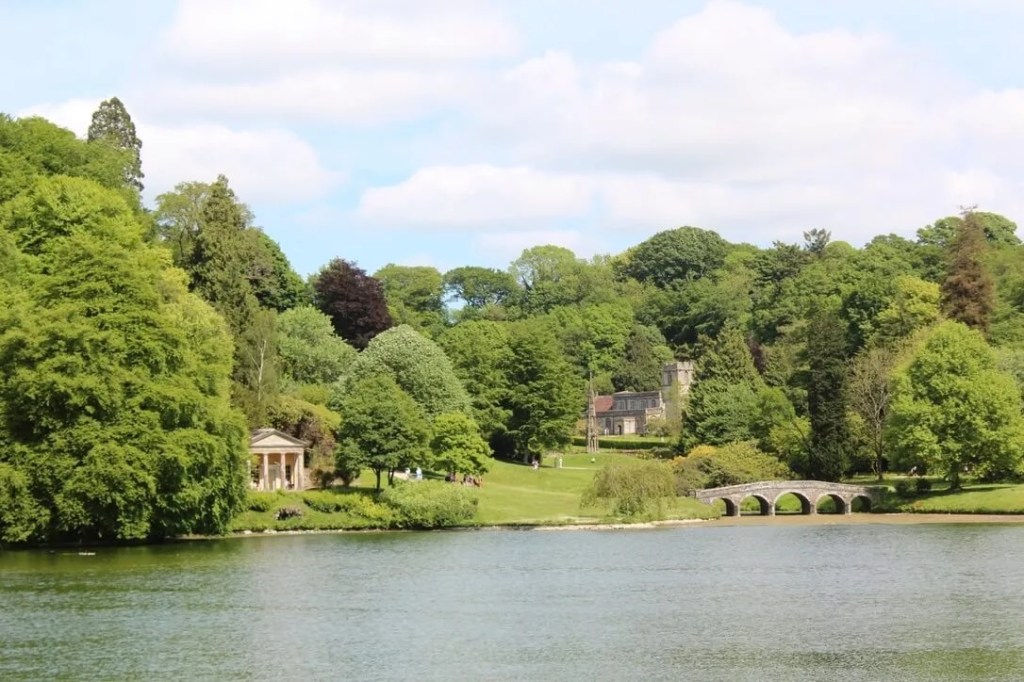
Stowe Landscape Gardens, Buckinghamshire: Designed by Charles Bridgeman, William Kent, and Capability Brown, Stowe is one of the most important and influential landscape gardens in England. It features a series of classical temples, follies, and monuments set within a beautifully designed naturalistic landscape.
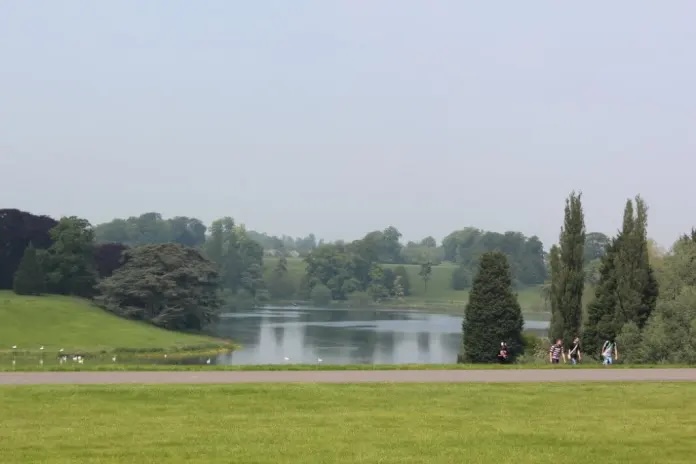
Blenheim Palace, Oxfordshire: A UNESCO World Heritage Site, Blenheim Palace boasts gardens designed by Capability Brown. The extensive grounds include sweeping lawns, a grand lake, and a variety of formal and informal gardens.
Rousham House, Oxfordshire: William Kent’s masterpiece, Rousham is a perfect example of the English landscape garden. The garden includes a series of carefully composed scenes, classical statues, and a picturesque rill.
Chatsworth House, Derbyshire: Known for its impressive gardens, Chatsworth features work by Capability Brown, including the famous Cascade and the Emperor Fountain. The garden also includes a maze, rock garden, and sculptures.
Claremont Landscape Garden, Surrey: With contributions from Charles Bridgeman, William Kent, and Capability Brown, Claremont is a historic garden that exemplifies the evolution of the English landscape garden. It includes a serpentine lake, amphitheater, and grotto.
Painshill Park, Surrey: Created by Charles Hamilton, Painshill is a beautiful example of the English landscape garden, featuring a serpentine lake, grotto, and a variety of follies, including a Turkish tent and Gothic temple.
Stourhead, Wiltshire: One of the most famous landscape gardens in England, Stourhead was designed by Henry Hoare II and includes a magnificent lake, classical temples, and a grotto. The garden is renowned for its picturesque beauty and harmonious design.
Sheffield Park, East Sussex: Originally designed by Capability Brown and later developed by Humphry Repton, Sheffield Park features lakes, waterfalls, and a stunning array of trees and shrubs. The garden is particularly beautiful in autumn when the foliage turns vibrant shades of red and gold.
Sissinghurst Castle Garden, Kent: Created by Vita Sackville-West and Harold Nicolson, Sissinghurst is not a pure landscape garden but incorporates many elements of the style. The garden is famous for its romantic and intimate design, with a series of ‘garden rooms’ and beautiful vistas.
Kenwood House, London: Set within Hampstead Heath, the gardens of Kenwood House were designed by Humphry Repton and offer sweeping views over the city. The landscape includes rolling lawns, woodland, and a picturesque lake.
The English landscape garden represents a significant shift in garden design, moving away from formal, geometric layouts to embrace a more naturalistic and harmonious aesthetic. Rooted in the Arcadian ideal of an idyllic rural paradise, these gardens combine sweeping lawns, naturalistic planting, serpentine lakes, and classical architecture to create landscapes that appear effortlessly beautiful. Pioneered by landscape architects such as Lancelot ‘Capability’ Brown, William Kent, Humphry Repton, and Charles Bridgeman, the English landscape garden remains a timeless and influential style, with many stunning examples still delighting visitors today. From the grand estates of Stowe and Blenheim Palace to the intimate charm of Rousham and Painshill, these gardens offer a glimpse into the artistry and vision of their creators, celebrating the beauty of nature in its most idealized form.
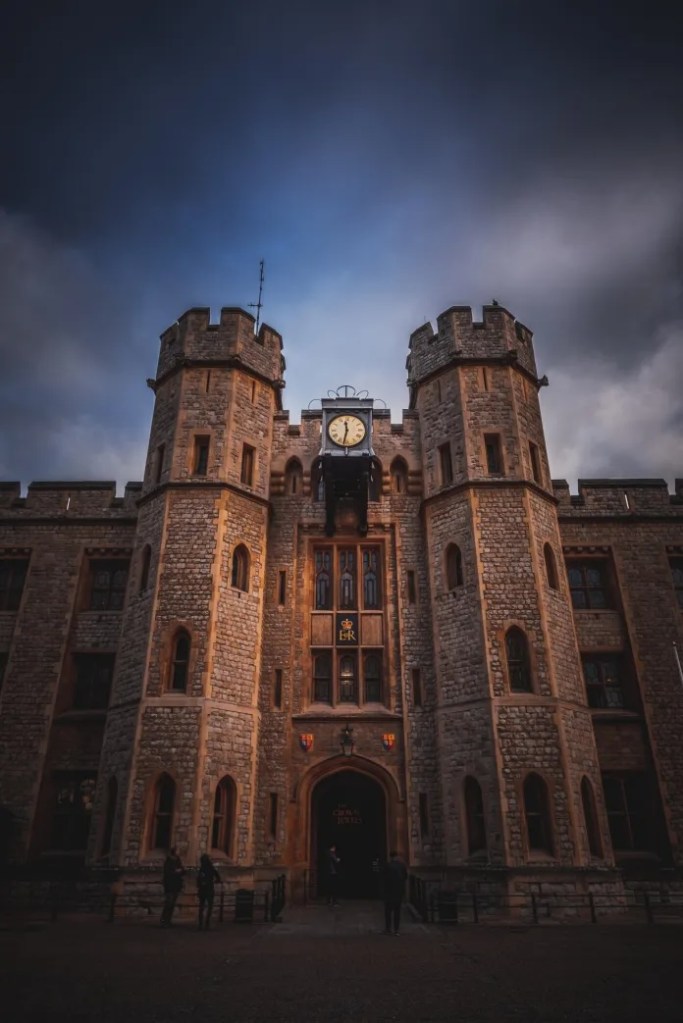
Towering above the River Thames, the massive stone battlements of the Tower of London have loomed over the city for nearly a millennium. Behind its formidable walls lies a place steeped in rich history, dark legends, and extraordinary architecture that has made it one of the world’s most famous fortified enclosures. Once a royal palace, prison, armory and even a menagerie, the Tower has served as a pivotal setting for many of England’s most dramatic events.
Five Key Facts
Construction of the Tower began in 1066 under William the Conqueror as part of the Norman Conquest of England.
It has served as a royal residence, armory, treasury, menagerie, observatory, and infamous prison over its long history.
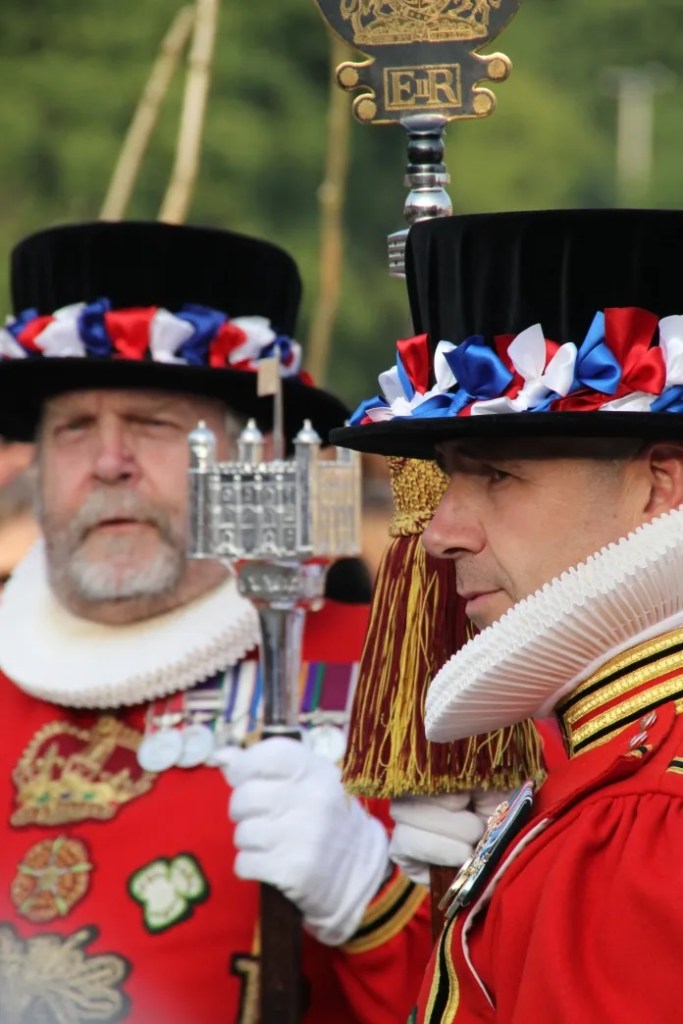
The Tower is guarded by legendary Yeomen Warders, better known as “Beefeaters”, with their distinctive Tudor-style uniforms.
It houses the priceless Crown Jewels of the United Kingdom as well as iconic ravens, whose presence is protected by decree.
The Tower has played a bloodstained role, being the site of many executions of royals and nobles throughout its history.
Geographic Location
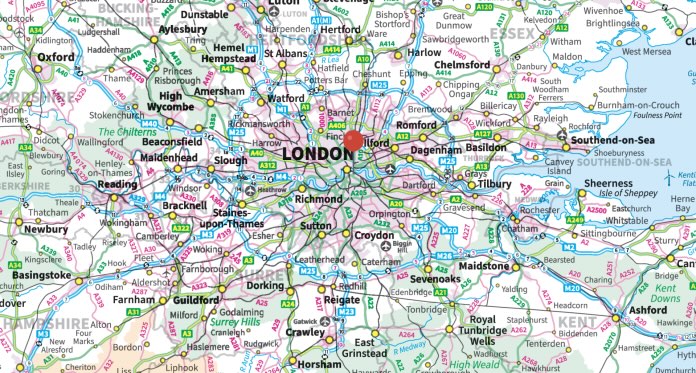
The Tower of London rises defiantly along the north bank of the River Thames in central London. Its strategic riverside location allowed it to control the capital city as both a fortress and gateway to the kingdom upon its construction in 1066. The contrast of its massive stone walls against modern skyscrapers makes for an unforgettable sight.
A Mighty Norman Fortress
In the wake of the Battle of Hastings in 1066, William the Conqueror set about solidifying his control over England. One of his first acts was to begin construction of a massive stone tower (the White Tower) in 1078 as the central keep of what became the Tower of London fortress. This imposing edifice served a dual purpose: to protect Norman power and subdue the natives of the former Anglo-Saxon capital of Ludenwic.
Over centuries, the concentric castle grew through successive expansions by adding an outer defensive wall, gatehouses, towers, and additional buildings within. Surrounded by two circuits of robust stone curtain walls and an immense moat, the Tower became one of the most powerful fortresses of medieval England.
A Royal Palace and Prison
While first designed as a formidable military stronghold, the Tower also served as a sumptuous royal palace and residence for many monarchs in its early years, including Richard the Lionheart. But its role took a darker turn, with its secure defenses also making it an ideal state prison.
Notable inmates over the ages included the future Queen Elizabeth I, who was imprisoned for a time by her half-sister Mary I. Prisoners were housed in chambers like the infamous Beauchamp Tower, with some meeting a grisly end on the grounds. Anne Boleyn and Catherine Howard are among the unfortunate souls executed at the Tower Green.
The Tower also contained the Royal Menagerie for many years, housing an extensive collection of exotic animals. And within its guarded buildings lay the priceless Crown Jewels of England – crowns, scepters, orbs, rings, and other lavish regalia.
An Icon of History and Tradition
While no longer a palace or prison, the Tower of London remains an enduring icon of national history and tradition. It has been an enduring witness to the rise and fall of kings, queens and empires for over 900 years. The legendary Yeomen Warders or “Beefeaters” have served as the Tower’s guardians since the 1500s, keeping alive longstanding ceremonies and traditions.
The Beefeaters, officially known as the Yeomen Warders of His Majesty’s Royal Palace and Fortress, the Tower of London, are a distinct group of ceremonial guards that play a vital role in safeguarding the Tower of London, a historic fortress and former royal residence. Renowned for their distinctive red and gold uniforms, the Beefeaters have become an iconic symbol of the Tower of London and are an integral part of its rich history.
The origins of the Beefeaters can be traced back to 1485, during the reign of King Henry VII. Their primary role was to protect the prisoners held within the Tower and to ensure the safety of the Crown Jewels, which are still housed at the Tower of London to this day. Over the centuries, their responsibilities have evolved, and they now serve as tour guides, providing fascinating insights into the history of the Tower and entertaining visitors with captivating stories and historical anecdotes.
The Beefeaters, unlike popular belief, are not simply ceremonial figures. They are all former military personnel with exemplary service records. To become a Yeoman Warder, one must have served a minimum of 22 years in the British Army, Royal Navy, Royal Air Force, or the Marines and have achieved the rank of warrant officer. Their military background equips them with the necessary skills to safeguard the Tower and its priceless treasures.
The Beefeaters live within the grounds of the Tower of London in distinctive Tudor-style cottages, creating a unique community within the ancient walls. These historic dwellings are maintained by the charity Historic Royal Palaces and provide the Yeoman Warders with a truly extraordinary living environment, steeped in centuries of history.
While the Beefeaters’ main duty is to ensure the security of the Tower of London, they are also actively involved in its day-to-day operations. Additionally, they play a significant role in ceremonial events, such as the daily Ceremony of the Keys, which has taken place uninterrupted for over 700 years and symbolizes the locking up of the Tower for the night.
Despite their formal responsibilities, the Beefeaters are admired for their warm and friendly interactions with visitors. They are often seen engaging with tourists, sharing intriguing historical facts, and posing for photographs. This unique blend of history, military service, and engaging storytelling makes the Beefeaters an invaluable part of the Tower of London experience.
The Beefeaters, or Yeoman Warders, represent a living connection to the Tower’s rich past, adding a touch of authenticity and charm to this iconic historical site. Their dedication to preserving the heritage of the Tower of London and their commitment to sharing its stories ensure that the legacy of this extraordinary fortress endures for generations to come.
Today’s visitors are treated to a captivating experience inside the Tower’s walls. From the breathtaking Crown Jewels exhibit to exploring the royal buildings, towers, and chambers where pivotal events unfolded, the Tower’s majesty and stories come alive. And as the ravens continue their age-old residence, per a decree that says if they ever leave, the Tower will crumble, and the kingdom will fall.
The Tower of London stands in imposing testament to centuries of British history, bearing countless tales of intrigue, ceremony and drama within its mighty ramparts. This powerful fortress continues to capture the imagination of all who visit this unparalleled icon of a bygone world of kings, knights and Tower’s bloody chronicle.
Visiting Information
One of London’s premier attractions, the Tower welcomes over 3 million visitors per year. Open daily, visitors can tour the Tower’s many buildings, view the priceless Crown Jewels, attend colorful events like the Ceremony of the Keys, and explore exhibitions of its long history. Highlights include the iconic White Tower, Beauchamp Tower, Waterloo Barracks, and Royal Beasts exhibit. Check the official website for opening times and current admission costs.
Recommended Reading
“The Tower of London” by Liam Fitzpatrick (2020)
“The Closing of the Tower of London” by Arthur Percival (2016)
“The Bloody Tower” by John G. Heath (2021)
“Tower of London Wonders and Marvels” by Jane Draycott (2015)
“The Yeoman Warders of the Tower of London” by G. Parnell (1988)





 London visitor