London’s 10 Best Bus Routes

24_1

What could be better than nabbing the front seat on the top deck to watch London roll by from the comfort of your moquette throne?

We think we’ve found London’s finest bus routes — whether it’s for seeing filmic London, the parks, or the posh bits.

The film locations: 24

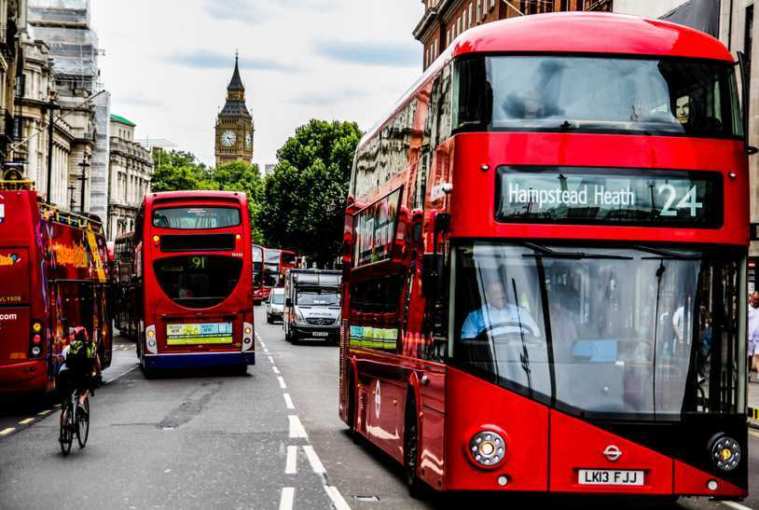
The number 24 bus has steered its path past some of London’s most iconic spots since 1912. It’s also London’s oldest unchanged bus route.

Board at the very start — Grosvenor Terrace in Pimlico — and ride along the Thames. On the south side you’ll see Battersea Power Station (featured in the film Children of Men, amongst others), before Parliament Square, Horseguards and Trafalgar Square — all featured in 28 Days Later.

Up Tottenham Court Road to Camden, you’ll catch a glimpse from An Education as you whizz past Morning Crescent.

The bus climbs through Chalk Farm up to Hampstead Heath, where much of Monty Python and the Holy Grail was filmed, as well as scenes from An American Werewolf in London and The Omen.

The Posh Bits: 74

To see the finer parts of London, pick up the 74 bus at Baker Street or Marble Arch before it makes its way down Park Lane into Knightsbridge. This ride’s a particular delight early in the morning when the parks are still misty, and the locals of South Kensington are popping out for a latte in their finest cashmere.

You’ll travel Cromwell Road to Earls Court, from where you can take the bus another half an hour to Putney Bridge, or can cut your journey short at West Brompton station for a walk around one of London’s most gorgeous cemeteries.
bus100

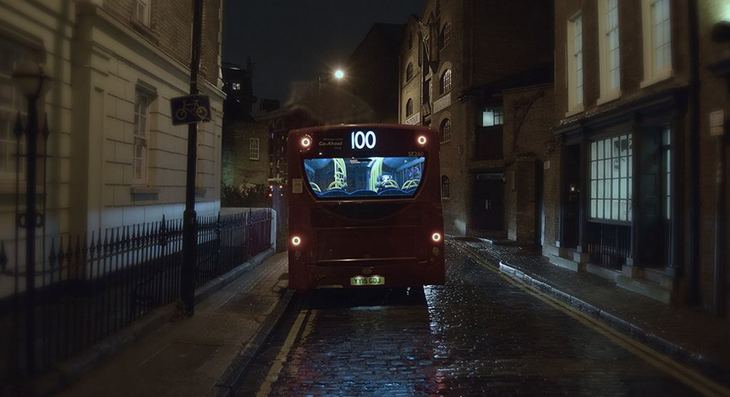
Ancient London: 100

Start outside Roman London at Tower Gateway, noting the Roman wall in Wakefield Gardens (which was built a little taller by medieval Londoners).

Apart from a short diversion, the bus follows the old wall all along Bevis Marks to Bishopsgate (the start of the Roman road to York), and Moorgate.

Get off at the roundabout to visit the Museum of London, then walk down Noble Street to get up and close to an old section above ground (the corner of a fort, exposed during the Blitz). You can also walk round large sections in the Barber Surgeon’s gardens, by Bastion Highwalk.

Walk down to St Paul’s to catch the bus again, and cross the river at Blackfriars, where the remains of Roman ships were found in the 1960s.

Old east London: D3

Forget Jack the Ripper tours — if you want to see how much east London has changed in the last few years, just ride the D3.

Get on at Old Ford Road, travelling through Bethnal Green. You’ll pass York Hall — opened in 1929 as a public baths and boxing hall. Now, like the rest of the city, it has opened its doors to a global audience, listing luchador wrestlers as well as major British boxing matches.

You’ll also pass the tube station — which acted as an air raid shelter, but is also the site of Britain’s worst civilian incident of the second world war.

The bus makes its way down Bethnal Green Road before heading into Whitechapel towards Cable Street. Now a quiet neighbourhood with little to attract outsiders, a mural at number 236 marks the fight against fascism in 1936.

Over the Highway to Wapping, the site of huge changes in the British media during the 1980s. Some 6,000 members of the printers’ unions went on strike after refusing new contract terms, including a no-strike clause. Demos often occurred on Pennington Street, now home to the venue Studio Spaces, during the year-long dispute.

Through Wapping, new-builds nestle against old riverside pubs, and the Victorian power station which, until recently, served as a restaurant and gallery, The Wapping Project.

Next stop is Canary Wharf. The towers of London’s second business centre popped up after the Victorian docks were all but abandoned. The land is now privately owned (apart from a patch by the tube). Its borough, Tower Hamlets, last year had the worst levels of pay inequality in the whole city.

Alight here for the Museum of London Docklands and find out more about how the area has changed, or ride till the end in Crossharbour to see remnants of the old docks.
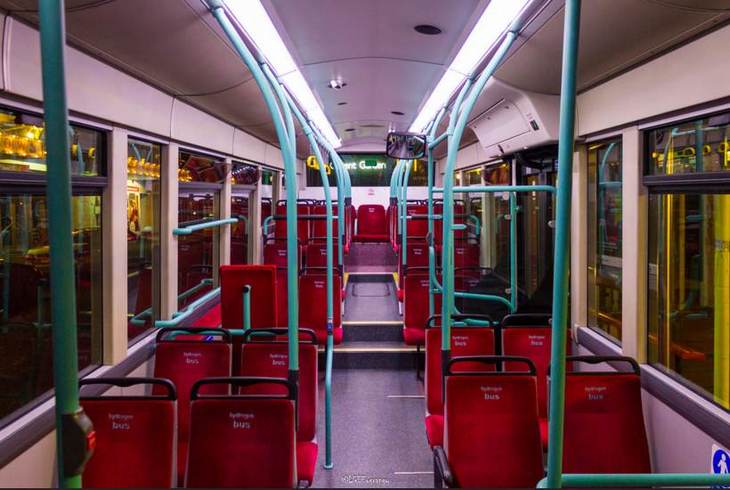
busrv1

Best for the Thames: RV1

Take on two Thames bridges on the ride from Tower Hill to Covent Garden on the RV1. The bus takes passengers from Tower Bridge to London Bridge (southside), to Blackfriars and along the back of the South Bank, crossing north again at Waterloo. Ideal for those who think they want to walk the three-mile stretch, but would actually rather spend the afternoon scoffing their faces in the Primrose Bakery.

Best for the parks: 274

Next time the weather’s nice, catch the 274 from Angel, Caledonian Road or Camden Town, and head to Primrose Hill. The bus takes Prince Albert Road, which skirts the Regent’s Canal and ZSL London Zoo — you’ll be able to see the monkeys from your seat.

Get out at Albert Terrace and stretch your legs here, or wait a couple more minutes to alight at Eamont Street for Regent’s Park.

To take the bus again, head to Kent Passage (behind the boating lake) and walk to the stop outside London Business School. The last stop is Lancaster Gate, right by the Long Water at Hyde Park.
bus15

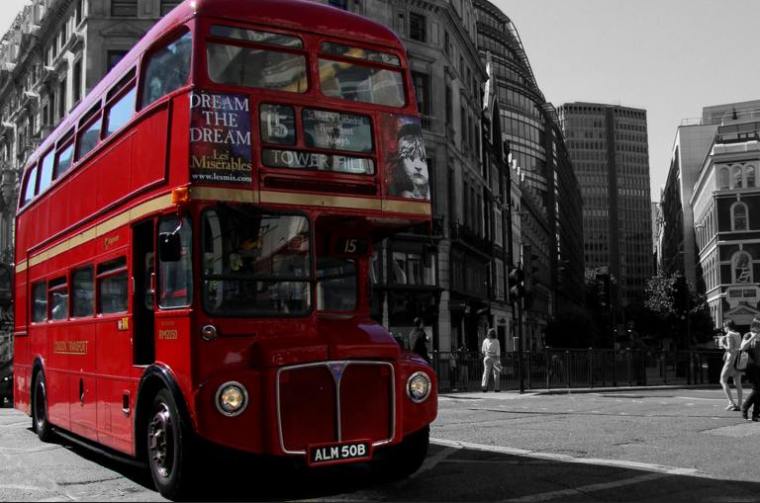
Best for tourists: 15

Tourists on a shoestring budget should skip the red bus tour for £1.50’s worth of sightseeing.

Grab a beigel on Brick Lane then walk down to stop OH on Leman Street. Within minutes you can clap your eyes on Tower Bridge, the Tower of London, Monument, St Paul’s, Blackfriar’s Bridge, Fleet Street, the Royal Courts of Justice, Waterloo Bridge, the Strand and Trafalgar Square. Now you’re smack bang in the middle of London, and you didn’t even have to set foot on the Central line. Have you even finished that beigel yet?

Best for museums: 14

At Warren Street, investigate the weird and wonderful Grant Museum of Zoology and the Petrie Museum of Archaeology.

A short walk takes you to John Soane’s Museum, where you can currently check out the Museum of Innocence, or the surgical curiosities at the Hunterian Museum. (Tourists or newbies might prefer to swap the tiny museums on Lincoln’s Inn Fields for the British Museum.)

For an alternative to the Science Museum, ride from Tottenham Court Road to the Faraday Museum at the Royal Institution (Royal Academy stop).

But if you’re ready for the big cheese, you can ride on to the bus stop right outside the Victoria and Albert Museum. The Science and Natural History Museums are just behind, along with the Royal Geographical Society, which mounts regular exhibitions.
bus9

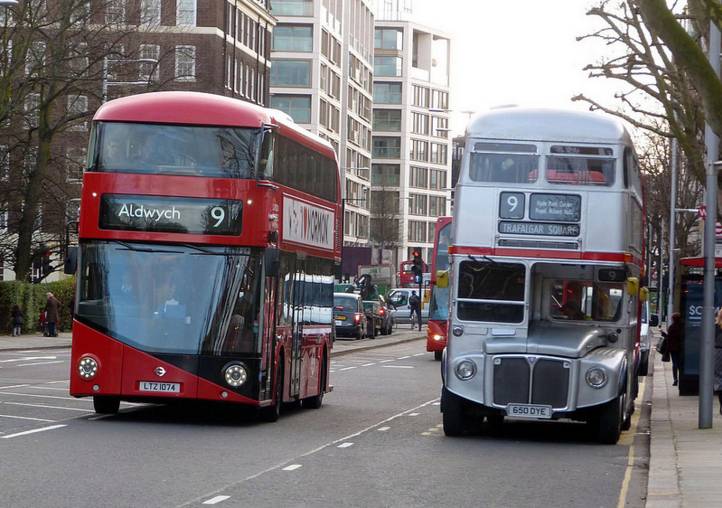
Perfect pub crawl: 9

West London has some great pubs. Start in the Dove, a tiny pub by the Thames, before picking up the 9 in Hammersmith (about 15 minutes’ walk away).

First stop, Queen’s Gate. Head to Queens Gate Mews for the Queen’s Arms. The corner pub does loads of real ales (and Bloody Marys).

Second stop, Pall Mall. Nip up Crown Passage to the Red Lion, which prides itself on being a ‘village pub’ for the West End.

And if you can manage a third stop, hop back on the bus, and alight at the start of the Strand. Walk to the Harp on Chandos Place, which never fails to impress with its cask ale and cider.

The oldest: 205

It’s usually said that the first bus route in London was Paddington to Bank via the Euston Road (or the New Road as it was then), which began in 1829 as a horse-drawn omnibus. The closest modern equivalent is route 205, which started in 2002.

Catch the bus from Paddington and ride down the Marylebone Road. Little of this stretch would look the same in 1829 — no Euston station, nor Marylebone station, for example — but Regent’s Park would have been a decade or so old.

Up the hill to the Angel, which would have bustled in 1829 with a combination of animals heading to Smithfield Market and out-of-town coaches. City Road Basin would have been less than a decade old. The route no longer goes to Bank, but travels instead to the East End.

Valentine’s Day in London: Things to do

Valentines-Day

With its wild, romantic scenery and rich history, Britain has been the setting for some of the world’s most famous love affairs. From Darcy and Elizabeth, Will and Kate, to Posh and Becks, there’s plenty of love to go around in Britain!

With the most romantic day of the year fast approaching, why not treat your loved one on Valentine’s Day in London and see why it’s right up there with Rome and Paris as one of the world’s most romantic cities.

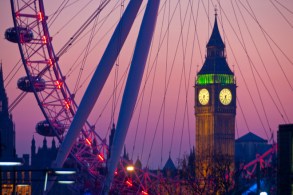
Admire the views from the London Eye

Elizabeth Browning once proclaimed, “Love VB34133846doesn’t make the world go round; love is what makes the ride worthwhile.” Love may not make the world – or indeed the London Eye – go round, but a ride in one of the

Eye’s viewing capsules will certainly be a worthwhile experience on your Valentine’s Day in London. Each flight lasts 30 minutes and provides stunning views across the whole of London in all directions. For an extra romantic touch, you could even visit at sunset or splash out on a private capsule.

Take a cruise on the Thames

VE14857Romantic and relaxing, a cruise on the River Thames offers a unique perspective of London’s landmarks and unparalleled views of the city. London is centred around the Thames, meaning a trip along it is the perfect way to see many of the top sights in one go, including St. Paul’s Cathedral, the Houses of Parliament, the Tower of London, HMS Belfast and Shakespeare’s Globe Theatre, to name just a few.
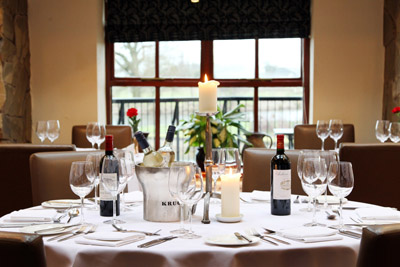
For something really special, opt for either a lunch cruise or a dinner cruise on the Thames. Departing every day, the three-hour dinner cruise is a fabulously fun evening, including a luxurious four course meal at a candlelit table, complete with sparkling wine and live entertainment. Not only is there time to dance the night away on the boat’s very own dancefloor, you’ll be able to admire the twinkling lights of London and dazzling skyscrapers of Canary Wharf after dark.

Have a decadent dinner date

If you’re planning to indulge in a classic dinner date, avoid the queues and stress of last minute booking by reserving a table at one of London’s top restaurants before you go.

Treat your date to drinks at trendy Soho cocktail bar Obica, award-winning tapas at La Tasca, or a quirky, modern Indian meal at Imli Street, with over 200 of the top dining experiences in the country to choose from.

VE15686

Spend an evening at the theatre

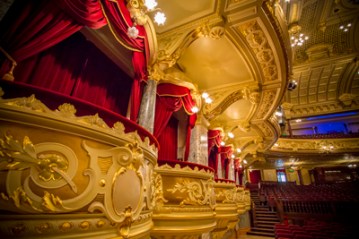
What better way to spend your  VE25976Valentine’s evening than at a world-class show? London’s West End theatre scene is legendary: whether you’re interested in ballet, musicals, or choose to save money on tickets with a Theatre Passport, which gives you the best available seats

at a wide selection of London’s biggest West End musicals and shows. If entertainment is your passion, you can even turn a romantic weekend into a fantastic value theatre break, including show tickets and a stay in a five star hotel.

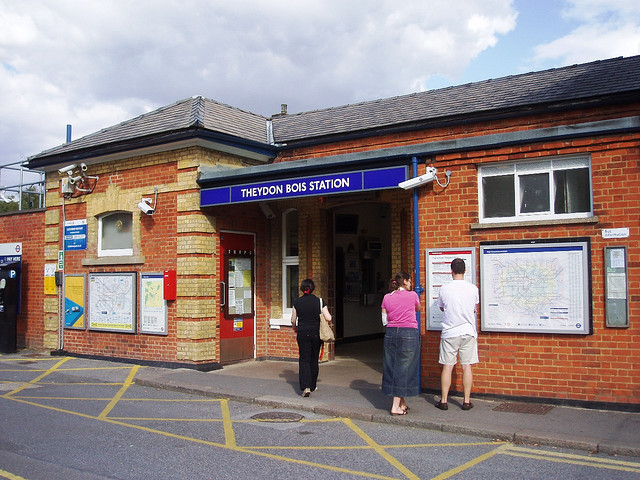
How Do You Pronounce Theydon Bois?

theydonbois

We’ve all heard it. «Can you tell me where Lie-sester Square is?«. English place names can be a bit of a challenge to the outsider. Even longtime Londoners might struggle with some pronunciations. Hands up who’s contemplated the correct way to say ‘Theydon Bois’?

Here’s a quick guide to some of the commonest tongue-puzzlers:

Leicester Square: Any native knows this is pronounced ‘Less-ter’, but that complex run of vowels commonly stumps visitors.

Theydon Bois: A bit of a teaser, even for locals. The consensus seems to be ‘Theydon Boyce’ (or Boyz), given credence by Tube stop announcements. But we’ve found several reports of bus drivers pronouncing it as Theydon Boy. Most definitely, it’s not Theydon Bwahh.

Hainault: On the Central Line, it seems that pronouncing words the French way is passé. A few stops round from Theydon Bois, we find Hainault, which is enunciated as Hay-nolt rather than the Gallic ‘ay-no.

Cadogan Square/Hall: The Cadogan name is all over the Sloane Square area, named after a Georgian noble whose family still own much of the land thereabouts. It should be pronounced as Ca-duggan, not Cad-ogan.

Holborn: A perennial puzzler, Holborn is best pronounced using as few letters as possible – o’b’n rather than Hole-born. Ho-bun is probably the commonest form among locals.

Marylebone: As with Holborn, using fewer letters gets you nearer to the local pronunciation (up to a point). Mar’l’bun is a good start. Marry-lebone seems commonplace. Mary-le-bone is the tourist’s choice, and close to the historical roots in St Mary-le-Bourne church.

Homerton: The Simpsons fans might be tempted towards Homer-tun, but the correct form is more like Hommer-tun.

The Mall: Potentially confusing for North American visitors, who may be expecting a shopping centre. The ‘a’ is short, making the word rhyme with ‘pal’. And, as it happens, the name was borrowed from the neighbouring Pall Mall (definitely not pronounced Paul Maul), which itself was called after a croquet-like game called Pell Mell.

Rotherhithe: This had never struck us as particularly tricky, until one (anonymous) Londonist contributor admitted: «This probably marks me out as a moron, but I was convinced Rotherhithe was pronounced Rotherhither when I first moved to London. If we were in Germany, I’d totally have been right.»

Greenwich/Southwark/Woolwich/Chiswick: The ‘silent W’ is a common peril for non-natives. The phenomenon tends to crop up in names of Anglo Saxon origin. If you see a W in the middle of a place name, just ignore it (hence Gren-itch, suth-urk, Wool-itch and Chis-ick). It’s only a rule of thumb, though. Don’t try it with Holloway or Queensway.

Tottenham: Most Londoners probably say something like Tott-num. The name was most famously mangled by former Spurs midfielder Osvaldo ‘Ossie’ Ardiles, who rolled it out to ‘Tottingham’ in this top-10 hit from Chas & Dave.

Проведение мастер-классов в процессе преподавания практических дисциплин, связанных с программированием.

Формы преподавания дисциплин, связанных с программированием, играют важную роль и требуют тщательного исследования ввиду того, что многие традиционные формы организации учебного процесса малоэффективны в данной предметной области и зачастую на практике плохо применимы для передачи знаний. К примеру, лекционные занятия предполагают конспектирование, в силу чего они малоэффективны для запоминания конструкций, операторов и ключевых слов языков программирования (ЯП), отчего при последующем воспроизведении могут появиться ошибки в синтаксисе ЯП. Семинарские занятия в традиционном понимании непригодны для преподавания подобных дисциплин, на практике эта форма преподавания дисциплин в данной области не применяется. Основными на настоящий момент применяемыми формами преподавания дисциплин, связанными с программированием, являются адаптированные варианты практикумов, лабораторных работ, а также самостоятельная работа.

Как правило, перед обучающимся ставится одна или несколько задач, которые относятся к определенной области изучаемого курса, на выполнение которой отводится более одного занятия. Контроль выполнения, консультирование в случае возникновения вопросов, а также проверка результатов работы осуществляются непосредственно на занятиях по запросу обучающихся. Данный подход имеет следующие недостатки:

* на момент начала выполнения задания невозможно проверить успешность усвоения материала;

* преобладает самостоятельное изучение предметной области, которое является более медленным и опирается на метод проб и ошибок.

Второй недостаток связан в первую очередь с тем, что обучающиеся предпочитают выполнять задачи в более комфортных домашних условиях, вне лабораторных часов, где, помимо прочего, не будет ограничений по времени.

Для повышения эффективности образовательного процесса предлагается проводить лабораторные и практические занятия в формате мастер-классов. Особенно эффективным подобный формат показал себя в самом начале изучения дисциплины, в период, когда у некоторых обучаемых присутствует непреодолимый страх перед использованием незнакомых ЯП, методов и средств разработки.

Мастер-класс – это форма передачи педагогического опыта путем подробного и комментированного показа методов и приемов работы педагога. Данный подход хорошо зарекомендовал себя в процессе преподавания практических дисциплин не только связанных с программированием, но и в других областях. Несмотря на это, в современной педагогической науке нет однозначного определения мастер-класса, данная форма преподавания дисциплин не включена в перечни традиционных форм обучения и тренингов.

Г.А. Русских рассматривает следующий алгоритм проведения мастер-класса:

1. Презентация педагогического опыта преподавателя. В ходе этого этапа учитель-мастер

рассказывает о рассматриваемой предметной области, а также делится собственным успешным опытом.

2. Представление системы учебных занятий. Мастер рассказывает о базовом наборе знаний и приемах, которыми он будет пользоваться при обучении.

3. Проведение имитационной игры. В ходе игры мастер демонстрирует приемы, а обучающиеся копируют их и задают уточняющие вопросы.

4. Моделирование. Обучающиеся применяют только что изученные приемы для решения задач, аналогичной предлагаемой в ходе имитационной игры. Мастер выступает на данном этапе в роли консультанта.

5. Рефлексия. Обсуждение полученных результатов работы, дискуссия.

В силу своей организации, мастер-классы хорошо вписываются в концепцию программированного обучения. При рассмотрении описанного выше алгоритма следует остановиться и вспомнить линейный алгоритм Скиннера. Алгоритм Скиннера является исторически первой формой программированного обучения и выражается в следующих принципах: малых шагов, низкого уровня трудности порций, открытых вопросов, немедленного подтверждения правильности ответа, индивидуализация темпов обучения, дифференцированного закрепления знаний, единообразного хода инструментального учения.

Рассмотрим принципы алгоритма Скиннера в применении к алгоритму проведения мастер-класса. Принцип малых шагов реализован в рамках мастер-класса за счет постоянной обратной связи, которая призвана исключить отставание отдельных обучающихся при воспроизведении методов мастера. Принцип низкого уровня трудности порций подразумевает под собой, что все действия мастера четко систематизированы и могут быть формализованы в простые и наглядные инструкции, передаваемые по одной за итерацию обучения. Принцип открытых вопросов реализуется на этапе построения модели, когда обучаемый может самостоятельно оценить плодотворность своего труда, а также успешность освоения материала по положительному результату своей работы. Воспроизведение методов мастера, практическая форма подачи материала и самоконтроль на этапе моделирования обеспечивают соответствие принципу немедленного подтверждения правильности ответа. В рамках проведения мастер-класса материал подается с учетом скорости работы самого медленного ученика, в то время как более быстрые обучающиеся могут изучить преподаваемый материал на более глубоком уровне или дополнительно закрепить материал, задавая дополнительные вопросы. Это обеспечивает индивидуальность темпа в рамках ведения мастер-класса. Дифференцированность закрепления знаний в модели мастер-класса реализуется в неоднократном применении метода для решения похожих задач: как в рамках копирования техник мастера, так и в ходе самостоятельной работы. Единообразность хода инструментального учения заложена в самом алгоритмическом описании мастер-класса, подразумевающем итеративную деятельность мастера и обучающихся.

При проведении мастер-классов в ходе изучения дисциплин, связанных с программированием, существует ряд особенностей. Необходимо демонстрировать процесс написания программного кода при помощи проектора в аудитории или в ходе on-line

трансляции в случае дистанционного обучения. Это обусловлено тем, что основной вид деятельности при изучении дисциплин, связанных с программированием, является написание программного кода, а в рамках мастер-классов предполагается копирование учащимися методов мастера. При таком подходе следует опасаться рисков искажения информации при передаче. Для этого необходимо придерживаться следующих принципов, позволяющих минимизировать данные риски:

1. Постоянная проверка корректности программного кода посредством компиляции и проведения тестов как преподавателем, так и всеми обучающимися;

2. Обязательно устное объяснение всех мест, которые могут быть двояко поняты или воспроизведены неправильно (при копировании и самостоятельном воспроизведении);

3. Постоянная обратная связь с обучающимися и проверка совпадения результатов работы программ обучающихся и преподавателя.

Помимо прочего, следует помнить и о другом важном аспекте при проведении мастер-класса – психологическом комфорте обучающихся. У них не должно возникать ощущения отставания от группы и не должно оставаться необъясненных мест в преподаваемом материале. Такие ситуации особо опасны в начале прохождения курса, весь подаваемый материал должен быть полностью объяснён. Таким образом, следует избегать моментов, когда какая-либо сложная конструкция языка «будет объяснена на следующем занятии» — это существенно снижает вероятность успешного усвоения материала и последующего корректного воспроизведения метода на этапе моделирования. Не рекомендуется проводить мастер-классы для слишком большой группы обучающихся, а уровень начальной подготовки обучающихся не должен сильно различаться – это позволит снизить количество вопросов и увеличить объём преподаваемого материала.

С технической точки зрения, следует обратить внимание на отображение материала, показываемого с помощью проектора. Код на проекторе должен быть хорошо виден из любой точки аудитории: следует учитывать освещенность помещения, использовать шрифты большого размера, применять форматирование и подсветку кода.

Применение концепции мастер-классов с учетом особенностей преподавания дисциплин, связанных с программированием, позволяет улучшить усвоение материала особенно на начальных этапах преподавания курса.

Литература:

1. Положение о «мастер-классе» как форме профессионального обучения учителей // Практика административной работы в школе. – 2004. — № 5. – с.46.

2. Лихачев Б.Т. Педагогика: Курс лекций. – М., 1993.

My favourite christmas songs.

christmasdecorationsinteriordesigntreelights009

Frank Sinatra — Silent Night

Lyrics:

(Sleep in heavenly peace)

Silent night, holy night
All is calm, all is bright
‘Round yon virgin mother and child
Holy infant so tender and mild
Sleeps in heavenly peace

Silent night, holy night
All is calm, all is bright
‘Round yon virgin mother and child
Holy infant so tender and mild
Sleeps in heavenly peace

Boney M — Mary’s Boy Child

Lyrics:

Mary’s boy child Jesus Christ, was born on Christmas Day.
And man will live for evermore, because of Christmas Day.

Long time ago in Bethlehem, so the Holy Bible say,
Mary’s boy child Jesus Christ, was born on Christmas Day.

Hark, now hear the angels sing, a king was born today,
And man will live for evermore, because of Christmas Day.
Mary’s boy child Jesus Christ, was born on Christmas Day.

While shepherds watch their flock by night,
They see a bright new shining star,
They hear a choir sing a song, the music seem to come from afar.

Hark, now hear the angels sing, a king was born today,
And man will live for evermore, because of Christmas Day.

For a moment the world was aglow, all the bells rang out
There were tears of joy and laughter, people shouted
«Let everyone know, there is hope for all to find peace.»

Now Joseph and his wife, Mary, came to Bethlehem that night,
They found no place to bear her child, not a single room was in sight.

And then they found a little nook, in a stable all forlorn,
And in a manger cold ‘n’ dark, Mary’s little boy was born.

Hark, now hear the angels sing, a king was born today,
And man will live for evermore, because of Christmas Day.
Mary’s boy child Jesus Christ, was born on Christmas Day.

Oh a moment still worth was a glow, all the bells rang out
There were tears of joy and laughter, people shouted
«let everyone know, there is hope for all to find peace».

Oh My Lord…

Read more: Boney M. — Mary’s Boy Child (oh My Lord) Lyrics | MetroLyrics

Frank Sinatra — Jingle Bells

Lyrics:

Jingle bells, jingle bells
Jingle all the way,
Oh what fun it is to ride
In a one-horse open sleigh,
Jingle bells, jingle bells
Jingle all the way,
Oh what fun it is to ride
In a one-horse open sleigh

Dashing through the snow
In a one-horse open sleigh
O’er the fields we go
Laughing all the way
Bells on bob-tail ring
Making spirits bright
What fun it is to ride and sing
A sleighing song tonight

Jingle bells, jingle bells
Jingle all the way,
Oh what fun it is to ride
In a one-horse open sleigh, oh
Jingle bells, jingle bells
Jingle all the way,
Oh what fun it is to ride
In a one-horse open sleigh

Jingle bells, jingle bells
Jingle all the way,
Oh what fun it is to ride
In a one-horse open sleigh,
Jingle bells, jingle bells
Jingle all the way,
Oh what fun it is to ride
In a one-horse open sleigh

George Michael — Last Christmas

Lyrics:

Last Christmas, I gave you my heart
But the very next day, you gave it away
This year, to save me from tears
I’ll give it to someone special

Last Christmas, I gave you my heart
But the very next day, you gave it away
This year, to save me from tears
I’ll give it to someone special (special)

Once bitten and twice shy
I keep my distance but you still catch my eye
Tell me baby do you recognize me?
Well it’s been a year, it doesn’t surprise me

I wrapped it up and sent it
With a note saying «I Love You» I meant it
Now I know what a fool I’ve been
But if you kissed me now I know you’d fool me again

Last Christmas, I gave you my heart
But the very next day, you gave it away
This year, to save me from tears
I’ll give it to someone special (special)

Last Christmas, I gave you my heart
But the very next day, you gave it away
This year, to save me from tears
I’ll give it to someone special (special)

A face on a lover with a fire in his heart
A man undercover but you tore him apart
Maybe next year,
I’ll give it to someone, I’ll give it to someone special
Special, someone, someone
I’ll give it to someone, I’ll give it to someone special

Who’ll give me something in return
I’ll give it to someone, hold my heart and watch it burn

I’ll give it to someone, I’ll give it to someone special
I thought you were here to stay
How can love be for a day?
I thought you were someone special, gave you my heart

I’ll give it to someone, I’ll give it to someone
Last Christmas I gave you my heart
You gave it away
I’ll give it to someone, I’ll give it to someone

New Year in the UK

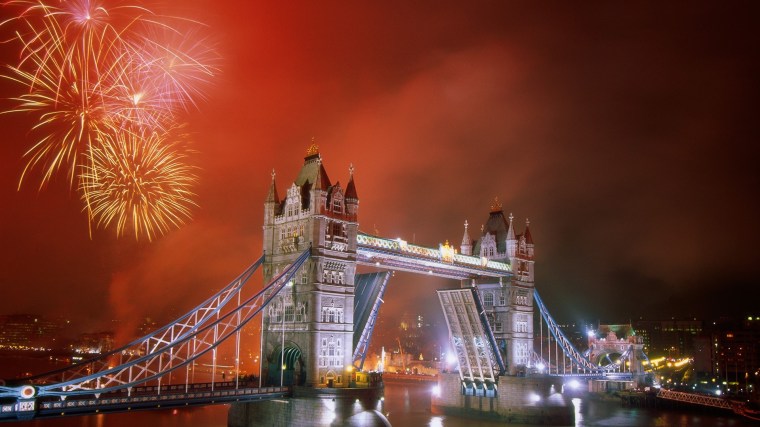
new-year-london-tower-fireworks

England, a major part of United Kingdom, celebrates New Year on the day of January 1, i.e. the first day of the first month of the Georgian calendar. The date was declared as the New Year in 1752.

Before 1752, England celebrated its New Year on Christmas Day, i.e. 25th December. History of England celebrated different dates as New Year in different time periods.

However, one common aspect is the great vigor and enthusiasm associated with New Year celebrations.

People enthusiastically wait for the time of the New Year to arrive; more so because it offers them a chance to carry forward their celebration mood of Christmas ahead and higher with the New Year celebrations.

New Year Celebrations in England

In the present time, the most common trend is to organize a house party on the New Year midnight where everyone from the family and close friends is invited to be a part of it. Also, special midnight parties organize in discotheques, pubs, clubs, and bars also see crowd passionately participating in it.

New Year day also see lot of theme parties, cruises, troupes, carnivals, live concerts, and salsa dance celebrations occurring in different parts of England. Among these, cruises and theme parties saw a large crowd coming from far distant places including foreign land. The New Year celebrations in England are considered to be incomplete, more specifically without the special cruise ride.

New Year Arrival

As soon as the clock in the midnight rings twelve, everyone present in the party, on the road, in the house hoot, shout, whistle, and create noise to mark the arrival of the New Year. It is followed by greeting everyone around by hugs and kisses. A drinking toast is raised by everyone in concert to officially get into the celebration grove.

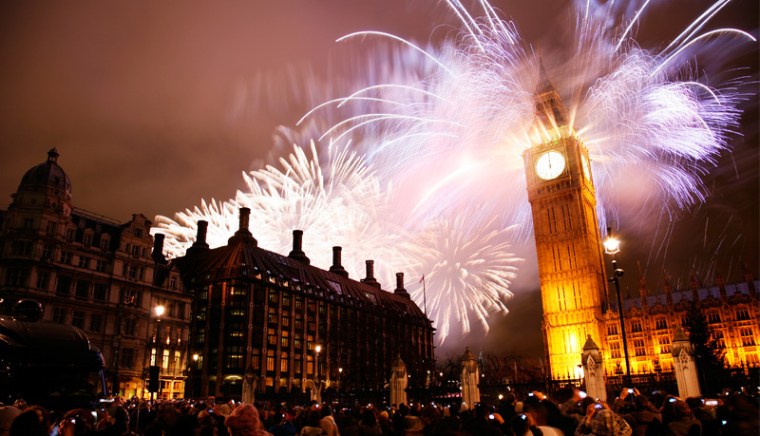
Lavish meals are served, champagne flows in, creative fireworks are done, and everyone gets into the singing and dancing atmosphere on the biggest night of the year. New Year Parade which initiates on the noon of the New Year day saw thousands of people participating in it, with dancers, drummers, acrobats, musicians, and entertainers. The parade moves through the streets of Whitehall, Pall Mall, and eventually concluding at Berkley square.

england-sky-bridge-fireworks-2017-new-years-eve

Traditional Celebrations of New Year in England

In England, there is a traditional belief that whosever first arrives at the threshold of the household will be the one bringing good luck to the lives of the inhabitants of the household living in, for the entire coming year. The tradition is called as ‘First Footing’. As a part of ‘First Footing’ tradition, England people pray for young, healthy, handsome, and a dark haired male to be their first arriver of the New Year. However, a woman, a blonde, or a red colored person is not welcome for the day, as they are considered to bring bad luck for the entire year.

More so, if that person carries coal, money, bread, salt, or holy mistletoe with him, then it is considered to be a sign of a good luck and prosperity for the rest of the year. Traditionally, the first footer is meant to follow and abide by certain customs and traditions. Few of them as mentioned in legends states that the first footer should always enter into the house from the front door, and should exit from the back door. Also, the first footer, without speaking or wishing to anyone or vice versa, should place the fuel (as carried along) on fire, should place loaf on the table, and should pour in water for the head of the household. Tradition also calls for gifting of the mistletoe by the visitor to any household member.

Other New Year Traditions in England

There is also a popular tradition of exchanging New Year gifts while wishing each other. However, with Christmas day falling few days before the New Year day, this tradition of exchanging gifts is now less followed. Then, there is a tradition of ‘burning of bush’, which is considered to be a symbol of burning of all past evils and making a new beginning. Other than this, the New Year morning see young kids waking up early, and then making rounds of neighborhood while singing New Year celebration sings. Traditionally, whosoever does not sings before the noon of the New Year day is referred as a fool.

Рождество в Англии.

What is Christmas?

Колупаева 8.jpg

That one word brings to mind so many images: food, carols, family and, of course, present! Whether you look forward to snuggling by the fire on Christmas Eve, gathering in the kitchen to take cookies, or sharing traditions that have been in your family for generations, Christmas enriches our lives in countless ways.

Boxing Day.

In Great Britain and Canada, Boxing Day is usually celebrated on the 26th of December. The holiday may have originated in the custom of giving Christmas boxes to policemen, lamplighters and servants. On that day, the alms boxes that had been placed in churches over the festive period were opened and their contents distributed. Today it is customary to recognize the work of postal workers and newspaper deliveres with bonuses.
Also known as St. Stephen’s Day, Boxing Day celebrates 2 saints of that name. Since St. Stephen is the patron saint of horses, these animals were traditionally fed bread, salt, or corn and blessed in church by an English priest on that day.

Children.

New toys flying reindeer, elves, twinkling light and candy canes – these magical symbols of Christmas are especially associated with children. When the stockings are hung and the dollhouses are assembled, it’s for the children. And when the star-shaped sugar cookies and popcorn garlands mysteriously disappear, we all suspect the children.
These days, Christmas wouldn’t be Christmas without the produced-for-children-but-loved-by-all television classics “Rudolph the Red-Nosed Reindeer”, “A Charlie Brown Christmas” and “How the Grinch Stole Christmas”.
Finally, it is the children who add sparkle to the most routine of holiday events, from the proud little tykes leading the Christmas parade to the nervous ones at the mall, waiting to sit on Santa’s knee.

Parties, Christmas.

From the perfunctory office event to the traditional family garthering, Christmas is the time for parties. At many holiday parties, gifts are exchanged.
Most party-givers tend to stick with the traditional ones described above, but anything is possible. Consider a breakfast or branch party: they are ideal when so many schedules are already occupied with evening events, and set the state for a different kind of menu. Tree-trimming parties, when guests are invited to bring one ornament to hang on a tree, are always fun and unusual. A twist on this idea is to have guests prepare a special tree for birds and squirrels of the neighbourhood.

Wreath.

The most popular of all door decorations, the wreath has become a gesture of holiday welcome. The outdoor wreath is a recent innovation, but circles of fresh evergreens have been used to decorate homes since Victorian times.
The Advent wreath is a circle of fir decorated with four candles, each of which is lit on one of the 4 Sundays before Christmas. Wreaths may be made entirely of pinecones or fashioned from dried flowers and herbs the way they were made in England during the Middle Ages. A simple wreath may be made of mixed greens and decorated with cones, bayberry and red berries; more elaborate types might be decorated with shellacked fruits.

Yule log.

The custom of burning a Yule log comes from the Norse and Anglo-Saxons, who burned a huge oak log once a year to honour Thor, the god of Thunder. When the northen tribes accepted Christmas, or Juul, as it was known in Northern Europe. Selecting and burning the Yule log then became symbolic of Christ as Light of the World, and many different nationalities came to accept this custom as their own with variations in their rules.

Bells.

Although they are not exclusively symbolic of Christmas, bells have always been closely associated with religious services. For example, Jewish high priests wore gold bells on the borders of their robes, and Emperor Augustus of Rome had a bell hung before the Temple of Jupiter. It is believed that Christmas first used bells on churches about the year A. D. 400, but by medieval days, the ringing of bells had become closely associated with Christmas.
St. Nicholas carried a hand bell on his visits, too, and in Clement C. Moore’s poem, “A visit from St. Nicholas”, Santa Claus’s sleigh had bells.

Carols.

The world carol comes from a French round dance called a carol. It was also the name of an English pagan song-dance performed to celebrate the winter solstice.

What does encyclopedia say to us about this holiday?

Christmas, in the Christian church, annual festival, held on December 25, to celebrate the Nativity, on birth of Christ. The origin of the festival is unknown. Scholars believe that it is derived in part from rites held by pre-Christian Germanic and Celtic peoples to celebrate the winter solstice. Christians since the 4th centure, incorporate pagan customs, such as the use of holly, mistletoe, Yule logs and wassail bowls. The Christmas tree, an evergreen trimmed with lights and other decorations, is derived from the so-called paradise tree, symbolizing Eden, of German mystery plays.

“Bah, Humbug”.

Early in Charles Dickens’ story “A Christmas Carol” Ebenezer Scrooge is visited by his nephew, red, who bids him a Merry Christmas. “Bah!” said Scrooge, “Humbug!” And the rest is history. Because ever since Dickens published his classic in 1843, Scrooge’s ill-willed oath has been the most oft-repeated line from the story, even appearing on commercial T-shirts and coffee mugs. Usually, though, “Bah, humbug!” is used in jest, since Scrooges’s transformation from crabby old miser to sentimental do-gooder is widely appreciated by audiences around the world.
In Charles Dickens’ classic “A Christmas Carol”, Ebenezer Scrooge is visited by 3 ghosts. The mission of the third ghost is to show Scrooge scenes from dismal future.

Advent.

The term advent comes from the Latin word adventus, which means “a coming”. The Advent season includes the first 4 Sundays before Christmas and reminds Christians of the coming Jesus. Many Christians, particularly those in Germany and other European countries, observe Advent with fasting and player. The first Sunday of the season is known as Advent Sunday.
The wreaths and calendars used to celebrate this religious holiday are, in fact, German customs. For each of the 4 Sundays, a red candle is added to an Advent wreath made of fir, holly or laurel.

Calendars.

Advent calendars typically show a Christmas scene incorporating little doors or windows that are opened, one at a time, on each of the 25 days preceding December 25.
The largest door is opened on Christmas Day and often shows a picture of Jesus, Mary and Joseph. Some Advent calendars consist of big star and 24 little stars, designed to be removed daily until only the large star remains on Christmas Eve. There are also Advent calendar candles, numbered on one side, which are burned down one number each day from December, the first until Christmas. They are usually lit during a family meal.

Top Ten Things to See and Do in Notting Hill

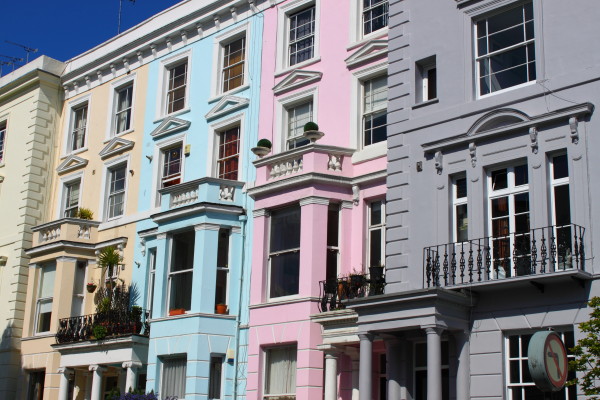
Notting Hill houses

Known to most people outside of London for the 1999 film written by Richard Curtis and starring Hugh Grant and Julia Roberts, Notting Hill is really one of the most affluent and charming boroughs in London.  Those wanting to visit this neighborhood can easily find a number of great restaurants, pubs, shops, and sights to experience.  There certainly is no lack of things to do here, and we have laid out our top ten favourite Notting Hill experiences for you to consider.  Let us know some of your own favorites in the comments.

Notting Hill Tours

The best way to see any place is with a guide who knows the area, and there are many great tours available to help you see and know more about Notting Hill that you can get walking around on your own.  Whether you want to walk with Jordan on See Notting Hill or ride with Joe in his black cab for Notting Hill Taxi Tours, they are both going to provide you with plenty of information, some of it unknown even by people who live there.  If you’re more into film, the Rom-Com Tour of London certainly takes you through the neighbourhood.

The Museum of Brands

We are inundated with advertising today, and the Museum of Brands, Packaging and Advertising on Lancaster Road is dedicated to the history of selling us things.  The museum’s collection goes back to the Victorian period and includes not only packages and posters, but also items such as OXO cubes from World War I and Rimmel Cosmetics from the 1890s.  The museum also puts on workshops so you can get in-depth lessons into what it takes to market a product in any era.

Electric Cinema

One of the best cinemas in the whole of London, Electric Cinema is also one of the oldest in the United Kingdom.  Only shuttered for brief periods during its history, it has been in near-continuous use since opening in 1910.  The theatre continues to show the latest releases and offers an array of snacks as well as alcoholic and non-alcoholic beverages.  Once you’re done with your film, you can check out the adjoining Electric Diner for a meal.

The Blue Door

Those who’ve seen the movie Notting Hill will certainly want to visit this iconic location that marked the entrance to Hugh Grant’s flat.  280 Westbourne Park Road is the physical location of the door, which naturally became very popular after the film was released.  The home behind the door was actually owned by Richard Curtis, who smartly decided to sell.  Unfortunately, the new owners weren’t too happy with the attention and painted it black, but the current residents loved its tie-in with the movie and painted it blue again.

Portobello Film Festival

Late August and Early September sees the return of the Portobello Film Festival, an event highlighting the variety of films from London’s best independent filmmakers.  It has been around since 1996 and today features a number of screenings at venues all over Notting Hill.  Filmmakers are often present at the screenings to speak with the audience about the creative process, and there is an awards ceremony to recognise the best offerings for that year’s festival.

Notting Hill Mayfest

Held throughout the month of May, Mayfest has been going on for fifteen years and is full of food, film, music, and more.  The festival is entirely volunteer-based and features a wide variety of things to do depending on the time of year that you visit.  The May Fair has been running even longer than the festival and features a number of carnival games, stalls, a fancy dress parade, and a crowning of the May King and May Queen.

The Notting Hill Bookshop

The Travel Bookshop that the film Notting Hill was based on closed several years ago and the Notting Hill Bookshop has replaced it. The shop is worth checking out thanks to its extensive library of current and new books as well as its charming atmosphere.  Those wanting souvenirs of their trip to Notting Hill can also find any number of items there dedicated to the borough or the film.

Beach Blanket Babylon

This restaurant and bar on Ledbury Road is known as much for its food and drink as it is its eclectic interior.  Each part of BBB from the bar to the dining rooms to the private spaces has a different theme such as the crypt, the rococo mansion dining rooms, and the more kitsch-style bar.  The service has received some less-than-stellar reviews in the past, but it’s easy to forgive when their cocktails are some of the best in Notting Hill, featuring drinks such as Pineapple Empire and Forget Me Not.

Portobello Road Market

Easily one of the top reasons to visit Notting Hill whether you’re a tourist or a London resident, the Portobello Road Market ranks amongst the city’s best open air shopping venues.  The market is mostly known for its extensive collection of antiques with over 1,000 vendors lining the street, but there are also a number of other stalls selling produce, new items, and second-hand goods.  It should be noted that the market can get pretty crowded, so you might want to check the opening times for the day you plan to visit and get there as early as you can.

Notting Hill Carnival

Most carnivals around the world are usually held as a precursor to the Christian season of Lent, but Notting Hill’s comes along in late August.  The Carnival is Europe’s biggest street festival and dedicated to celebrating the Caribbean culture of London.  It has been around since 1964 and is full of music, dancing, and food for two days, with the main party and parade falling on the Monday bank holiday.  Early Sunday activities are dedicated to families and children before the serious partying begins.