While travel to the UK for pleasure might still be a ways off, there are plenty of things from Britain right here in the United States. By this, I’m not talking about the international foods aisle of your grocery store or your local pub, but places and items whose origins were across the pond before coming here. While you can’t visit all of the things on this list, most of them are available to see right in the United States. If there’s something you think we left off, let us know in the comments.
The Resolute Desk
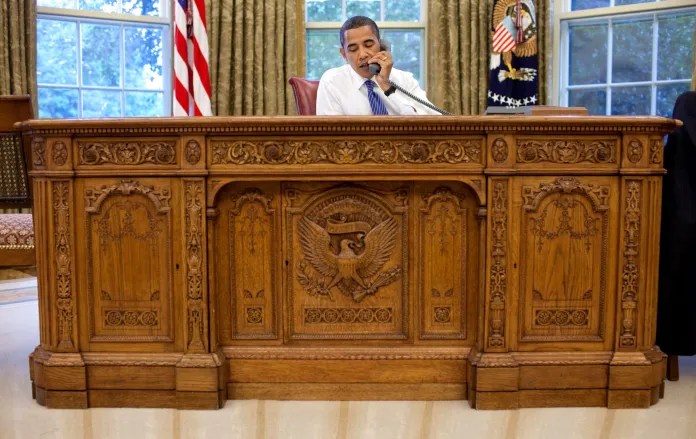
Not likely something you’ll get to see if you go on a tour of the White House, the Resolute Desk is actually the desk that the President uses in the Oval Office. The HMS Resolute had been lost in the Arctic in 1854, itself looking for a lost expedition to the North Pole. An American whaling ship found it a year later, repaired it, and sent it back to the UK as a gesture of goodwill. Queen Victoria then had the timbers fashioned into a desk for President Rutherford B. Hayes in 1880. It’s been modified twice to add a door to conceal FDR’s leg braces and later a two-inch plinth.
Bacon’s Castle
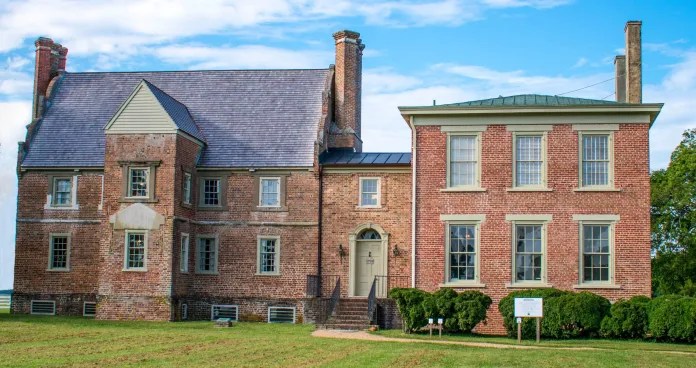
While built entirely in America, Bacon’s Castle in Surry County, Virginia undeniably has its origins in the United Kingdom. It was constructed by wealthy businessman Arthur Allen in 1665 and is the oldest brick-built home in the United States. It’s also the oldest example of Jacobean architecture in America as well as possessing an excellent example of an English formal garden. It got its name for having been occupied by the followers of Nathaniel Bacon during Bacon’s Rebellion of 1675-1676, the first armed rebellion in the country’s history that ended a hundred years before the American colonies declared independence.
London Bridge
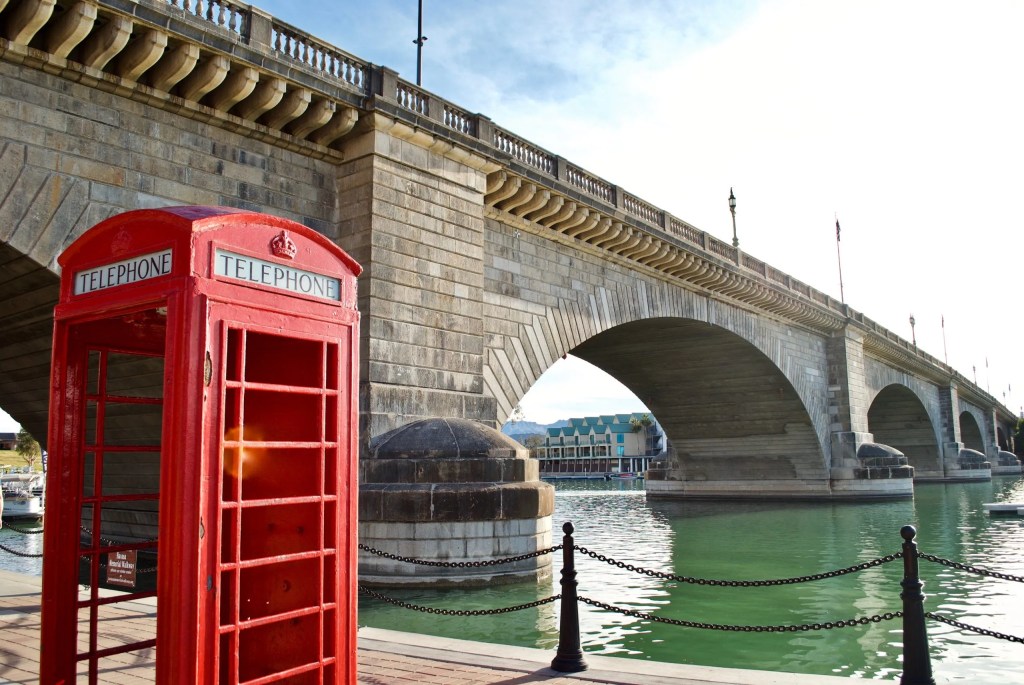
Several London Bridges have existed throughout history, with the first to bear the name being “Old London Bridge”, which was constructed in 1209. “New London Bridge” replaced it in 1831, but by 1967, it was replaced with the modern bridge that crosses the Thames today. “New London Bridge” was purchased from the City of London by Robert P. McColloch, who moved the entire thing stone-for-stone to Lake Havasu City, Arizona, where it remains today. A popular rumor suggested that McColloch thought he was purchasing Tower Bridge, but that was flatly denied by all parties.
Agecroft Hall
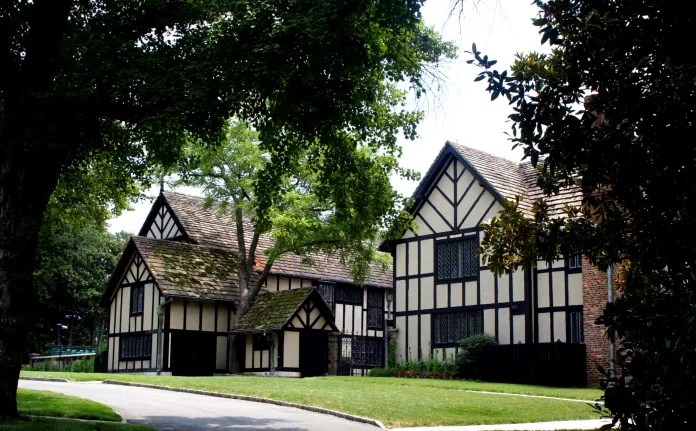
Another British home located in Viriginia, Agecroft Hall, was actually built in the United Kingdom (originally, anyway). This impressive Tudor mansion was constructed in the late 15th Century, though the original house in Lancashire had stood since 1292. Eventually, the family line failed, and the hall fell into disuse and disrepair until it was purchased by Thomas C. Williams at auction in 1926 for $19,000 (about $293,000 today). There was a bit of protest from the local community and in Parliament over the sale, but it ultimately went through as it was felt that it was better to see it sold than demolished for good. Today, it operates as a museum in Richmond and plays home to annual Shakespeare performances.
RMS Queen Mary
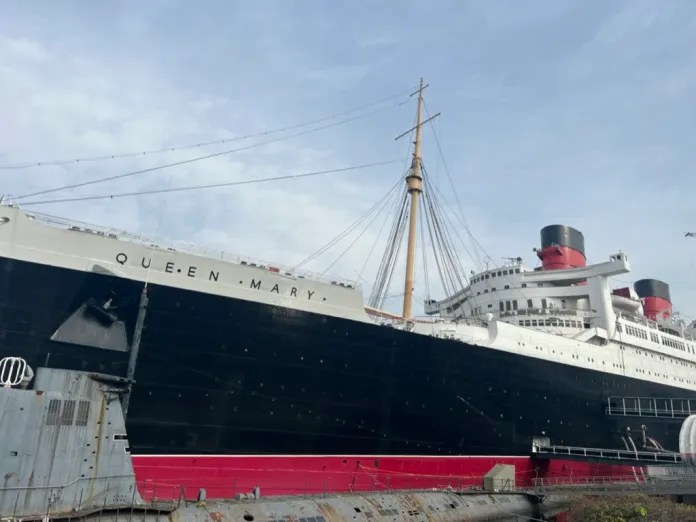
Launched in 1934, the RMS Queen Mary is an ocean liner that once operated as an “express” ocean liner from Southampton to New York. It continued operation for another thirty-one years, barring when it served as a troop ship during World War II, until it was retired in 1967. That same year, it came to rest in Long Beach, California, where the city had purchased it prior to the ship’s last transatlantic voyage, and converted it into a permanently moored hotel, museum, and event hall. It recently re-opened after being closed during the pandemic and going through management changes.
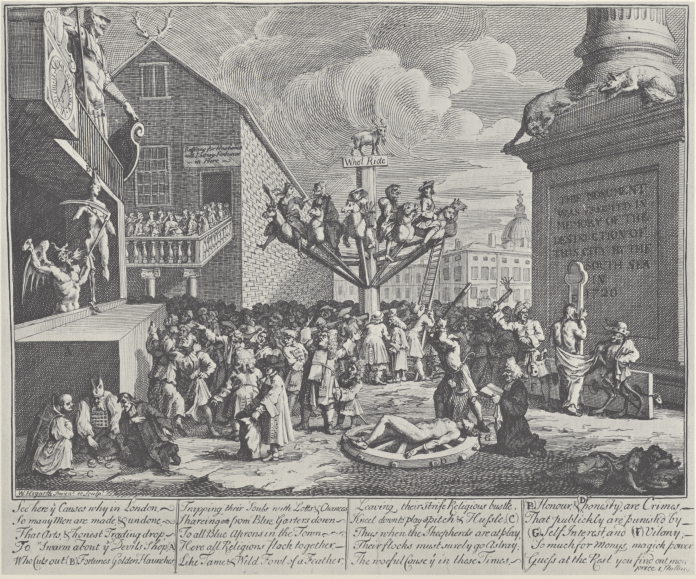
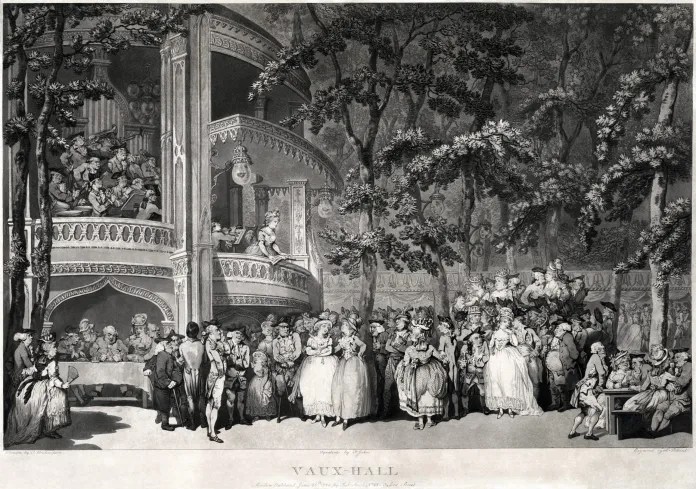
While using images to tell a story dates back to cave paintings and later on to the Greeks, Romans, Egyptians, and other cultures, political cartoons or comics as we know them are a tool of satire that’s only a few hundred years old. While the art of cartooning and caricature began in Renaissance Italy, historically, the use of pictorial satire began with William Hogarth in the early 18th Century. In his work, Emblematical Print on the South Sea Scheme, the artist sought to criticize the greed and corruption of the South Sea Company, using real and allegorical persons and places. The print inspired a host of imitators on the Continent and is credited as a precursor to later political cartoons of the era, if not the first.
The medium grew in popularity over the next few decades, with the works of Hogarth and George Townshend often shared as after-dinner entertainment and enjoyed by the lower classes who would view them outside of London’s print shops. While Hogarth was more moralizing in his themes, Townshend was overtly political. The pictorial nature of these early satirical cartoons also lent itself to be easily understood by the illiterate, easily conveying the subject matter and meaning to a wide audience.
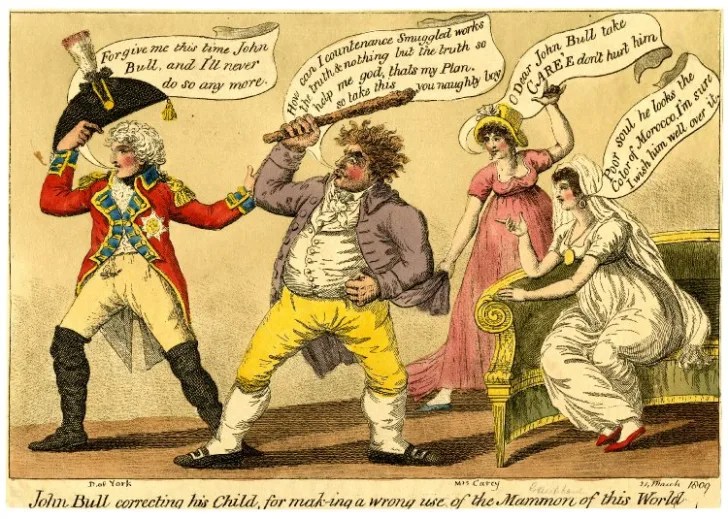
Towards the end of the 18th Century, the two primary artists of the genre were James Gillray and Thomas Rowlandson. Gillray is sometimes described as “the father of the political cartoon.” He particularly enjoyed lampooning the government and especially King George III, whom he thought of as a fool. While initially supportive of the French Revolution, Gillray’s works turned on the French as the revolution descended into the violence and chaos of the Reign of Terror. He also turned his attention to Napoleon, and a cartoon from 1805 showed the competing global interests of England and France as the French Emperor and Prime Minister William Pitt are depicted carving up the world like a Christmas pudding.
Interestingly, despite the Crown and the government still having a significant influence on publishing in the United Kingdom, the cartoons were taken in good nature. Officials were far more likely to buy up all editions of a satirical cartoon or bribe the publishers to prevent people from seeing them rather than taking action against the cartoonist. What was depicted was often a lot raunchier than what we might see today, and important persons could be depicted vomiting, urinating, or even defecating in the cartoons. One particularly famous work from 1740 satirized Prime Minister Robert Wapole’s love of patronage by having a giant caricature of Wapole in front of the British Treasury, presenting his bare bottom to be kissed before people were allowed to enter.
By the 19th Century, cartoonist magazines such as Punch and political newspapers regularly published political cartoons. As per the norm for caricatures, often one attribute of the subject was overexaggerating to help identify them. Pitt the Younger was often depicted as drunk, Churchill was rarely drawn without one of his trademark cigars, Thatcher was either shown with a handbag or her nose greatly enlarged, and John Major was often depicted wearing his underpants outside of his clothes after Labour spin master Alastair Campbell suggested he tucked his shirt into them.
Today, the importance of political cartoons to free speech and holding officials to account for their actions continues. The history and cultural significance of these works can be found in art museums across the United Kingdom, but most pointedly at The Cartoon Museum in London. With its large collection, The Cartoon Museum features political cartoons heavily in its exhibits, along with non-political humor comic strips, superheroes, and more. It’s highly recommended to visit the next time you’re in London to understand more about one the most important genres of free expression and criticism.
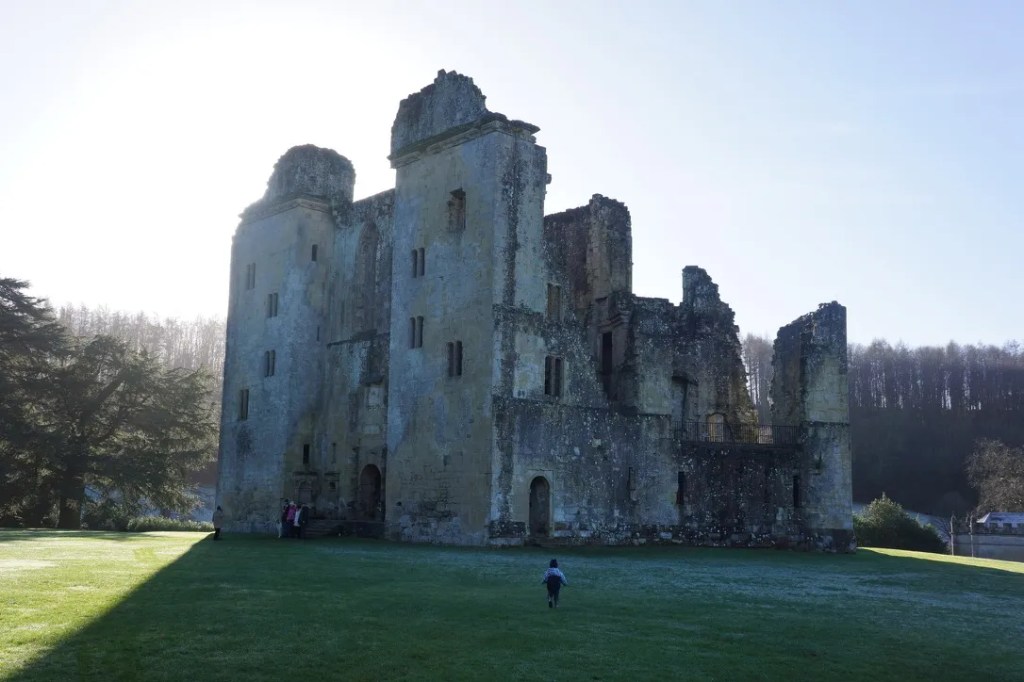
Once upon a time, many a castle stretched towards the heavens across the United Kingdom. Whether constructed for defense or to show off the wealth of the local lord, they were magnificent structures that represented the power of the nobility. However, over time, many of these castles have fallen into disrepair as they were abandoned or their maintenance became too expensive for the families that called them home. The preservation of the ruins and whole castles forms part of the mission of the National Trust, English Heritage, and other organizations to preserve these important pieces of history for future generations.
Over the centuries, as castle maintenance got to be too much for the ancient families, they often sold the castles or entered into agreements with preservation organizations, especially as the castles became tourist destinations in the 19th Century. Families with the money to do so often revitalized their castles and unified their multi-era architectural styles with Gothic Revivalism. Such examples include Windsor Castle as well as Alnwick Castle, the former owned by the Crown while the latter is still owned and maintained by the Percy family. The government also turned its attention to preserving these ancient sites with the Ancient Monuments Protection Act of 1882 while private individuals such as William Morris established the first preservation organization, the Society for the Protection of Ancient Buildings, in 1877. Less than twenty years later, the National Trust was formed.
In the ensuing decades, other organizations also formed that bought up the castles around the United Kingdom, including the National Trust for Scotland. The English National Trust acquired its first castle in 1926, which was Bodiam Castle. Bodiam had been constructed in the 14th Century and was under the ownership of Lord Curzon, who had purchased it specifically for its preservation and then gave it to the National Trust. The National Trust for Scotland received its first castle, Crookston Castle, from Sir John Stirling Maxwell in 1931 after he was elected the charity’s vice-president. Today, the National Trust owns and maintains twenty-nine castles over England, Wales, and Northern Ireland. The National Trust for Scotland owns roughly seven castles across Scotland.
Even more castles are owned by organizations that formed in the 20th Century, such as English Heritage and Historic Scotland. Both organizations began as governmental bodies, the Historic Buildings and Monuments Commission and the Ministry of Works, respectively. English Heritage in the 21st Century became its own separate non-governmental charity, while Historic Scotland became Historic Environment Scotland and still serves as a department of the Scottish government. English Heritage owns and maintains approximately 100 castles, while Historic Environment Scotland has roughly 65. The Welsh government, meanwhile, formed Cadw in 1984 to support its own preservation efforts, which include 44 castles, including some World Heritage Sites such as Caernarfon Castle and Conway Castle. Whatever castles you visit across England, Scotland, and Wales, the chances are good that one of these three organizations is responsible for ensuring that visitors can continue to marvel at and learn from these sites.
Of course, that doesn’t mean that all castles in Britain are in the care of these charities and governmental organizations. As mentioned previously, besides castles owned directly by the Crown, some places, such as Alnwick Castle, are still owned by their respective families and maintained through private trusts and by opening themselves to the public. Besides Alnwick, Eilean Donan is another famous castle still in the private ownership of Clan Macrae and maintained by the Conchra Charitable Trust. Arundel, Bamburgh, Ludlow, and Belvoir are other excellent examples of private castles that can be visited today.
Thus, even while many castles across the United Kingdom have lost their defensive uses, they serve today as living museums of British History, maintained by any number of organizations and individuals dedicated to their preservation. No matter which castles you choose to visit; we hope you will keep in mind the enormous efforts and costs that are associated with preserving these sites. Maybe drop something in the donation box or buy a souvenir at the gift shop to show your appreciation for their efforts.
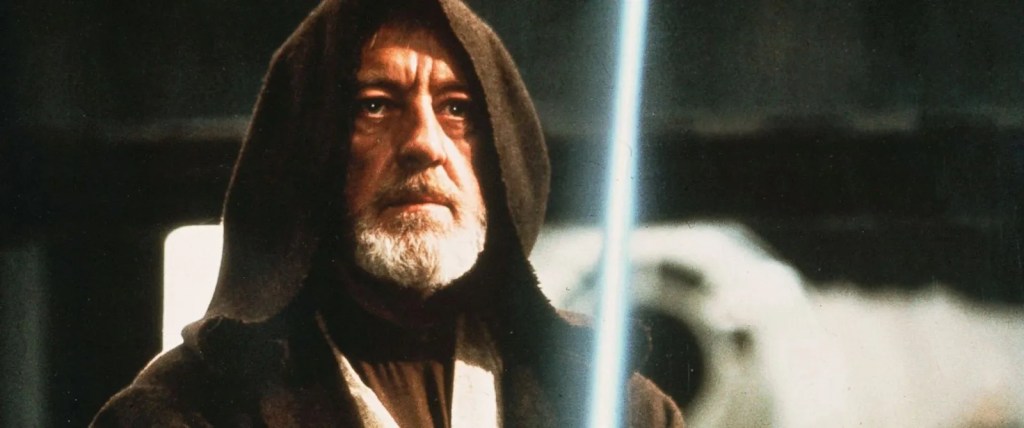
Con Man, Spymaster, and Jedi Sir Alec Guinness took on many unforgettable roles over his career as an actor. Guinness made a name for himself early in his acting career by starring in several Ealing Studios comedy films and showed what a dramatic powerhouse he could be in 1956’s The Bridge Over the River Kwai. Younger audiences, of course, mostly know him as Jedi Master Obi-Wan Kenobi in the Star Wars films before Ewan McGregor took over the role at the turn of the 21st Century. Naturally, such a long and storied career lends itself to a number of great facts about one of Britain’s best actors.
Single Parent Household
Sir Alec was born Alec Guinness de Cuffe in 1914, though his birth certificate did not list a father. At the time, that portion could only be filled out if the father was present and gave his consent per an 1875 law concerning illegitimate children. Since Alec’s father did not sign, we don’t know who he was and he was not a presence in his son’s life. Guinness himself believed that his father was a Scottish banker named Andrew Geddes, who would often visit the family posing as an “uncle” and paid for Alec’s education.
Alec, the Fanboy
The actor was apparently a huge fan of the show Due South, a “dramedy” series about a Mountie and a Chicago cop solving crimes.
And the Award Goes to….
Alec Guinness was no stranger to the Academy Awards. He was nominated for Best Actor for The Lavender Hill Mob but ended up winning the award for playing Colonel Nicholson in Bridge Over the River Kwai in 1957. In 1958, he was nominated in the category we know today as Best Adapted Screenplay for The Horse’s Mouth. He was also nominated for Best Supporting Actor for Star Wars: A New Hope and Little Dorrit. To date, he’s the only actor from the Star Wars franchise to be nominated for their role in the movies.
Thanks, but No Thanks
When he found out that he was going to win a Lifetime Achievement Oscar, he wasn’t terribly thrilled about it and refused to attend. The Academy sent out Dustin Hoff to talk him into going, and Hoffman’s similar attitude toward acting convinced him to go to the ceremony.
Need a Place to Stay?
Harrison Ford once said that Guinness helped him find an apartment during the filming of Star Wars: A New Hope.
Studying the Footage
To prepare for his role as Obi-Wan Kenobi in the prequels, Ewan McGregor not only watched the original trilogy (of which he was already familiar through his uncle Dennis “Wedge Antilles” Lawson) but also many of his other early roles to get his speech pattern and mannerisms. McGregor wasn’t the only one who took their cues from Guinness, as Watto’s voice actor, Andy Secombe, based his character’s voice on Guinness’s portrayal of Fagin in the 1948 adaptation of Oliver Twist.
Quite the Contrast
Guinness played a seasick Royal Navy officer in the Ealing Studios comedy All at Sea, but in reality, he served with distinction in the Royal Navy during WWII and commanded landing craft that invaded Sicily and Elba.
Don’t Call Me “Sir”
Alec Guinness was awarded his CBE in 1955, knighted in 1959, and made a Companion of Honor in 1994 by Queen Elizabeth II for his services to drama. Despite all that, he didn’t care to be referred to as “Sir Alec Guinness.”
Not the Biggest Fan
While the conventional belief is that Alec Guinness hated being remembered as Obi-Wan Kenobi, his main concern was that younger audiences only knew him for Star Wars rather than the wealth of roles he had portrayed prior to the Star Wars films. Guinness was allegedly approached by a young fan in 1980 who said he’d seen the movie 100 times and, horrified, Guinness told him he’d give him an autograph if he never watched it again. Carrie Fisher once said that Guinness paid Mark Hamill £20 to leave him alone because Hamill would constantly badger him with questions about his career or acting advice. However, in his autobiography, Guinness recounted that Star Wars let him “live for the rest of my life in the reasonably modest way I am now used to, that I have no debts, and I can afford to refuse work that doesn’t appeal to me.”
And Also With You
In one of those great misquotes owed to the Mandela Effect, Guinness’s well-known line “May the Force be with you” was actually “The Force will be with you, always.”
The 1990s were a time of “new” in Britain. New conflicts, new travel options, new government, a new peace, and even a new millennium helped mark the years from 1991 to 2000. For many, the 90s were certainly a golden time for Britain at home and abroad, and the changes helped bring a better quality of life to the United Kingdom. From cloned sheep to expanding the Anglican priesthood, we’ve outlined ten of the most important events of the decade by year. This is by no means an exhaustive list, so you can feel free to add your own suggestions in the comments.
1991 – The United Kingdom Enters the First Gulf War
After then-Iraq leader Saddam Hussein invaded the sovereign nation of Kuwait in 1991, Britain became part of an international coalition to liberate the small country on the Persian Gulf. Under the operating name “Operation Granby,” 53,462 members of the British Armed Forces participated in the larger Operation Desert Storm and successfully freed Kuwait from the influence of the Iraqi Army.
1992 – The Channel Tunnel Opens
Also known as the Eurotunnel or the Chunnel, the Channel Tunnel is an underground tunnel below the English Channel. Opened in 1992, it has been a vital link for the trade of goods between the UK and Continental Europe as well as a major player in passenger travel.
1993 – First Premier League Championship
After 1991, 22 top-tier football teams resigned from the Football League to set up their own commercially independent league, the Premier League. The Premier League became the highest tier of English football, and the 1992-1993 season ended with Manchester United finishing ten points ahead of Aston Villa to secure the league’s first championship. The Premier League’s success has kept it a driving force in football today and may have partially inspired the ill-conceived European Super League.
1994 – First Women Priests Ordained in the Church of England
March 12, 1994, saw the ordination of thirty-two women as priests into the Church of England. While previous branches of the Anglican and Episcopalian Churches had ordained women in the past, it was not permitted in the Church of England until the General Synod passed the measure in 1992. By 2004, one in five priests in the Anglican Church was a woman.
1995 – BSE Outbreak
One of the worst virus outbreaks in Britain until COVID-19, Bovine spongiform encephalopathy (more popularly known as “Mad Cow Disease”), was a neurodegenerative disease that struck cattle. The virus had been identified as early as 1984 but experienced an alarming surge in 1995, with the United Kingdom experiencing 14,562 cases. It was also discovered during this time that a variant of the virus could be passed to humans by eating BSE-tainted meat.
1996 – Dolly the Sheep
What’s so remarkable about a sheep, you may wonder? Well, Dolly has the distinction of being the first mammal to be cloned from an adult cell. Prior to this, the only mammals cloned were other sheep from embryonic cells. It was a leap forward in genetic engineering that no one at the time thought possible.
1997 – New Labour
As the Conservative Party slid further under the premiership of John Major, Tony Blair took charge of Labour’s leadership and formed a more center-left coalition that was dubbed “New Labour.” The results were striking as Blair’s Labour Party won 145 new seats in the 1997 General Election and reduced the Tories to a mere 165 seats to Labour’s 418. The Labour government would last for the next thirteen years until the Conservative-Liberal Democrat coalition in 2010.
1998 – Good Friday Agreement
Also known as the Belfast Agreement, the Good Friday Agreement finally put an end to most violence in Northern Ireland by giving the country a greater say over its affairs through devolved government and demilitarization. It was signed between the British and Irish governments and political parties in Northern Ireland in 1998. Voters in Northern Ireland accepted the agreement in a referendum on May 22 by an overwhelming majority of 71% (94% in the Republic of Ireland). The agreement aimed to end the decades-long conflict known as “The Troubles” and establish peace and stability in the region. The agreement established a power-sharing government in Northern Ireland, recognized the right to self-determination for Northern Ireland, and provided for the decommissioning of paramilitary weapons. The lasting effects of the agreement are that it has brought relative peace and stability to the region, significantly reduced violence and deaths, and paved the way for ongoing reconciliation efforts between the two communities.
1999 – Welsh Parliament and Scottish Parliament Open
Northern Ireland wasn’t the only beneficiary of government devolution in the 1990s. The Labour government also helped to form and give power to the Senedd Cymru (the Welsh Parliament) as well as the Scottish Parliament. Both institutions continue to have power over the internal affairs in Wales and Scotland to this day.
2000 – New Millennium
All across the world, the coming of the year 2000 brought both excitement and apprehension. While some worried about the possibility of a “Y2K” bug shutting down computers, Britain prepared for the coming of the new millennium with the construction of the Millennium Dome and the London Eye. While the Dome initially failed, it was later reinvented as the O2 Arena, while the Eye continues to be a popular attraction for the city.
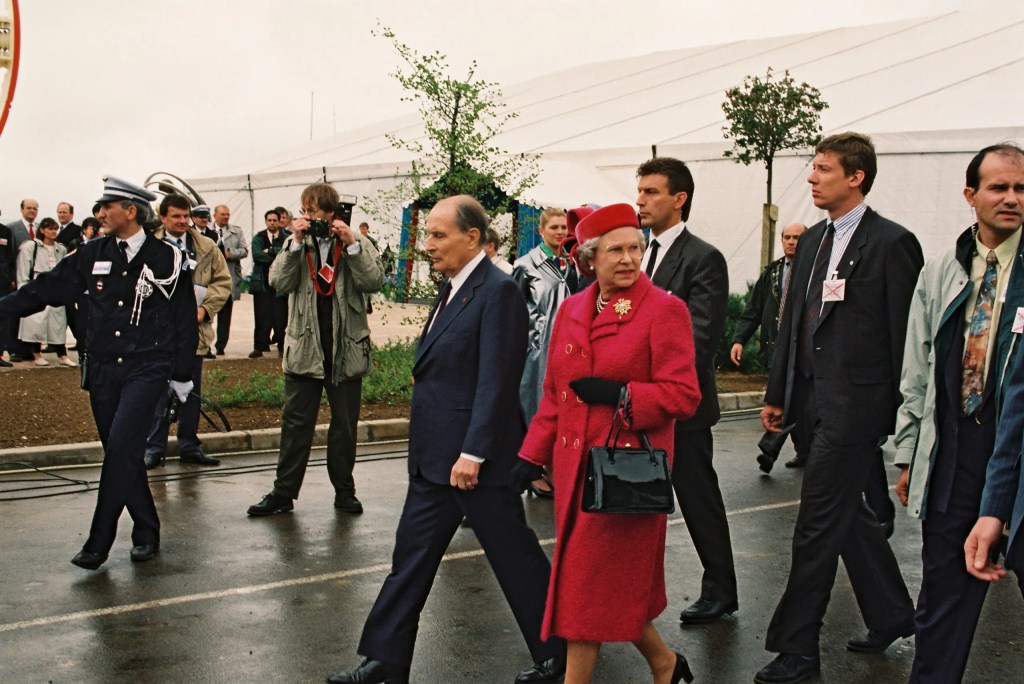
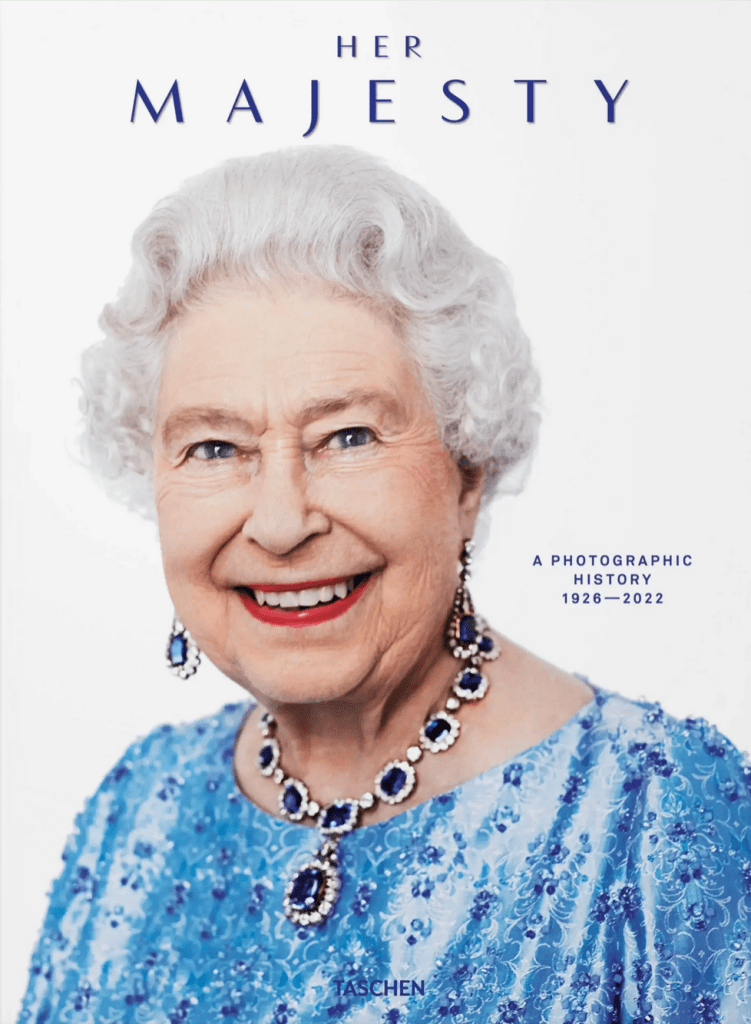
Commemorate Her Majesty Queen Elizabeth II with this definitive photographic story of her public and private life. Brimming with tradition, history, glamour, and culture, this book features tours, state functions, weddings, and jubilees, and showcases the glorious photography of such stars as David Bailey, Yousuf Karsh, Harry Benson, and many more.
Born in 1926, married in 1947, crowned as Queen in 1953, Her Majesty Queen Elizabeth II carried out her duty with great dedication for more than seven decades. TASCHEN celebrates her remarkable royal story with a new edition of Her Majesty, a definitive photographic collection of her public and private life.
Brimming with history, tradition, fashion, glamour, and culture, the book spans the Queen’s early years rightuntil her passing in 2022.. Along the way, we trace her coming of age during World War II; her marriage, motherhood, and coronation; her encounters with such icons of their age as the Beatles, Marilyn Monroe, and JFK; and her extensive international travels. We visit the spectacular royal palaces and enjoy the infectious celebration of royal weddings and jubilees. We witness the elegance of official portraits, and the intimacy offamily moments.
As much a showcase of top photographers as a r celebration of her remarkable royal life. Her Majesty includes the work of such luminaries as Cecil Beaton, Studio Lisa, Dorothy Wilding, Karsh, Lord Snowdon, David Bailey, Patrick Lichfield, Annie Leibovitz and many others.
Whether you know her as a regular in Richard Curtis films, her classics roles, or more off-the-wall characters, chances are good that you have seen a film starring Emma Thompson. Thompson has had a long and illustrious career in comedy and drama that started as a member of the Cambridge Footlights alongside such notable actors as Hugh Laurie, Stephen Fry, and Ben Elton, amongst others. Whether starring alongside her fellow Cambridge alumni or amongst fresh faces, Emma Thompson gives every character her all. If you have a favorite Emma Thompson role or film, you can share that with us in the comments.
Never Ask a Woman Her Age
One of Emma Thompson’s most well-known roles is that of Elinor Dashwood in Sense & Sensibility. At 36 years old, though, Thompson was 17 years older than the character is in the novel (19). Elinor was aged up to twenty-five for the movie.
Tough Room
Thompson tried her hand at stand-up comedy for a little while, but didn’t feel that it fit her aesthetically, so she moved on to other acting projects.
First in Footlights
Members of the Footlights Club have to be invited to join after auditioning for the group. Emma Thompson was the first woman to be invited to join the club, and her involvement was instrumental to her later career.
Two-Time Award Winner
Thompson has been nominated for four Academy Awards and won two of them. Her first win was for Best Actress in 1992’s Howard’s End (which also features Harry Potter co-star Helena Bonham-Carter). She was nominated for the award two more times for The Remains of the Day and Sense & Sensibility as well as Best Supporting Actress for In the Name of the Father. Her other Oscar win is for Best Adapted Screenplay for Sense & Sensibility, which she wrote from Jane Austen’s novel.
Beloved by Children
Emma Thompson is just as well-known for her family movie roles as her adult characters. Her best known are quite possibly Nanny McPhee in the series of the same name and Professor Sybil Trelawney in the Harry Potter franchise. In the case of Harry Potter, her children with husband Greg Wise pushed her to take on the role. Additionally, she’s also played Queen Elinor in Disney and Pixar’s Brave as well as Miss Trunchbull in the film adaptation of Matilda the Musical.
I Always Feel Like, Somebody’s Watching Me
While a guest on Graham Norton, Thompson said that she often walks out to the hot tub in her country home completely nude. One time, she got a knock on her door from the police, who said that someone had spotted a nude man trespassing on her property.
Birthday Twins
Emma Thompson shares a birthday (August 15) with Harry Potter co-star and fellow Emma, Emma Watson.
Going to Bat
When the studio wanted actress Hayley Atwell to lose weight for her role in Brideshead Revisited, Thompson was livid at the demand and threatened to walk off the film. While Atwell wasn’t yet the household name she is today, Thompson’s star power meant the studio backed off pretty quickly to keep her in the movie.
Left Swipe
Emma Thompson’s contentious divorce from Kenneth Branagh was finalized in 1998. At the same time that she was filming Primary Colors, she got a phone call from none other than Donald Trump asking her out on a date. Trump was recently divorced from his second wife, Marla Maples. Thompson politely declined, and the circumstance proved ironic as she was playing a fictional version of Hillary Clinton, Trump’s future 2016 presidential opponent.
The Family Business
Thompson comes from a very talented family where each member has had a pretty significant career in entertainment. Her father, Eric Thompson, was a well-known television presenter and also served as the original English narrator of The Magic Roundabout. Her mother, Phyllida Law, also has a long and equally-illustrious acting career as her eldest daughter. Her sister, Sophie Thompson, has received numerous award nominations for her film and television roles as well. Coincidentally, both sisters are featured in the Harry Potter films, though never in the same movie. While Emma plays Prof. Trelawney, Sophie contributed to the character Mafalda Hopkirk in Harry Potter and the Deathly Hallows, Part One.
When warmer weather hits, you can bet that race season is on. 5Ks, 10Ks, Half-Marathon, and full-Marathon races go on all over the world. The UK has several notable races of its own, including the famous London Marathon. There are also some pretty lesser-known, though infinitely more fascinating, races that take place across the country. From a simulated prison break to a marathon run in reverse, we have identified five of these unusual races that take place all over Britain. If you feel up for the challenge, maybe you’ll race in one? You can also add some of your own favorite odd races in the comments.
Dartmoor Prison Break
This “ultra event” race raises money to support the Dartmoor Search & Rescue Team Plymouth and gets its name because it starts at HMP Dartmoor. In the spirit of a real prison break, teams are encouraged to take their own route from the prison and get as far as they can within a given time. The time periods for the race are broken down into 12 hours (“Delinquent”) and 24 hours (“Felon”). For 2022, the race is introducing a new element as the teams can compete against the “wardens” to see who can get further.
nohtaraM nodoL ehT
If you’ve already figured this one out from reading backwards, the name of this race is “The London Marathon” in reverse. Also known as the Reverse London Marathon or Backwards London Marathon, this race was started by a group that didn’t qualify for the marathon proper, so they decided to run their own. Starting at 2 AM the day of the marathon, the participants run the London Marathon course in reverse, starting at the course’s end and finishing at the beginning. The runners wrap up their race before the 8AM start time of the London Marathon.
Man vs Horse
Originating in Llanwrytd Wells, Wales in 1980, this race is exactly what it sounds like. Run the distance of a normal marathon, runners race against a rider on horseback on roads, through trails, and over mountainous terrain. The race started all because a local landlord overheard a pub argument over which of the two would be faster and decided to put it to the test for real. Over the more than forty years that the race has been held, humans have beaten the horse a handful of times, winning a cash prize in the process.
The Sumo Run
While it doesn’t appear to be an active race anymore, the Sumo Suit Run was a 5K that saw participants run for 3.1 miles through London’s Battersea Park wearing inflatable sumo suits. During its history, the Sumo Run actually set a Guinness World Record for the largest gathering of runners in sumo suits, proving if you come up with a wacky enough concept, you can get a world record for it. Personally, I wouldn’t mind seeing this event revived with T-Rex suits, but maybe that’s just me (“Must go faster, must go faster”).
The Spooky Sprint
Currently a virtual event, this Halloween-themed race offers courses in 5K, 10K, Half-Marathon, and Full-Marathon distances. Runners are encouraged to participate in costume, though it doesn’t seem any award is given for the best dressed. The race will return to Peterstow Manor for 2023 but also continue offering virtual events. We can guarantee that if you run in one of the races either in person or virtually, you’ll be *dead* on your feet afterwards (*maniacal laugh*). Regardless of how you choose to race, all funds go to support Parkinson’s research in the UK, so you’ll be contributing to a great cause.
The Home Guard always had something a little absurd about it. Made up mostly of men too old or unfit to serve in the regular armed forces, it trained with inadequate equipment for an invasion that never happened. It was only a matter of time before it became comedy material, and Dad’s Army was the long-running show that did it. Set in a fictional coastal town, and led by the local bank manager, the show followed the exploits of the local Home Guard troop. It found humor in the perennial class differences of the British, as well as in the low status of the patriotic volunteer, unpaid troops. Occasionally, they really did encounter the enemy, perhaps as a parachuting pilot, but their night-time antics brought smiles into British homes during the difficult years of the 1970s.
Key Facts:
Nine series, totaling 80 episodes, aired between 1968 and 1977
Based on the real Home Guard of WWII
Starred Arthur Lowe as Captain Mainwaring, John Le Mesurier as Sergeant Arthur Wilson, and Clive Dunn as Lance Corporal Jack Jones
Placed 4th in a BBC poll for ‘Britain’s Best Sitcom’
Used authentic wartime popular songs as background
A Short History
Of the more than 3 million British soldiers who were alive when the war ended, perhaps only 100,000 or more are still living, yet the myth that Britain won the war single-handedly seems to have grown as the number of veterans has shrunk. With the British inclination towards parody, that doesn’t mean that all the memories have to be respectful. While the war heroes in movies of the 1950s were young and brave, Dad’s Army was not. This comedy portrayal of the real Home Guard became a massively popular TV show for almost a decade through the late 60s and 70s, which was a time of general irreverence in British society. The bumbling and ridiculous members of the troop, led by the pompous but patriotic Captain George Mainwaring, kept everyone in stitches. No one seemed to ask how, with soldiers such as these, the country could have won any war at all?
The Home Guard was an important, but largely forgotten, element in the British war effort. It was made up of men too old (or young) to join the ‘Regulars’ (between 18 and 41), exempt because they had important day jobs, or were unfit. At its peak, there were 1.5 million volunteers in the force, whose main purpose was to act in the event of a German invasion, which was a genuine fear at the time. They were to control the panicking civilians, keep routes open for the regular troops, and give some resistance to allow regulars time to reach battle points. Since the invasion never came, they spent their nights on exercises, helping to run the underground bomb shelters and patrolling to enforce the blackout – homes were not allowed to show lights, which could guide bombers in an age before radar. This motley group, drawn from all social classes, and reflecting different generations, was a comedy gold mine for a skilled writer. The scriptwriter, James Perry, had plenty of real-life experience to draw on in creating Dad’s Army, because he had been a member of it.
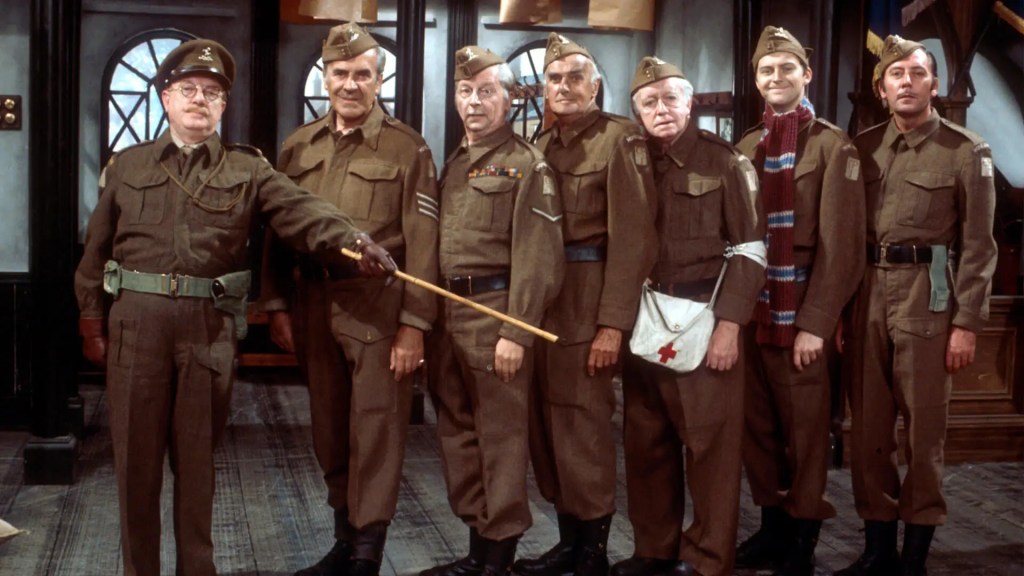
Dad’s Army is set in Walmington-on-Sea, a fictional town on the English Channel, and thus a place where the Nazi invasion would have begun. Captain Mainwaring (played by Arthur Lowe) is the local bank manager. He served in the Army of Occupation in Germany after WWI, but to his shame, he never saw active duty in that war. Patriotic and brave, he is also pompous as only a privately educated Englishman can be, and he appoints himself the leader of the platoon. His sergeant, Arthur Wilson (played by John Le Mesurier), is also his senior clerk in the bank, and despite his public education, he is the wiser of the two. Lance Corporal Jack Jones (played by Clive Dunn) is already in his early 70s, and fought for Lord Kitchener in Sudan at the end of the 19th century. The town’s butcher, he is convinced of the greater courage of the British, but he reflects the simultaneous contempt for, and fear of, the German enemy, that underpins the show.
Of the four Privates who round out the platoon, Private Frank Pike (played by Ian Lavender) is the youngest. He also works at the bank, and his mother always makes sure he wears a thick scarf, to avoid a cold. The remaining Privates are; James Frazer (John Laurie), a former Royal Navy officer; Charles Godfrey (Arnold Ridley), a retired shop assistant from, appropriately, the Army & Navy Store in London.; and Joe Walker (James Beck), a black market spiv, who left the show after the sixth season. There are also a number of secondary characters. Perhaps the most notable is Mainwaring’s rival, Chief Warden William Hodges (Bill Pertwee), the town’s greengrocer (seller of fruit and vegetables) and head of the local Air Raid Precautions unit. The ARP always made invidious comparisons between their ‘real’ job and the antics of the Home Guard. The vicar of the local church, The Reverend Timothy Farthing (Frank Williams), has to reluctantly share his hall with Mainwaring’s troop, and he and his Vicar are also regular characters in the show.
The main plot elements of the show come from the inadequacies of the Home Guards for their job and their lack of real wartime experience. Opposition from the ARP and the Church, as well as rival Home Guard troops in neighboring towns, provides tension, increased by occasional real encounters with the enemy, including a downed German pilot and a U-boat crew. The humor ranges from subtle jokes based on class relationships to broad physical slapstick, giving the show wide appeal to a large audience.
The early seasons were filmed in black and white, a format still found on many televisions in the UK in the 1960s. From season 3 onwards, the show was in colour. Apart from the theme song, “Who do You Think You are Kidding, Mr. Hitler?”, the program was remarkable for the use of a broad spread of authentic wartime music, often chosen to reflect the theme of the episode. The theme song was recorded using a military band and a wartime singer, Bud Flanagan. In all, 80 episodes were produced, over nine seasons, between 1968 and 1977. There were two extended Christmas specials and four sketches. Peak viewership reached 18.5 million.
Cultural Impact
Dad’s Army had an impact on colloquial speech in the UK, adding several enduring phrases. Private Frank Pike is usually addressed by Mainwaring as, “You stupid boy!” Other still-heard catchphrases include, “Don’t panic!”, “They don’t like it up ’em,” “We’re doomed. Doomed, I say!”, “Put that light out,” and “Permission to speak, sir?” The references to “Fuzzie-Wuzzies” by Lance Corporal Jones have thankfully faded into oblivion.
The show received numerous BAFTA nominations, including five for Arthur Lowe, but only won once, for “Best Light Entertainment Production Team” in 1971. It placed 13th on the ‘100 Greatest British Television Programmes’, a British Film Institute poll. It was 4th in a BBC poll for ‘Britain’s Best Sitcom’.
Two full-length feature film versions of the show were made, in 1971 and in 2016. A stage show starring most of the cast ran for almost a year at the Shaftesbury Theatre in London, and on tour, in 1975 and ’76. It was called Dad’s Army: A Nostalgic Music and Laughter Show of Britain’s Finest Hour. The show also ran in Australia and New Zealand, as Dad’s Army – The Musical, in 2004 and 2005. A new version of the show, with new actors, featuring re-enactments of several popular episodes, ran in 2007.
Places to Visit
Most of the exteriors of the show were filmed in the town of Thetford, in Norfolk. This romantic part of England, with its marshes and waterways, is a popular boating area, and an escape from the bustle of London. Thetford itself dates back 1,000 years at least, and it is built around the hilltop remains of a Norman motte-and-bailey castle. There are numerous old buildings and churches. It is perhaps most famous as the birthplace of Thomas Paine, author of the Rights of Man, and an important participant in the American Revolution.
There is a statue of Thomas Paine, but for viewers of Dad’s Army, more important will be the statue of Captain Mainwaring, which was erected in 2010. He sits on a bench with his swagger stick across his lap, providing opportunities for photographs with fans.
In the town Guildhall, in Cage Lane, is the Dad’s Army Museum. Open from 9 to 4, Monday to Saturday, entry is free with a donation, and the museum includes a reconstruction of Captain Mainwaring’s office in the church hall, and the Marigold Tea Room. Home Guard and other military uniforms are on display.
The Charles Burrell Steam Museum, on Minstergate, displays Jack Jones’ butchers van, which is owned by the Dad’s Army Museum, but displayed here because of lack of space. The museum also includes displays of steam-powered equipment, from steam rollers to road locomotives.
While in Thetford, visit:
Thetford Forest, an area for cycling and walking
Breckland – 100,000 acres of wetland protected as a bird sanctuary
Thetford Priory – the ruins of a 12th century monastery
Ancient House Museum – the local museum, housed in an oak-framed Tudor building
Where to Watch
Complete collections of all the series, and specials, are available on DVD
All episodes of the show are available for download purchase on iTunes
The whole series is streaming on BritBox. The 2016 movie is available on Amazon Prime and Apple TV
Further Research
We’re Doomed! – Dad’s Army Story (DVD), a dramatization of the founding of the show
Dad’s Army: The Making of a Television Legend, by Bill Pertwee
Dad’s Army at 50: A Radio Times Tribute to the Classic Series, by Mark Braxton
Dad’s Army – Music from the Television Series (Audio CD)
To the Last Man: The Home Guard in War & Popular Culture, by Malcolm Atkin
We Remember the Home Guard, by Frank and Joan Shaw
The Home Guard Training Pocket Manual, by Lee Johnson (a compilation of original training materials)
Thoughts and notes for the Home guard commander: The coming invasion–defence–patrols–the counter-attack–action against para-troops, by Hanbury Pawle, 1942
Between the United States and the United Kingdom, the words and phrases we use to describe everyday things can change. Even though we’re both speaking English, etymology can vary widely, and the same item or activity might leave you scratching your head when you hear it coming from someone on the other side of the pond. This extends even to home improvement, which is colloquially known in Britain as “Do It Yourself” or “DIY.” So if you find yourself in a DIY store looking to fix up the plumbing or something else has gone wrong in your house or flat, better learn these terms, so you’ll know what to get.
Bodge Job
A “bodge job” is typically one that’s gone quite wrong. If you hired a handyman whose workmanship wasn’t good enough because it was done cheaply or in a hurry, it could break again, which would make it a bodge job.
Stanley Knife
In America, we would typically call this a box cutter or a utility knife. Much like Kleenex, Band-Aid, or Post-It, this tool in Britain has become a generic trademark, or a brand name that has become so synonymous with the item itself that all similar products are referred to by the trademark name.
Wire Wool
This one seems so straightforward that you might wonder why we don’t call it the same thing. Wire wool for Brits is what Americans call steel wool. Both names are rather apt as this material is made from steel wires bundled very finely so that they form an abrasive surface that’s good for finishing work.
Silicone Sealant
This name is a little more upfront in Britain than in America, where we typically call it caulk. While caulk is made from silicone, the origins of the term go back to the 14th Century when it began use as a verb meaning “to stop up cracks and crevices.” “Caulking” came into being in the 18th Century, though calling silicone sealant “caulking material” started around 1980.
Spanner
This term you might be most familiar with, since “spanner” is the British term for a wrench. It comes from the 17thCentury and the German word “spannen” which was the tool used for winding the wheel lock of a firearm. It’s also the origin of the phrase “spanner in the works”, which means something that otherwise ruins one’s plans.
White Spirit
While not exactly the same as paint thinner, white spirit the British term for mineral spirits, which are typically used to clean paint brushes and keep them getting gunked up with dried oil-based paints. Unlike paint thinner, mineral spirits don’t have the same pungent aroma.
Breeze Block
Breeze block is a much cooler-sounding name for what Americans call a cinder block. The origins of the terms are very similar, as the blocks are commonly made from mixing concrete and ash, the latter of which is synonymous with the word “breeze” in Britain.
Stillson Wrench
Despite being an American invention, in America, we call it a pipe wrench rather than giving it the name of its creator. Daniel C. Stillson invented the Stillson wrench in Massachusetts, and the first patent on it was issued in 1869. Instead of naming it for Mr. Stillson, we gave it the name that follows its function, which is tightening or loosening pipe fittings.
Steel Rule
While we could call this a tape measure in America, in Britain, that’s used to refer to a tape measure that is used by a tailor to take measurements for clothing. It gets the distinction by being made of a thin steel ribbon rather than cloth or plastic as is normal for the other kind of tape measure.
Bonus: Gaffer Tape
This one is a fun one – gaffer tape is what the British call ‘duct tape.’



 London visitor