
📍Notting Hill, London.
[Photo: @dr_difilippo]
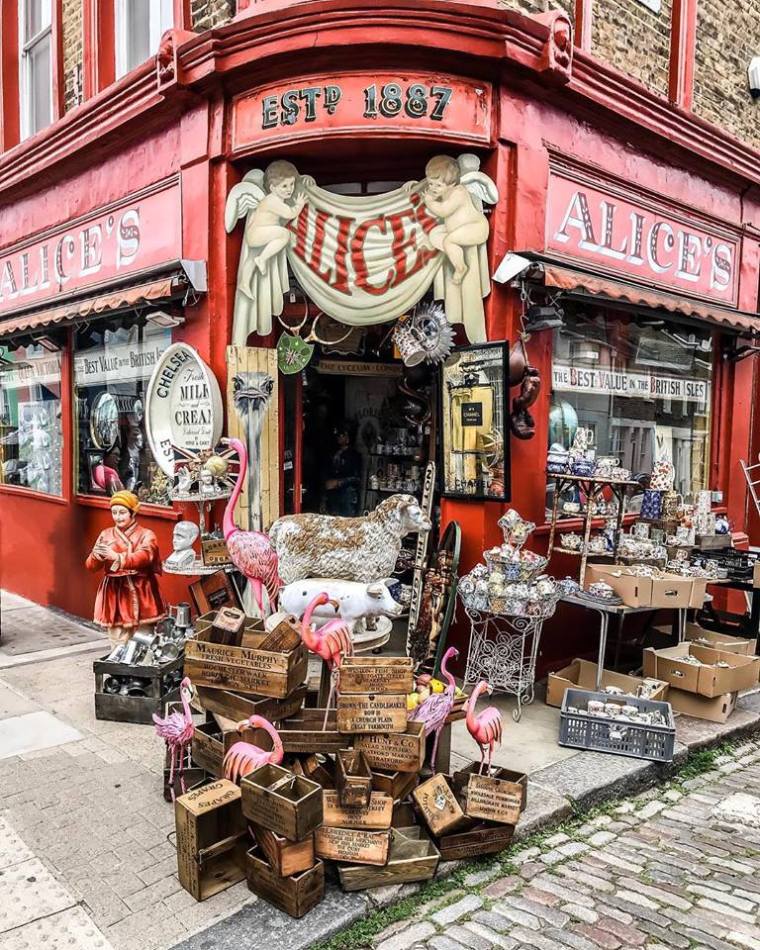
📍Notting Hill, London.
[Photo: @dr_difilippo]
Shhh… These gorgeous London libraries have a lot more to offer than just reading material
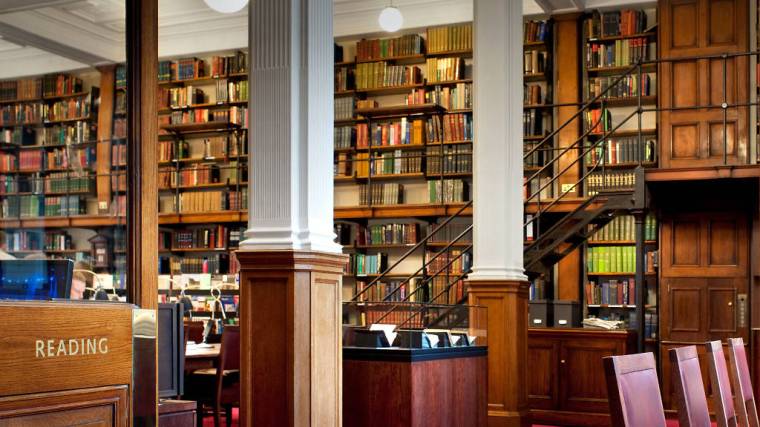
For book lovers seeking a bit of peace and quiet, libraries are a great hideout. Luckily, London is full of them: big libraries, secret libraries, tiny libraries and aesthetically-pleasing libraries, all bursting with books to borrow and read.
Some of them are historic lending archives that have existed in the city for centuries and others are modern celebrations of the written word. Some are famous, while others are well-kept secrets… and all of them are great little spots to spend an afternoon curled up with a book, whether you take one out or not.
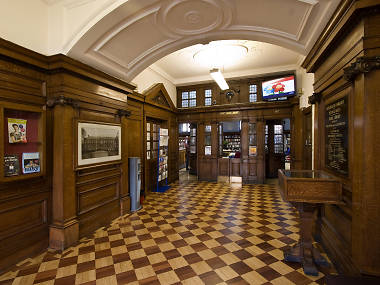
Standing on the busy intersection outside Bethnal Green tube, you might think you’ve stumbled across an out-of-place stately home in the middle of East London. You haven’t. You’re actually looking at the beautiful buildings of Bethnal Green Library, which first opened its doors way back in 1922. Today it boasts a fully-stocked library of treasures for both adults and children, as well as two hireable rooms for up to 100 people each. That’s one massive book-slam just waiting to happen.
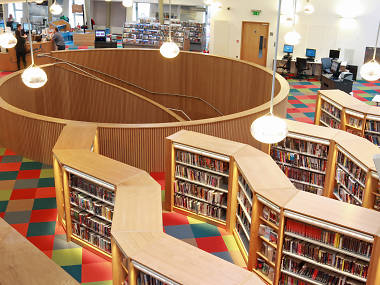
This modern-but-pretty public library was opened in 2011 and now welcomes an average of 37,000 visitors per month. As well as reading material the venue offers live music, theatre, author events and writing groups in its culture space.

This public library was the final building designed by English architect E Vincent Harris, who also built the damn fine-looking Manchester Central Library, among many other civic beauties. With nearly 50 years worth of experience behind him when the project began in 1958, it’s no surprise Harris’s swansong is such a stunner – just check out that spacious floorpan and those bold, authoritative pillars.

Freemasons’ Hall, the eye-catchingly bombastic stone building where Long Acre becomes Great Queen Street, is the headquarters of the United Grand Lodge of England and the principal meeting place for Masonic Lodges in London. In addition to the Grand Temple, there is a library and museum, which house a collection of Masonic material, and everyone from historians to conspiracy theorists is welcome to visit.

Bill Bryson, Sebastian Faulks, Joanne Trollope: nope, not this year’s Man Booker shortlistees, but a rundown of famous writers who are all members of The London Library. It’s the Shoreditch House of book stacks: you pay a subscription fee (around £500 pa), but you don’t have to talk to anyone. And members can borrow books from its 17 miles of shelves for an absurdly long time (or until another member requests the same one). For those not on the bestseller list, the library hosts free evening tours twice a month: just keep an eagle eye on its website to book a place.
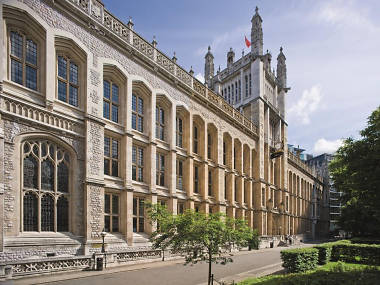
King’s College London’s main research library is a nineteenth-century neo-gothic building that was home to the Public Record Office before King’s bought it in 2001. The magnificent dodecagonal reading room featured in ‘The Da Vinci Code’ and regularly receives filming requests, but its day-to-day purpose is as a space for actual learning. As such, you have to be a member to access it, though Maughan Library is usually open to the public as part of Open House.
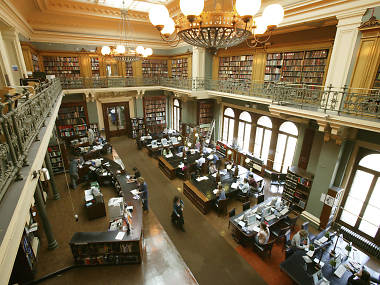
This gorgeous library is hidden away within the V&A, but once you’ve been in you’ll wonder how you never noticed it. Its collection contains books on prints, drawings, woodwork, textiles, metalwork and many more subjects relevant to the museum its housed in. As a major public reference library it’s free to join – all you need to do is provide ID with proof of address. Or you can just peer in through the glass in its huge double doors.
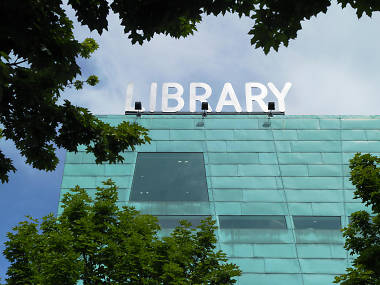
If there’s any confusion as to what this copper-clad minimalist beauty of a building is, the word ‘library’ is helpfully written in huge letters on its roof. The alien-like structure won the Stirling Prize for architecture in 2000 – the only local library to win so far – and between the interior’s space-age pods and bulbous wooden desks there’s a fantastic collection of works by black authors, the largest collection of African CDs in the borough and a great choice of graphic novels.
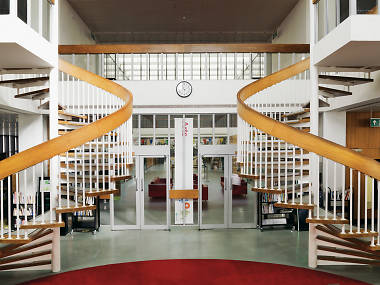
If you’re a fan of symmetry, you’ll love the brutalist exterior of the Swiss Cottage Library, while every element inside looks like a shot from a Wes Anderson film. It’s a dramatic swirl of mirror-image staircases and 1960s curves. The collection is strong on the philosophy and history front, and there’s a big open space where you can swot up in comfy chairs.
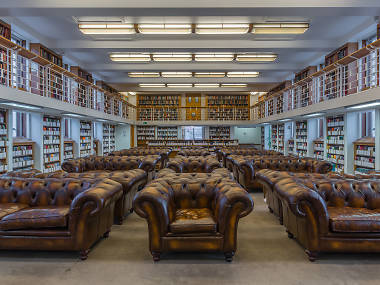
It’s been a Ministry of Information (during World War Two) and a Court of Justice (in ‘Batman Begins’) but this magnificently authoritative-looking building just north of the British Museum is also home to the central library of the University of London. The library occupies the building’s fourth-to-eighteenth floors and is ordinarily only open to members, but you can access for reference purposes by puchasing a day ticket or special summer membership.

The Pearly Queen of St Pancras Diane Gould gives us the story behind the buttons
‘The pearly tradition began with Henry Croft, who was born in St Pancras workhouse. Curiously, he died there too, in 1930. He worked as a road-sweeper and rat-catcher, and he was the one who created the first suit. There’s plenty of stories, but they reckon there was plenty of button factories back in that sort of time, churning out pearl buttons. Then there was another legend about a cask of pearl buttons, chucked overboard by one of the traders going along the Thames. But it took Henry a few years to make that costume. He made what was called “skeleton suits” – one for each day of the week.’
‘We started in north London. People talk about the phrase that you have to be “born in earshot of the Bow Bells” [of St Mary-le-Bow Church] to be a true Cockney. But thinking about it, back before the high-rises and modern building in London, you could hear the Bow Bells in north London, Hampstead and way up. People think we started in the East End when it really started in King’s Cross.’
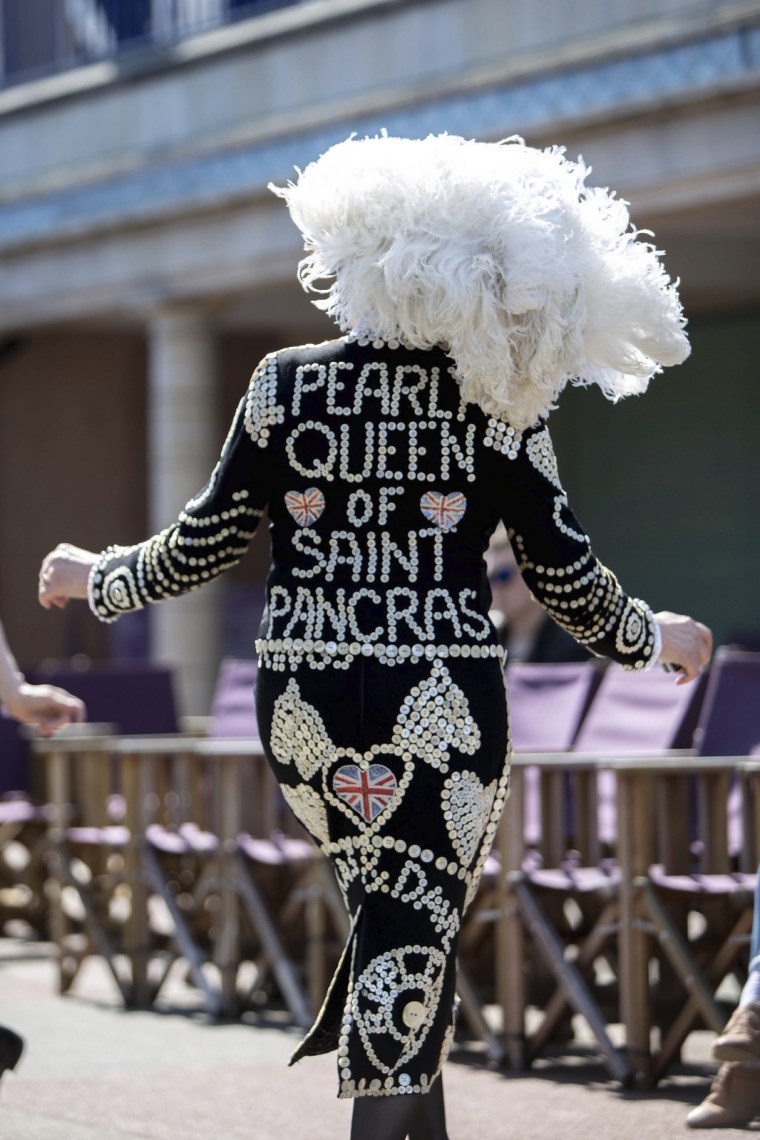
‘The women’s hats are usually larger cartwheel-type felt hats; they all need to take the weight of the traditional ostrich feathers. Some ladies put wire netting inside the hat to take the weight. Generally the suits are handed down through generations, and a pearly king would be the one sewing the pearly suit. A pearly suit is never finished. You’re always adding or changing the design. I’ve had mine for over 30 years now. A full pearly “smother” suit can weigh up to 30kg.’
‘Coster backslang is where the words are backwards. It started in Victorian London, and was used mainly by costermongers to talk behind the backs of their billy bunters [punters]. Sometimes they were being saucy or didn’t want the punters to know. The word “yob” was originally backslang for “boy”.’
‘They used to elect a costermonger king and a costermonger queen to look after the market, so if any market trader fell on hard times, they would always have a collection. From the coster king and coster queen, the pearly kings and queens started. It goes way back to when working-class people used to stick together. It’s about being united, spreading love and looking out for those who can’t do it themselves. It’s about raising funds for those less well-off. Sometimes people needed a little help up. That’s what the pearlies do – the traditional, real pukka pearlies.’
Order a tipple, sink into a squishy armchair and warm those rosy cheeks beside a roaring fire. We bring you our pick of London’s cosiest pubs…
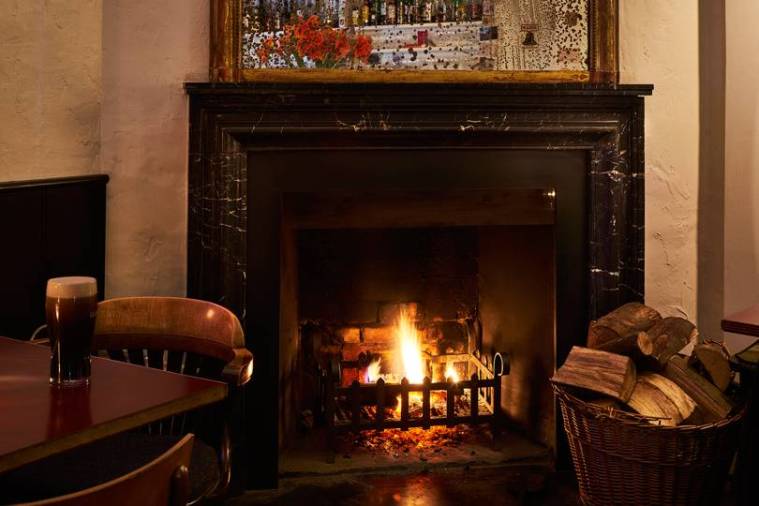
A indie gem so deliciously warm, friendly and relaxed, it instantly feels like home (if home was a beautifully eclectic nook that everyone is incredibly secretive about). The most comfortable escape in west London. Catch up over an organic bottle of red (settle in front of the open fire or head to its twinkly winter wonderland-style garden) or spend the entire evening sampling the menu which is all about slow food, local produce and herbs from its roof-top garden. Small warning: you will fall in love.
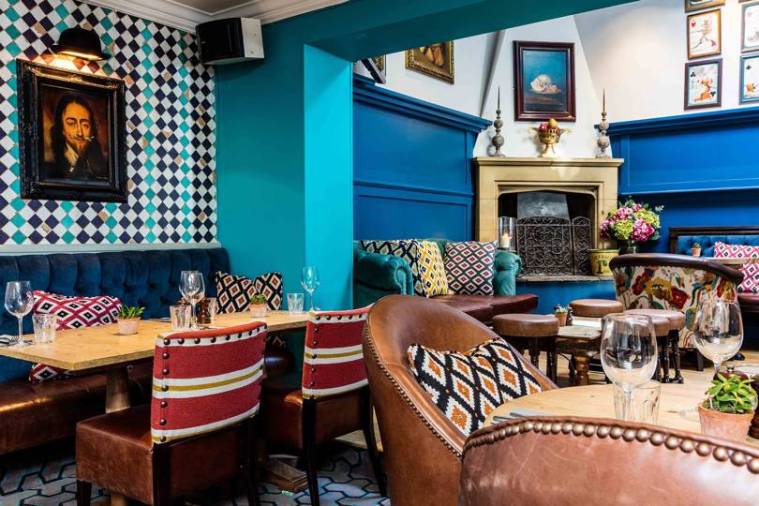
Tucked away behind the hustle and bustle of the King’s Road is one of Chelsea’s favourite drinking holes, the Builders Arms. We love the jewel-coloured interiors and basket full of blankets practically inviting you to curl up for the entire day.
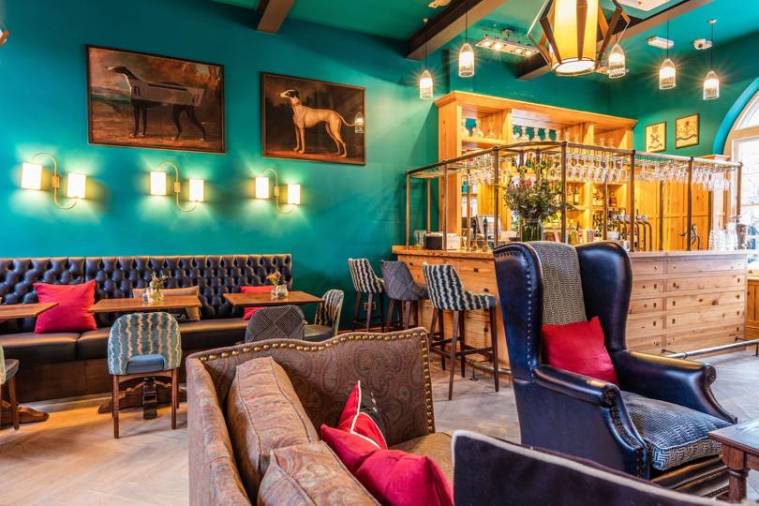
It might be a little out of the way, but we can promise you — this jaunt is worth the distance. The best spot? The Mess Bar, where they serve up the punchiest hot toddy. Oh, and come on a Sunday and you’ll be serenaded with a little jazz to ease you back into Monday. Yes, please.
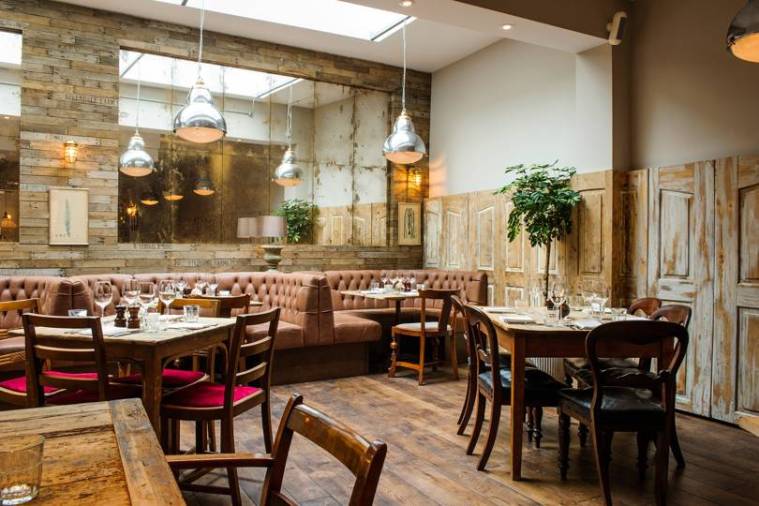
The best of SW3. If it was good enough for Agatha Christie, Bob Marley and The Rolling Stones, then we can only hope it’s good enough for you. Make sure you try the Scotch eggs — they’re awfully good.
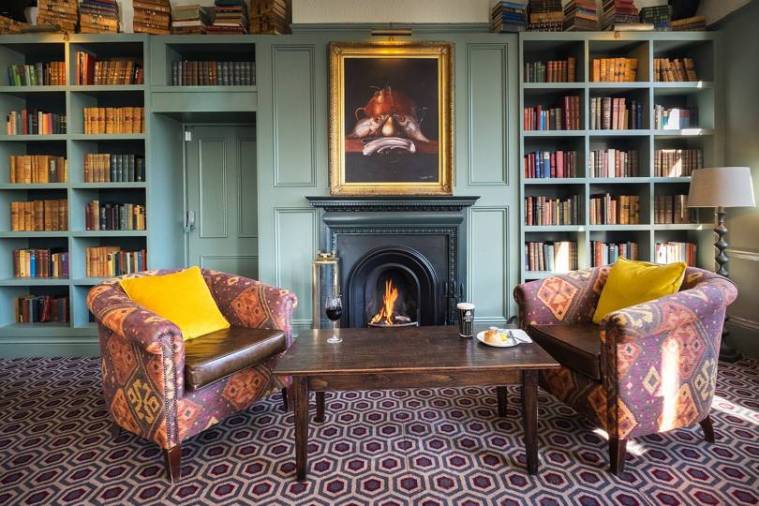
Paintings, bookshelves, open fires… yes, this smart pub, just across the road from Battersea Park, has it all covered. We don’t think there could be a better place to crack open a bottle of red wine or two over Sunday lunch…
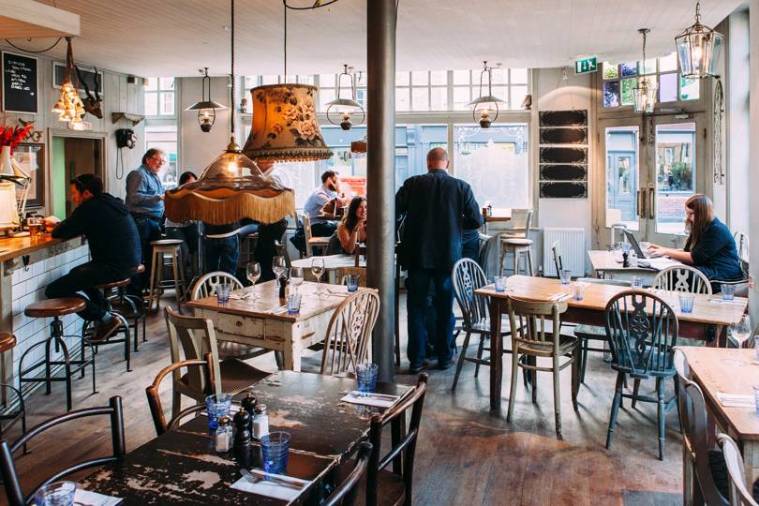
A stone’s throw from London Bridge, this is the one for all you City folks. Tough day at work? Venture here and soothe your woes. There’s a cinema room in the basement too if you fancy a mammoth private-screening session of Stranger Things with your pals.
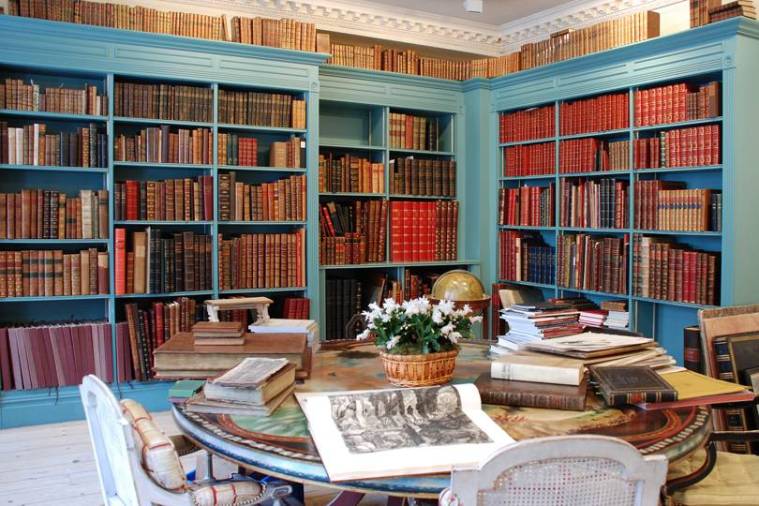
Shapero, with its blue-painted shelves heaving with leather-bound volumes, is a quiet literary sanctuary. They’re especially good on illustrated books – from the fifteenth to twentieth centuries, and they have a gallery too, Shapero Modern, holding exhibitions of their modern and contemporary prints.
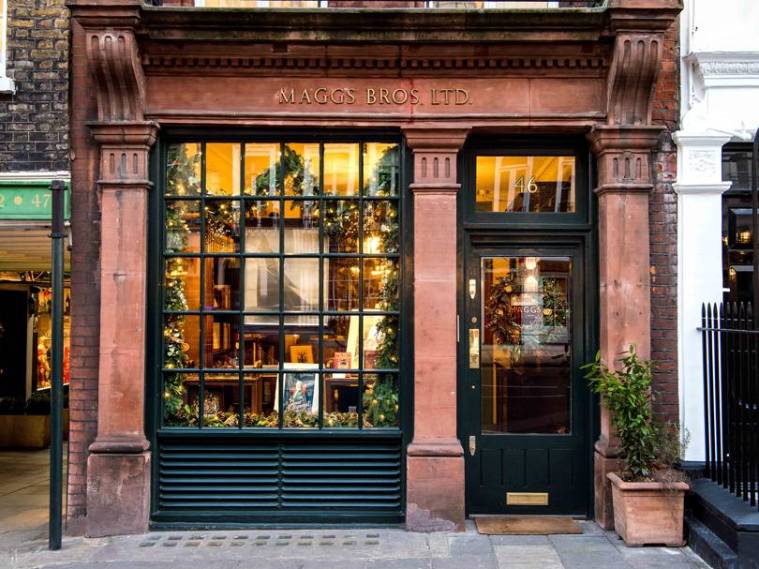
Maggs has been a Mayfair institution for years (though their main address is in fact in Bloomsbury). They have a cosy little shop on Curzon Street, having moved a couple of years ago from Berkeley Square, full of rare and wonderful gems. Positively Dickensian. And you might stumble across a rare Dickens find while you’re there…
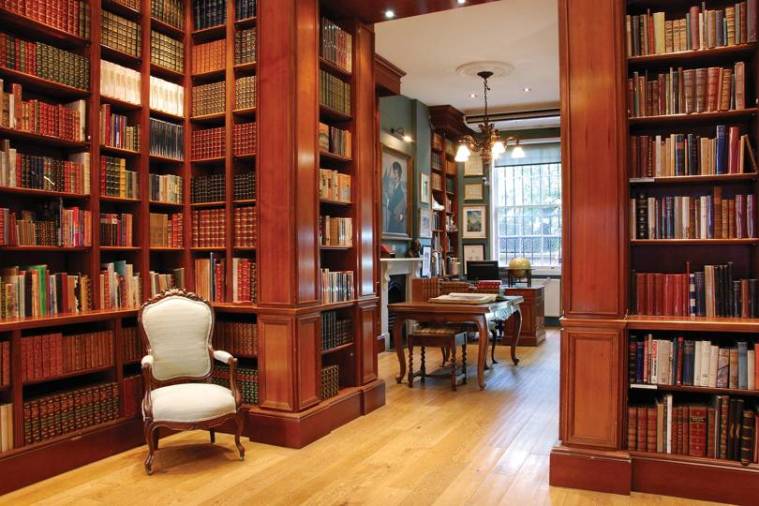
The forest green shop on the Fulham Road is four storeys high and has more than 20,000 books and 6,000 prints and old maps. The Peter Harrington empire also includes the Chelsea Bindery, for traditional bookbinding and the more glitzy shop on Dover Street. It’s the place to go for the rarest of the rare – they once sold a Shakespeare first folio and Virginia Woolf’s pocket diaries.
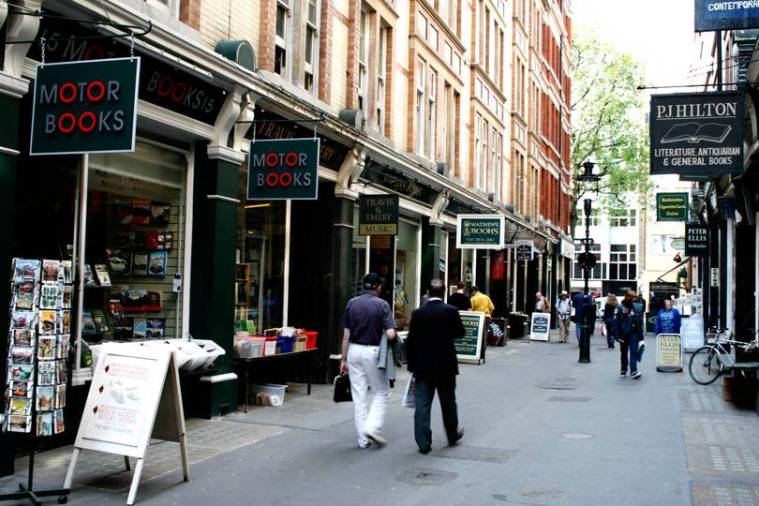
This little pedestrian thoroughfare linking Charing Cross Road and St Martin’s Lane is a booklover’s heaven. Behind the Victorian shopfronts are all manner of rare and second-hand booksellers. You’ll find maps and prints and posters, and all manner of ephemera – each shop houses a literary treasure trove.
Passers-by are always drawn into this little shop opposite the V&A by the shelves outside, heaving with second-hand books. Behind the big glass shopfront are all manner of antiquarian books, maps, atlases and prints. Offers tranquil respite from the Knightsbridge hustle and bustle.
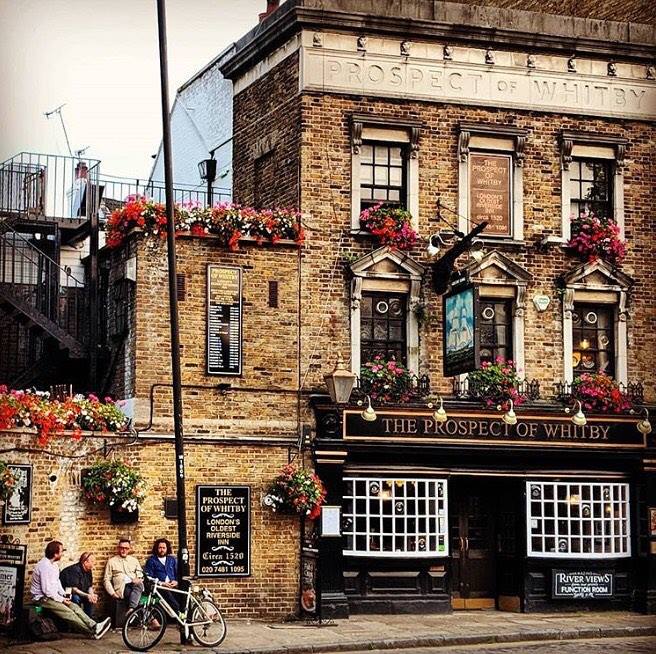
This oh-so-cute Wapping watering hole is situated slap bang next to the Thames for 10/10 drinking scenery.
📍 Wapping, London.
[Photo: @london_dock]
Художник-сюрреалист Ричард Сондерс живет в Англии и творит невероятные композиции. Эти шедевры — его рук дело, ими восхищаются во всем мире, а в этот парк теперь мечтает попасть каждый!
Обычные зеленые кусты он превращает в настоящие произведения искусства. Сегодня в мире все любят котиков и природу. Так почему бы не соединить приятное с полезным, подумал Ричард? Однажды он увидел кадры деревьев, которые очень сильно напоминали облака. Мужчина решил сделать котокусты, которые принесли ему всемирную известность. Каждый котокуст Ричарда — это отголосок его любимого питомца, кота Толли. Толли является вдохновителем и музой каждой работы. Даже, не смотря на то, что Толли уже нет в живых, он живет в каждой работе Ричарда.
Сондерс ведет свой аккаунт в Фейсбук и Инстаграмм, каждый день там размещает снимки котиков. Но мы хотим раскрыть Вам одну тайну: многие подписчики талантливого художника думают, что это реально гигантские кусты в виде котов, которые расположены в одном из парков Лондона, на самом деле Ричард признается:
Здесь деревья и кусты превращаются в котиков! Один из самых чудесных садов на планете!
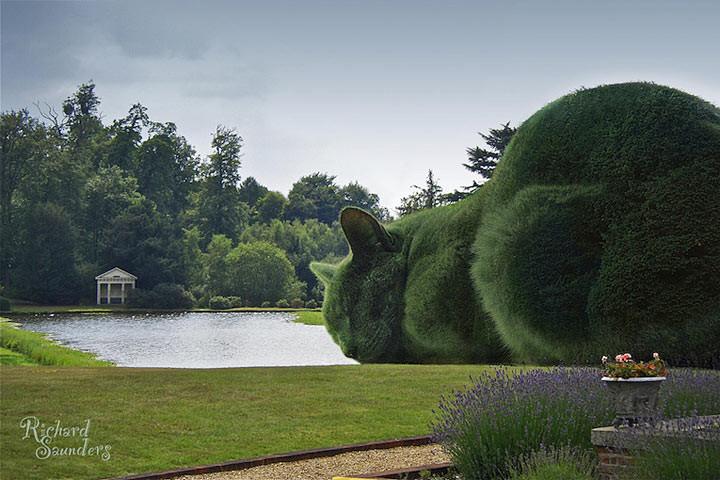

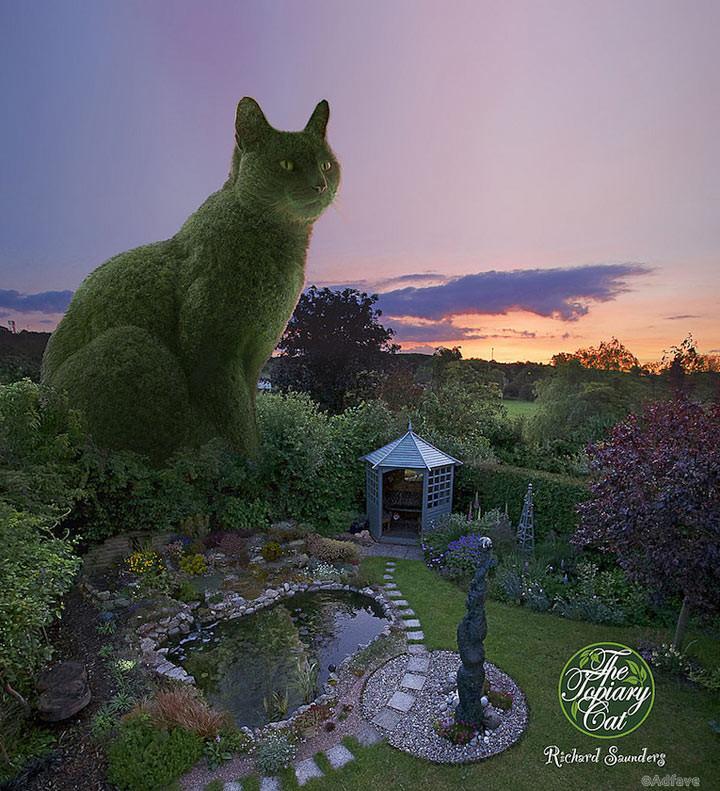
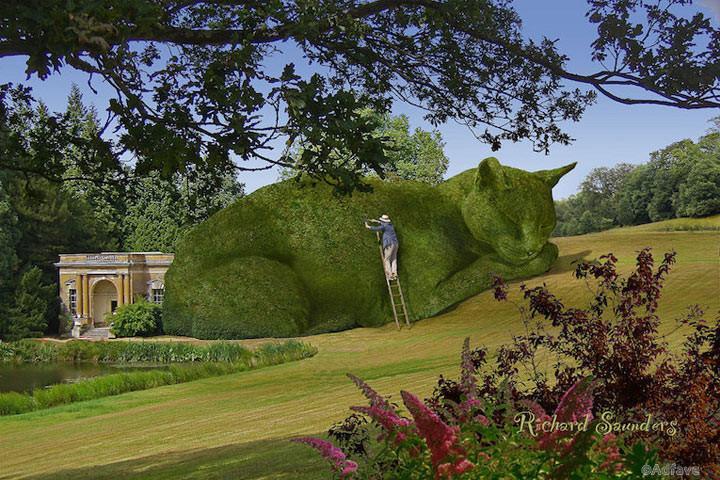

Еще раз отметим, что все эти фото — работы замечательного художника-сюрреалиста Ричарда Сандерса. Да, это всего-лишь фото, но повесить такую картину у себя в доме точно многие не отказались бы, согласитесь?
With their twinkly fairylights, patio heaters and clever blankets and cushions, these chic and comfy outdoor spaces are perfect for eating al fresco when the mercury drops
 Following on from its French Riviera-themed summer offering, Dalloway Terrace’s blooms have transformed for the festive season, with champagne-hued foliage made up of leather leaf, gogo, eucalyptus and pale pink magnolia leaves. Bed in for the evening under the cosy patio heaters and candle-lit lanterns and be sure to try the spiced pumpkin pie or the truffle cheese fondue. Visit dallowayterrace.com
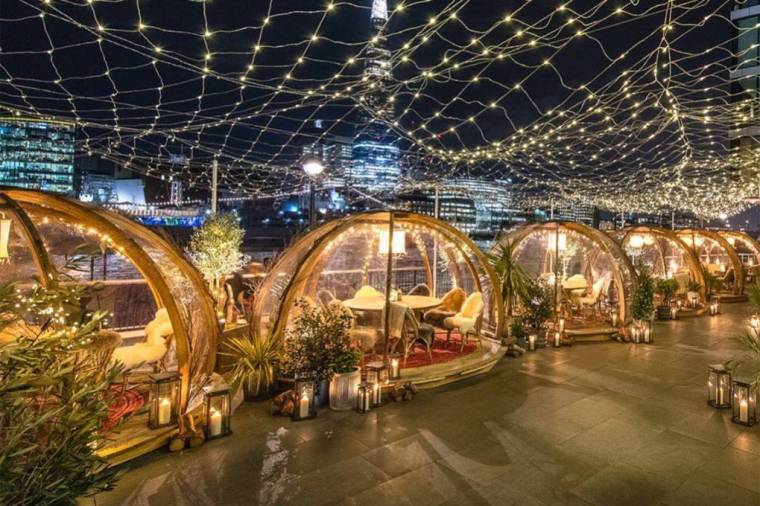 The most famous igloos outside of the North Pole are back for another year at Coppa Club. The intimate glass igloos have once again been kitted out with fluffy blankets, sheepskin rugs and plenty of pillows for a cosy al fresco dining experience unlike any other, with guests able to order from the restaurant’s main menu. Competition for a space is fierce – with the booking’s website crashing several times, leading to it being compared to Glastonbury.
Visit coppaclub.co.uk
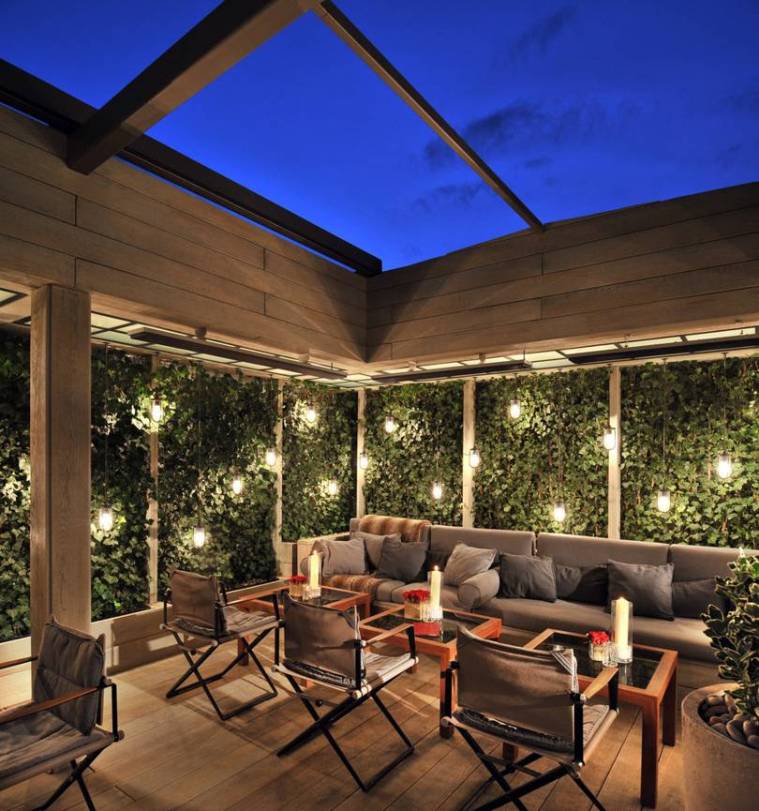 An alpine menu of fondue is the feather in the cap of The Hari’s smart new Winter Wonderland terrace. Featuring fontina and blue cheese, with an option to add mushrooms, each pot is served with freshly baked bread, winter vegetables and seasoned new potatoes, plus there’s a dark chocolate version with doughnuts and fruit if you’ve got a sweet tooth. With champagne cocktails by Moet & Chandon to wash it down, the apres-ski vibe is palpable.
Visit thehari.com
 Rosewood London is celebrating the longer nights by transforming the terrace of the Holborn Dining Room into a magical woodland glade complete with twinkly star-lit sky. The cosiest companion? Whisky of course – in particular The Glenlivet, who have created a cocktail menu celebrating our favourite season, with a fresh take on the iconic Old Fashioned and of course, a hot toddy or two.
Visit rosewoodhotels.com
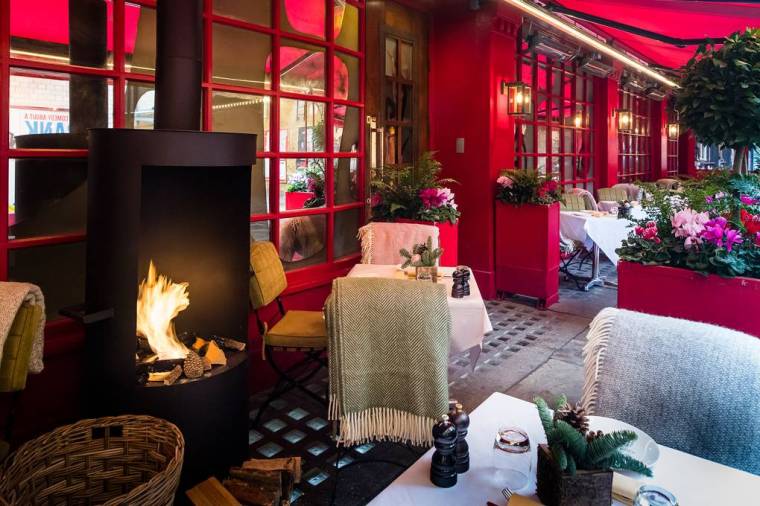 When oysters are your raison d’etre, it’s pretty safe to assume that you’re a dab hand with romance. So it’s unsurprising that J Sheekey have got you covered on that front, with a sweet terrace kitted out with soft, hugable blankets and a roaring fire to stare into.
Visit j-sheekey.co.uk
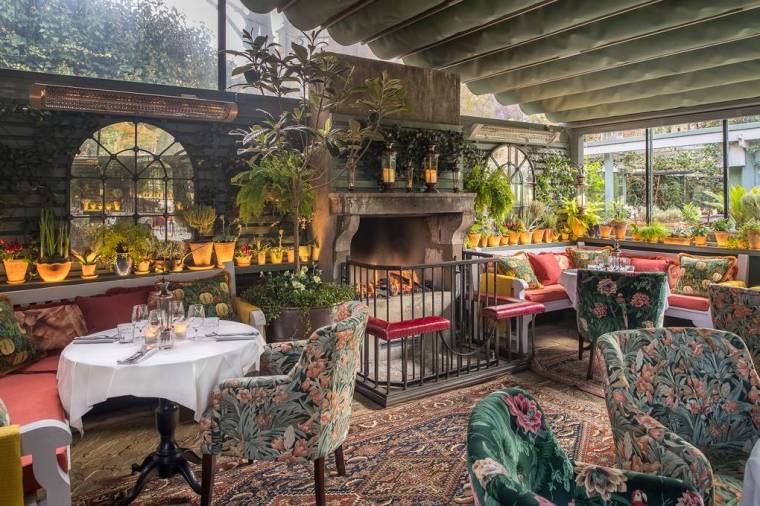 The piece de la resistance of the Ivy Chelsea Garden is – unsurprisingly given the name – its garden. Designed by Cameron Landscapes and Gardens, the chic terrace area features a mix of antique pots and planters (magnolias, hydrangeas and Boston ferns bloom) as well elegant French patio furniture and arched mirrors creating the illusion of even more space. For winter, the upholstered velvet chairs and cushions are particularly welcoming, as are the cosy rugs, blankets and flickering candles.
Visit theivychelseagarden.com
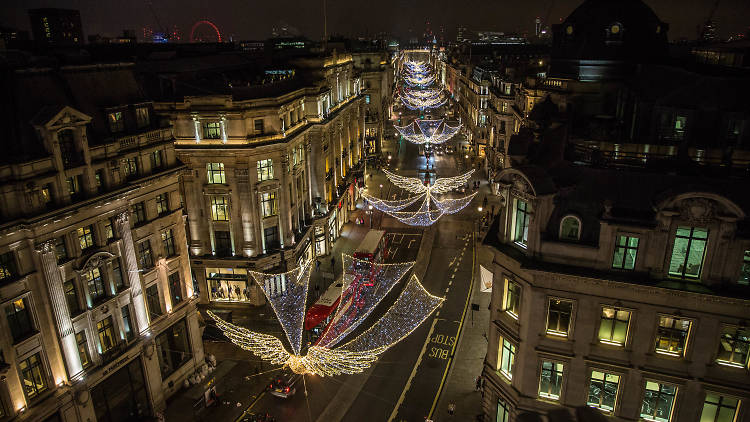
Those golden angel-shaped lights will be making a glorious comeback and soar high above Regent Street once more. The grand Christmas lights switch-on is on Thursday November 15. To mark the occasion, the street will be traffic-free between 5.30pm and 9pm, with loads of festive events and activities going on in nearby shops. This year’s star-studded event will be hosted by Heart London’s Jamie Theakston and Sian Welby, with very special guest Jodie Whittaker from ‘Doctor Who’ and performances by singer Calum Scott and the amazing cast of West-End musical ‘Dreamgirls’.
This is the largest Christmas light show in the capital, so make sure you get there early to bag a good spot, and see this festive transformation shine brighter than ever.
The Regent Street Christmas lights switch-on is on Thu Nov 15, 5.30pm-9pm. Free.

You may have noticed that Odeon Leicester Square, London’s most famous cinema, has been out of action for nearly a year. It’s been undergoing a space-age upgrade designed to transform it from a fusty but beloved moviehouse to something with all the bells and whistles of a twenty-first-century cinema. And here it is in all its splendour, getting ready to reopen the doors in December.

It’s definitely not fusty anymore. Its 800 seats (down from the previous 1600-odd) promise comfort hitherto unknown to even the most widely-travelled bum, as well as the latest in Dolby Atmos sound and Dolby Vision laser projection. By the looks of things, even the popcorn will come in surround sound.

Some of the cinema’s original features, dating back over its 80-year history, have been restored to provide a nifty mix of old-world ambience and modern luxury touches, including a glass-fronted cocktail bar (above).
No word on an exact opening date yet, but Odeon is promising to have it ready for Christmas. It’s exciting to have the old favourite back in action.
 London visitor