History can be fascinating, but how do you relate to historical figures who inhabited such vastly different time periods? We can picture the lives, daily struggles, and in some cases even the internal monologues of famous historical figures, but when we try to see the figures themselves, all we have to go on are stuffy descriptions, old portraits (if we’re lucky), and maybe a Hollywood actor’s portrayal. One artist is helping to fix that.
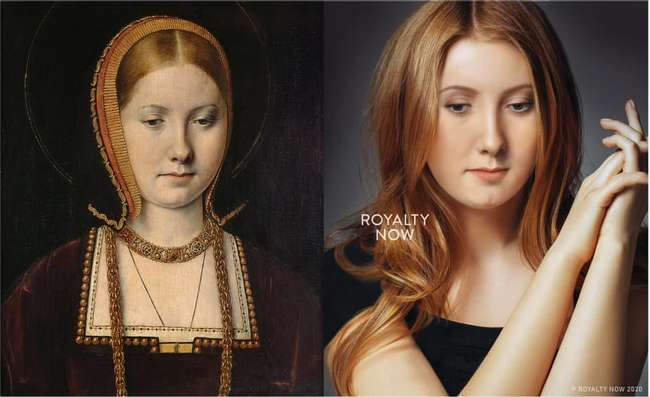
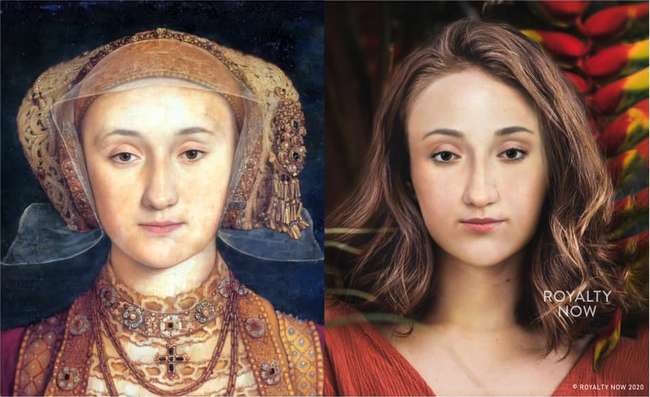
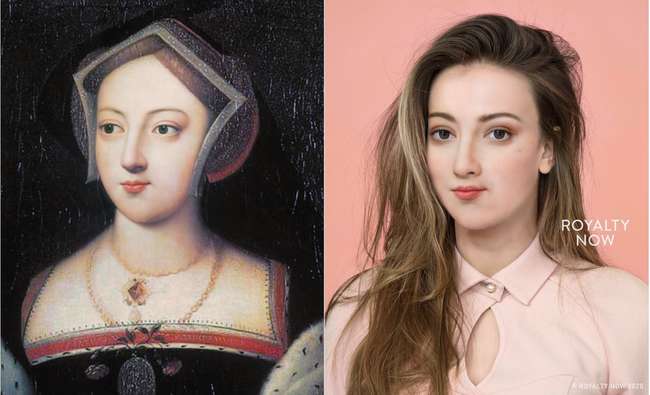
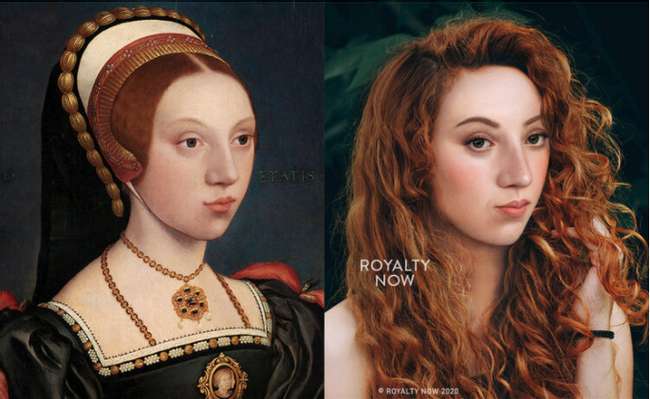
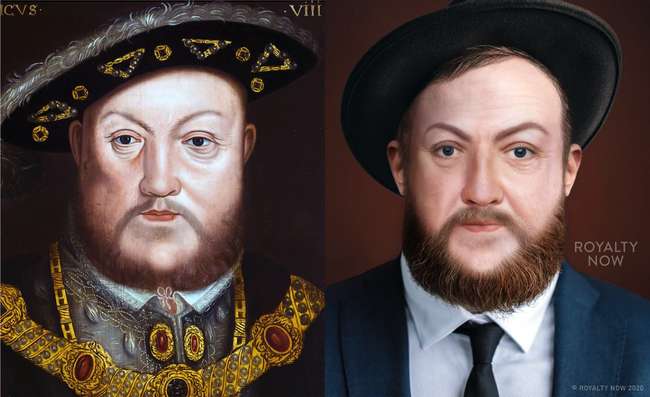
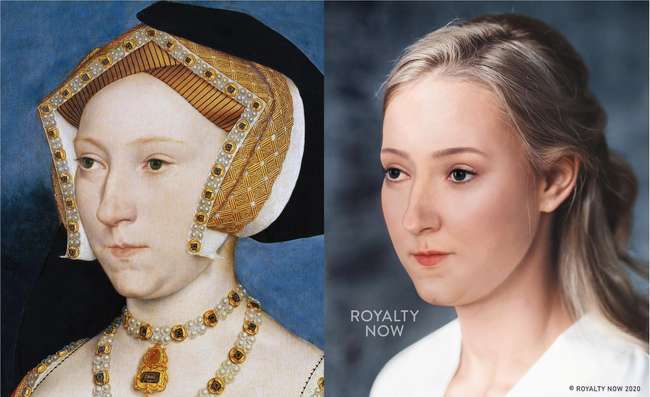
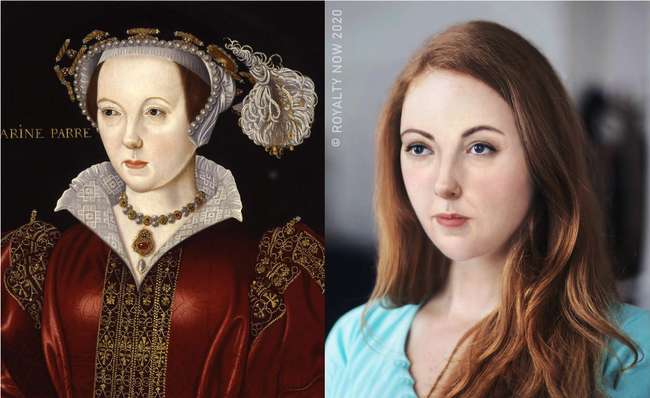
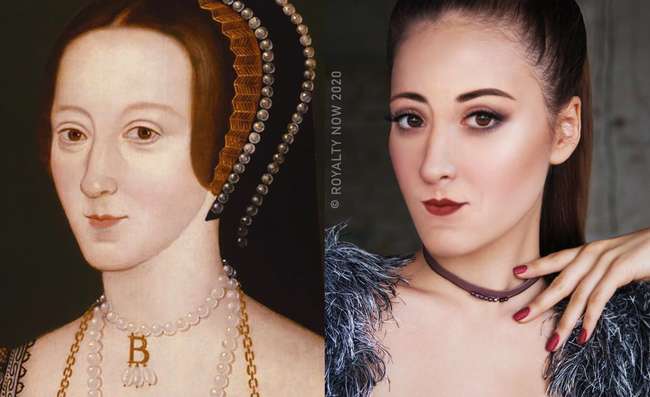
Becca Saladin runs Royalty Now, and her passion for art, history, design, and Photoshop is bringing history to life for thousands of followers on social media. Becca says she modernizes portraits of people from the past so that «we can learn about the past with a little more empathy for the figures involved.»
These portraits bring us a step closer to relating to the women in the life of Henry VIII, as well as the king himself, and reveal what they may have looked like in a modern context. These portraits, and more of Becca Saladin’s work, can be found on the Royalty Now Instagram and Etsy store. You can see the process behind the portraits on her YouTube channel.
Catherine Of Aragon
The first wife of King Henry VIII.
Age: Dec. at 50 (1485-1536)
Birthplace: Alcalá de Henares, Spain
Anne Of Cleves
The fourth wife of King Henry VIII.
Age: Dec. at 41 (1515-1557)
Birthplace: Düsseldorf, Germany
Mary Boleyn
Anne Boleyn’s sister, and mistress of Henry VIII.
Age: Dec. at 44 (1499-1543)
Birthplace: Blickling Hall, United Kingdom
Catherine Howard
The fifth wife of King Henry VIII.
Age: Dec. at 21 (1521-1542)
Birthplace: London, United Kingdom
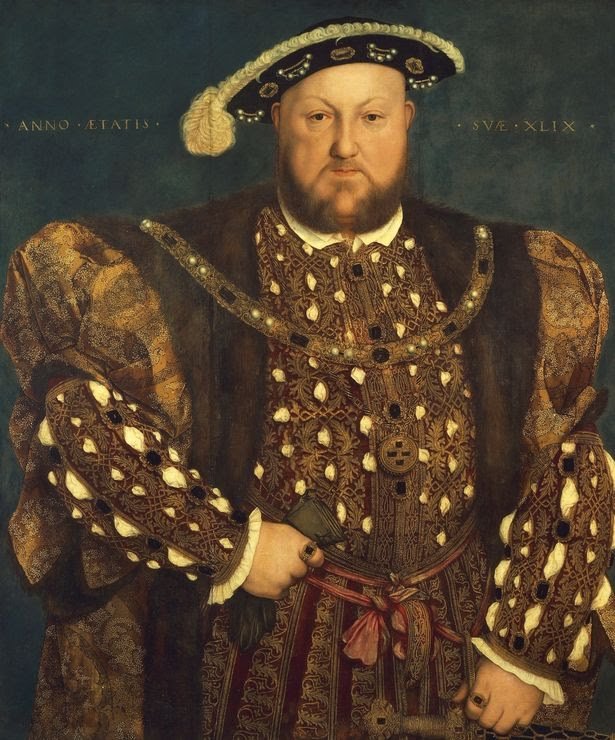
Henry VIII Of England
The second Tudor monarch.
Age: Dec. at 55 (1491-1547)
Birthplace: Palace of Placentia, London, United Kingdom
Jane Seymour
The third wife of King Henry VIII.
Age: Dec. at 29 (1508-1537)
Birthplace: Wulfhall, United Kingdom
Catherine Parr
The sixth and final wife of King Henry VIII.
Age: Dec. at 36 (1512-1548)
Birthplace: Blackfriars, London, London, United Kingdom
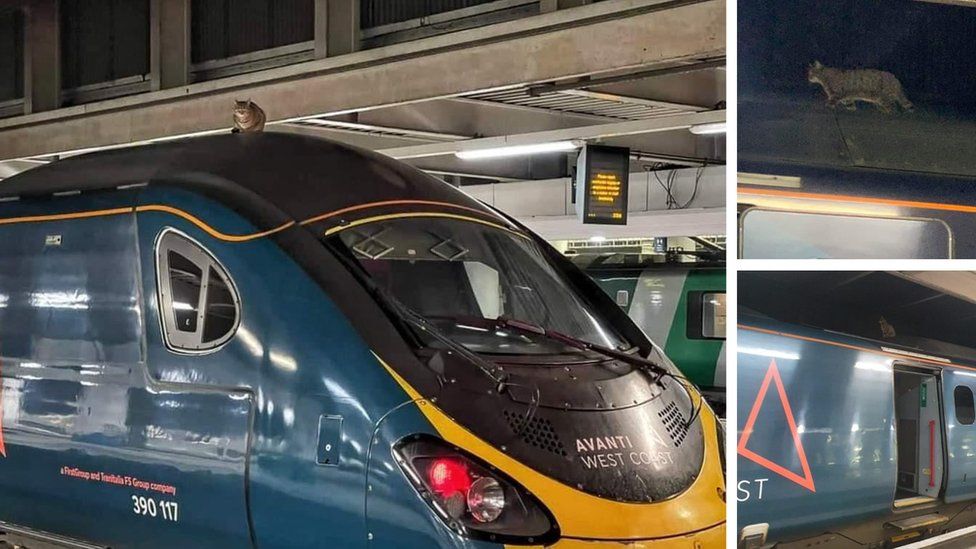
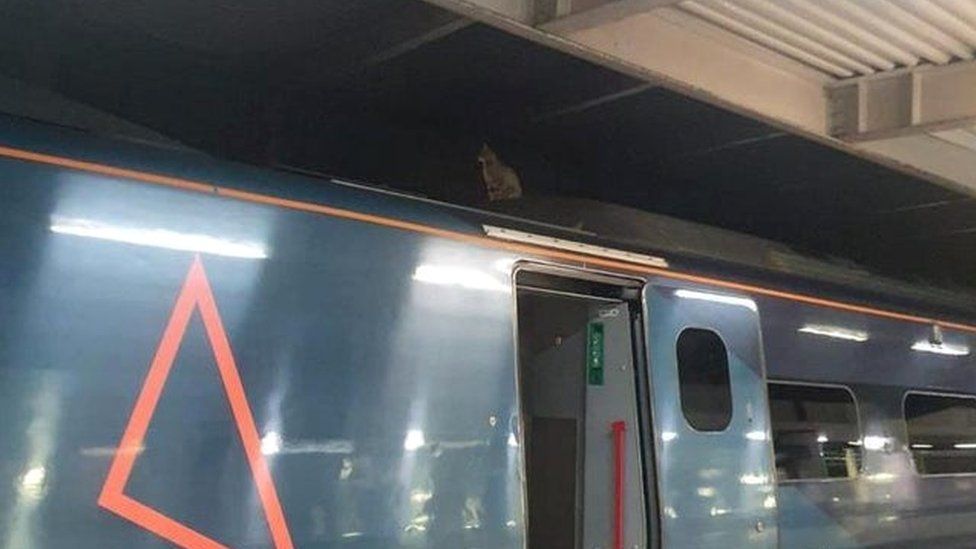
It took two and a half hours to persuade the puss from its perilous perch
A cat narrowly avoided disaster after being spotted on the roof of a train as it prepared to depart.
The tabby was seen on an Avanti West Coast train at London Euston, about half an hour before it was due to leave for Manchester at 21:00 GMT on Tuesday.
Passengers were transferred to a replacement train as station staff coaxed the cat from the Pendolino, which travels at speeds up to 125mph.
It took two and a half hours for the cat to move from its perilous perch.
The stand-off came to an end after a bin was pulled up beside the carriage, giving the moggy its own special disembarkation platform.
A bin was pulled up beside the carriages to give the cat its own special platform on which to disembark
The cat did not appear bothered by its brush with danger, said its rescuers, who described it as «swaggering off» with the air of having somewhere else to be.
In addition to the danger of falling off a speeding train, they are powered by 25,000-volt overhead lines.
Joe Hendry, Network Rail station manager for Euston, said: «Thankfully curiosity didn’t kill this cat, and we’re glad it avoided using up one of its nine lives».
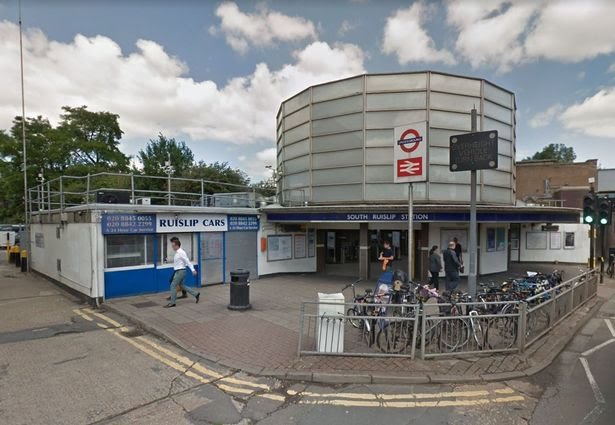
You’ll never guess this one. Ruislip was recorded in the Domesday Book in 1086 and comes from the Old English ‘ryse’ meaning ‘rush’ and ‘hlype’ meaning ‘leap’. Historians reckon it was named after a place where the River Pinn was so narrow you could literally do a running jump over it. Wahoooo!
22) Seven stunning sisters
Not massive imaginative, but this place took its name after seven Elm trees that stood in the area
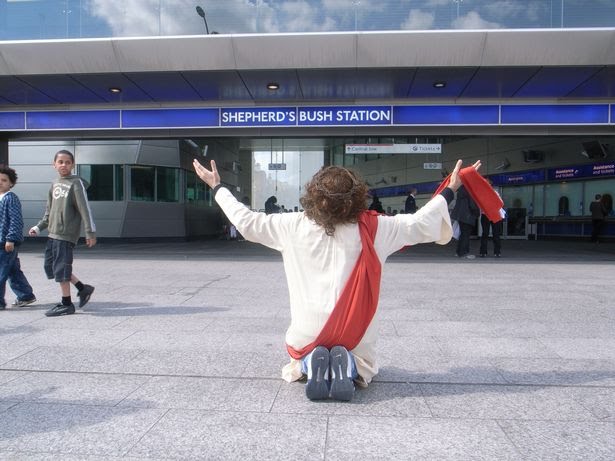
A Christian missionary pictured in front of Shepherd’s Bush tube station in west London. The tube station is next to the big Westfield shopping centre
23) Shepherds in the Bush
As you might expect, this London mainstay probably took its name from the shepherds who once used the area to graze their sheep. Or it’s possible it was simply named after a person called Shepherd.
Quite what the shepherds were doing hiding in a bush we’d love to know as that could make the story a lot more interesting.
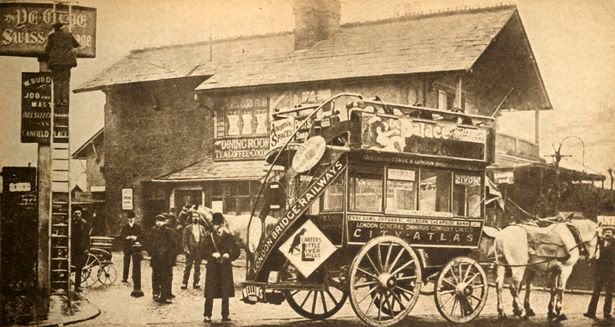
An open-top horse-drawn bus outside Ye Olde Swiss Cottage public house in north London in 1900
24) A nice bit of Swhistory
With a lovely international tone to it, this name comes from an old toll keeper’s cottage that once stood on the site. This was later turned into a pub built in the style of an actual Swiss cottage called Ye Olde Swiss Tavern, later changed to The Swiss Cottage. The pub was rebuilt in 1965 and at one point claimed to be the largest pub in London…
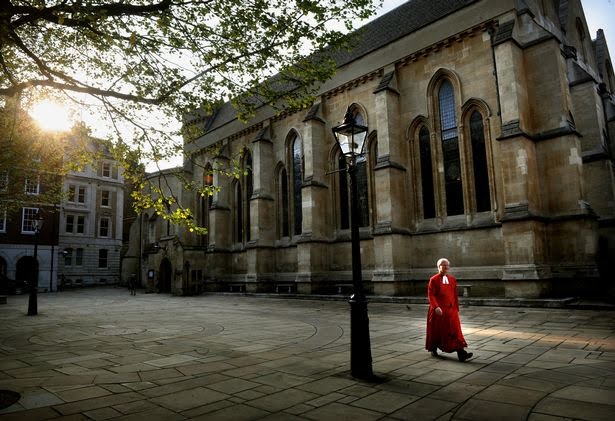
The Temple church which was built in the style of the church of the Holy Sepulchre in Jerusalem and gives its name to the nearby station
25) Keeping the faith at Temple
Temple is one of the most historic of London station names. It comes from the station that was built on land once owned by the Knight’s Templar, an almost mythical band of medieval fighting monks.
The order was known for it’s fiercely disciplined warriors and it was formed in Jerusalem with the purpose of protecting Christians who wanted to visit Jerusalem.
This was necessary because the city was surrounded by hostile Arabic tribes who seemed to enjoy attacking Christian pilgrims and cutting them to pieces.
The Templars fought numerous bloody battles against forces led by great Islamic leaders such as Saladdin and built up huge amounts of wealth in the process. They became advisors and bankers to kings and queens around the word and set up «Temples» or headquarters everywhere, including the Temple Church.
This incredible church which still stands just up the hill from the Thames, still contains the ghostly graves of many medieval knights and is well worth a visit. It was modelled in the Holy Sepulchre, the church where Christ was said to have been laid to rest in Jerusalem.
The place is also a reminder of what happens to people who get too rich and powerful. The Templars were eventually rounded up as heretics by jealous kings and popes and many were executed and had their lands and wealth confiscated. Maybe a message not to worship at the temple of fame and fortune.
Re-enactors posing as Knights Templar who once built the fascinating Temple Church in central London
26) Sound your horn and ‘look out’ at Tooting
There has been a town in the Tooting area since pre-Saxon times flourishing along the old Roman road between London and Chichester. Some very clever people argue about the true origin of the name Tooting with some believing it to be referring to the Tota people who could have lived in the area.
It also could have come from the old meaning of the verb ‘tout’, to ‘look out’. There may have been a look-out post here overseeing this important route into London.
Uxbridge station first opened at its current site in 1933
27) Not quite Oxbridge at Uxbridge
This names comes from the term ‘Wixan’ — a seventh century tribe who lived near here. The name became abbreviated to Ux. The bridge part comes from a very ancient bridge over the river Colne which stood here. The name was first recorded as Uxbridge in 1398.
The local would probably like it to be Oxbridge but never mind.
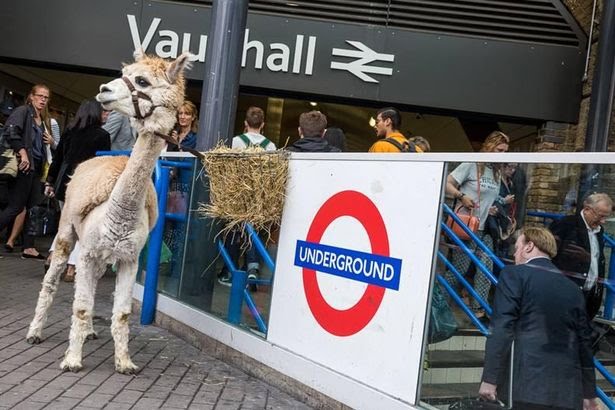
An Alpaca called Ben helping TfL advertise its Overground map in 2018 at Vauxhall station
28) Grandad’s car at Vauxhall
No it’s not named after your grandad’s car!
It’s thought this strange French-sounding name came from that of a Norman Lord, Falkes de Breaute who inherited a piece of land here that became known as Faukeshale — as in ‘Falkes Hall’. The place later became known as Fox Hill until eventually being labelled Vauxhall.
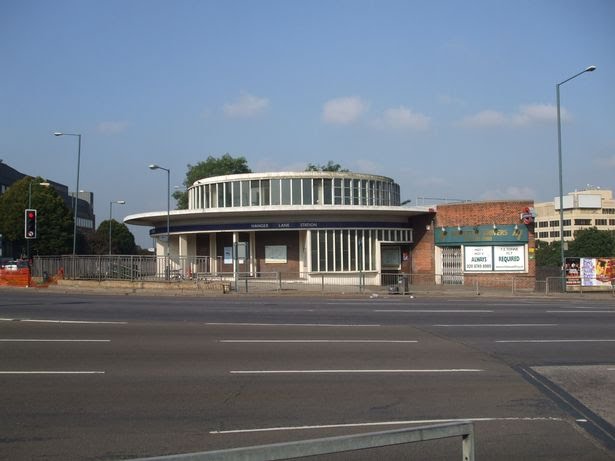
Hanger Lane station on the Central Line right next to the hellish Hanger Lane roundabout
11) The roundabout from hell at Hanger Lane
This one sounds like a truly grim place! It kind of suggests a dark and grizzly zone where people were literally hung up to die in times gone by.
In reality it’s not quite that bad, but the fact the station sits right next to the ridiculously busy and polluted Hanger Lane gyratory means it could easily be described as a living hell.
In truth it takes its name from the Old English word ‘hangra’ which meant ‘a wooded hill with steep slopes’.
A wood known as ‘le Hanrewode’ was recorded here in 1393 and the place was later called ‘Hanger Hill’ before it was later changed to ‘Lane’.
Nowadays there’s not a wood in sight and you’ll be lucky not to come away with permanent lung damage if you venture to this truly awful roundabout.
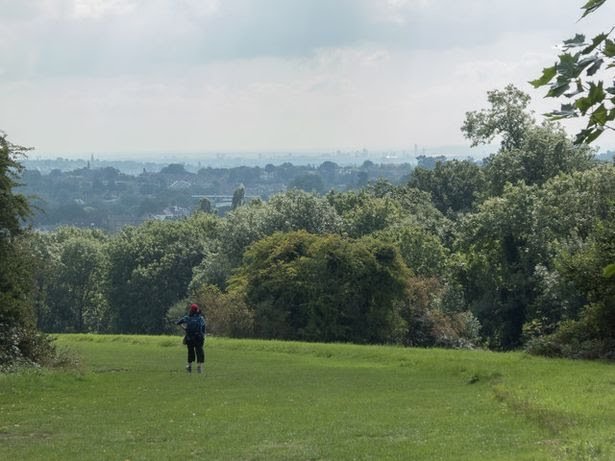
High Barnet has some amazing views over North London including from King George’s Field
12) Climate catastrophe at High Barnet
A place that’s very high up? A place where people are very happy or taking illegal drugs?
In fact the ‘high’ part of the name does refer to it being literally high up geographically. But the ‘Barnet’ part is much more interesting. It comes from the Old English, baernet which meant ‘a place cleared by burning’. So presumably at some point people burnt down the forest here to create space for their homes and farms.
Nothing changes does it!
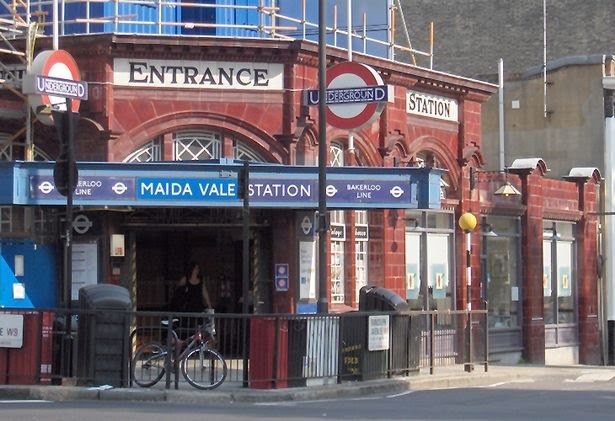
The picturesque Maida Vale station
13) An Italian job at Maida Vale
I’ve always thought this was a strange one when I’ve heard it over the loudspeakers. It just doesn’t sound very English.
Well it turns that that’s because it’s not. Maida comes from the name of a town in Italy where the British military general Sir John Stuart defeated the French in 1806. He was made Count of Maida after the victorious battle.
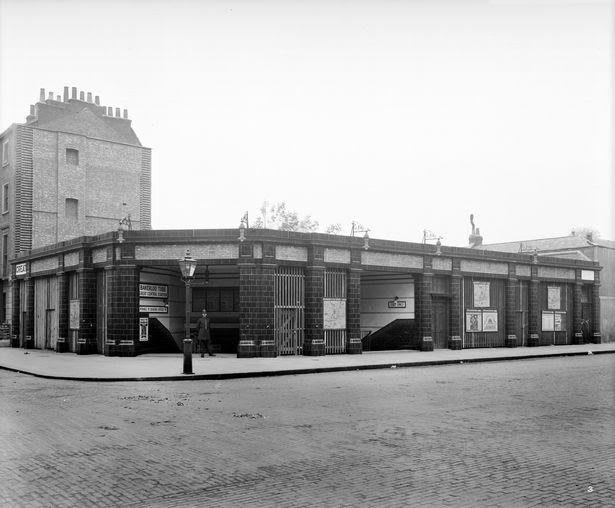
Marylebone Underground Station, Great Central Street, London, 1907. Entrance to Marylebone Tube Station on the Bakerloo line, which had been opened in 1906. Developed by Charles Tyson Yerkes, this was the first line to cross London north to south
14) A holy place at Marylebone
Named after a church dedicated to St Mary nearby and the small stream or ‘bourne’ on which the building sat, the area became known as St Mary at the Bourne.
This slowly got boiled down to Marylebone. Somehow that’s now pronounced something like ‘Marrleebone’. Go figure. It is commonly and incorrectly thought to be a corruption of Marie la Bonne (French for Mary the good).
Morning…time for cornflakes!
15) Cornflakes for breakfast at Mornington Crescent
This one sounds like it should be a breakfast cereal, or perhaps a Communist Party newspaper! Actually it just comes from the name of Anne Mornington, the sister of the famous Duke of Wellington. She was the sister-in-law of Ferdinand, Lord Southampton, who began building the station in 1821.
16) A nosy neighbour at Neasden
This truly is a weird one. It comes from the Old English, ‘naess’ meaning ‘nose’ and ‘dun’ meaning ‘hill’. So you’ve guessed it, it means ‘nose-shaped hill’. The name was of course used to describe a hill which was shaped rather like a nose in the area.
Commuters make their way through the Oval Underground station
17) Completely stumped at Oval
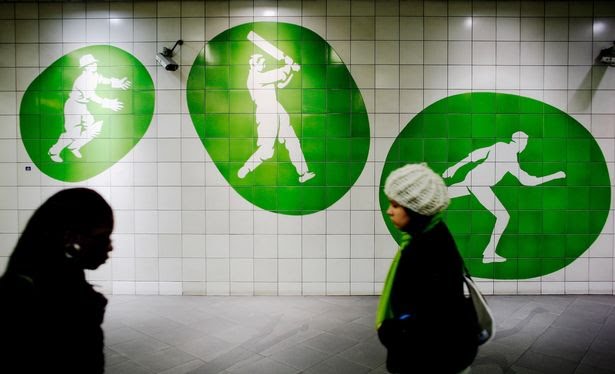
Oval of course takes its name from the oval shape of Surrey Country Cricket Club’s ground which is nearby. It really is that simple. Maybe if it was a circle the England team might do a bit better there?
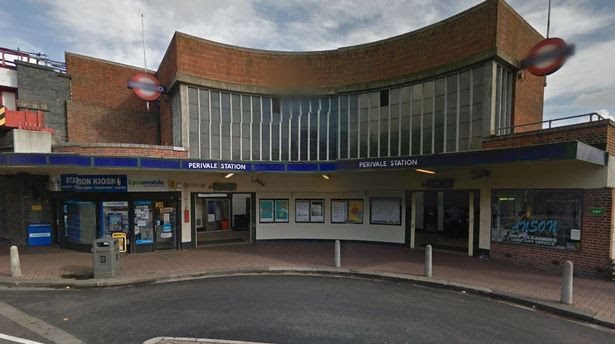
Perivale Tube station. It doesn’t look as nice now as the beautiful valley suggested in its name
18) A fruit one at Perivale
This is definitely a fruity one. Perivale comes from the Middle English name ‘Perie’ which meant pear. Colourfully it means the «valley of the pear trees». This was the name of a nearby meadow called Purevale. It’s actually still got some nice green parks nearby but it’s spoilt by the horrendously busy A40 which runs right through it.
It’s pretty hard to imagine the name applying to it these days.
19) Pubtastic Pimlico
Named after a well-known inkeeper, Ben Pimlico, whose Hoxton pub was named after him in the late 16th century.
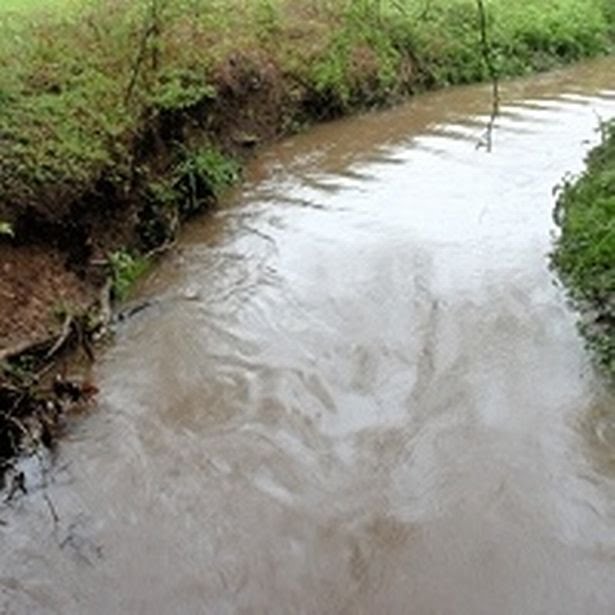
A section of the River Pinn in West London
20) A popular guy at Pinner
Named after a mythical seamstress perhaps? Wrong! In fact the name comes from a personal name, ‘Pin’ or ‘Pinna’ combined wit the Old English name ‘Ora’ meaning ‘bank, edge or slope’. This refers to the steeply sloped street that to this day runs up from the River Pinn to the church. So it literally means ‘The slope to Pinna’s Place’. Who Pinna was and why he/she was well known is not known, but they must have been someone pretty popular to get the lace named after them…or someone notorious perhaps.
Okay we know that generations of Londoners have sniggered hand-over-mouth when the name Cockfosters comes over the tannoy at a Tube station.
Hilarious of course!
But it’s far from the only London Tube station with a name that needs some explaining.
Dotted all across London are stations with names that make us crack up laughing, conjure up weird and wonderful imaginary places or just sound plain stupid.
In this story we’ve picked out 28 of the most bizarre-sounding names to tell you what they actually mean — including a couple that are pretty insulting to redheads.
1) Sniggering schoolboys at Cockfosters
I’m sure all of us have sat on a Tube train and giggled ourselves silly when the Piccadilly Line station Cockfosters comes over the loudspeaker. One mention of the word «c**k» and we all go crazy. What does that say about the human race eh?
But why did this station have such a hysterical name?
It’s in fact possible that it simply comes from the name of a house that once stood here that was named ‘Cockfosters’. It’s been suggested this was named after a man who was in charge of foresters, ie ‘cock’ or ‘chief’ forester.
But please don’t take it literally and go and call your boss a c**k as it’s obviously a somewhat outdated term!
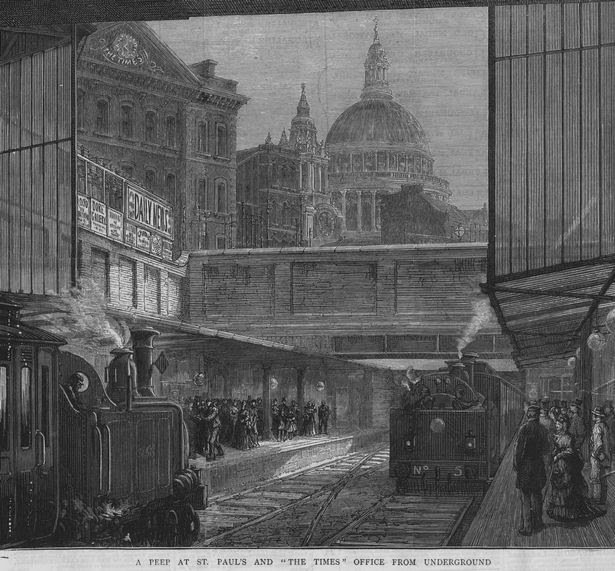
The Underground station at Blackfriars with St Paul’s Cathedral in background, pictured in 1875
2) Itchy monks at Blackfriars
It’s easy to think these days that this station might have some politically incorrect racial connotation and should have its name wiped from the map. But not so. Blackfriars is in fact named after the black habits or garments worn by monks at a medieval monastery that once stood nearby.
These groovy monks were known as Black Friars because of the colour of their woollen garments — which let’s be honest must have been pretty itchy to wear in all the wrong places.
The monastery was founded in the 13th century but was quickly shut down by the greedy Henry VIII who plundered the monasteries for their wealth. His rather nasty officers stole everything from books to bed sheets, relics to roof tiles and sold off the lands and buildings they took over in a massive money-grabbing exercise.
It was all so he could pay to go to war in France and sit looking grossly fat and ridiculous on his horse.
Interestingly the monastery itself was positioned on the bank of the lost River Fleet which now runs underground but was once an important waterway in the city.
Many important occasions took place at Blackfriars including — most famously — the court hearing when Henry VIII wanted to dump his first wife Catherine of Aragon.
Later it became a theatre and Shakespeare part-owned it. But it’s a great name for a station so a big hats off to the monks for putting up with those itchy robes.
Henry VIII famously plundered the monasteries, including Blackfriars to gather cash for his ego-driven war with France
3) Billowing smoke at Burnt Oak
Why on earth would a station be named after a burnt out tree?
I mean you don’t get trees underground do you?
So it seems that way back in history the area where the station now is, was a place where fires were lit to mark the boundary between different places.
Maybe it was to warn off invaders from daring to approach?
It’s possible this was done in Roman times. Perhaps they were signal fires lit by soldiers patrolling the area. This makes sense as it was once on the edge of what was the Roman road of Watling Street.
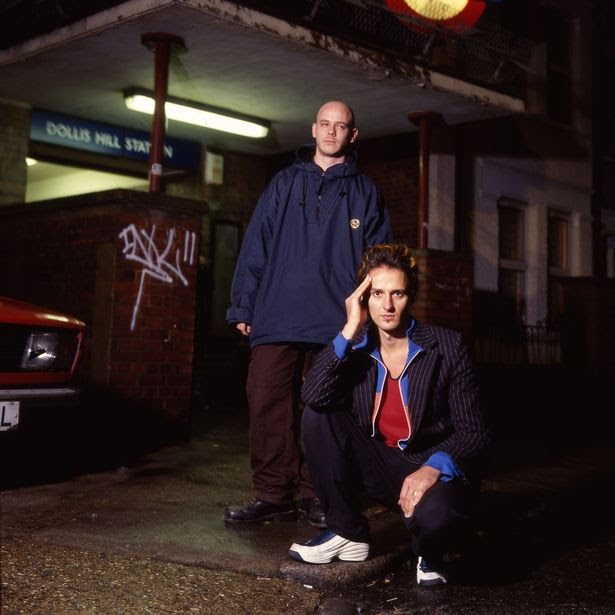
The local musicians Future Sound of London outside Dollis Hill station
4) All dolled up at Dollis Hill
This one always makes me wonder when I glide by it on a Tube train. Is it something to do with a dolls house? Is this some kind of bizarre miniature village?
Apparently the place was recorded as Daleson Hill as early as 1593. It was later known as Dolly’s Hill. But whether there was a famous toy shop here making dolls or a dolls house maker or something similar, we can but speculate.
It seems more likely the name is something to do with ‘Dalley’ — the name of a family who lived nearby. This may have converged with the name of the nearby piece of water known as Dollis Brook — so the two names may have come together to form Dollis Hill.
Much later a manor house stood in the area called Dollis Hill House. This was built in the early 19th century and was frequently visited by the one time Prime Minister, Gladstone when Lord Aberdeen owned it.
The open space at Gladstone Park
What is now Gladstone Park formed the grounds of the manor house. As recorded by the Hidden London website, Mark Twain spent the summer here in 1900, writing that: “From the house you can see little but spacious stretches of hay-fields and green turf … Yet the massed, brick blocks of London are reachable in three minutes on a horse.”
How different he would find it now!.
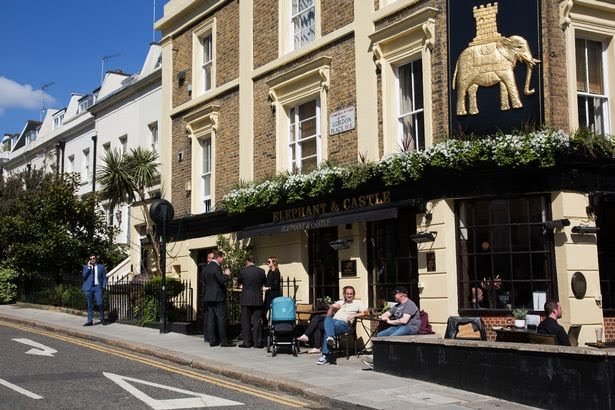
Elephant and Castle sure is a forking good name
5) A forking good name at — Elephant and Castle
Surely one of London’s most truly bizarre station names, this one conjures up all sorts of grand images of Eastern warriors riding elephants and knights in shining armour.
It was actually named after an old pub called Elephant & Castle which once upon a time stood nearby.
The pub had an amazing gilt model of an elephant and a castle on its front which was preserved when the tavern was demolished in 1959.
Way before that though, it’s thought the Elephant and Castle name actually originated from the badge of the cutler’s company, a guild or union of London cutlers — yes people who literally made knives, forks and spoons for a living.
These likely lads once decided to get all dolled up and paint elephant badges on their shields when they attended the Royal Wedding of King Henry VI and Queen Margaret during the 15th century.
The badge was probably used due to the ivory that the cutlers used from elephant tusks to make their cutlery.
The present day Elephant & Castle pub stands a short distance away from the old site.
People outside the Elephant and Castle pub in Kensington. You can see the famous gilt decoration of the elephant
6) Heading for the chop at Fairlop
This strange name seems to suggest having a good go at chopping something down — or giving it a ‘fair lop’ or is that just me?
Actually I’m not too far off. A legend surrounds this place. Apparently once an oak tree stood here which sheltered a popular fair founded by a certain Daniel Day.
When Daniel died in 1767, his friends decided to make his coffin from the wood of the tree. But even though they had lopped a lot of wood off the tree, it somehow continued to grow, so they made the conclusion they had made a ‘fair lop’.
How true this is is questionable, but the name certainly does come from a fair that was held in the area and the ‘lop’ bit comes from the name of a branch or twig. It probably came to refer to a description of the beautiful trees standing in the area.
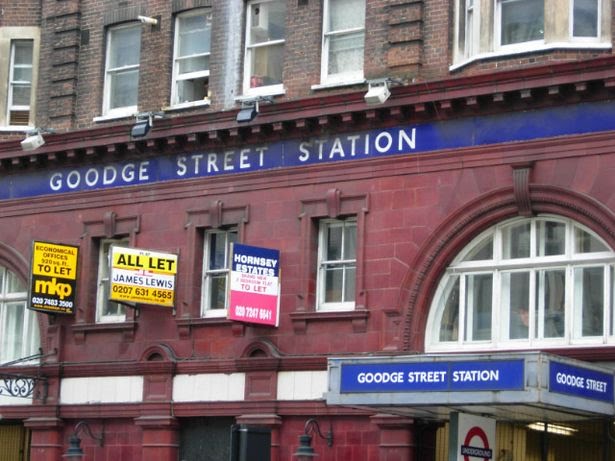
7) Taking the p**s at — Goodge Street
This name seems to conjure up sticky images of gloopy mud or glue for some reason in my head. Again I’ve never actually stopped there on the Tube as it seems like the kind of place you could get stuck…
In reality, the area was once called ‘crab tree field’.
It belonged to a widow named Mrs Beresford who married a carpenter called John Goodge in 1718. When the street was built, the name was taken from their descendants William and Francis Goodge, who then owned the site.
More interestingly though, according to the Forebears website, the name Goodge actually comes from the original meaning ‘the son of Guch’ so would have applied to the son or daughter of a person called Guch.
Guch itself is a very old name and has developed in different variations including Gooch, Gouch and Gough. According to the surnameBD.com website it has two possible origins, both ultimately Gaelic or Celtic.
This is where it gets interesting. It may derive from the Gaelic or Celtic word ‘coch’ an old Gaelic Welsh word for ‘red’ which was used as a pretty nasty insult against people with red hair, specifically the Saxons who had invaded Britain in the 5th century.
So basically by calling someone a ‘coch’, you were slagging off the people with red hair who had turned up and invaded your country.
It’s probably the reason why the insult ‘c**k’ has developed into such an insult these days. So think twice if you use it, especially if you’re talking to a redhead!
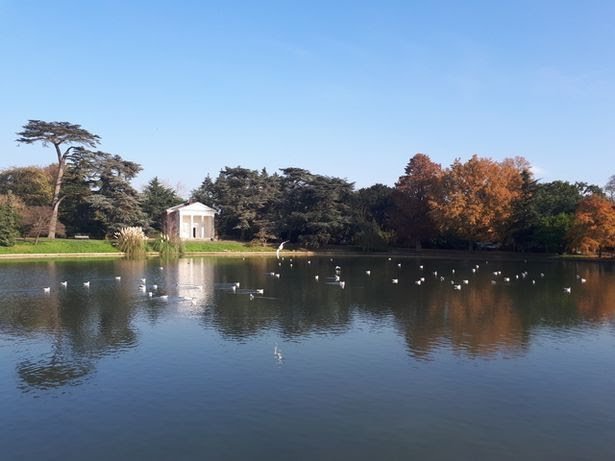
The Temple and Round Pond at Gunnersbury Park
8) Scandinavian style at Gunnersbury
This name conjures up images of war and the military. It’s actually a really nice place to stop as it’s right next to the lovely Gunnersbury Park — a beautiful old mansion surrounded by wonderful grounds which make a great day out. It’s a lovely place in summer with lakes, ponds, old ruins and a brilliant museum.
The meaning may come from the legend that Gunhilda, the daughter of the Danish King Canute, who once lived here. He was the guy who thought he was powerful enough to hold back the sea but eventually drowned whilst trying.
It certainly seems to come from a female name from Scandinavia such as Gunhild, put together with the Old English name for town — burgh. This gives us Gunnersbury.
9) French fallacy at Hainault
Why would a Tube station be named after a French town you ask? Well actually etymologists don’t think this does come from the French.
Instead it’s a thoroughly Old English name coming from the word for household — ‘hiwan’ and the word for wood, ‘holt’. So it probably mans ‘house on the land with a wood’.
The modern spelling seems to arise from the fact that it was wrongly thought to be linked to the French princess Philippa of Hainault at a later date. But of course we’re claiming it as English.
A fan cosplays as the Norse God Thor. Hammersmith conjures up images of such fiery, all-powerful Gods
10) Fire of the Gods at Hammersmith
Hammersmith seems to conjure up the glory of some old Norse God of war hammering out swords fit for heroes at his ancient forge. Thor springs to mind, or maybe the Roman god of fire and blacksmiths, Vulcan.
The reality is not so far from this fiery legend. It probably does in fact come from the word ‘hammer’ and the old word ‘smiddy’ which later became smithy — the place where a blacksmith worked.
The name was first recorded in the area in 1294 and was the name of a parish, and of a suburban district, within the manor of Osselstone, in the historic county of Middlesex
Smiths of course were highly prized for their incredible skills in days gone by for making swords, helmets, shields, horseshoes etc, so it would have been right that places got named after them.
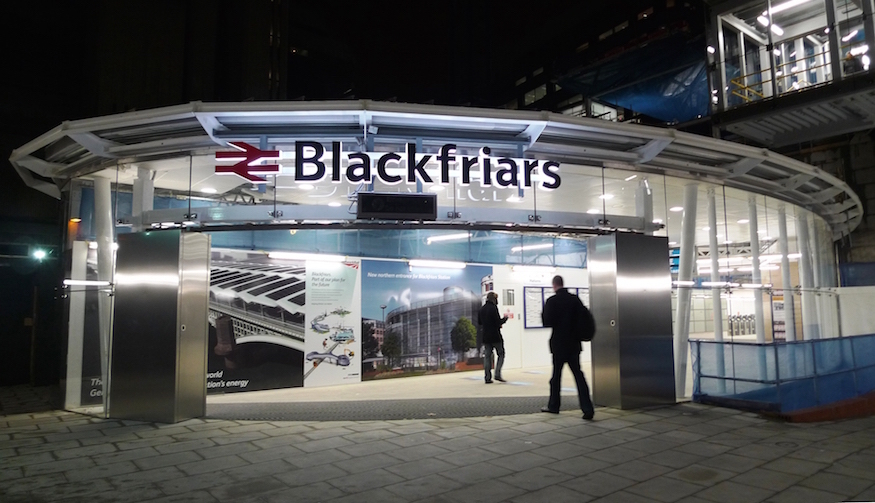
Blackfriars station opened in 1886, with a different name. It went from international holiday start point to a mere through-station. Following a £550m reconstruction, it’s once again one of London’s major rail stations. Find out about its rise, fall and rise again…
1. A name-changer
The station was known as St Paul’s until 1937, when it was renamed Blackfriars (not long after, the ‘Post Office’ tube station nabbed the St Paul’s moniker). The name Blackfriars is named after a Dominican priory established in 1276 at the foot of nearby Ludgate Hill. Dominican friars wore black robes, hence the name Blackfriars.
2. ‘Return to Brindisi please’
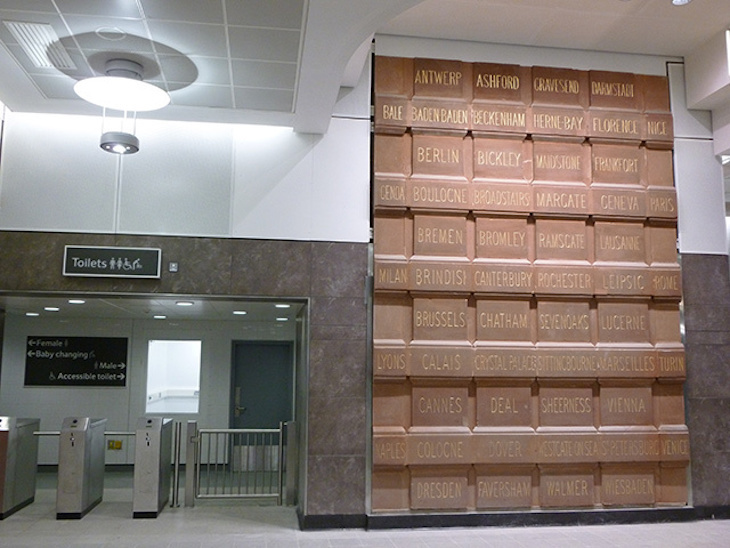
Long before Eurostar, Blackfriars was an important starting point for rail trips to the continent. The station had a wall with the names of train company LCDR’s European destinations hand-carved into it. Tempting visitors were destinations such as St Petersburg, Marseilles, Berlin and Brindisi.
Much of the station was severely damaged by bombing during the second world war, but the wall survived and is displayed in today’s station.
3. Stretching far and wide
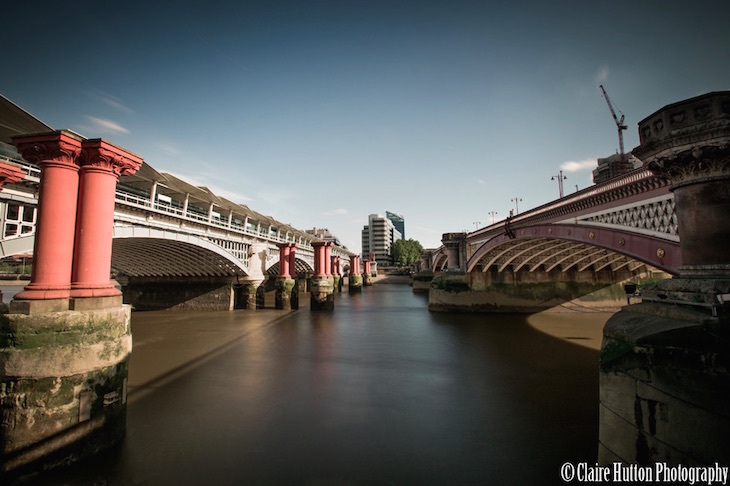
Blackfriars is the only is the only station in London to stretch over two postcodes. Its northern end lies in EC4V, while the southern entrance is in SE1. It’s also the first station to span the River Thames.
4. What are those red columns in the Thames?
In 1862-64 — over 20 years before the station was opened — a bridge was built to accommodate four trains at one time. John Wolfe-Barry and HM Brunel built a second bridge to increase the number of trains coming into St Paul’s. The columns are the remains of the original bridge, which was removed in 1985 as it was deemed too weak for modern trains. During the station’s reconstruction, they were used as platforms for equipment.
5. Green is the new Blackfriars
Blackfriars railway bridge is the world’s largest solar-powered bridge. The 4,400 photovoltaic panels on top of the rail bridge produce 900,000kWh, enough to make 80,000 cups of tea a day. Thameslink and Great Northern, which runs the station, expects to produce half the electricity the building requires from these solar panels.
Some of these places are better known than others. If you follow London-based Instagrammers, you may have already seen a few.
They’re all beloved by locals and visitors alike, and if you get a chance to go to some of them, you should take it.
1. Peggy Porschen
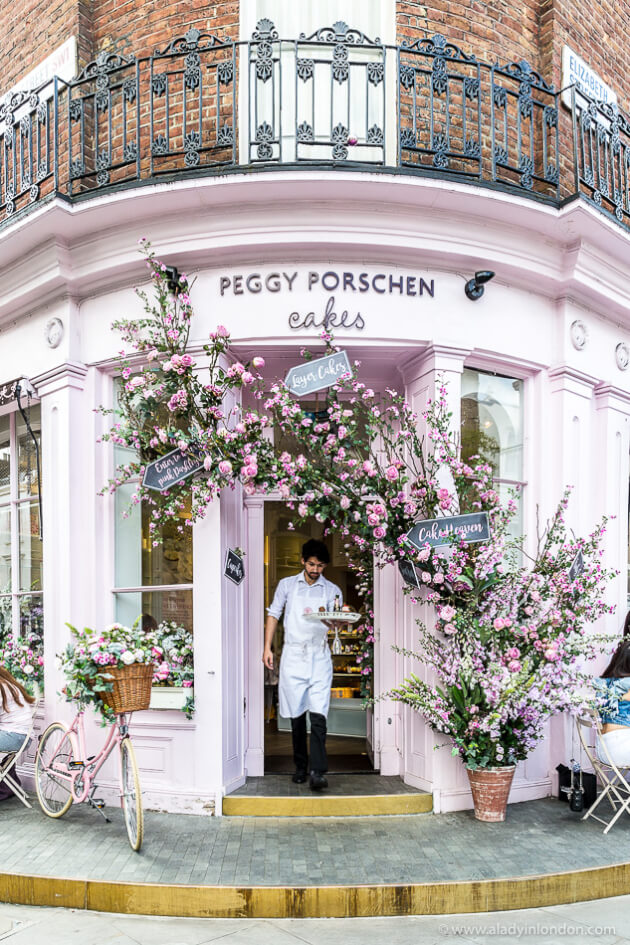
Belgravia’s Peggy Porschen likely has the most photographed facade in London. This pink pastry palace is known for its seasonal floral displays, which range from Valentine’s hearts to Christmas trees.
But whatever the season, Peggy Porschen is pretty inside and out. Add to that delicious cakes and cupcakes, and this place is a winner. Just make sure to arrive early to avoid a long wait.
2. Saint Aymes
Another cafe with a pretty facade is Saint Aymes in Connaught Village. Its windows are bordered by wisteria and other seasonal blooms, bringing a sense of spring to every season.
Inside, a rosy cocoa heaven awaits. 23-carat gold hot chocolate is one of their signature specials, and they even have a colorful unicorn latte.
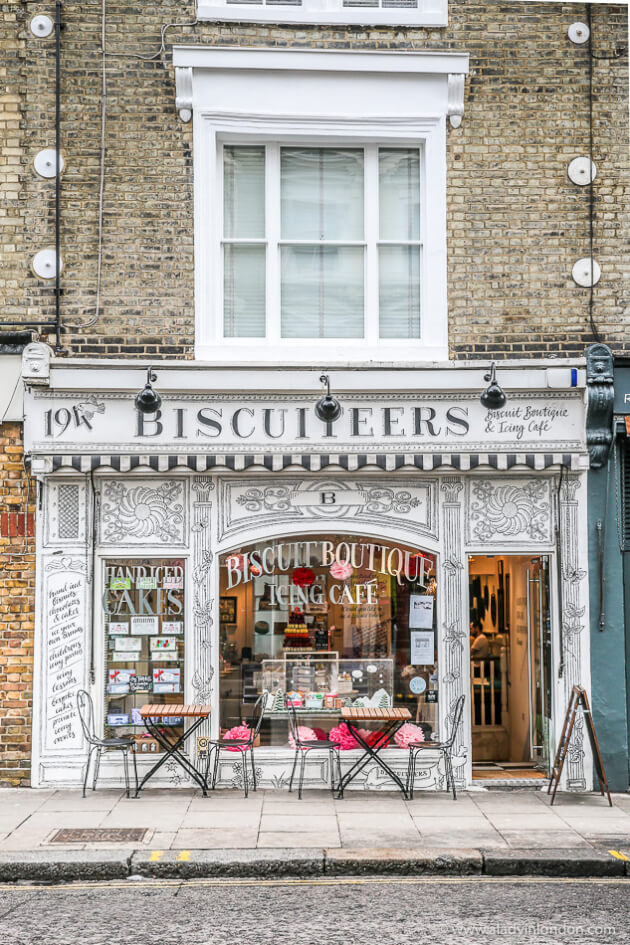
3. Biscuiteers
Biscuiteers in Notting Hill might just be the cutest cafe in London. With a black-and-white facade that feels like it’s straight out of an old fashioned newspaper, this place catches my eye every time I’m in the area.
But what draws me in are the cookies (or biscuits, if you’re British). These iced beauties come in all shapes and colors, and are decorated in meticulous detail. They’re almost too pretty to eat. Almost.
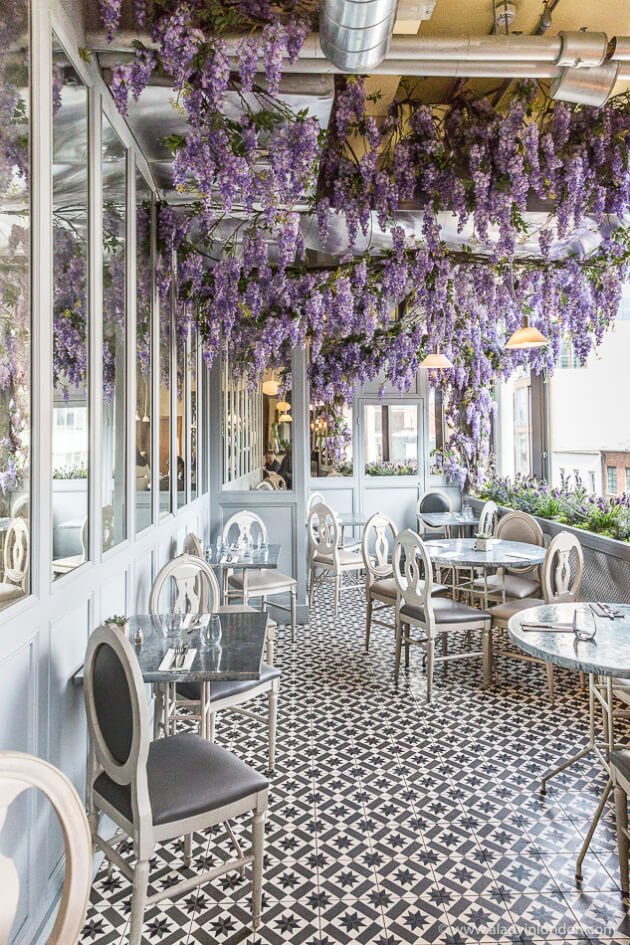
4. Aubaine Selfridges
Like Saint Aymes, Aubaine Selfridges has embraced London’s love of wisteria. This cafe in the Oxford Street department store suspends strands of purple blossoms from the ceiling.
The result is enchanting; I wouldn’t be surprised to see fairies appear and start serving coffee. This is truly one of the best pretty cafes in London.
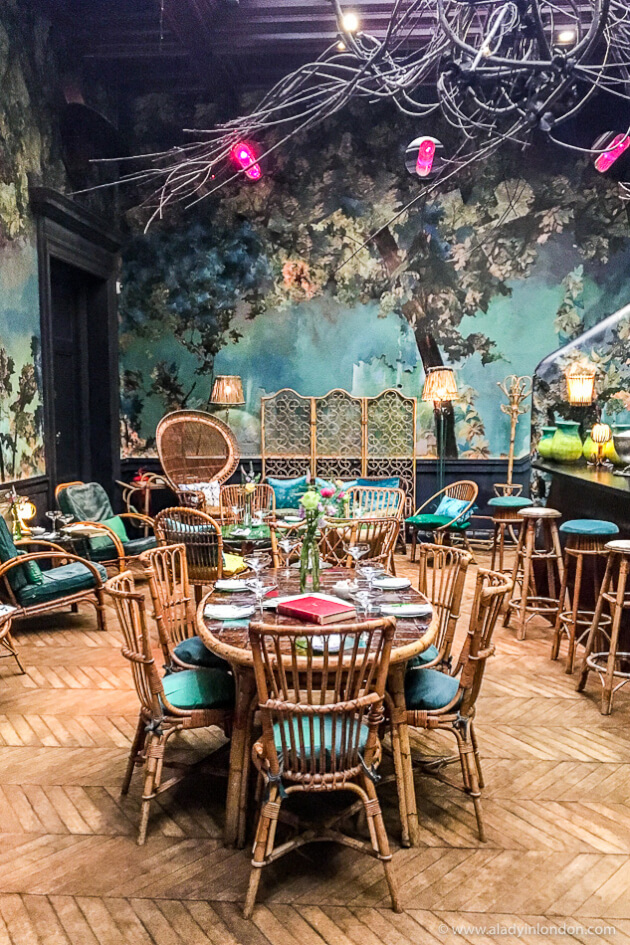
5. Sketch
I’ll never forget the first time I walked into Mayfair’s Sketch. I was overwhelmed by the colors, the designs, and the fact that I felt like I was being transported into one world after another. Each room has its own signature style, and they all impress.
The one that best fits the theme of pretty cafes in London is The Gallery, which is decorated in pink and does a great afternoon tea. But my favorite is The Glade, a woodland wonderland done in greens and blues.
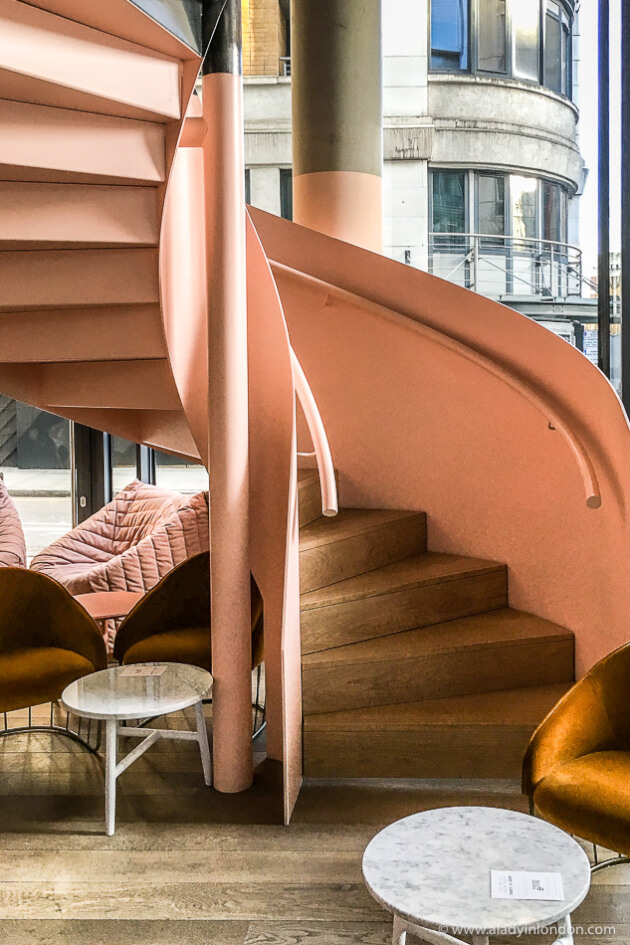
6. Treves and Hyde
But back to pink. Treves and Hyde in Whitechapel is known for its pink spiral staircase and bright interior.
The ground floor cafe is the perfect place to catch up with a friend over a cup of tea, and every time I’m in this place I revel in the pastel hues. If London has a stairway to heaven, this is it.
7. L’ETO London
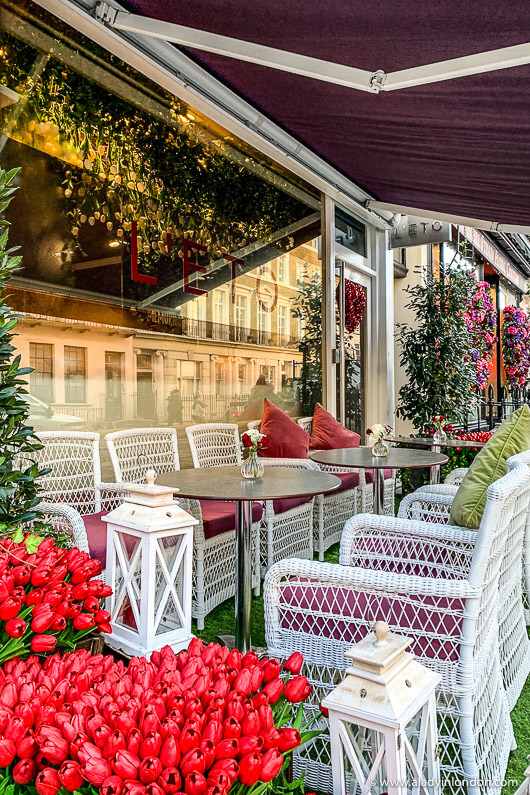
Back in Belgravia, L’ETO London is down the street from Peggy Porschen and has challenged its neighbor for the area’s floral display crown.
With flowers around the entrance and covering the outdoor terrace, this gem is one of the prettiest cafes in London.
8. EL&N London
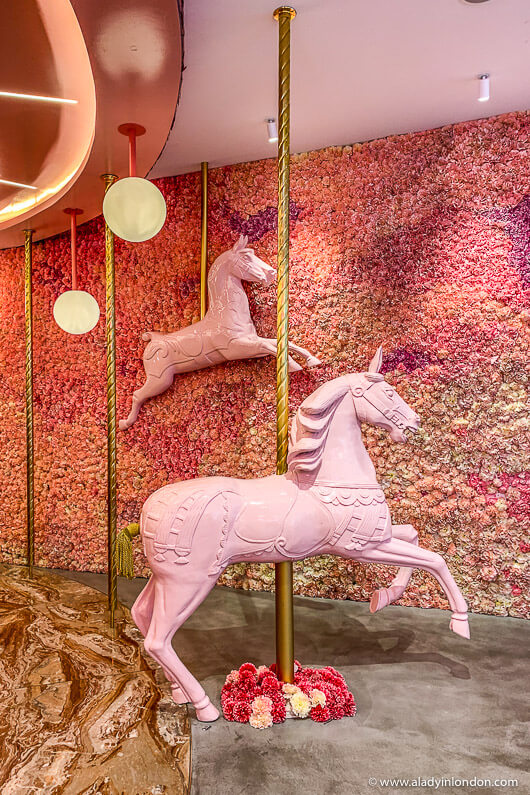
EL&N London is a riot of pink. With multiple locations in Knightsbridge, Mayfair, and other London neighborhoods, these pretty cafes in London are a sweet Instagram dream.
Think pink merry-go-round horses, cute candy heart walls, and flowers galore and you’ll start to get the idea. And that’s to say nothing of the cakes, which are as delicious as they are pink.
9. Grounds & Grapes
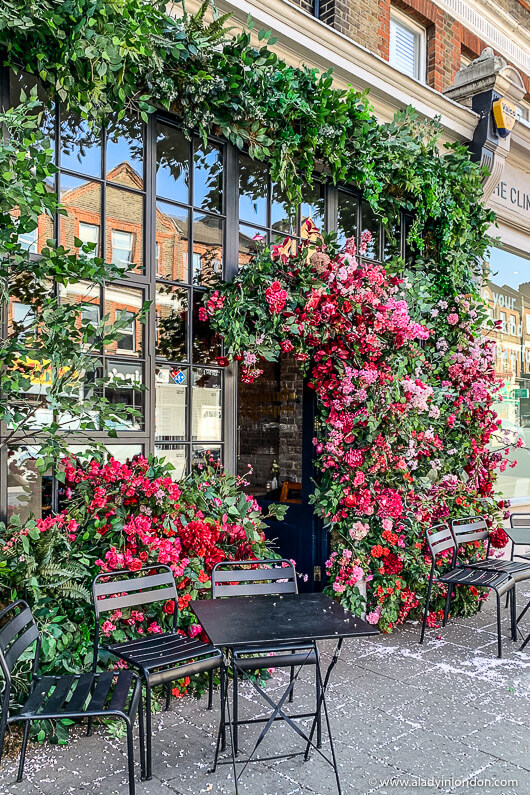
Down south in Honor Oak Park, Grounds & Grapes has a floral facade that won’t quit.
This cafe by day, bar by night is a great place to go if you want to explore more of south London’s cafes. With coffees in the morning and cocktails in the evening, it has you covered all day.








 London visitor