William Hamley, a Cornishman who had always wanted to own a toy store, opened his first shop in Holborn in 1760. The location was chosen to attract the well-heeled Bloomsbury crowds. The location and the brand changed, eventually becoming London’s — and one of the world’s — most famous emporiums for kids.
1. Early beginnings and the loss of an apostrophe
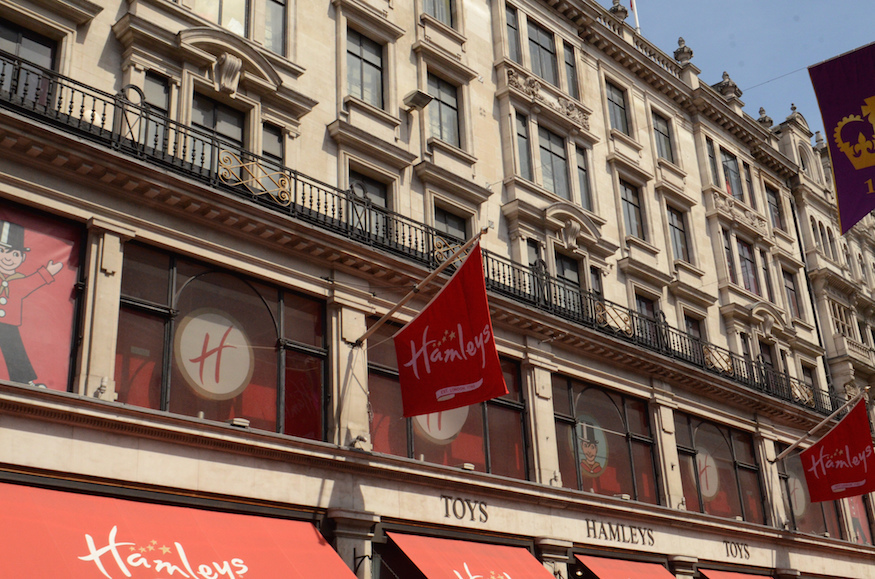
Hamleys moved to its current premises on 188-196 Regent’s Street in 1981.
Its original Holborn store was called Noah’s Ark. Once it moved to 200 Regent Street in 1881, it was known as the Joy Emporium, before finally becoming Hamleys, long after the original Mr Hamley had died. Well, almost.
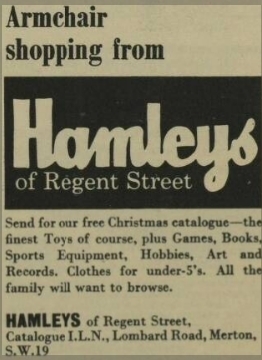
A Hamleys advert from 1967
The firm actually traded as Hamley’s (with an apostrophe) until about 1911, when they started to be referred to as Messers Hamley Bros. That lasted until about 1920, when the branding became Messrs Hamleys (without the apostrophe). Soon after, it became just Hamleys.
We doubt the reason behind this apostrophe drop is as unhappy as the reason Selfridges no longer has one.
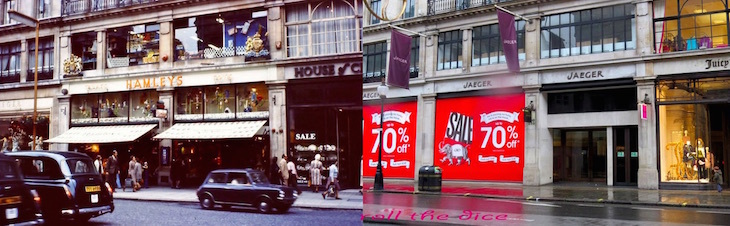
Hamleys on Regent Street in 1978, before it moved to its current location in 1981, and the ex-Hamleys store in 2016
2. The oldest toy store in the world…
…is what the store claims, and we have no reason to dispute it. It predates Harrods (which has long peddled toys) by nearly 90 years. There are further claims that is the largest toy store in the world. Anyone who’s visited all seven floors, with a child, close to Christmas, won’t dispute that either.
3. Nearly gone for good
In the late 1920s and early 1930s, Hamleys wasn’t faring so well, and was forced to close. It was saved, however, when Walter Lines — who remembered riding on one of the delivery trucks as a child — bought it. Lines, along with his two brothers, owned a toy company. He restored the shop to its former glory and ushered customers back through the doors.
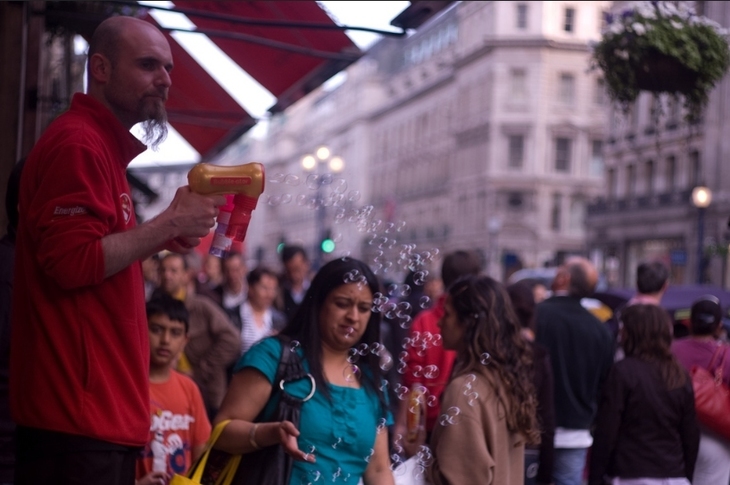
He’s forever blowing bubbles
4. It’s got a Royal Warrant… and a green plaque
Actually, it’s got two Royal Warrants. Queen Mary (wife of King George V) awarded Hamleys one in 1938, just seven years after Walter Lines bought and rejuvenated it. A Royal Warrant indicates that the shop supplies the Royal family. Indeed, Queen Mary’s own granddaughters had toys from Hamleys in their nursery.
In 1955, Queen Elizabeth II gave it a second Royal Warrant, identifying it as a «toys and sports merchants».
Westminster Council awards green plaques to buildings which have a rich heritage, or where famous people have worked or lived. In 2010, marking 250 years of the business, Hamleys was awarded got its own.
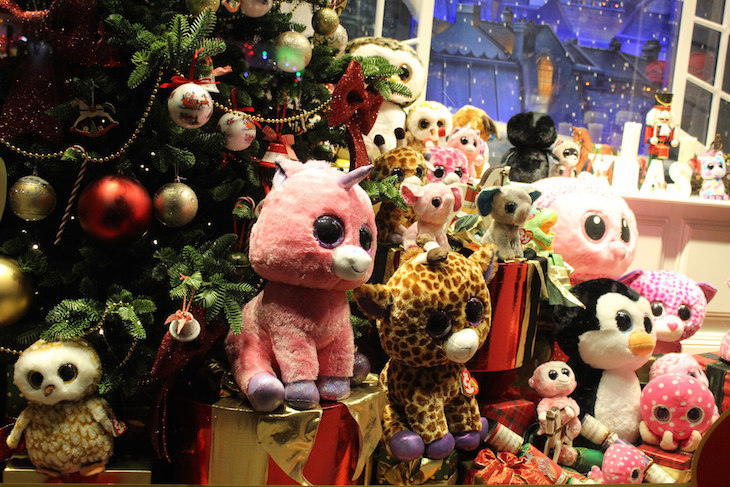
Maybe the Queen is a fan of these bug-eyed creatures?
5. The disappearing magic warehouse
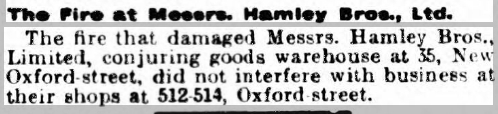
The firm once had a warehouse for conjuring tricks on New Oxford Street which, in 1916, burnt down. In other words, it disappeared in a puff of smoke.
6. More destruction
Hamleys staff serving during the war
The Regent Street store was bombed five times during the war, yet it remained open for business. Staff served at the front of the store, wearing tin hats and running inside to collect toys before completing the transaction at the front.
7. You can sleep there…
…or your kids can, anyway (shh, don’t tell them, or you’ll never hear the end of it). Among the many birthday party options that Hamleys offers are Hamleys Dream Sleepovers, aimed at kids age 5-11.
8. Penguin problems
The 2014 Christmas celebrations were better received
In Christmas 2010, Hamleys briefly advertised an in-store Christmas event that would involve real-life penguins. Predictably, this drew complaints from people concerned about the birds’ welfare and the event was shelved.
9. A rude ending
The final scene of Stanley Kubrick’s erotic Eyes Wide Shut is set in Hamleys. The very last word of the film, uttered by Nicole Kidman, is an expletive. How very un-family-friendly.
It’s not quite light when you get to work, and the sun’s long set by the time you leave. But it’s not all doom and gloom. There are some things in the capital best done under cover of darkness. Here’s how to make the most of the dark evenings in London, rather than hibernating away until spring.
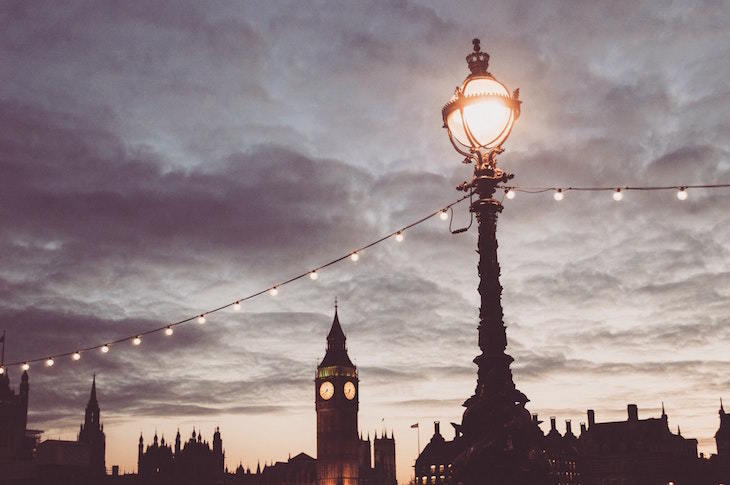
Admire London’s gas lamps
Did you know that London still has approximately 1,300 gas lamps, mainly in the Westminster area? A few years back, we met the team of gaslighters who keep them going.
Naturally, the dark evenings are the ideal opportunity to see these gas lamps in action — time it right and you might even see someone lighting them up.
…and other unusual lamp posts
London’s gas lamps aren’t the only interesting lights on our streets. In 2017 we put together a lamp post tour of London. We can’t guarantee the eccentricities are all still in situ, but night time is certainly the time to see the ones which are as the designers intended. Oh, and these ridiculous lamp posts are worth a look, too.
Go stargazing
Cities and stargazing aren’t obvious bedfellows, but if you manage to get a clear night, it’s not out of the question to ogle the cosmos from London. Our tips? Watch the weather forecast for a cloudless night, and head up a hill above the main street level lighting if you can. Primrose Hill and Greenwich Park are ideal spots. Read up on more tips for stargazing in London.
Have a go at night kayaking
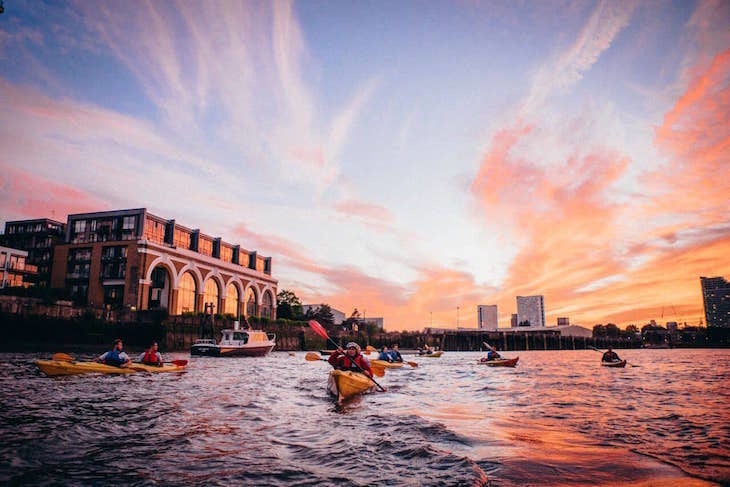
Secret Adventures is an events company offering interesting and unusual ways to explore London. One of their regular events is a night kayak across London, which sees you row from Battersea in Greenwich. During summer months, part of the route is done in daylight, but over the winter, you’re in full darkness (head torches provided), giving you a chance to see London’s landmarks illuminated, from your watery vantage point. Keep an eye on the website for future dates when announced.
Learn the art of night-time photography
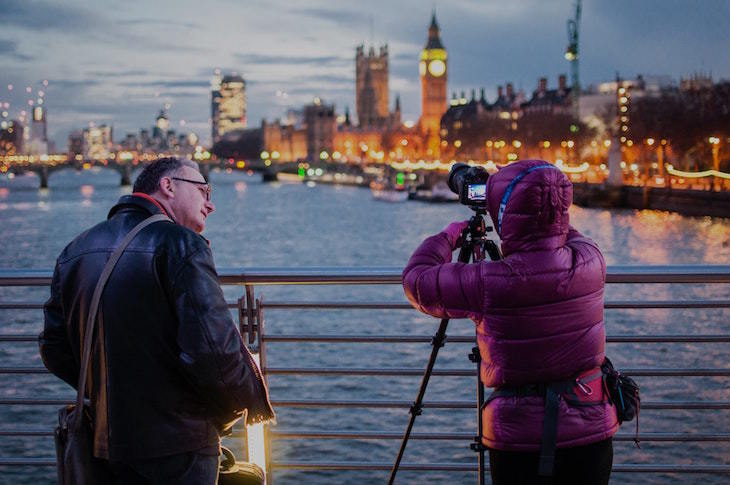
As one of the world’s most photographed cities, it’s hard to find a new angle on London through your lens. Night time might just be that new angle. Plenty of organisations run night photography courses in the capital, including London Photo Tours and The School of Photography. Once you’ve grasped the basics of shooting London’s landmarks at night, you can spend the winter practising at your leisure — and by spring, you’ll be wishing the evenings would stay darker for longer. Maybe.
Ogle the Christmas lights
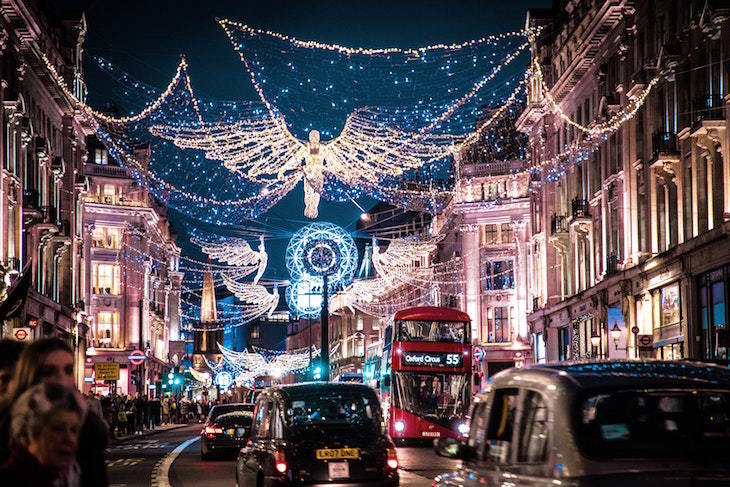
London’s Christmas lights go on from early November, meaning most of central London is blanketed in a haze of fairy lights, making the darkness all worth while. Here’s the schedule for switch-ons this year, beginning with Carnaby on 4 November.
Wander around a light festival
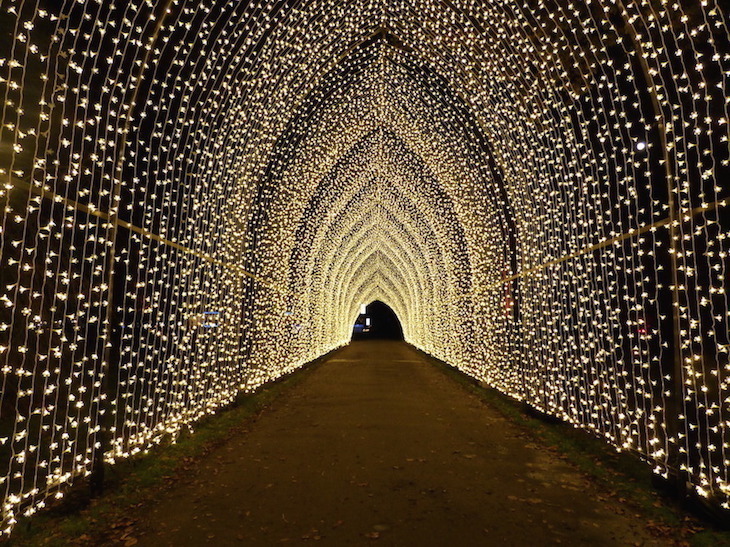
Long gone are the days when the Christmas lights were the highlight of London’s winter season. These days, you can barely turn a corner from November through to February without tripping over a light festival, illuminations trail, fire garden, laser route or other light-based festivity — and we absolutely love it. Here’s our guide to light festivals in London this winter.
See the Illuminated River project
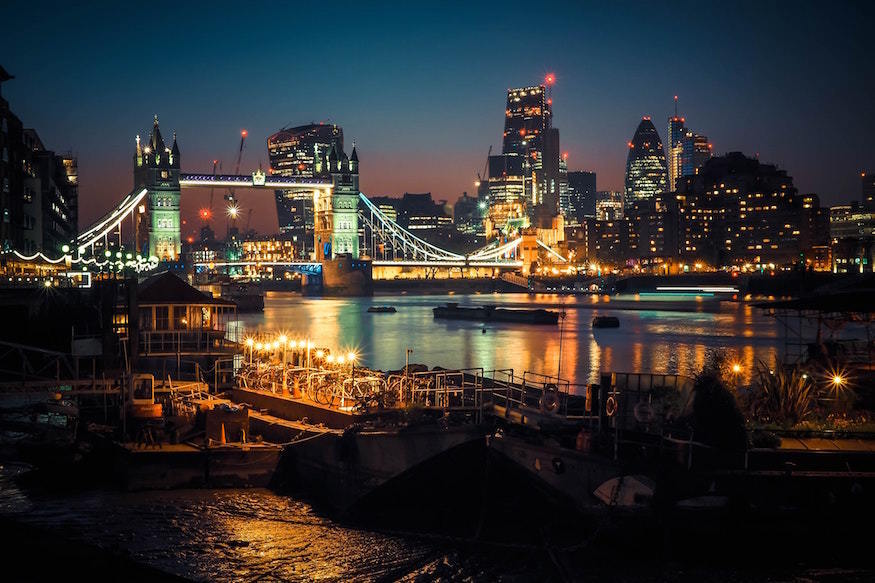
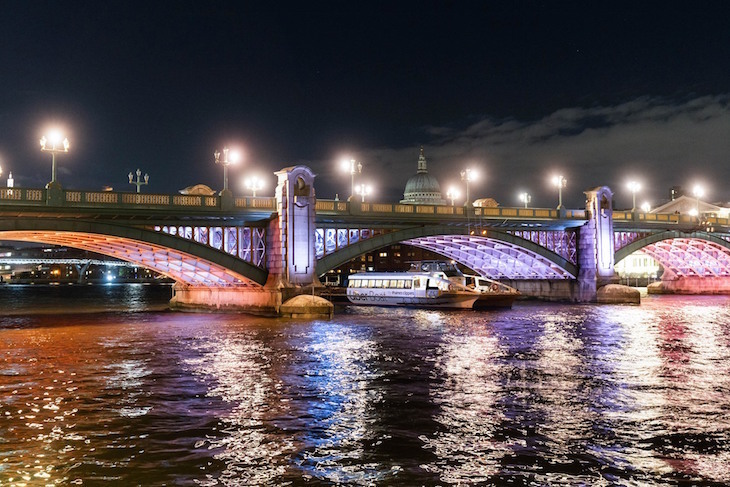
If you’ve been down to the Thames after dark recently, you may have noticed the bridges have been pimped up with colourful lights. It’s the Illuminated River project, which currently covers the nine bridges from London Bridge to Lambeth Bridge with light artworks by Leo Villareal.
Naturally, darkness is the time to see them at their best — why not head to one bridge per night over several days, or if you’re feeling energetic, visit them all on one epic nocturnal walk? Or, to do it in style, take an official Illuminated River boat tour, which lasts about 40 minutes and takes in all nine bridges from the water.
Go to a museum late
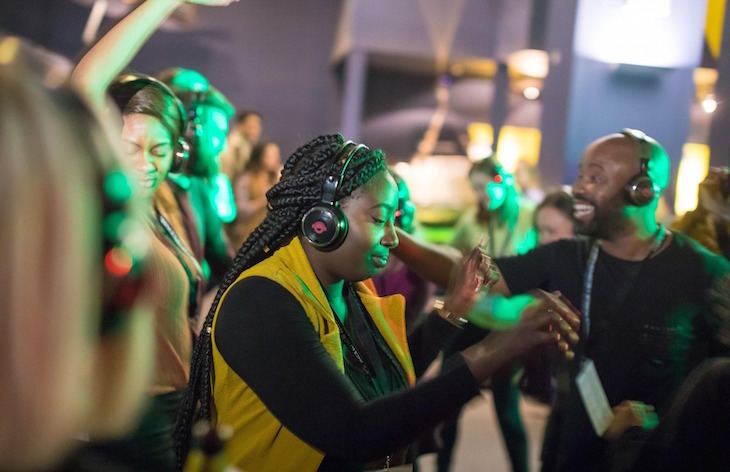
So the hazy days of hanging out in the park all evening are gone, and you need somewhere cheap (preferably free), light and warm to socialise? Check out London’s museum lates. They haven’t all resumed since lockdown yet, but The National Gallery stays open late every Friday, and Science Museum’s monthly Wednesday lates are back.
The Ritz: the very name of this world-famous Piccadilly hotel is the final word in glitz and glamour. Here are some things you might not know about it.
1. It’s inspired words, songs, movies and biscuits (sort of)
César Ritz was the Swiss hotellier who gave his name to London’s Ritz when it opened in 1906 (the Hôtel Ritz Paris existed eight years earlier).
In the early 1900s, that surname would become a word in its own right, with ‘ritz’ ‘ritzy’ and ‘ritzier’ entering common parlance, meaning ‘high quality, superiority’.
The phrase ‘puttin(g) on the Ritz’ is recorded from 1911, and was later used by Irving Berlin in his 1927 song, and for the 1930 musical of the same name.
As for those moreish cheese biscuits — they were first introduced to Philadelphia and Baltimore in November 1934, although as they’re American, they probably allude to the Ritz-Carlton in NYC.
2. The man behind Woolworths died here
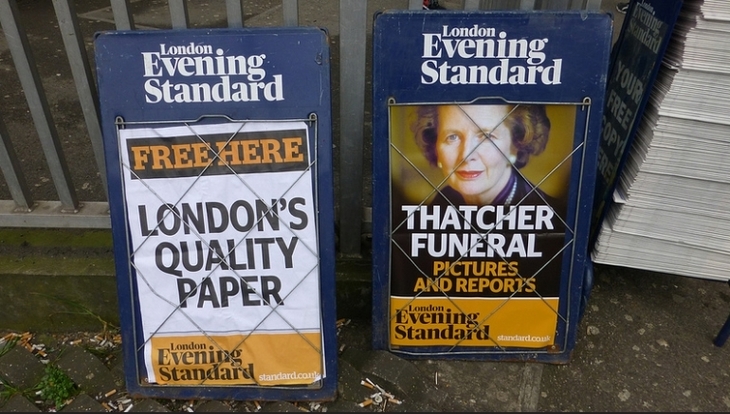
The most famous person to die in The Ritz was former prime minister Margaret Thatcher.
She passed away, apparently reading in bed, in a private suite in April 2013.
Lesser known Ritz deaths of note include another Conservative, Lord Steinberg, as well as Fred Moore Woolworth — founding MD of the Woolworth’s stores in the UK, and by association, the bloke who got you hooked on those peanut pick ‘n’ mix sweets.
3. Self-published
The Ritz has its own dedicated magazine. You can read it here. Although if you want a physical copy, you might have to be a guest, or at least buy a cocktail. Speaking of which…
4. The cocktail-from-a-slipper incident
In 1951, the star Tallulah Bankhead rocked up at The Ritz for a press conference.
Apparently in ‘high spirits’, a Time article reports how Bankhead called for a champagne cocktail, summarily poured it into her size four black suede shoe, cried out «Winston Churchill is my god! I’m just mad about England. I mean Britain…» then took a good slurp.
In 2014, The Ritz commemorated the publicity stunt with another; The Tallulah is a champagne cocktail you quaff from a glass slipper:
5. Charlie Chaplin and the hat bill
Bankhead is just one of the countless famous names who have dined, drunk and slept at The Ritz.
Perhaps the most memorable celebrity guest came in September 1921, when Charlie Chaplin visited from America. He was mobbed by fans outside the hotel, and had to be escorted inside by around 40 policemen.
From the balcony of his room, Chaplin began to throw carnations, which prompted this note from one incensed mother:
My boy tried to get one of your carnations and his hat was smashed. I enclose you a bill of 7s. 6d for a new one.
6. You can’t please everyone
As Chaplin found out, you can’t please all the people all the time.
It might still be considered one of London’s, and the world’s, finest hotels, but some people just refuse to be charmed by The Ritz.
Much as we like to complain about it, Londoners and visitors marvel at the London Underground to the extent that there’s a museum dedicated to it, and its logo and map have become design icons, depicted on everything from mugs to boxer shorts.
It currently consists of 11 lines, which range in size from one-and-a-half to 52 miles. Some have their own associations; the Central line is regarded as energetic, the Circle line adventurous, and the Northern line intense. But where did their names come from? Some lines are named for a station, or stations, located along them. When looked at in closer detail, though, the names of our tube lines — names that are part of the everyday language of London — take in such diverse origins as a builder, a battle, a queen, a 16th century item of clothing and an extension plan that didn’t happen.
Bakerloo
Opened in March 1906, the brown line was originally called the Baker Street & Waterloo Railway on the grounds that it connected Baker Street — named after the 18th century builder William Baker, who built the street — with the London & South Western Railway’s terminus which had in turn been named after the famous battle. Within months, a shortened version of the name, Bakerloo, had caught on to the extent that it was quickly adopted as the official name.
Central
This one opened in 1900 under the name of the Central London Railway, although back then it only went between Shepherd’s Bush and Bank. It was so named because the idea had been to run a deep-level underground railway line through central London on an east-west axis. The ‘London’ part of the name was dropped in 1937 due to plans to extend the line beyond the boundaries of the old County of London.
A different angle on the District line
Circle
Named due to its prior existence as a closed loop, running along the tracks of the Metropolitan/Hammersmith & City and District Lines for much of its length. Although it had long been planned that the Met and District Lines would between them form a circle around central London, the Circle did not became a line in its own right until 1949. The loop was broken in 2009 with an extension to Hammersmith, making it more of a spiral than a circle, but the name remains.
District
The Metropolitan District Railway opened in 1868. Originally running between South Kensington and Westminster, the plan was for it to merge with the slightly older Metropolitan Railway — hence the ‘Metropolitan’ part of the name — to create a circle of underground railway lines around central London. This didn’t happen, so the new line became known as the District Railway. The word ‘district’, by the way, derives from the Latin districtus, meaning ‘area of jurisdiction’.
Hammersmith & City
The pink line was named due to its linking Hammersmith with the City of London, even though it actually extends out to the East End. The line from Hammersmith to Barking was originally part of the Metropolitan line, but it has had its own separate identity since 1990. The most likely theory for the origins of the name Hammersmith is that it is a combination of the Old English words hamor (hammer) and smyththe (smith).
The Jubilee line in all its shiny glory
Jubilee
Named to commemorate the Queen’s Silver Jubilee in 1977, which is why it’s a silver/grey colour. However, the line that took over the Stanmore branch of the Bakerloo Line and linked it with Charing Cross didn’t actually open until 1979. Originally it was to have been called the Fleet line, with a proposed extension to the City passing under the subterranean River Fleet. In the event, though, the extension (when it came) went south to Waterloo and then turned east to go to the Docklands.
Metropolitan
Running between Paddington and Farringdon, the Metropolitan Railway opened in January 1863 and was the first underground railway in the world. The word ‘metropolitan’ derives from ‘metropolis’, a word of Greek origin (literally, ‘mother city’) which over time came to mean a large city. In Britain, ‘the Metropolis’ was for many years a term used to refer to London, and this lives on in the name of the principal police force as well as the purple tube line. In the 20th century, the Met line was extended out to the developing suburbs to the north west of London, which in turn came to be known as Metro-land.
Northern
The ‘Misery line’ started out as two separate railway lines — the City & South London Railway and the Charing Cross, Euston & Hampstead Railway, which opened in 1890 and 1907 respectively. The two were merged in the 1920s and 1930s, and at the same time the new line spread northwards and southwards, which led to it being called the Edgware, Highgate & Morden line. A few Bakerloo-style abbreviations were suggested (‘Edgmorden’), but in 1937 it was renamed the Northern line in anticipation of the Northern Heights extension plan which, if realised, would have pushed the line out to Bushey. It was cancelled when war broke out in 1939.
The Victoria line could have been called something very different
Piccadilly
Named after the central London street, the name of which derives from the piccadill, a large broad lace collar which was fashionable in the late 16th and early 17th centuries. Robert Baker, one of the most successful manufacturers of these, had acquired land in the area on which he built his house, Pikadilly Hall. The Piccadilly Line was opened in December 1906 as the Great Northern, Piccadilly & Brompton Railway; it originally ran from Finsbury Park (already a station on the Great Northern Railway) to Hammersmith. From the start, presumably for the sake of convenience, passengers referred to it as the Piccadilly Railway.
Victoria
The first entirely new tube line in half a century, the Victoria Line opened in 1968. There are no prizes for guessing that it is named after Victoria station, which was in turn named after Queen Victoria. Suggested alternatives during the planning stages had been ‘Walvic’ (Walthamstow-Victoria) and ‘Viking’ (Victoria-King’s Cross).
Waterloo & City
‘The Drain’ dates back to 1898 when the London & South Western Railway opened an underground line that connected their terminus at Waterloo with the City of London. They’d originally wanted to extend the main line into the City but as this was impractical they went for a separate line instead. The line was operated as a train line until 1994, when it was transferred to the London Underground as a result of the privatisation of British Rail.
Sam Smith’s: the owner of this thrifty pub chain may be an eccentric flouting some very odd rules, but if you’re looking for a comely, no thrills London boozer on a budget, these 11 should probably be on your list
1. The Princess Louise, Holborn
As far as tiles are concerned, The Princess Louise gives the Alhambra, 19th century Manchester and Topps Tiles a run for their money. So candied with tiles is this gin palace, you kind of want to lick it. The pub’s divvied up into various nooks and crannies, and you may have to bide your time for the best perch (or any seat at all), but boy, is it worth it. After draining two or three extra stouts, gentlemen can relieve themselves at the Grade II listed urinals. That’s tantamount to being allowed to piss on the BT Tower. A full-on treat of a pub.
2. The Champion, Fitzrovia
With its earthy wood panelling, man-in-a-box lager and puritanical rules (no swearing, no music, etc) The Champion is much like many other central London Sam Smith’s pubs. What makes it stand out is its stained glass windows. They variously depict Victorian celebrities including WG Grace, Florence Nightingale and Edward Whymper — the first person to climb the Matterhorn. What a delight to sip a bottle of cherry beer, while the glass kaleidoscope dapples your table. As much as we love the nearby All Saints Church, we reckon this pub’s windows are better. And its alcoholic offerings stretch further than communion wine.
The Princess Louise, 208 High Holborn, WC1V 7EP
The Champion, Fitzrovia, and some bearded cricket legend
3. The Captain Kidd, Wapping
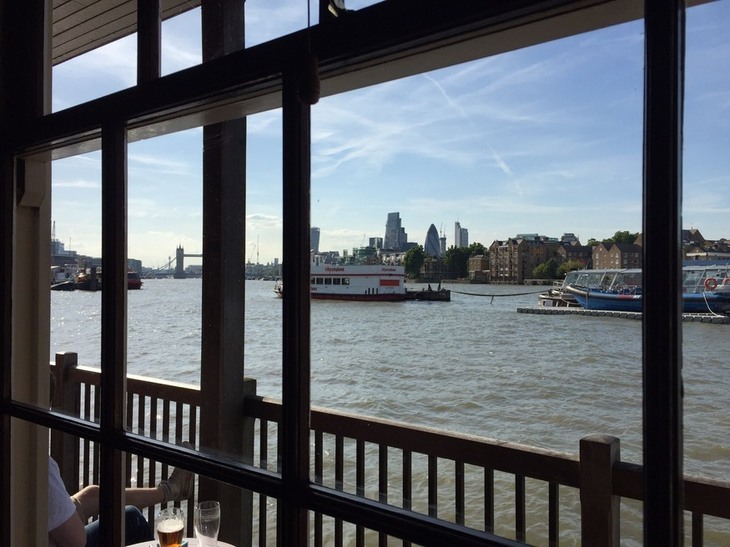
On a dark and stormy night (so really anytime from October through to April) The Captain Kidd throbs with an almost-delicious sense of foreboding. Snuggle up on a settle (or if it’s crowded, huddle round a barrel) and watch the grey ooze of the Thames out of the window. It’ll transport you back to a time of pirates and smugglers, and — after a couple of pints of cider — it’s easy enough to imagine a galleon full of cutthroats and scallywags sailing by. The patio, also overlooking the river, is wonderful in the summer too.
The Captain Kidd, 108 Wapping High Street, E1W 2NE
4. Cittie of Yorke, Chancery Lane
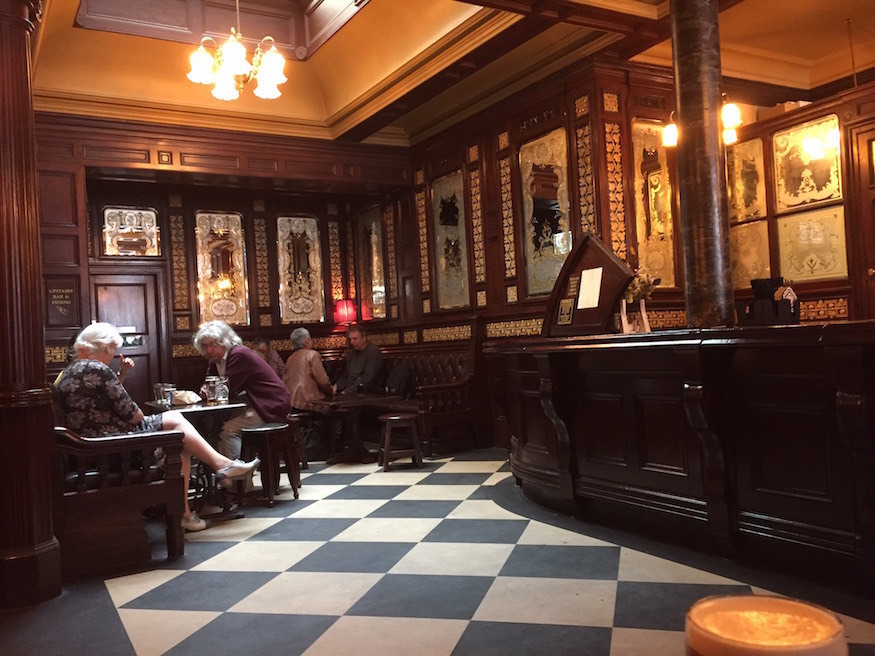
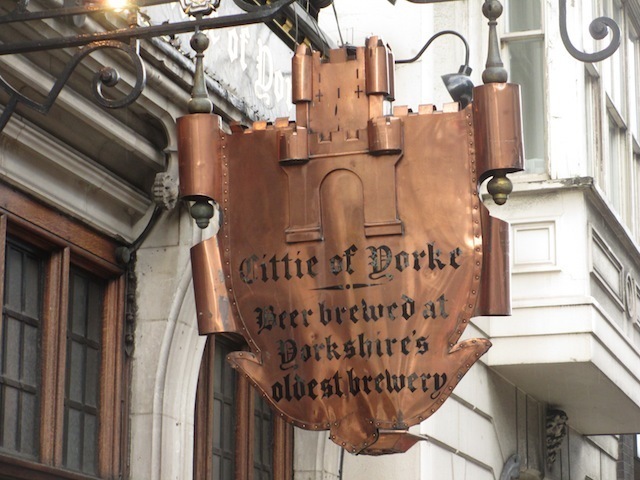
Certain boozers give you a swell of pride as you introduce them to people who’ve never been before. Such is the feeling we get at the Cittie of York. Who wouldn’t fall for that lofty vaulted ceiling like the nave of a church? Who wouldn’t swoon at those confessional box-like booths with their miniature palladian windows, ideal for indulging in clandestine drinking sessions? If they’re full, the cellar bar, with its ‘In Vino Veritas’ legend writ across the door, will do the trick. And a pint for under £5 in this part of London — how can you resist? We are, we admit, sad that those gargantuan barrels kept behind the bar are presumably empty.
Cittie of York, 22 High Holborn, WC1V 6BN
5. Ye Olde Swiss Cottage, Swiss Cottage
If you stretch the truth a little, then here’s the only Sam Smith’s pub that gives its name to a tube station. There is nothing particularly outstanding about the Swiss Cottage on the inside — indeed, if you’re to believe some of the food reviews on TripAdvisor, you might be better off sourcing lunch from Sainsbury’s. But when the weather’s decent enough, how can you pass up the bizarre opportunity of slurping Alpine lager outside a olde world Swiss chalet from a north London traffic island, while watching National Expresses chug by?
We’d feasted on the George & Vulture’s devilled whitebait and steak & kidney pudding before, without ever realising it was a Sam Smith’s. This pimped up, restaurant version of the pub chain is something straight out of a Dickens novel, what with its decorative stoves, pristine white tablecloths and City back-alley location. Come here on a winter’s lunchtime with a copy of The Pickwick Papers, and feast on steaks, sausages and various stodge — washed down with a bottle of claret. They also cook a Barnsley chop, which we’re told is like a chop, but thicker i.e. better.
The George & Vulture, 3 Castle Court, EC3V 9DL
7. The Crown and Sugarloaf, Fleet Street
Nestled in a lamp-lit corner off Fleet Street, with the spire of St Brides dangling over it, there is something even more antedilluvian about the Crown and Sugarloaf than its other Sam Smith’s peers. In fact, we can’t help but feel it’s a ghost pub — one that only we and our drinking companions can see. Whenever we’ve visited for a quick pint of Taddy lager and a packet of scratchings, we’ve been the only people in the place. Understated this pub may seem, yet the mosaic floor, veined marble counter top and gin palace mirrors, make it one of the most unspoilt pubs in central London.
The Crown and Sugarloaf, 26 Bride Lane, EC4Y 8DT
8. Ye Olde Cheshire Cheese, Fleet Street
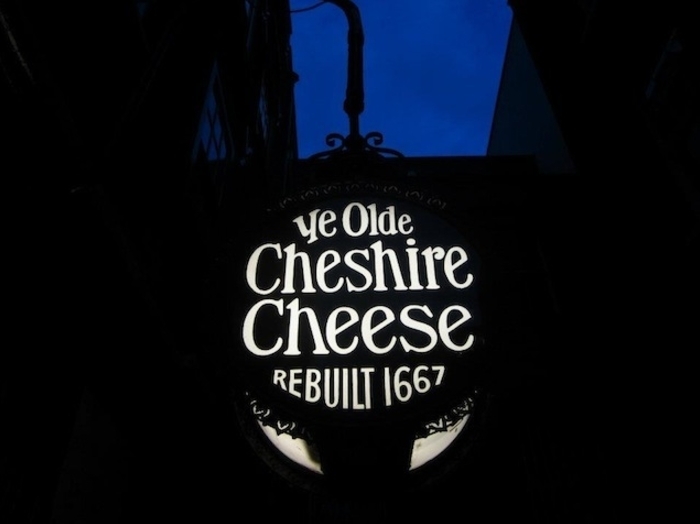
The bouquet of history smacks you round the chops the moment you step into this 17th century boozer (or maybe that’s the smoking curling off the open fire). On a chilly winter’s eve, there are few places in the city we’d rather frequent than this swarthy, multi-layered drinking den. Order a stout at the front room bar, and descend through the various levels of the pub, picking up sawdust on the bottom of your shoes as you go. For restaurant-quality food, The Chop Room offers cockle-warming roast pheasant with blackberry sauce, and woodland mushroom stroganoff. Or just grab a salty bar snack; a nervous bar girl and self-proclaimed inexperienced-cutter-of-huge-pork-pies, once accidentally cut us the heftiest hunk you’ve ever set eyes on. It remains one of the best days of our lives.
Ye Olde Cheshire Cheese, 145 Fleet Street, EC4A 2BU
9. The Angel, Bermondsey
An unexpected but welcome premonition to the thrifty drinker, the Angel appears on the banks of the Thames shortly after passing through the gentrified stretch of Shad Thames. It makes a tempting stop-off for many a person en route to the Mayflower in Rotherhithe (a far prettier pub, but not a Sam Smith’s, so stuff it). When the weather’s decent, see if you can secure a spot on the narrow balcony. In stormier conditions, watch the Thames thrash at the windows (genuinely, there’s a sign warning you not to open said windows, lest the river cascade in).
The Angel, 101 Bermondsey Wall East, SE16 4NB
The Angel: like drinking in the Thames
10. The Yorkshire Grey, Fitzrovia
Barry Cryer once noted that in the BBC’s heyday (Broadcasting House lies round the corner), «I’m going to Studio YG» was code for «I’m going to get pissed down the local». We come in here every once in a while, hopeful of seeing Alan Partridge pitch to an exasperated BBC exec. In the meantime, we’re satisfied enough perching on a stool and watching the comings and goings of this pint-sized, but often bustling, Samuel Smith’s. Not as lavish as the Princess Lou, or grand as the Cittie of Yorke, the Yorkshire Grey exudes a cosiness, no doubt helped by the roaring fireplace, and a few bottles of oatmeal stout.
The Yorkshire Grey, 46 Langham Street Fitzrovia, W1W 7AX
11. The Anerley Arms, Anerley
In the capital, Sam Smith’s focuses most of its efforts on central London, so it’s a pleasant surprise to find a member of the chain due south east, in Anerley — something that, we admit, helps get this pub on our list. The Anerley Arms has the usual varnished, woody decor of any decent Sam Smith’s boozer — in this case a curved, bar, studded all along the top with stained glass windows. But this place has something that many of London’s other Sam Smith’s are short on — the feel of a real local.
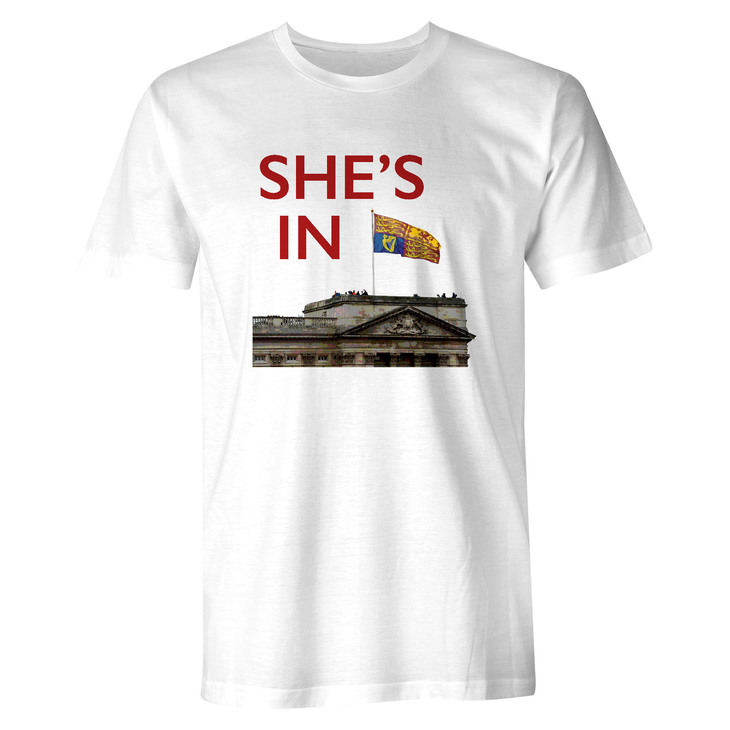
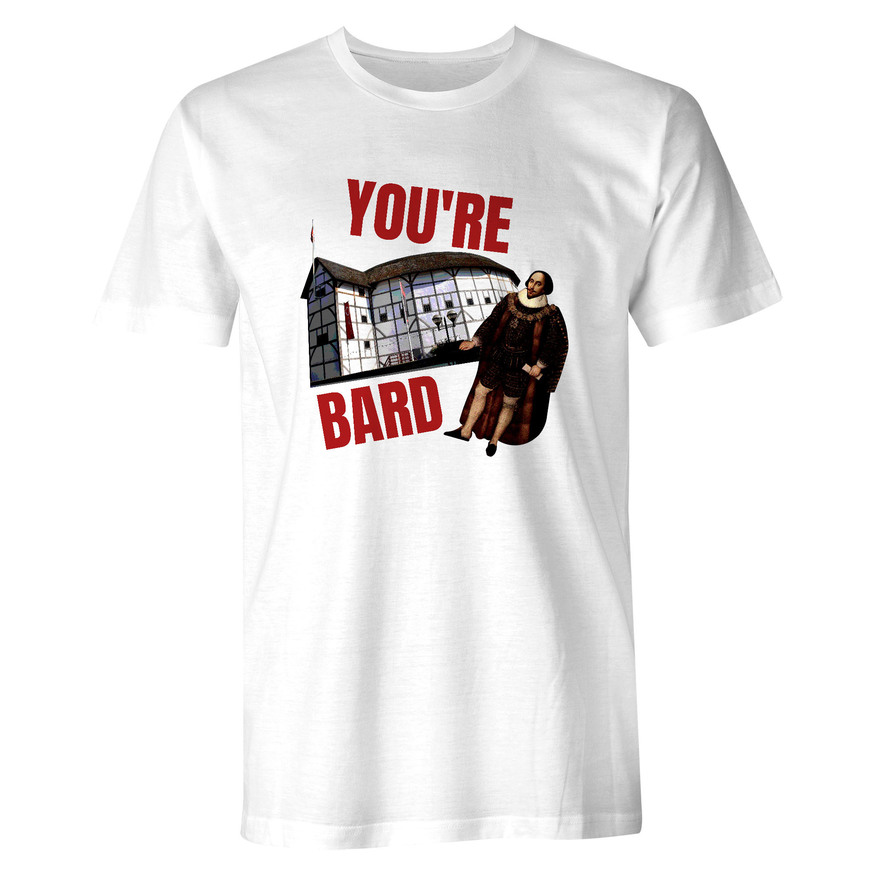
Be one of those adorable people who bangs on about brutalismShow the Central line some loveWe know there are people out there who’ll wear this16 stations of sheer excellenceThe age-old dilemmaThe birds in question probably only eat Pret croissants these days, but anywayAnd as we all know, she’s in when the Standard’s flying, not the Union FlagAt 26cm per second, we’re informedA fitting gift for the Shakespeare-loving publican in your life
Below, we’ve started a list of commonly mentioned London places that don’t actually exist. Some are genuinely non-existent, others are places we know by nicknames that differ from their official names. Feel free to suggest additions in the comments.
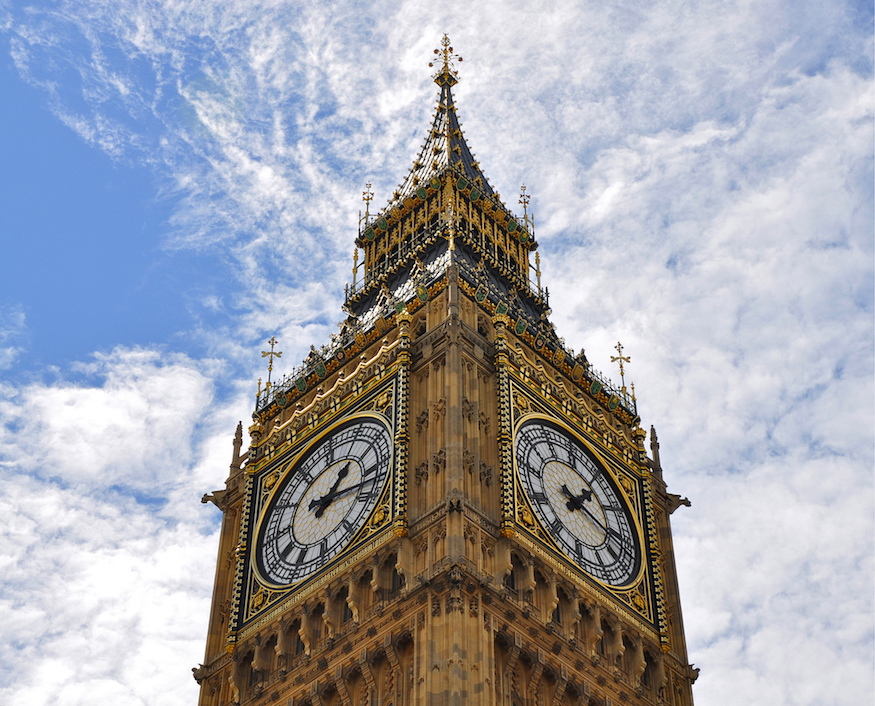
Big Ben
The most famous clock tower in the world. Or is it? «It’s the name of the bell not the tower», so says every pedant ever. Even pre-school shows like Peppa Pig and Go Jetters have pointed this one out.
If we want to get really pedantic, though, then it’s not the bell, but the largest of five bells. And its official name is The Great Bell of Westminster, not Big Ben (that’s just a nickname). The tower is, of course, now called the Elizabeth Tower since its renaming in 2012 to mark the Queen’s Diamond Jubilee. Prior to that, it was simply called the Clock Tower. It was never St Stephen’s Tower, as commonly believed.
Bond Street
There’s an Old Bond Street and a New Bond Street, and a Bond Street station, but nowhere other than the Monopoly board can you find plain old Bond Street. Well, not in central London, anyhow (there are Bond Streets in Chiswick, Ealing and Forest Gate, but not in central London).
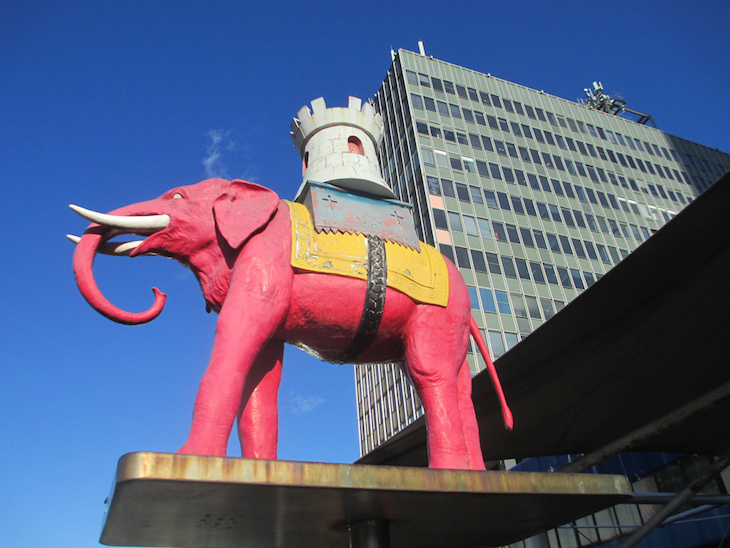
Elephant and Castle roundabout
It doesn’t have one. Not any more. If you don’t believe us, go check.
London
It’s not easy to find a place called London. There’s Greater London, Inner London, Outer London and the City of London, but can we find any place that bares the official name of just ‘London’? Why yes, it is a European Parliament constituency. An unfortunate side-effect of our withdrawal from the EU — which it seems only we have noticed — is that London will cease to exist.
Ah, the iconic shot of St Paul’s Cathedral across… the London Millennium Footbridge.
Millennium Bridge
Officially, it’s the London Millennium Footbridge. That’s too wordy, and shares an abbreviation with Lazy Mother F*cker, so everyone calls it the Millennium Bridge. Except for those of us who were here when the crossing first opened. We all call it the wobbly bridge.
Millennium Dome
It’s the name that still trips off the tongue for many of us. That, or simply just ‘the Dome’. But the official title of this Greenwich landmark has been The O2 since 2005. One exception. During the 2012 Summer Olympics and Paralympics, the dome was used as a sports venue. It had to drop its sponsor name as part of the deal, and so became the plain old North Greenwich Arena for a few weeks.
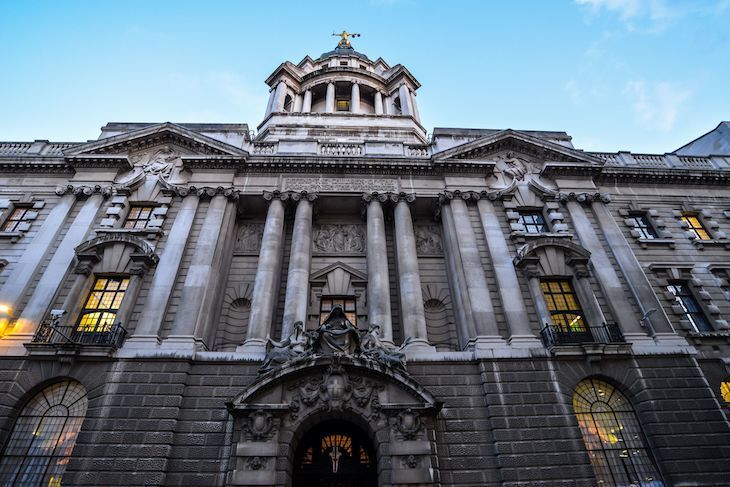
Central Criminal Court or ‘Old Bailey’
Old Bailey
Another nickname, its official title is The Central Criminal Court of England and Wales. Check out some more Old Bailey secrets here.
Petticoat Lane
The East End market has traded on land east of Bishopsgate since time immemorial. The main thoroughfare through the market was known as Petticoat Lane until around 1830, when it was changed to its present name of Middlesex Street. A newspaper commentator in 1845 noted «Although Middlesex Street is painted on the walls on each side of the lane, ‘Petticoat Lane’ it is still called and is likely ever to be so.» Eight generations later, and he hasn’t been proved wrong.
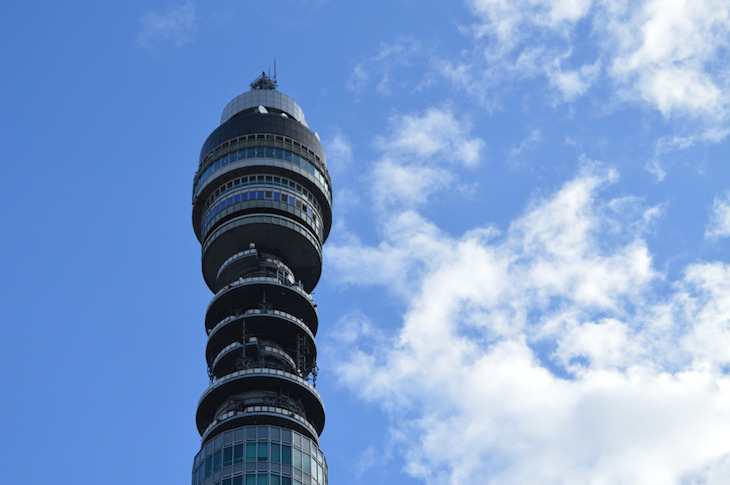
The BT/Post Office/Telecom Tower
Post Office Tower
You can tell a person’s age by how they describe the massive telecoms tower in Fitzrovia. Under 40, and they’ll probably call it the BT Tower — its modern official name. Older Londoners will plump for the Telecom Tower or Post Office Tower or even the GPO Tower. These are all crap names. It’s about time that the tallest building in the West End got a proper epithet. We’re proposing the Low Tower. It’s deliciously self-contradictory but also remembers Archibald Low, the forgotten pioneer of TV (and drones, and Strictly Come Dancing).
St Pancreas
Obviously, it’s St Pancras.
The Strand
Because, technically, it’s just Strand. Only weirdos like us insist on pointing this out.
toe
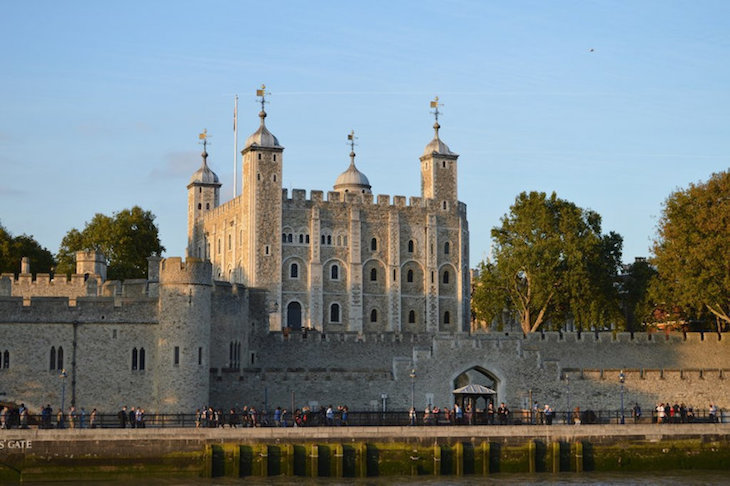
The Tower of London needs no introduction. Or does it?
Tower of London
So it is known to just about everyone. Yet the stronghold’s official name is Her Majesty’s Royal Palace and Fortress of the Tower of London. And they’re yeoman warders, not beefeaters!
Westminster Abbey
This great ecclesiastical building is formally known as the Collegiate Church of St Peter at Westminster. That’s because it’s not an abbey. England hasn’t had abbeys since Henry VIII gobbled them all up nearly 500 years ago. Come to think of it, the name Westminster Abbey is also tautological. The ‘Westminster’ bit is a reference to the ‘minster to the west of London’… that is, Westminster Abbey.
As a symbol of our city, the red double-decker is up there with Big Ben and Tower Bridge. But did you ever wonder why the colour was chosen?
One theory holds that early prototypes were painted red as a warning to other drivers — as though to say ‘keep your distance; this thing’s experimental’. These German test vehicles were known as ‘Rotmeisters’ (translates as red master [vehicles]), a name corrupted to Routemasters by the British public when the buses were put into active service without a colour change.
It’s an intriguing theory. Unfortunately, we just made it up, and the truth is more prosaic.
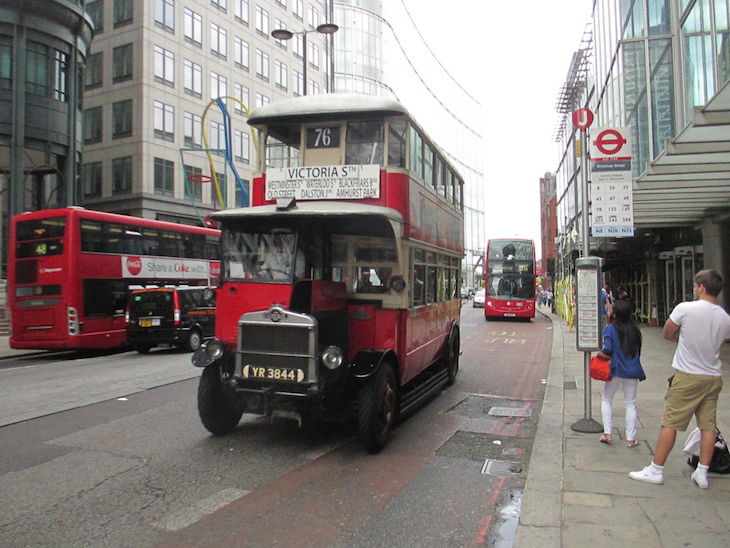
A 1920s bus, recently spotted by the author on Bishopsgate. Then, as now, a stately red.
You have to go back to 1907, when most buses were still horse-drawn, to witness the crimson dawn.
Before that time, buses came in all manner of shades, with rival companies operating different routes. In 1907, the London General Omnibus Company rouged-up its entire fleet in an effort to stand out from the competition.
The LGOC soon became the largest bus company, and its livery came to dominate the streets. When London Transport formed in 1933, it extended the convention to most (though not all) London buses, a decision whose effects remain with us today.
What’s the shade?
A quick glance through Transport for London’s colour standards guide reveals that buses under its purview should be coloured in Pantone 485 C (which corresponds to RGB 218, 41, 28; see here).
This popular hue is also used on the tube roundel and Central line, as well as by Royal Mail, Kit Kat, McDonald’s and the Russian flag.
Actually, London buses aren’t all that red
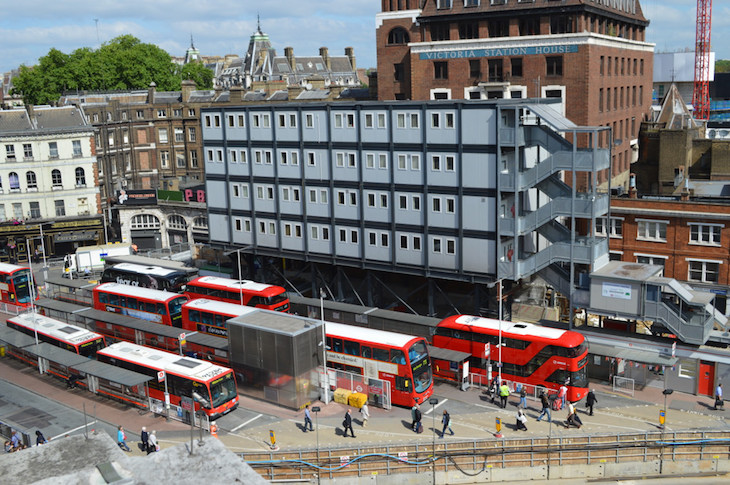
But there’s a snag. The surfaces of London buses are mostly not red. This becomes clear when seen from above. Here’s a view we somehow managed to get from Victoria station.
As you can see, bus roofs are largely white, to reflect sunlight and thereby reduce heating in summer. We’ve never checked, but we’d be willing to bet that their underbellies aren’t red, either.
Now subtract the area taken up by the windows and adverts — the latter can encanker the whole backside of a bus. We’d guess that the typical vehicle is only 30-40% red.
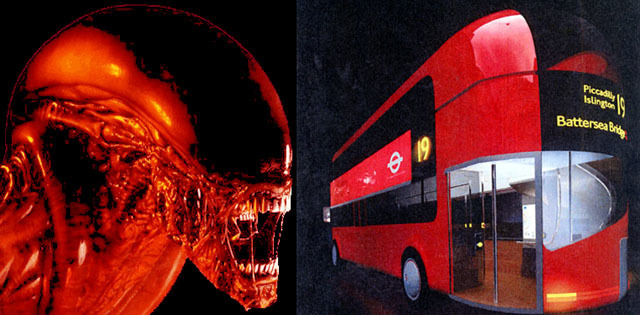
New Routemasters, like the one leading the pack in our photo, are decidedly more crimson than their stablemates. Seen from behind, they also look a lot like the alien from Alien, though that’s neither here nor there.
Finally, we have to acknowledge those buses that get the all-over, wrap-around advertising. You can see a black example, lurking at the back of the Victoria image above.
At any given time, a small percentage of London’s buses don’t feature any red at all.
This symbol of our city is in danger of disappearing. The London red bus might actually be a red herring.
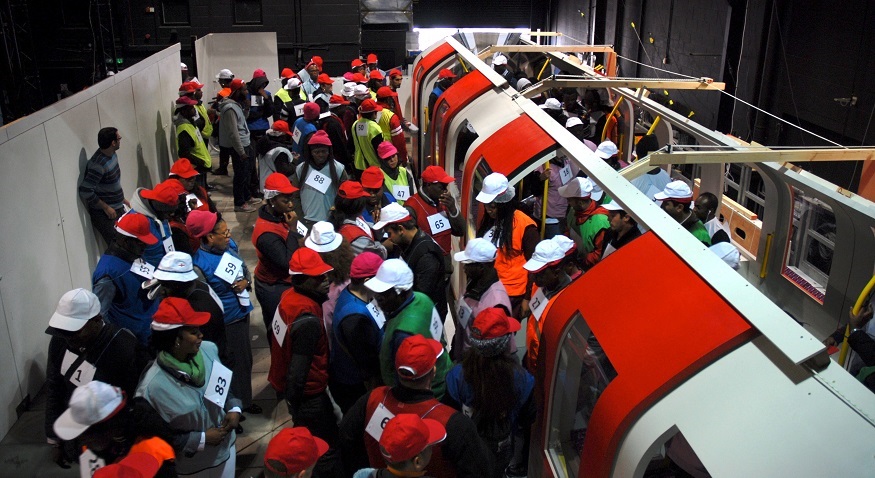
Cramming onto a tube train, not going anywhere, getting off again, and doing the whole thing over, might sound like just another bad day on the Northern Line. But that’s one of the science experiments at University College London’s PAMELA Lab.
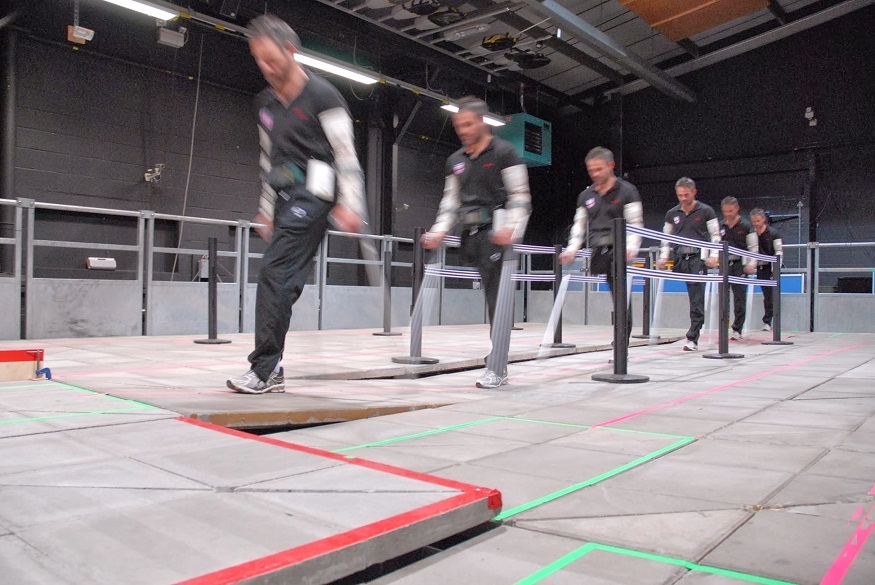
PAMELA, short for Pedestrian Accessibility Movement Environment Laboratory, is in a shed in an industrial estate in Tufnell Park. Inside, the walls are painted black, street lights hang from the ceiling and students, researchers and volunteers mingle, with eye trackers, brain monitors, circuit boards and cups of tea. The research happens on a big concrete platform that can be adjusted to create different surfaces and conditions to test how people move.
Tube tests
The PAMELA team work with TfL to test new designs for train carriages and platforms. Dr Catherine Holloway, director of the lab, tells us about a recent experiment to measure the effect of platform edge doors on how quickly people can get on and off a tube carriage. Platform edge doors are used on the Jubilee Line (and soon Crossrail), providing a barrier between the platform and the track. Catherine explains «the doors improve safety but increase heat in the tunnels, which means that components of the track, signalling and trains wear out faster». TfL also wanted to know if they have an impact on people getting on and off the trains, and the PAMELA experiments showed that overall the extra doors have no significant impact.
Assisting people
Extra doors on tube platforms might not make much difference, but moving around London can be difficult if you are in a wheelchair, on crutches, sight impaired or suffering from dementia. Testing new designs and developing new technologies to help people with disabilities is what excites engineer Catherine the most.
Testing the effect of different surfaces on people using crutches.
«We have equipment here to measure brain function, eye movement, and full biomechanics of people moving through different environments», says Catherine. «We can test assistive technologies here in ways that are just not possible in the outside world». For instance, PhD student Chinemelu Ezeh, is researching head controlled wheelchairs. Chi is hacking new controls into motorised wheelchairs, then measuring how well they work and what impacts they have on users’ bodies.
PAMELA researchers are also working with neuroscientists to get a better understanding of how people with dementia see their environment and move around. Mr Brown is a research participant with a form of dementia that has reduced his ability to understand the objects that he sees. He can see a chair, and tell you that he is looking for a place to sit, but his brain can’t put the two together. Working with experts in dementia, PAMELA researchers design experiments to find out how Mr Brown sees the world, and test interventions that might help him. «Perhaps Mr Brown would know where to sit if we put a flashing light or a label on the chair,» Catherine says. «In our lab we can safely test things that might help Mr Brown and others suffering from his condition».
Science bus
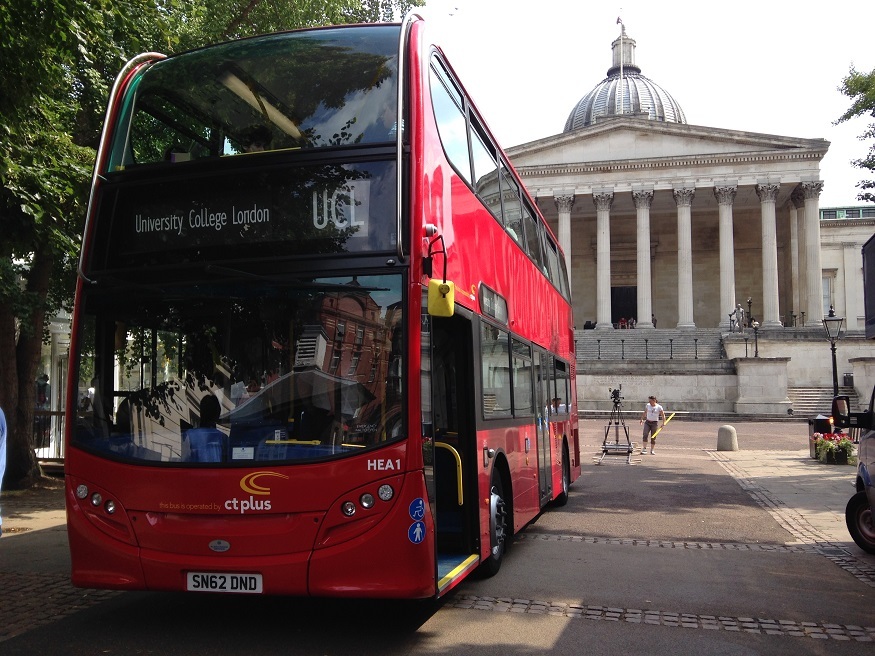
Because no London lab is complete without one, PAMELA has its own bus.
Destination — Science. The bus that is also a laboratory.
The PAMELA bus is full of instruments to measure the forces and movements of passengers getting on and off, and travelling on London buses. The bus is the focus of a collaborative project led by PAMELA artist in residence Zoe Schoenherr. Zoe is working with a visually-impaired dancer and five other artists to turn the bus into an art installation, exploring tactile experiences of places and things. Zoe’s work will be ready for a public performance and exhibition at PAMELA in September and October.
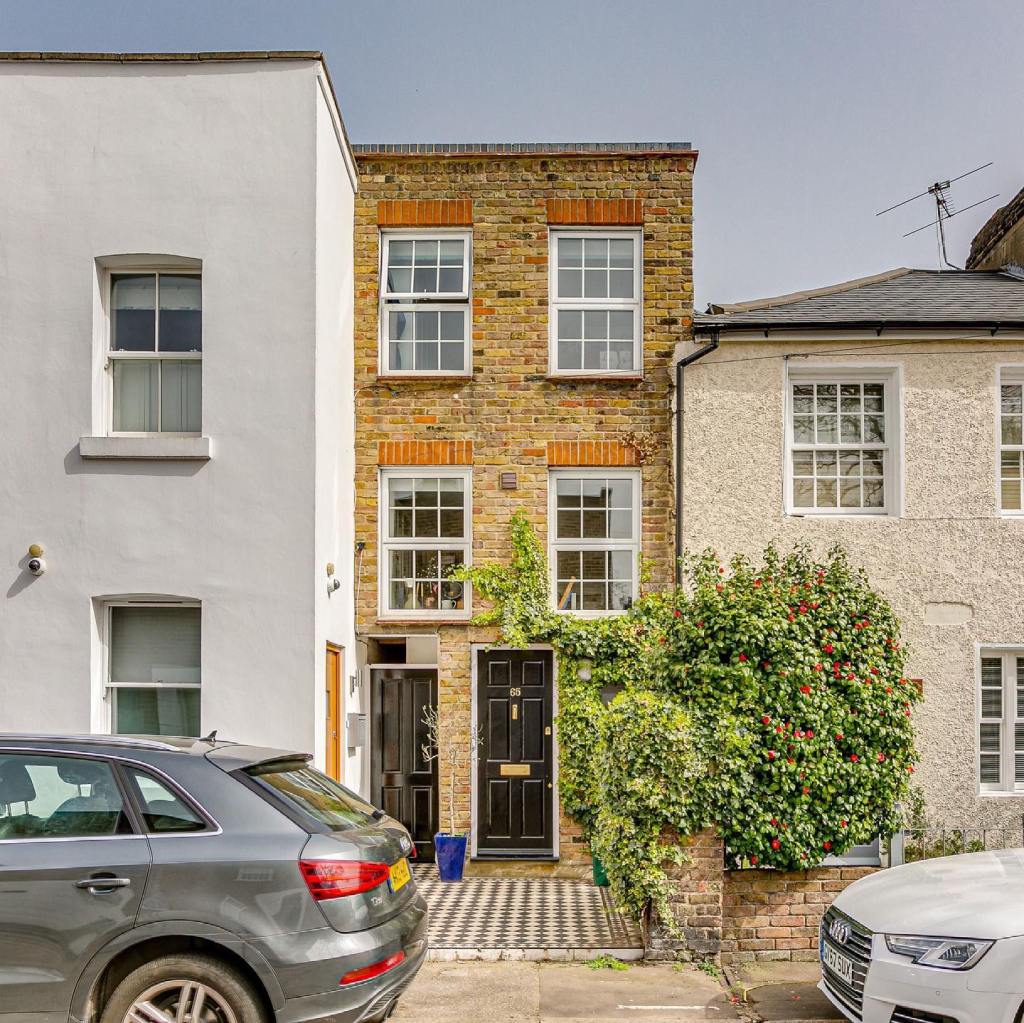
This super skinny London home is narrower than a double-decker bus! It’s described by estate agents as a ‘cool’ space which ‘oozes charm and character’.











 London visitor