
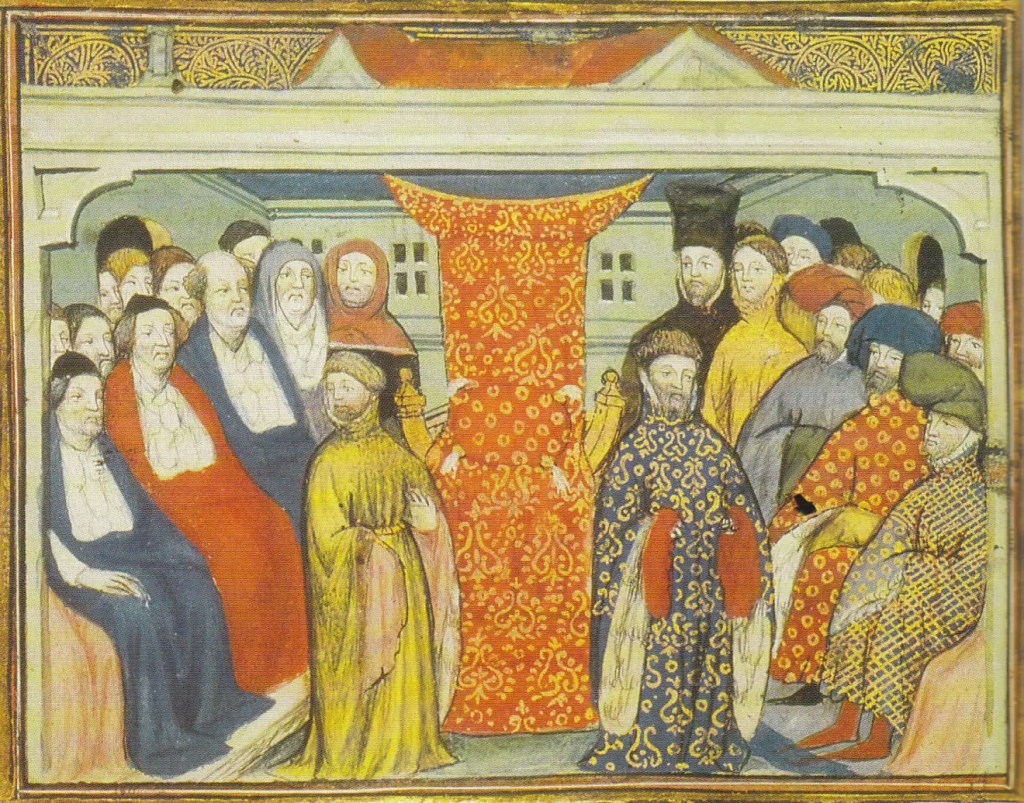
Henry IV is one of the most intriguing figures in English history. Born in 1367, he was the son of John of Gaunt, the Duke of Lancaster, and his wife, Blanche of Lancaster. He grew up in a time of great turbulence in England, with the Hundred Years War raging on the continent and the Black Death devastating the country.
Key Facts about Henry IV
- Henry IV was born in 1367, as the son of John of Gaunt, the Duke of Lancaster, and his wife, Blanche of Lancaster.
- He became the King of England in 1399, after deposing his cousin Richard II in a coup.
- Henry IV passed the Statute of Prerogative, which limited the king’s power and gave more authority to Parliament, laying the foundation for the constitutional monarchy that exists in England today.
- He faced many challenges during his reign, including the rebellion led by the Welshman Owain Glyndŵr and the ongoing Hundred Years War with France.
- Despite these challenges, Henry IV was generally successful in maintaining his grip on power and promoting justice and fairness.
Henry’s father, John of Gaunt, was one of the most powerful men in England, but his legitimacy was always in question. John of Gaunt’s parents were Edward III of England and his wife, Philippa of Hainault. There were some doubts about John of Gaunt’s legitimacy due to rumors about Edward III’s affair with a woman named Alice Perrers. In any case, John of Gaunt was never able to claim the throne for himself, and his son Henry was only able to do so after a series of dramatic events.
Henry IV came to the throne in 1399 after deposing his cousin Richard II in a coup. Richard had been a weak and unpopular king, and Henry was able to win the support of the nobility and the common people by promising to rule with justice and fairness. He was crowned on October 13, 1399, and set about consolidating his power.
One of the most important things Henry did during his reign was to pass the Statute of Prerogative, which limited the king’s power and gave more authority to Parliament. This was a significant step towards modern democracy, and it laid the foundation for the constitutional monarchy that exists in England today.
Henry also faced many challenges during his reign. The most significant of these was the rebellion led by the Welshman Owain Glyndŵr, which began in 1400 and lasted for over a decade. Glyndŵr was able to gain the support of many Welsh nobles and commoners, and his forces were able to inflict several defeats on the English army. However, Henry was ultimately able to suppress the rebellion, and Glyndŵr disappeared into obscurity.
Despite these challenges, Henry IV was generally successful in maintaining his grip on power. He was able to win the support of the nobility by granting them lands and titles, and he was popular with the common people for his efforts to promote justice and fairness. He was also successful in promoting trade and commerce, which helped to stimulate the economy.
Henry IV died in 1413, at the age of 46. He was succeeded by his son, Henry V, who would go on to become one of England’s most celebrated monarchs. Although Henry IV’s reign was relatively short and marked by many challenges, he was an important figure in English history. His efforts to limit the power of the monarchy and promote justice and fairness laid the foundation for the modern democratic state, and his successes in promoting trade and commerce helped to lay the foundation for England’s economic prosperity.
Henry IV was a complex figure who faced many challenges during his reign. He was able to consolidate his power and win the support of both the nobility and the common people, and he made significant contributions to the development of modern democracy and the economy. Although his reign was marked by many challenges and struggles, he remains an important figure in English history, and his legacy continues to be felt to this day.
Movies and TV Shows Featuring
- Almost two hundred years after his death, Henry became the subject of two plays by William Shakespeare, Henry IV, Part 1 and Henry IV, Part 2, as well as featuring prominently in Richard II.
- Ian Keith in The Black Shield of Falworth (1954), with Tony Curtis
- John Gielgud in Chimes at Midnight (1965), a merger of several Shakespeare plays
- Carl Wharton in Henry IV – Part 2 (2012), a film by The Co-operative British Youth Film Academy.
- Ben Mendelsohn in The King (2019), a film by Netflix
- The Hollow Crown (BBC)
- Numerous BBC dramas and plays
Locations Related to Henry IV
- Bolingbroke Castle: This was the birthplace of Henry IV and he lived here for some time before becoming the King of England.
- Coventry: The city was a significant location during the Peasants’ Revolt of 1381 and also played a significant role in the rebellion led by Owain Glyndŵr in the early 15th century.
- Wales: Henry IV faced a rebellion led by Welshman Owain Glyndŵr, which lasted for over a decade and was a significant challenge to his reign.
- France: The Hundred Years War with France was ongoing during Henry IV’s reign, and he was able to win several significant victories against the French.
- London: As the capital city of England, London was the center of political and economic power during Henry IV’s reign, and he spent much of his time there.
- York: The city played a significant role in the rebellion led by the Archbishop of York, which challenged Henry’s authority in the early years of his reign.
- East Anglia: This region was one of the most prosperous areas of England during Henry IV’s reign, and he made efforts to promote trade and commerce there.
- Scotland: Henry IV faced several challenges from Scotland during his reign, including a rebellion led by the Earl of Northumberland in 1402.
- Kenilworth Castle: The castle was a significant location during the rebellion led by Owain Glyndŵr, and it was besieged by Welsh forces in 1403.
- Canterbury: The city was a significant location during the Peasants’ Revolt of 1381 and was also the site of several important events during Henry IV’s reign, including the coronation of his son, Henry V.
 London visitor