
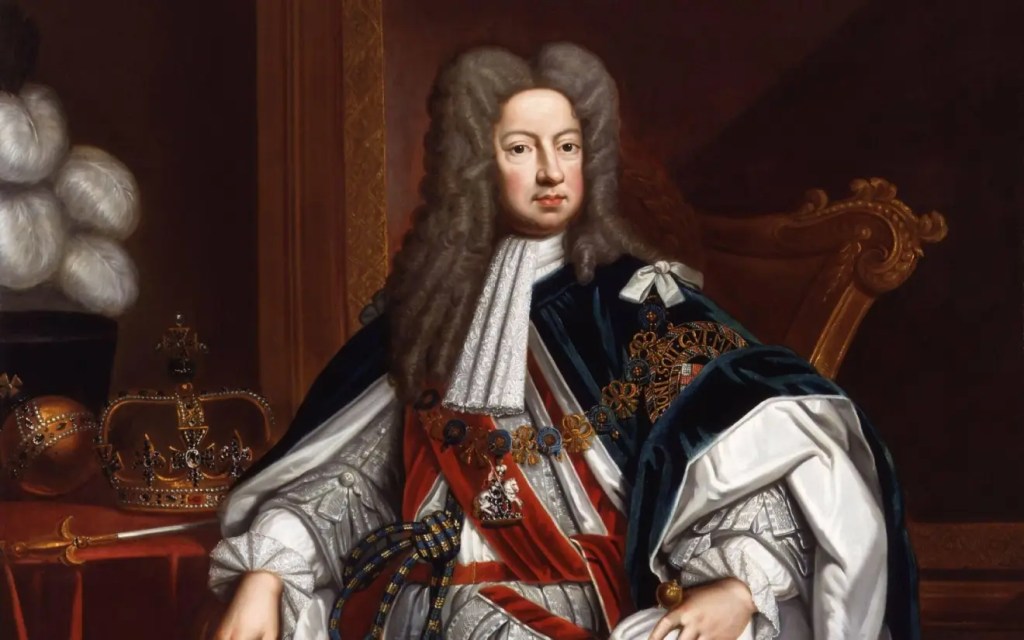
King George I was the first of the Hanoverian monarchs who ruled over Britain from 1714 to 1727. He was born in Hanover, Germany, on May 28, 1660, and was the eldest son of Ernest Augustus, Elector of Hanover, and Sophia of the Palatinate. It marked the beginning of the Georgian era in Britain, which would have lasting effects on Britain, its role in the world, and eventually implications for the American colonies. In this article, we will take a closer look at the life, reign, and legacy of this significant historical figure.
Key Facts
- George I was not born in Great Britain, but in Hanover, Germany, and he was the first monarch of the House of Hanover to rule over Britain.
- He was not fluent in English when he arrived in Britain, and he relied heavily on his ministers to conduct state affairs.
- George I was not particularly interested in British politics and preferred to spend his time in Hanover, where he was still the Elector.
- During his reign, the Whig political party emerged as the dominant force in British politics, and the Tories lost much of their influence.
- George I’s reign saw the emergence of the British Empire as a major global power, laying the groundwork for the growth of British influence in the Americas, Africa, and Asia.
Early Life and Career
As a young man, George I served in the army of the Holy Roman Empire and fought in the War of the Spanish Succession. He was not originally in line to inherit the throne of Great Britain, but after Queen Anne died childless, the Act of Settlement 1701 established him as the next in line.
George I arrived in London on September 18, 1714, and was crowned king on October 20 of that year. However, he was not particularly interested in British politics and was more focused on his responsibilities as Elector of Hanover. As a result, he left much of the decision-making in England to his ministers.
Reign
One of the most significant events of George I’s reign was the Jacobite Rising of 1715, which was an attempt to overthrow him and put James Stuart, the son of James II, back on the throne. The rebellion was ultimately unsuccessful, but it did highlight the ongoing tensions between the supporters of the Stuarts and the Hanoverians.
Another important development during the reign of George I was the emergence of the Whig political party as the dominant force in British politics. The Whigs were generally more supportive of the monarchy and more tolerant of religious dissent than their Tory counterparts, which made them the natural allies of the Hanoverians.
In terms of foreign policy, George I was primarily concerned with maintaining peace in Europe. He supported the Quadruple Alliance, which was a coalition of Britain, France, Austria, and the Netherlands that sought to maintain the balance of power on the continent.
Legacy
Although George I was not a particularly popular or influential monarch, his reign did have some significant long-term effects on British politics and society. Perhaps the most notable of these was the emergence of a two-party system, with the Whigs and Tories vying for power in Parliament.
Additionally, the Hanoverian succession helped to solidify the Protestant character of the British monarchy and the British state. This was particularly important given the ongoing tensions between Protestants and Catholics in Europe at the time.
George I’s reign also saw the emergence of the British Empire as a major global power. Although he was not directly involved in many of the early colonial ventures, his support for the Whigs and their pro-imperial policies helped to lay the groundwork for the growth of British influence in the Americas, Africa, and Asia.
King George I was an important historical figure who played a significant role in the development of Britain and Europe during the early 18th century. Although he was not a particularly charismatic or influential monarch, his reign saw the emergence of a new political order and helped to lay the groundwork for the growth of the British Empire. Despite his relative lack of popularity, his legacy continues to be felt in Britain and around the world to this day. One could say his most important legacy was his son and grandson, who became George II and George III, respectively, one of the longest reigns in British history.
Movies and TV Shows Featuring George I
On screen, George I of Great Britain has been portrayed by Peter Bull in the 1948 film Saraband for Dead Lovers, Eric Pohlmann in the 1953 film Rob Roy, the Highland Rogue, Otto Waldis in the 1954 film The Iron Glove, and Steve Plytas in an episode of the Granada Television series Rogues’ Gallery entitled “A Bed-Full of Miracles” (1969). George was also featured in the book Isle of Fire by Wayne Thomas Batson.
Further Research
- George I: The Lucky King by Tim Blanning
- King George I by Ragnhild Hatton
- The Hanoverians: The History of a Dynasty by Jeremy Black
- George I: Elector and King by R. H. Nichols
- The First Georgians: The Kings Who Made Britain by Lucy Worsley
- George I: The German Connection by Michael De-la-Noy
- George I: The English Monarch by Stephen Taylor
- The Reign of George I, 1714-1727 by Basil Williams
- George I: The Forgotten Monarch by Gerard Kilroy
- Hanover and the British Empire, 1700-1837 by Brendan Simms.
Locations Related to George I
- Hanover, Germany – George I was born here in 1660 and spent much of his life as Elector of Hanover before becoming King of Great Britain.
- London, England – George I arrived in London in 1714 and was crowned king later that year. He spent much of his time in England as king.
- Oxfordshire, England – In 1716, George I visited Oxfordshire and stayed at the palace of Woodstock.
- Scotland – The Jacobite Rising of 1715 was centered in Scotland and was an attempt to overthrow George I and restore the Stuart dynasty to the throne.
- The Netherlands – George I was a supporter of the Quadruple Alliance, which was a coalition of Britain, France, Austria, and the Netherlands that sought to maintain the balance of power in Europe.
 London visitor