
Editor’s Note: This marks the beginning of a new series of articles on England’s Monarchs through history. Our goal is to have an article about every single one. We have just over half done so far.
Henry III was one of the longest-reigning monarchs in English history, reigning from 1216 to 1272. His rule was marked by political turmoil, religious conflict, and economic hardship, but it also saw significant cultural and artistic achievements. Henry III was known for his patronage of the arts, particularly architecture, and he oversaw the construction of several notable buildings, including Westminster Abbey and the rebuilt Westminster Palace. Despite his many accomplishments, Henry III’s reign was also marked by challenges to his authority, including a series of baronial rebellions that threatened to undermine his rule and reshape English governance.
Key Facts about Henry III
- Henry III was only nine years old when he became king of England in 1216, following the death of his father, King John.
- He was the first English king to use the title “Dominus Hiberniae” (Lord of Ireland), which was granted to him by the Pope in 1254.
- Henry III was a devout Christian and made several pilgrimages to holy sites throughout his reign, including to Santiago de Compostela in Spain.
- He was a prolific builder, and his patronage of architecture led to the construction of many significant buildings, including the famous Westminster Abbey.
- Henry III’s reign saw the first use of the term “parliament” to refer to the English council of nobles and clergy who advised the king.
A Brief Look at the Life of Henry III
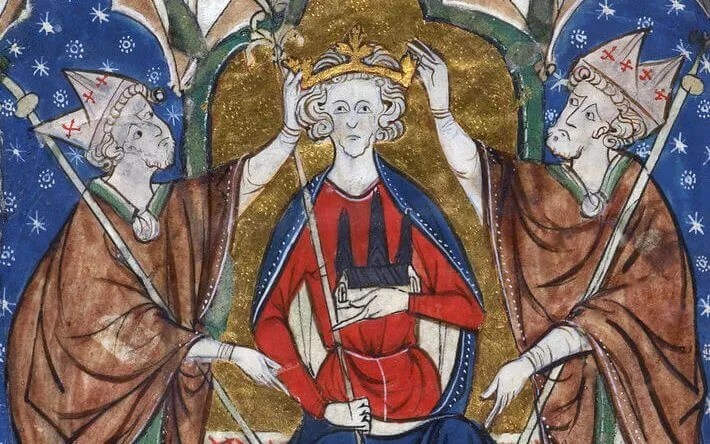
Henry III was born on October 1, 1207, in Winchester, England, to King John and Isabella of Angouleme. His father’s reign had been marked by political turmoil, including a conflict with the English barons that led to the signing of the Magna Carta in 1215. Following King John’s death in October 1216, nine-year-old Henry III was crowned king of England.
During the early years of his reign, Henry III faced a series of challenges to his authority. One of the most significant of these was the threat of invasion by Prince Louis of France, who had been invited to England by the rebellious barons. In 1217, however, the English forces, led by William Marshal, defeated the French at the Battle of Lincoln, securing Henry III’s position as king.
For much of his reign, Henry III struggled to maintain control over his realm, particularly in the face of the powerful barons who held significant political and military power. In 1258, a group of barons led by Simon de Montfort formed a council that effectively governed England for the next two years. This period, known as the “Provisions of Oxford,” saw significant reforms to English governance, including the establishment of a council of nobles and clergy that would advise the king.
However, Henry III’s reign was not entirely marked by political turmoil. He was a devout Christian and made several pilgrimages to holy sites throughout his reign, including to Santiago de Compostela in Spain. He was also a prolific builder, and his patronage of architecture led to the construction of many significant buildings, including the famous Westminster Abbey.
One of Henry III’s most significant achievements was his patronage of the arts, particularly architecture. He oversaw the construction of several notable buildings, including Westminster Abbey and the rebuilt Westminster Palace. He was also a significant patron of the arts; commissioning works from some of the most prominent medieval artists of his time.
Henry III’s reign saw the first use of the term “parliament” to refer to the English council of nobles and clergy who advised the king. While the precise origins of the English parliament are unclear, it is generally agreed that it evolved from the council of advisors that surrounded the king.
One of the key figures of Henry III’s reign was Simon de Montfort, who led the baronial rebellion that challenged the king’s authority in the mid-13th century. De Montfort was a formidable military leader and a skilled politician, and his rebellion led to significant changes in English governance. However, he was eventually defeated by the king’s forces at the Battle of Evesham in 1265.
Another key figure of Henry III’s reign was William Marshal, who played a significant role in securing the young king’s position following his father’s death. Marshal was a skilled military leader and a trusted advisor to the king, and he played a key role in several of the major conflicts of the early years of Henry III’s reign.
Overall, Henry III’s reign was marked by both significant achievements and significant challenges. His patronage of the arts and architecture left a lasting legacy, while his struggles to maintain control over his realm highlighted the complex political landscape of medieval England. Despite the challenges he faced, however, Henry III’s reign played a significant role in shaping the history of England and its monarchy.
Legacy of Henry III
Henry III’s reign was marked by both significant achievements and challenges. His patronage of the arts and architecture left a lasting legacy that you can still see in England’s built landscape, while his struggles to maintain control over his realm highlighted the complex political landscape of medieval England. His rule also saw the first use of the term “parliament” to refer to the English council of nobles and clergy who advised the king. Although Henry III faced many challenges to his authority, his reign laid the foundation for the development of the English monarchy and the growth of parliamentary governance in the centuries to come. His reign also saw significant cultural and artistic achievements, which helped to shape the identity of England as a nation and a center of European culture.
Cultural Depictions of Henry III
Henry is a character in Purgatorio, the second part of Dante’s Divine Comedy, which was completed in 1320. In the book, the King is portrayed sitting alone in purgatory, separated from other failed rulers such as Rudolf I of Germany, Ottokar II of Bohemia, Philip III of France, Henry I of Navarre, as well as Charles I of Naples and Peter III of Aragon. It is unclear why Dante depicted Henry sitting separately, but it could be a reference to England not being part of the Holy Roman Empire. Another possibility is that Dante had a favorable opinion of Henry, due to his unusual piety. In the same work, Canto VII. 132, Dante also salutes Henry’s son, Edward.
In William Shakespeare’s play King John, Henry appears as a minor character referred to as Prince Henry. However, in modern popular culture, Henry has a minimal presence and has not been a prominent subject of films, theatre, or television. Several historical novels feature him as a character, including Longsword, Earl of Salisbury: An Historical Romance (1762) by Thomas Leland, The Red Saint (1909) by Warwick Deeping, The Outlaw of Torn (1927) by Edgar Rice Burroughs, The De Montfort Legacy (1973) by Pamela Bennetts, The Queen from Provence (1979) by Jean Plaidy, The Marriage of Meggotta (1979) by Edith Pargeter, and Falls the Shadow (1988) by Sharon Kay Penman.
Further Research
- Henry III: The Rise to Power and Personal Rule, 1207-1258 (Volume 1) (The English Monarchs Series)
- Henry III: Reform, Rebellion, Civil War, Settlement, 1259-1272 (Volume 2) (The English Monarchs Series)
- Henry III Paperback by Darren Baker
- Henry III (Penguin Monarchs): A Simple and God-Fearing King by Stephen Church
Locations Related to Henry III
- Born at Winchester Castle
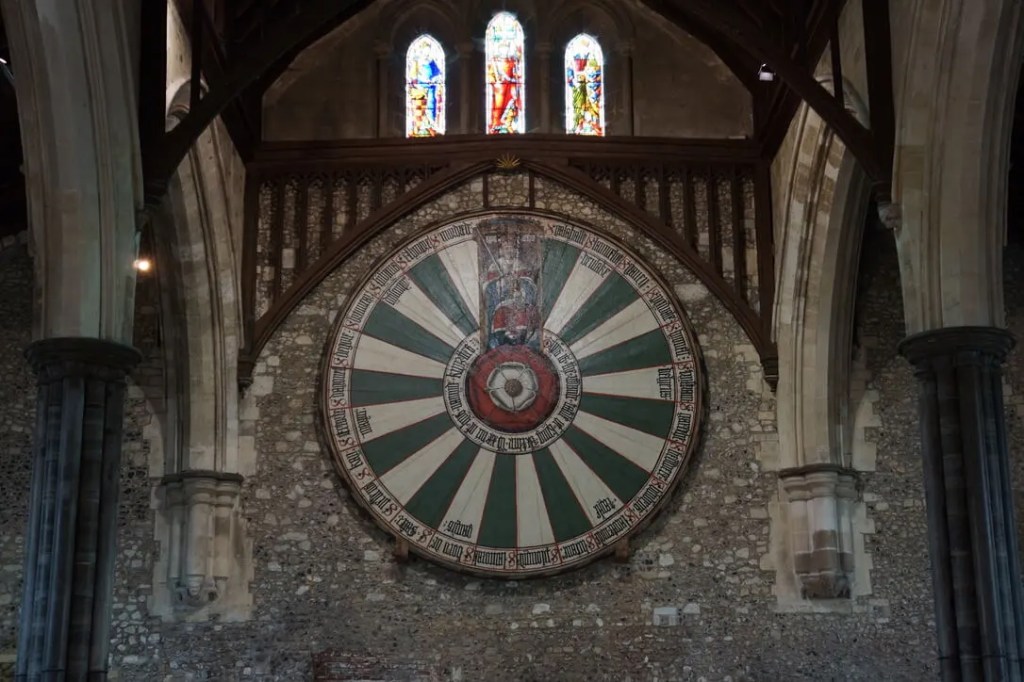
- The Great Hall at Winchester Castle (built by Henry)
- Crowned in Gloucester Cathedral (with a second coronation at Westminster Abbey later)
- Buried in Westminster Abbey
 London visitor