
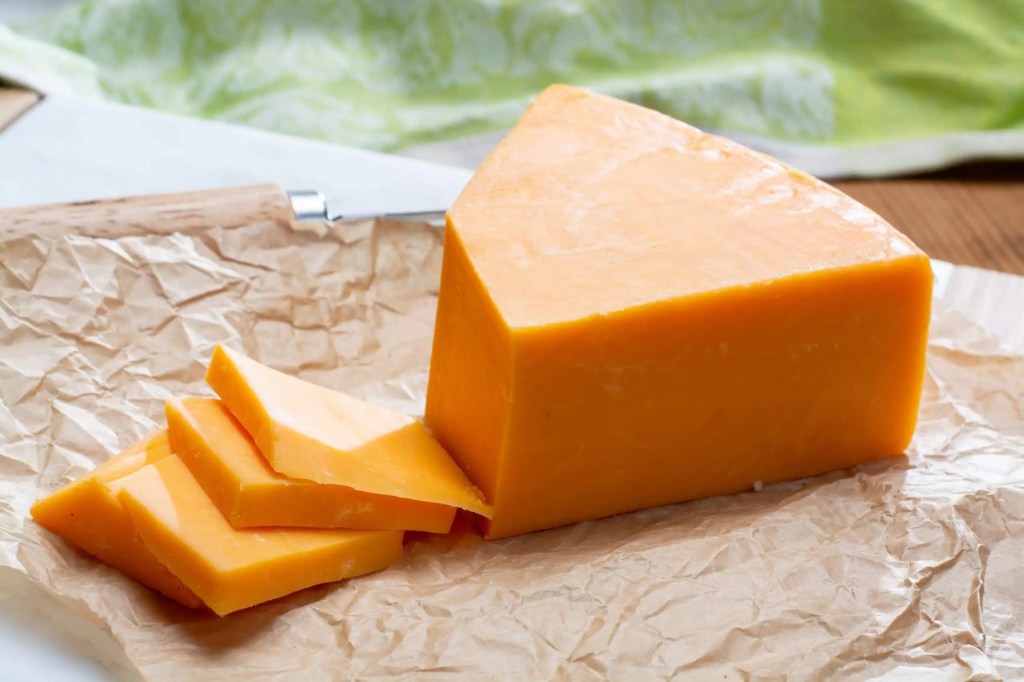
As much as tea and beer, one of the most prominent food exports in the United Kingdom is cheese. Cheese is as much a cultural icon in Britain as anything and there are over 700 different kinds of cheese made throughout the country. Each region tends to have its own variety and whether it’s a soft cheese, hard cheese, or even smelly cheese, there is a type of cheese for everyone. Some you might already be familiar with such as the ever-popular cheddar or Wallace and Gromit’s favorite Wensleydale, but with so many to choose from, we have identified ten types of British cheese we think is worth a taste.
Cheddar
You might not know that one of the most popular cheeses in the world shares its name with the town that invented it. Cheddar has been produced in the village as early as the 12th Century and was standardized in the 19th Century by Joesph Harding. Harding and his family introduced cheddar to Scotland and North America, helping to increase its spread across the globe. Cheddar also has plenty of variety from off-white in color to orange-ish, and can vary in its sharp taste.
Stinking Bishop
Stinking Bishop is unquestionably the youngest cheese on this list, having only been first produced in 1972 by Charles Martell. Martell bought up as many of the surviving Gloucester cows as he could and began producing the cheese from their milk. Its color ranges from white-yellow to beige with an orange to grey rind, and it gets its name from being washed in perry made from the local Stinking Bishop pear. As with Wensleydale, much of its popularity is owed to the animated franchise Wallace and Gromit, where the cheese made an appearance in the feature film The Curse of the Were-Rabbit.
Cheshire
Originating in the county of Cheshire, Cheshire cheese can also be found in Denbighshire and Flintshire in Wales, as well as in Shropshire and Staffordshire counties in England. Its texture is very hard and crumbly and can come in red and blue varieties. It is also one of the oldest cheeses in the United Kingdom, first mentioned as far back as the 1580 book Health’s Improvement.
Stilton
Stilton is one of the youngest on this list, having only been first created in the 18th Century. Stilton cheese is crumbly but gets creamier as it ages. It also comes in two varieties, White and Blue, the latter of which has Penicillium roquefortiadded to it to give the cheese a distinctive color, smell, and taste. Unlike Cheddar, Stilton cheese has Protected Designation of Origin status, and any cheese calling itself Stilton must be from Derbyshire, Leicestershire, or Nottinghamshire.
Wensleydale
French Cistercian monks began making this cheese after they moved to Wensleydale in Yorkshire in the 11th Century. Hailing from the Roquefort region, the monks brought with them their recipe for making cheese from ewe’s milk, but it’s the meadows of Wensleydale that give the cheese its particular flavor and a slightly honey aroma. By the 1990s, the popularity of the cheese declined to levels that threatened the Wensleydale Creamery’s business, but animated inventor Wallace claiming it as his favorite in the short “A Close Shave” helped reverse this cheese’s fortunes.
Ticklemore
While most cheeses on this list are made from cow’s milk, Ticklemore is actually made using goat’s milk instead. However, if you don’t like goat’s milk, you can take comfort in the fact that the cheese does not share much of a “goaty” taste and instead derives flavors from lemon and herbaceous plants. The cheese has an ivory color and hails from Sharpham.
Cornish Blue
The first cheese from Cornwall on this list, Cornish Blue is a milder blue cheese than other varieties found in the United Kingdom and softer than its contemporaries. The cheese comes from the Stansfield family farm on the edge of the Bodmin Moor. Its profile makes it perfect for someone who wants to try blue cheese but doesn’t like a strong flavor.
Red Leicester
Similar in color and make to cheddar, Red Leicester is much crumblier than its cousin and gets its color from annatto extract. The cheese originated on Leicester farms with whatever milk was leftover from making Stilton, then colored with beetroot or carrot juice. Originally known as Leicestershire Cheese, the name changed in the 1940s when White Leicester was introduced as a wartime recipe.
Double Gloucester
Double Gloucester has been around since the 16th Century when it was first made as Gloucester cheese from Gloucester cows. Its name comes from the mixing of morning and evening milk, though varieties of double Gloucester will also include other ingredients to produce different flavors. It was traditionally made in a large wheel with a thick rind to be part of cheese rolling ceremonies for the preservation of grazing rights, a ceremony that’s still carried out in Gloucester today, though more for fun than for any legal significance.
Cornish Yarg
As the name would suggest, this is a cheese that originates from Cornwall and can be semi-hard. The recipe dates back to the 16th Century but was brought back to public consciousness by Alan and Jenny Gray in the 1980s (Yarg being “Gray” spelled backwards). It’s wrapped in nettle leaves which help the exterior keep a creamy texture while the innermost part of the cheese block will be crumbly.
 London visitor