
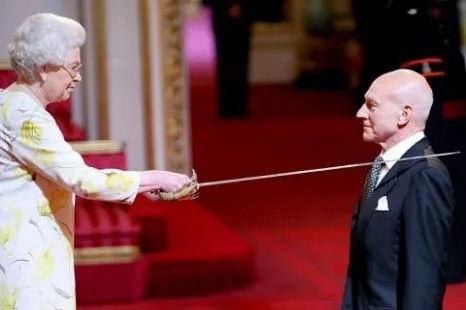
It is a dream for many Brits to one day be called “Sir” or “Dame” when they receive a knighthood from the Sovereign. In the past, we have covered the various orders of chivalry that make up the honors but have not covered the process from beginning to end. Even the process can have many routes as there are several different times at which individuals can be nominated to receive an honor. Join us as we cover the times and means by which British citizens can find themselves receiving knighthood from the King.
The process starts with a nomination for an honors list, which can happen at multiple times in a given year. The most common are the Birthday and New Year’s Honours, the former taking place on the Sovereign’s Official Birthday (as opposed to their actual birthday, which is a different time of the year). As it sounds, the New Year’s Honours are awarded around New Year’s Day every year. A less-common time for honors is the Prime Minister’s Resignation Honours when the Prime Minister ominates individuals for honors prior to leaving office (there have been more than the usual number of those lately…). Other opportunities include Special Honours, which can happen at any point in the year, Demise Honours at the death of a monarch or consort, and Coronation Honours.
For Birthday or New Year’s Honours, virtually anyone in the United Kingdom or the Commonwealth can nominate anyone else whom they feel has contributed to either. However, it should be noted that the individual will need to meet the requirements of the award for which they are nominated (and you can’t nominate yourself). The Cabinet Office oversees the process, and it is to that office that members of the public submit applications for their nominees. If the applicant has done their service overseas, the Foreign Office takes those applications. Applications should include what the person has done and how they have made a difference, with detailed examples of what they have done. Nominations also require a minimum of two letters of support, though more can be helpful to the nominee.
The Cabinet Office or Foreign Office will inform the applicant by mail when the application has been received. The offices then begin going over the application materials to verify qualifications and the nominee’s work. This process can take anywhere from 18 months to 2 years, so it is not uncommon to wait quite some time for a response. The Cabinet Office informs applicants not to resubmit their nominee until they hear back about the status of the application, or else the newer application will be rejected. Nominations are then divided into their various subject areas and assessed by independent experts and senior civil servants. The committees come up with their lists independent of the government and pass them on to the Prime Minister, who in turn makes recommendations to the monarch.
The Sovereign then informally approves the list since the truth is that the Prime Minister has already approved the list. The monarch’s approval is little more than a formality of their office. The list is formally approved after each nominee accepts or turns down the honor. The London Gazette, the official Crown newspaper, then publishes the full list twice per year—once for the New Year’s Honours and again for the Birthday Honours. The Central Chancery of the Orders of Knighthood makes the preparations for the investitures at St. James’s Palace, including setting the dates for the awards and determining which member of the Royal Family will present the honor.
One last thing to mention is that honors can, and sometimes are, taken away. The Honours Forfeiture Committee looks at a potential forfeiture candidate to see if their actions “raise the question of whether or not they should continue to be a holder of the honor.” This typically includes being convicted of a crime, though other actions can also result in forfeiture, such as when Royal Bank of Scotland head Fred Goodwin had his removed for the part he played in the bank’s near-collapse. Some individuals have returned their honors, such as John Lennon, to protest the British Government’s supportive role in the American war in Vietnam. Still, others have refused the honor, including such celebrities as French and Saunders, Roald Dahl, and David Bowie.
When the day comes, it can be quite the sight as a nominee kneels before the King or another member of the Royal Family and rises as a “Sir” or “Dame.” The Sovereign “dubs” the nominee by tapping them with a sword on the right, then the left shoulder, and announcing their new title. The award does not come with any tangible benefit but can help raise the person’s profile and any charity work in which they are engaged. For many honors recipients, it is the greatest award they could hope for, apart from their work, of course.
Aside: Americans have been awarded honors quite a few times, but as our constitution does not allow us to use honors, we cannot use titles like Sir or Dame (but you can use the initials KBE or DBE after your name). To use the title, you would have to acquire British citizenship.
 London visitor