
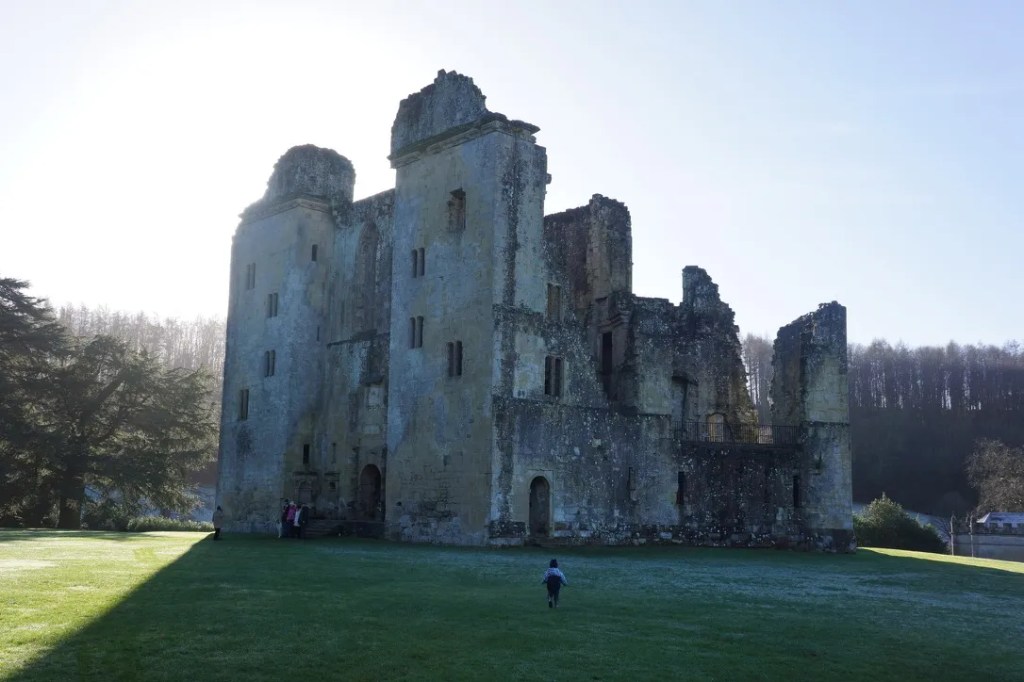
Once upon a time, many a castle stretched towards the heavens across the United Kingdom. Whether constructed for defense or to show off the wealth of the local lord, they were magnificent structures that represented the power of the nobility. However, over time, many of these castles have fallen into disrepair as they were abandoned or their maintenance became too expensive for the families that called them home. The preservation of the ruins and whole castles forms part of the mission of the National Trust, English Heritage, and other organizations to preserve these important pieces of history for future generations.
Over the centuries, as castle maintenance got to be too much for the ancient families, they often sold the castles or entered into agreements with preservation organizations, especially as the castles became tourist destinations in the 19th Century. Families with the money to do so often revitalized their castles and unified their multi-era architectural styles with Gothic Revivalism. Such examples include Windsor Castle as well as Alnwick Castle, the former owned by the Crown while the latter is still owned and maintained by the Percy family. The government also turned its attention to preserving these ancient sites with the Ancient Monuments Protection Act of 1882 while private individuals such as William Morris established the first preservation organization, the Society for the Protection of Ancient Buildings, in 1877. Less than twenty years later, the National Trust was formed.
In the ensuing decades, other organizations also formed that bought up the castles around the United Kingdom, including the National Trust for Scotland. The English National Trust acquired its first castle in 1926, which was Bodiam Castle. Bodiam had been constructed in the 14th Century and was under the ownership of Lord Curzon, who had purchased it specifically for its preservation and then gave it to the National Trust. The National Trust for Scotland received its first castle, Crookston Castle, from Sir John Stirling Maxwell in 1931 after he was elected the charity’s vice-president. Today, the National Trust owns and maintains twenty-nine castles over England, Wales, and Northern Ireland. The National Trust for Scotland owns roughly seven castles across Scotland.
Even more castles are owned by organizations that formed in the 20th Century, such as English Heritage and Historic Scotland. Both organizations began as governmental bodies, the Historic Buildings and Monuments Commission and the Ministry of Works, respectively. English Heritage in the 21st Century became its own separate non-governmental charity, while Historic Scotland became Historic Environment Scotland and still serves as a department of the Scottish government. English Heritage owns and maintains approximately 100 castles, while Historic Environment Scotland has roughly 65. The Welsh government, meanwhile, formed Cadw in 1984 to support its own preservation efforts, which include 44 castles, including some World Heritage Sites such as Caernarfon Castle and Conway Castle. Whatever castles you visit across England, Scotland, and Wales, the chances are good that one of these three organizations is responsible for ensuring that visitors can continue to marvel at and learn from these sites.
Of course, that doesn’t mean that all castles in Britain are in the care of these charities and governmental organizations. As mentioned previously, besides castles owned directly by the Crown, some places, such as Alnwick Castle, are still owned by their respective families and maintained through private trusts and by opening themselves to the public. Besides Alnwick, Eilean Donan is another famous castle still in the private ownership of Clan Macrae and maintained by the Conchra Charitable Trust. Arundel, Bamburgh, Ludlow, and Belvoir are other excellent examples of private castles that can be visited today.
Thus, even while many castles across the United Kingdom have lost their defensive uses, they serve today as living museums of British History, maintained by any number of organizations and individuals dedicated to their preservation. No matter which castles you choose to visit; we hope you will keep in mind the enormous efforts and costs that are associated with preserving these sites. Maybe drop something in the donation box or buy a souvenir at the gift shop to show your appreciation for their efforts.
 London visitor