
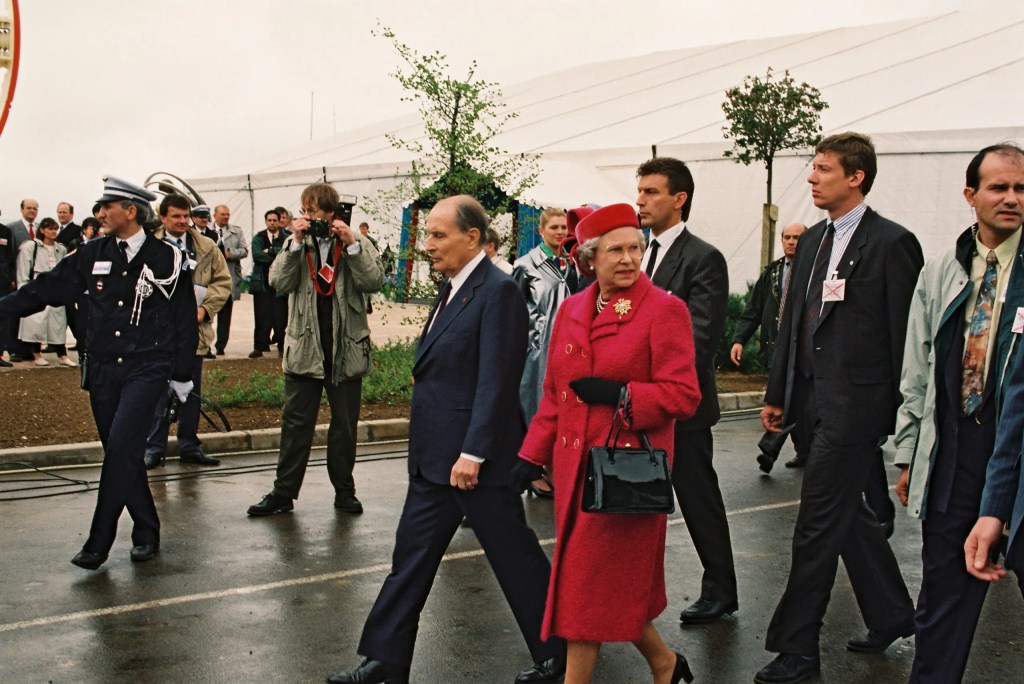
The 1990s were a time of “new” in Britain. New conflicts, new travel options, new government, a new peace, and even a new millennium helped mark the years from 1991 to 2000. For many, the 90s were certainly a golden time for Britain at home and abroad, and the changes helped bring a better quality of life to the United Kingdom. From cloned sheep to expanding the Anglican priesthood, we’ve outlined ten of the most important events of the decade by year. This is by no means an exhaustive list, so you can feel free to add your own suggestions in the comments.
1991 – The United Kingdom Enters the First Gulf War
After then-Iraq leader Saddam Hussein invaded the sovereign nation of Kuwait in 1991, Britain became part of an international coalition to liberate the small country on the Persian Gulf. Under the operating name “Operation Granby,” 53,462 members of the British Armed Forces participated in the larger Operation Desert Storm and successfully freed Kuwait from the influence of the Iraqi Army.
1992 – The Channel Tunnel Opens
Also known as the Eurotunnel or the Chunnel, the Channel Tunnel is an underground tunnel below the English Channel. Opened in 1992, it has been a vital link for the trade of goods between the UK and Continental Europe as well as a major player in passenger travel.
1993 – First Premier League Championship
After 1991, 22 top-tier football teams resigned from the Football League to set up their own commercially independent league, the Premier League. The Premier League became the highest tier of English football, and the 1992-1993 season ended with Manchester United finishing ten points ahead of Aston Villa to secure the league’s first championship. The Premier League’s success has kept it a driving force in football today and may have partially inspired the ill-conceived European Super League.
1994 – First Women Priests Ordained in the Church of England
March 12, 1994, saw the ordination of thirty-two women as priests into the Church of England. While previous branches of the Anglican and Episcopalian Churches had ordained women in the past, it was not permitted in the Church of England until the General Synod passed the measure in 1992. By 2004, one in five priests in the Anglican Church was a woman.
1995 – BSE Outbreak
One of the worst virus outbreaks in Britain until COVID-19, Bovine spongiform encephalopathy (more popularly known as “Mad Cow Disease”), was a neurodegenerative disease that struck cattle. The virus had been identified as early as 1984 but experienced an alarming surge in 1995, with the United Kingdom experiencing 14,562 cases. It was also discovered during this time that a variant of the virus could be passed to humans by eating BSE-tainted meat.
1996 – Dolly the Sheep
What’s so remarkable about a sheep, you may wonder? Well, Dolly has the distinction of being the first mammal to be cloned from an adult cell. Prior to this, the only mammals cloned were other sheep from embryonic cells. It was a leap forward in genetic engineering that no one at the time thought possible.
1997 – New Labour
As the Conservative Party slid further under the premiership of John Major, Tony Blair took charge of Labour’s leadership and formed a more center-left coalition that was dubbed “New Labour.” The results were striking as Blair’s Labour Party won 145 new seats in the 1997 General Election and reduced the Tories to a mere 165 seats to Labour’s 418. The Labour government would last for the next thirteen years until the Conservative-Liberal Democrat coalition in 2010.
1998 – Good Friday Agreement
Also known as the Belfast Agreement, the Good Friday Agreement finally put an end to most violence in Northern Ireland by giving the country a greater say over its affairs through devolved government and demilitarization. It was signed between the British and Irish governments and political parties in Northern Ireland in 1998. Voters in Northern Ireland accepted the agreement in a referendum on May 22 by an overwhelming majority of 71% (94% in the Republic of Ireland). The agreement aimed to end the decades-long conflict known as “The Troubles” and establish peace and stability in the region. The agreement established a power-sharing government in Northern Ireland, recognized the right to self-determination for Northern Ireland, and provided for the decommissioning of paramilitary weapons. The lasting effects of the agreement are that it has brought relative peace and stability to the region, significantly reduced violence and deaths, and paved the way for ongoing reconciliation efforts between the two communities.
1999 – Welsh Parliament and Scottish Parliament Open
Northern Ireland wasn’t the only beneficiary of government devolution in the 1990s. The Labour government also helped to form and give power to the Senedd Cymru (the Welsh Parliament) as well as the Scottish Parliament. Both institutions continue to have power over the internal affairs in Wales and Scotland to this day.
2000 – New Millennium
All across the world, the coming of the year 2000 brought both excitement and apprehension. While some worried about the possibility of a “Y2K” bug shutting down computers, Britain prepared for the coming of the new millennium with the construction of the Millennium Dome and the London Eye. While the Dome initially failed, it was later reinvented as the O2 Arena, while the Eye continues to be a popular attraction for the city.
 London visitor