
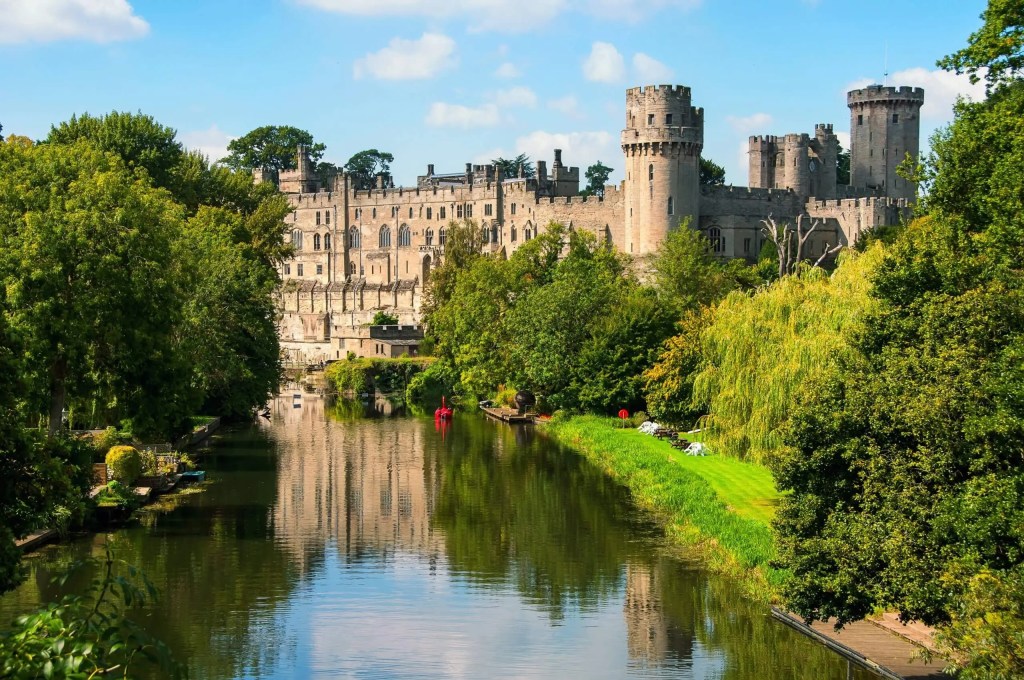
Silhouetted against the Warwick skyline, the mighty towers of Warwick Castle have born witness to over nine centuries of British history. This magnificent medieval fortress, a true symbol of power and fortification, has weathered sieges, royal ownership, and the passage of time itself to emerge as one of England’s most captivating attractions. Step across the castle threshold, and you’ll be transported to an era of chivalry, battles, and larger-than-life legends.
Five Key Facts
- Originally built by William the Conqueror in 1068, Warwick Castle is one of the few castles from the Norman Conquest still largely intact.
- It remained a fortified residence until the early 17th century when it was granted to Sir Fulke Greville, who converted it into a country house.
- The castle boasts some of the most complete defensive architecture from the medieval period, including towers, ramparts, and a massive curtain wall.
- It is famously linked to the Kingmaker, Richard Neville, whose bitter dynastic conflict with the House of York was pivotal in the Wars of the Roses.
- Warwick Castle is now under the stewardship of the Tussauds Group, featuring wax figures, exhibits, shows and year-round events.
Geographic Setting
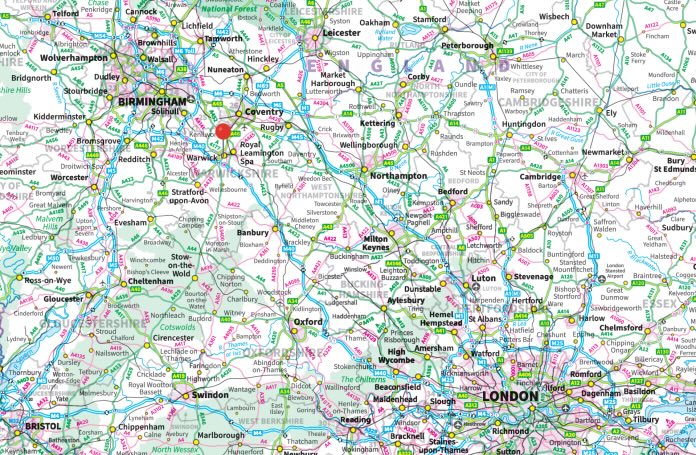
Warwick Castle commands an imposing presence on a sandstone bluff at a bend of the River Avon in the town of Warwick, England. Its elevated vantage point and proximity to the river made it a formidable defensive site in medieval times. The castle’s gray stone facades and robust architecture create a striking contrast against the idyllic Warwickshire countryside surroundings.
The Fascinating Origins of Warwick Castle
While records indicate an early fort stood on the site in the 6th century, Warwick Castle’s story begins with the Norman Conquest of 1066. William the Conqueror constructed the first castle here in 1068 as part of his campaign to control and subjugate the rebellious English following his victory at Hastings. This initial motte-and-bailey castle provided a strategic fortification along the River Avon to discourage revolt and project Norman authority into the Midlands region.
The Fortified Armaments
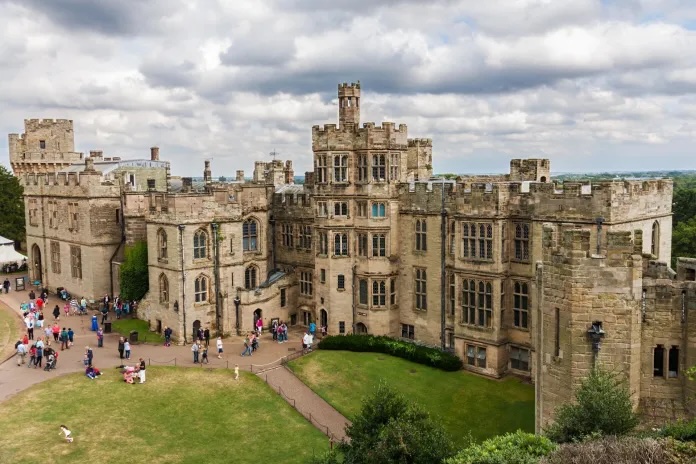
By the 14th century, Warwick Castle was an imposing fortress bristling with formidable defenses sculpted from the golden Warwickshire sandstone. Immense curtain walls lined with crenellations and towering gatehouses guarded the approaches. The Caesar’s Tower, one of the castle’s most iconic features, allowed archers to launch volleys of arrows upon any would-be invaders from its elevated ramparts.
Within the walls lay a defensible labyrinth – a series of killing grounds, portcullises, murder holes and gatehouses designed to entrap unlucky attackers. The entire ingenious design was reinforced by a massive 60ft wide dry moat and earthworks, becoming one of the most powerfully fortified castles of the medieval period.
The Kingmaker and Wars of the Roses
For two decades in the tumultuous 15th century, Warwick Castle was the power base of Richard Neville, the notorious “Kingmaker” whose political machinations proved pivotal in the Wars of the Roses dynastic conflict. He was one of the realm’s wealthiest and most influential figures, switching allegiances to support first the Lancastrian and then the Yorkist royal houses.
The castle hosted the ceremony where Neville removed the Lancastrian Henry VI and helped the Yorkist Edward IV take the throne in 1461. However, his excessive authority making and unmaking kings eventually led to his demise at the Battle of Barnet in 1471. The legacy of the Kingmaker casts a long shadow over Warwick’s history.
Restoration and Gardens
Over the passing centuries, Warwick Castle underwent many alterations. In the late 16th century, it was converted from a fortified castle into a lavish, unfortified mansion by Sir Fulke Greville. Remodeling by architects like Sir William Dugdale in the 1600s created more palatial interiors and landscaping.
The magnificent gardens and grounds took shape during this era under the vision of the immensely wealthy and trendsetting Earls of Warwick. The landscaping featured an array of garden “rooms” enclosed by hedgerows and walls, as well as an orangery, greenhouses, and landscaped parklands surrounding the River Avon.
Today’s Warwick Castle
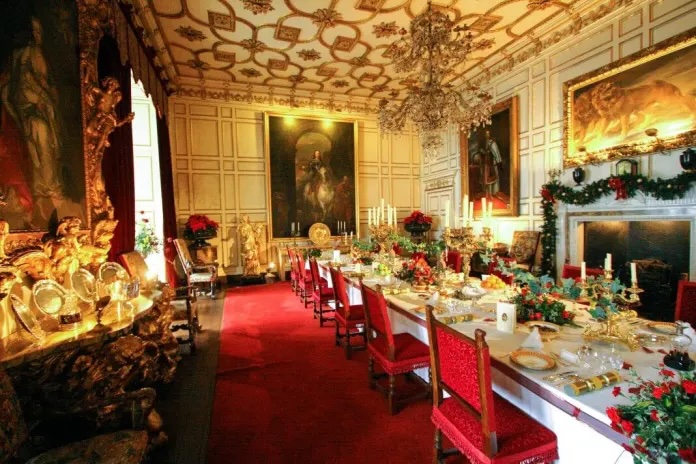
In the modern era, Warwick Castle has been restored and reimagined as one of Britain’s most acclaimed heritage sites (it is now operated by theme park operator Merlin Entertainment). Visitors can climb the ramparts, explore the lavish interiors like the gilded State Rooms and Great Hall, watch live shows reenacting medieval events or explore the Peacock Garden modeled on 17th century designs.
The legacy of Warwick Castle spans from its medieval warrior heritage to 19th-century Victorian romanticism. With its magnificent towers and fortifications still gloriously intact, this ancient castle remains an enthralling ambassador to Britain’s turbulent feudal history.
Visiting Information
Now one of the most visited and best-preserved castles in Britain, Warwick Castle offers an immersive look into medieval life. Highlights include climbing the Cesar’s Tower ramparts, exploring the Great Hall and State Rooms, witnessing thrilling shows like the “Scorched Earth” evening exhibitions, and strolling the Georgian-era grounds and gardens. Interactive exhibits, falconry displays, and daily shows bring history alive. See the official website for booking information (booking in advance is recommended and will save you a few pounds).
Recommended Reading
- “Warwick Castle” by the Countess of Warwick (1903)
- “Castles of England” by Sir Banister Fletcher (1987)
- “Medieval Fortifications” by John Kenrick (1988)
- “Warwick Castle and its Mighty Protector” by John Martin Robinson (1991)
- “The Castle Builders: Masons and Builders in the Middle Ages” by Malcolm Hislop (2017)
 London visitor