
Towering above the River Thames, the massive stone battlements of the Tower of London have loomed over the city for nearly a millennium. Behind its formidable walls lies a place steeped in rich history, dark legends, and extraordinary architecture that has made it one of the world’s most famous fortified enclosures. Once a royal palace, prison, armory and even a menagerie, the Tower has served as a pivotal setting for many of England’s most dramatic events.
Five Key Facts
- Construction of the Tower began in 1066 under William the Conqueror as part of the Norman Conquest of England.
- It has served as a royal residence, armory, treasury, menagerie, observatory, and infamous prison over its long history.
- The Tower is guarded by legendary Yeomen Warders, better known as “Beefeaters”, with their distinctive Tudor-style uniforms.
- It houses the priceless Crown Jewels of the United Kingdom as well as iconic ravens, whose presence is protected by decree.
- The Tower has played a bloodstained role, being the site of many executions of royals and nobles throughout its history.
Geographic Location
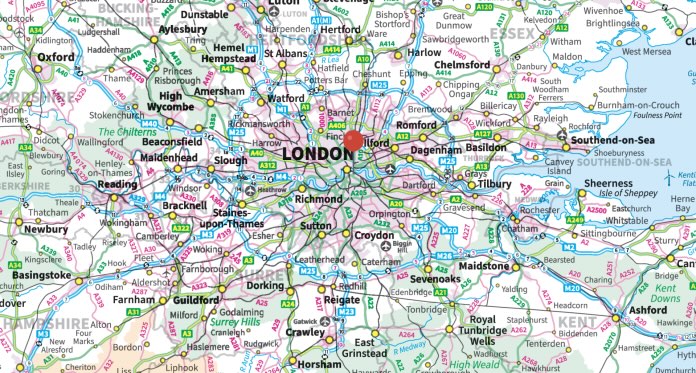
The Tower of London rises defiantly along the north bank of the River Thames in central London. Its strategic riverside location allowed it to control the capital city as both a fortress and gateway to the kingdom upon its construction in 1066. The contrast of its massive stone walls against modern skyscrapers makes for an unforgettable sight.
A Mighty Norman Fortress
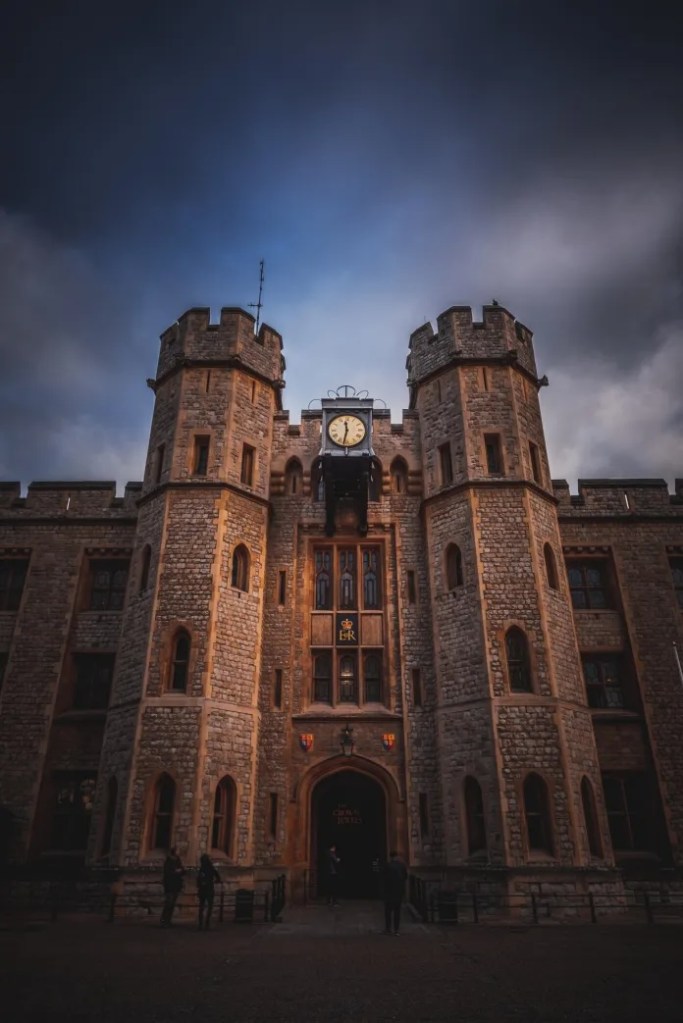
In the wake of the Battle of Hastings in 1066, William the Conqueror set about solidifying his control over England. One of his first acts was to begin construction of a massive stone tower (the White Tower) in 1078 as the central keep of what became the Tower of London fortress. This imposing edifice served a dual purpose: to protect Norman power and subdue the natives of the former Anglo-Saxon capital of Ludenwic.
Over centuries, the concentric castle grew through successive expansions by adding an outer defensive wall, gatehouses, towers, and additional buildings within. Surrounded by two circuits of robust stone curtain walls and an immense moat, the Tower became one of the most powerful fortresses of medieval England.
A Royal Palace and Prison
While first designed as a formidable military stronghold, the Tower also served as a sumptuous royal palace and residence for many monarchs in its early years, including Richard the Lionheart. But its role took a darker turn, with its secure defenses also making it an ideal state prison.
Notable inmates over the ages included the future Queen Elizabeth I, who was imprisoned for a time by her half-sister Mary I. Prisoners were housed in chambers like the infamous Beauchamp Tower, with some meeting a grisly end on the grounds. Anne Boleyn and Catherine Howard are among the unfortunate souls executed at the Tower Green.
The Tower also contained the Royal Menagerie for many years, housing an extensive collection of exotic animals. And within its guarded buildings lay the priceless Crown Jewels of England – crowns, scepters, orbs, rings, and other lavish regalia.
An Icon of History and Tradition
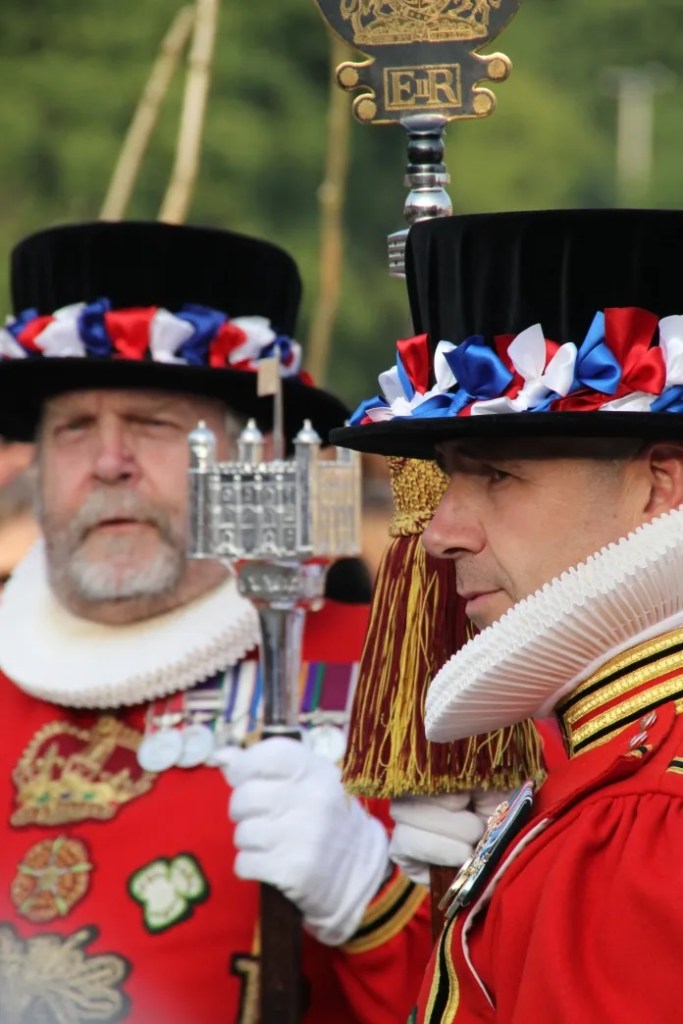
While no longer a palace or prison, the Tower of London remains an enduring icon of national history and tradition. It has been an enduring witness to the rise and fall of kings, queens and empires for over 900 years. The legendary Yeomen Warders or “Beefeaters” have served as the Tower’s guardians since the 1500s, keeping alive longstanding ceremonies and traditions.
The Beefeaters, officially known as the Yeomen Warders of His Majesty’s Royal Palace and Fortress, the Tower of London, are a distinct group of ceremonial guards that play a vital role in safeguarding the Tower of London, a historic fortress and former royal residence. Renowned for their distinctive red and gold uniforms, the Beefeaters have become an iconic symbol of the Tower of London and are an integral part of its rich history.
The origins of the Beefeaters can be traced back to 1485, during the reign of King Henry VII. Their primary role was to protect the prisoners held within the Tower and to ensure the safety of the Crown Jewels, which are still housed at the Tower of London to this day. Over the centuries, their responsibilities have evolved, and they now serve as tour guides, providing fascinating insights into the history of the Tower and entertaining visitors with captivating stories and historical anecdotes.
The Beefeaters, unlike popular belief, are not simply ceremonial figures. They are all former military personnel with exemplary service records. To become a Yeoman Warder, one must have served a minimum of 22 years in the British Army, Royal Navy, Royal Air Force, or the Marines and have achieved the rank of warrant officer. Their military background equips them with the necessary skills to safeguard the Tower and its priceless treasures.
The Beefeaters live within the grounds of the Tower of London in distinctive Tudor-style cottages, creating a unique community within the ancient walls. These historic dwellings are maintained by the charity Historic Royal Palaces and provide the Yeoman Warders with a truly extraordinary living environment, steeped in centuries of history.
While the Beefeaters’ main duty is to ensure the security of the Tower of London, they are also actively involved in its day-to-day operations. Additionally, they play a significant role in ceremonial events, such as the daily Ceremony of the Keys, which has taken place uninterrupted for over 700 years and symbolizes the locking up of the Tower for the night.
Despite their formal responsibilities, the Beefeaters are admired for their warm and friendly interactions with visitors. They are often seen engaging with tourists, sharing intriguing historical facts, and posing for photographs. This unique blend of history, military service, and engaging storytelling makes the Beefeaters an invaluable part of the Tower of London experience.
The Beefeaters, or Yeoman Warders, represent a living connection to the Tower’s rich past, adding a touch of authenticity and charm to this iconic historical site. Their dedication to preserving the heritage of the Tower of London and their commitment to sharing its stories ensure that the legacy of this extraordinary fortress endures for generations to come.
Today’s visitors are treated to a captivating experience inside the Tower’s walls. From the breathtaking Crown Jewels exhibit to exploring the royal buildings, towers, and chambers where pivotal events unfolded, the Tower’s majesty and stories come alive. And as the ravens continue their age-old residence, per a decree that says if they ever leave, the Tower will crumble, and the kingdom will fall.
The Tower of London stands in imposing testament to centuries of British history, bearing countless tales of intrigue, ceremony and drama within its mighty ramparts. This powerful fortress continues to capture the imagination of all who visit this unparalleled icon of a bygone world of kings, knights and Tower’s bloody chronicle.
Visiting Information
One of London’s premier attractions, the Tower welcomes over 3 million visitors per year. Open daily, visitors can tour the Tower’s many buildings, view the priceless Crown Jewels, attend colorful events like the Ceremony of the Keys, and explore exhibitions of its long history. Highlights include the iconic White Tower, Beauchamp Tower, Waterloo Barracks, and Royal Beasts exhibit. Check the official website for opening times and current admission costs.
Recommended Reading
- “The Tower of London” by Liam Fitzpatrick (2020)
- “The Closing of the Tower of London” by Arthur Percival (2016)
- “The Bloody Tower” by John G. Heath (2021)
- “Tower of London Wonders and Marvels” by Jane Draycott (2015)
- “The Yeoman Warders of the Tower of London” by G. Parnell (1988)
 London visitor