
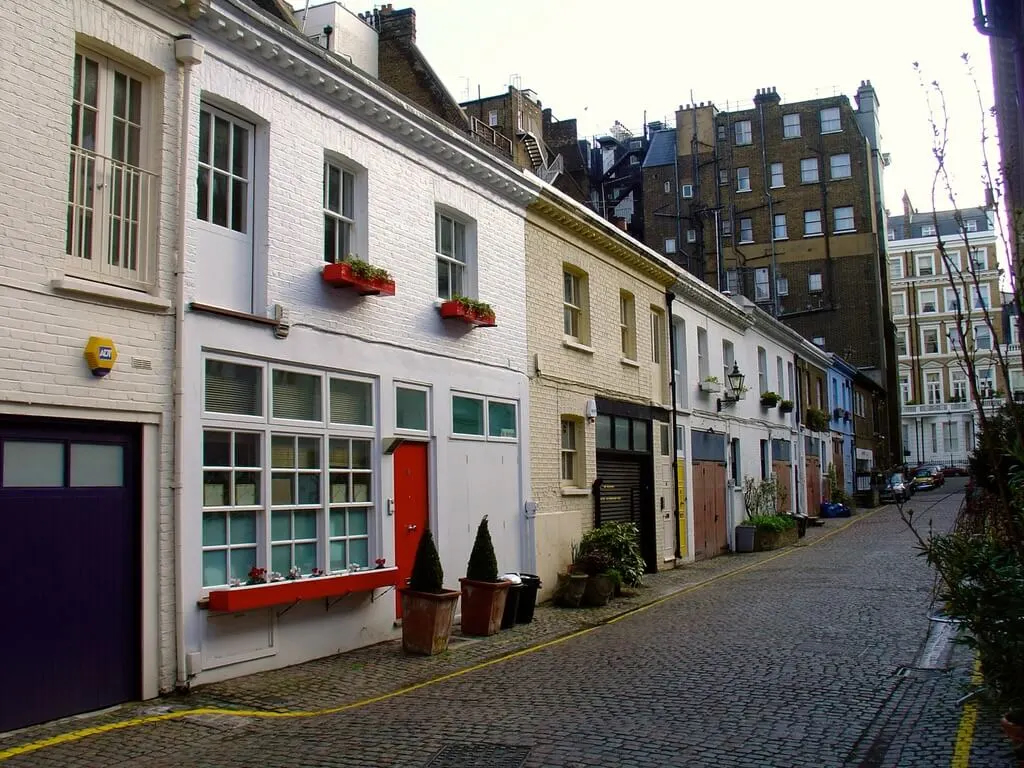
The mews house is a unique and charming architectural feature of many British cities, particularly London. The term ‘mews’ originally referred to the stables and carriage houses that were once located in the back alleys of grand townhouses. Over the years, these stables were converted into homes and became known as mews houses.
What exactly are mews houses? The history of mews houses can be traced back to the 18th and 19th centuries. During this time, the wealthy aristocracy in London owned large townhouses in the city center. These townhouses often had stables and carriage houses located behind them, on a separate street, known as a mews. The word ‘mews’ comes from the French word ‘mue’, meaning to molt, as the hawks that were once kept in the mews would molt their feathers before being used for hunting.
The mews were originally intended for the horses and carriages of the wealthy townhouse owners. However, as the popularity of the automobile grew in the early 20th century, the need for horse-drawn carriages decreased. Many of the mews were then converted into garages for cars, and some were even used as workshops for artisans and craftsmen.
In the mid-20th century, as the popularity of cars continued to grow, many of the mews were abandoned and fell into disrepair. However, in the 1960s and 1970s, there was a renewed interest in mews houses as unique and desirable properties. Many of the mews were converted into homes, and their distinctive features, such as high ceilings, exposed brickwork, and large windows, made them popular with buyers.
Today, mews houses are highly sought-after properties, particularly in London. They are typically located in the back alleys of grand townhouses, and many are hidden away from the main street, providing a sense of privacy and seclusion. Mews houses are often characterized by their charming cobbled streets, narrow alleyways, and distinctive architectural features. Because of their location and size, mews houses do not usually have gardens (but there are always exceptions).
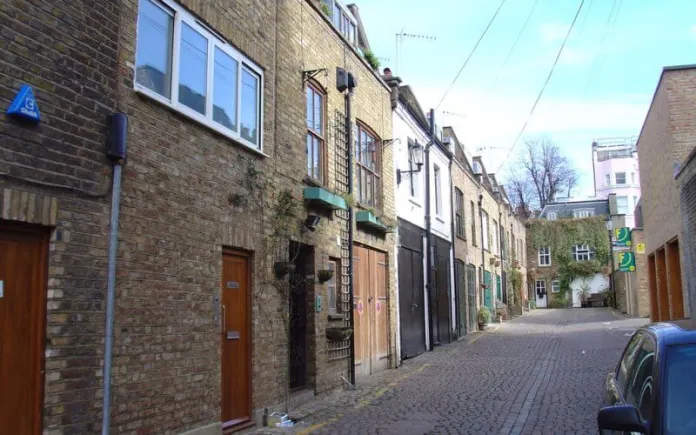
The popularity of mews houses as desirable properties has led to a surge in their value. Many mews houses have been renovated and modernized, and their unique features have been preserved and enhanced. The conversion of mews houses into valuable homes has been a boon for the property market, particularly in London, where space is at a premium.
Mews houses are often located in some of the most desirable neighborhoods in London, including Mayfair, Belgravia, and Notting Hill. They are often tucked away in quiet backstreets, providing a sense of privacy and seclusion while still being within easy reach of the amenities and attractions of the city center.
The conversion of mews houses into valuable homes has been a fascinating journey through the history of British architecture. From their humble beginnings as stables and carriage houses to their modern-day incarnation as desirable homes, mews houses have been an integral part of the fabric of British cities. Their unique features and charm have made them highly sought-after properties, and their value is only set to increase in the years to come.
 London visitor