
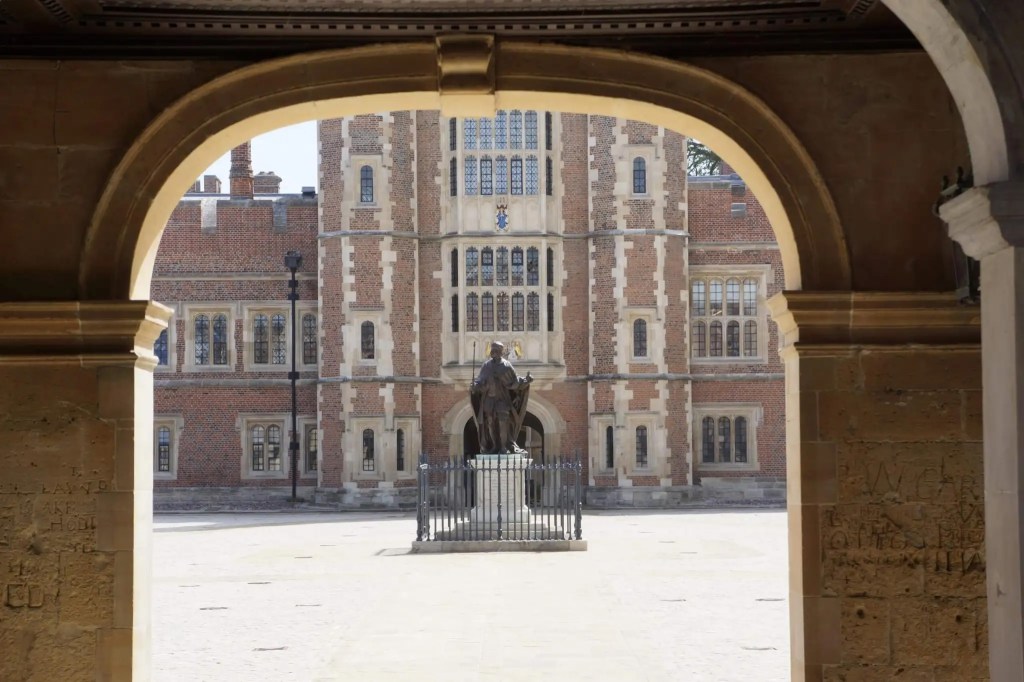
In the annals of British education, the term “public school” holds a unique and distinguished place. These exclusive institutions have played an integral role in shaping British society, culture, and history. Most of them are known as boarding schools, where children are sent away from home and their parents to be educated in a certain way. Among these, Eton College and Harrow School stand out as bastions of tradition, excellence, and privilege. However, there are several other notable public schools scattered across England, each with its own rich history, illustrious alumni, and contributions to the fabric of the nation. The idea of English public schools endures in the popular imagination thanks to the Harry Potter film and book series. The reality is that these places can often be terrible environments for children, with mixed results (but many have modernized and are excellent places to live and be educated).
Public Versus Private
First, here is a quick definition of what a ‘public school’ is in the British context because it seems like a contradiction in terms. In America, we call them private schools. In Britain, private schools are called ‘public’ schools because they are generally open to anyone who can pay the fees (there are a lot of caveats here; each school is different). State schools are schools run and managed by the British government (but England, Scotland, Wales, and NI all have different systems). Church schools are schools run by the Church of England (or other denominations). While most public schools are boarding schools, not all board students, and some may also accept ‘day’ students, which are students who do not live there but attend classes daily. One size doesn’t fit all here!
The Role in British History
The origins of English public schools can be traced back centuries, with many of them founded during the medieval period. Initially established to educate the sons of the elite and provide a classical education rooted in Latin and Greek literature, these schools evolved over time to become centers of academic excellence and breeding grounds for the country’s future leaders. Their influence on British history cannot be overstated, as generations of statesmen, writers, scientists, and thinkers have passed through their hallowed halls, leaving an indelible mark on the nation and the world.
Public schools played a pivotal role in shaping the values and ethos of the British ruling class, instilling ideals of duty, honor, and service to the nation. The success here, varies. The connections forged within their walls often proved instrumental in the corridors of power, with alumni forming influential networks that extended across politics, business, and culture. Moreover, the curriculum and traditions of these schools helped to perpetuate a sense of continuity and tradition, reinforcing the social hierarchy and reinforcing the notion of an educated ruling elite.
I would like to give you an example of one particular English public school-educated pupil – Winston Churchill. As the son of a ‘second son’ of a prominent aristocratic family (the Spencer-Churchills), Churchill was destined to go to a public school. He attended two boarding schools, first St. George’s School in Berkshire, then Harrow. But by all measures, he was a terrible student and spent most of his time pleading for positive attention from his awful parents. He did, however, show aptitude in history and English, but he was an otherwise unremarkable student. Harrow did not instil a love of reading and education in Churchill. He cultivated that himself after he left and later became a writer. His father pushed him to train for the military, so he was diverted to Harrow’s Army program. Eventually, he finished his schooling at the Sandhurst Military Academy (but it took him three tries to pass the entrance exams). He never attended university, which is quite something when you consider that he eventually won the Nobel Prize for literature (amongst other achievements). Despite his poor education, his time in public schools taught him HOW to be an English aristocrat; it gave me the bearings and attitudes in life he would need to succeed as an upper-class aristo (and how to interact with other people like him, who ran Britain and its empire). It taught him to be a citizen of the empire, to be loyal to the reigning monarch and to defer authority when necessary. Did it work? Well, you be the judge of that.
Locations
Eton College, perhaps the most famous of all English public schools, is situated in the picturesque town of Eton, near Windsor, in the county of Berkshire. Its sprawling campus overlooks the River Thames and boasts a history dating back to the 15th century. Harrow School, another iconic institution, is located in the leafy suburb of Harrow-on-the-Hill, northwest of London. Its hilltop location offers stunning views of the capital and provides a fitting backdrop for its centuries-old traditions.
In addition to Eton and Harrow, England is home to a plethora of other public schools, scattered throughout the country. From Winchester College in Hampshire to Rugby School in Warwickshire, these institutions are synonymous with academic excellence, sporting prowess, and a sense of tradition that transcends generations.
Notable Students
The list of notable alumni who have passed through the gates of Eton and Harrow reads like a who’s who of British history and culture. From prime ministers and monarchs to poets and playwrights, the roll call of distinguished graduates is truly impressive.
Eton College has 19 British prime ministers among its alumni, including Sir Robert Walpole, the first holder of office, and David Cameron, who served as prime minister from 2010 to 2016. Other notable Etonians include writers such as George Orwell and Ian Fleming, as well as actors like Eddie Redmayne and Damian Lewis.
Harrow School boasts an equally impressive roster of alumni, including seven British prime ministers, such as Winston Churchill and Jawaharlal Nehru, the first Prime Minister of India. The school has also produced renowned writers like Lord Byron and Anthony Trollope, as well as actors like Benedict Cumberbatch and James Blunt.
Beyond Eton and Harrow, many other public schools have produced their fair share of notable alumni. For example, Winchester College counts among its former students the likes of Lord Alfred Tennyson, the Victorian poet laureate, and Hugh Bonneville, star of the television series Downton Abbey. Similarly, Rugby School can claim Thomas Hughes, author of the classic novel Tom Brown’s School Days, and Lewis Carroll, the creator of Alice’s Adventures in Wonderland, among its illustrious alumni.
Enduring Traditions: An Insight into the Fascinating Customs of English Public Schools
One of the enduring aspects of English public schools is their rich tapestry of traditions, many of which have been upheld for centuries. These rituals and customs serve not only to foster a sense of belonging and identity among students but also to connect them with the storied history of their alma maters. From formal ceremonies to quirky rituals, these traditions add color and character to the educational experience and help to distinguish public schools from other institutions. Many of America’s own academic traditions have roots in the English public school tradition (school spirit, robes, sports, etc).
Eton College, for example, is renowned for its unique terminology, which includes terms like “fagging” (a system where younger students serve as personal assistants to older ones) and “Pop” (a secret society that dates back to the 18th century). The school also has a long-standing tradition of “Montem,” a biennial procession to the nearby village of Salt Hill, where students collect money for charity while dressed in elaborate costumes.
Similarly, Harrow School has its own set of traditions, including the annual “Speech Day” ceremony, where prizes are awarded to students for academic and extracurricular achievements. Another notable custom is the “Field Day,” an inter-house competition that culminates in a series of athletic contests and displays of skill.
Winchester College, one of the oldest public schools in England, is famous for its “elections,” where students are chosen to hold various positions of responsibility within the school community. These include the “captain of the school,” who serves as the head student, and the “prefects,” who assist with the day-to-day running of the school.
Rugby School is perhaps best known for its association with the sport of rugby football, which was reputedly invented by a pupil named William Webb Ellis in the early 19th century. To this day, the school maintains a strong emphasis on sportsmanship and athleticism, with rugby playing a central role in its ethos.
 London visitor