
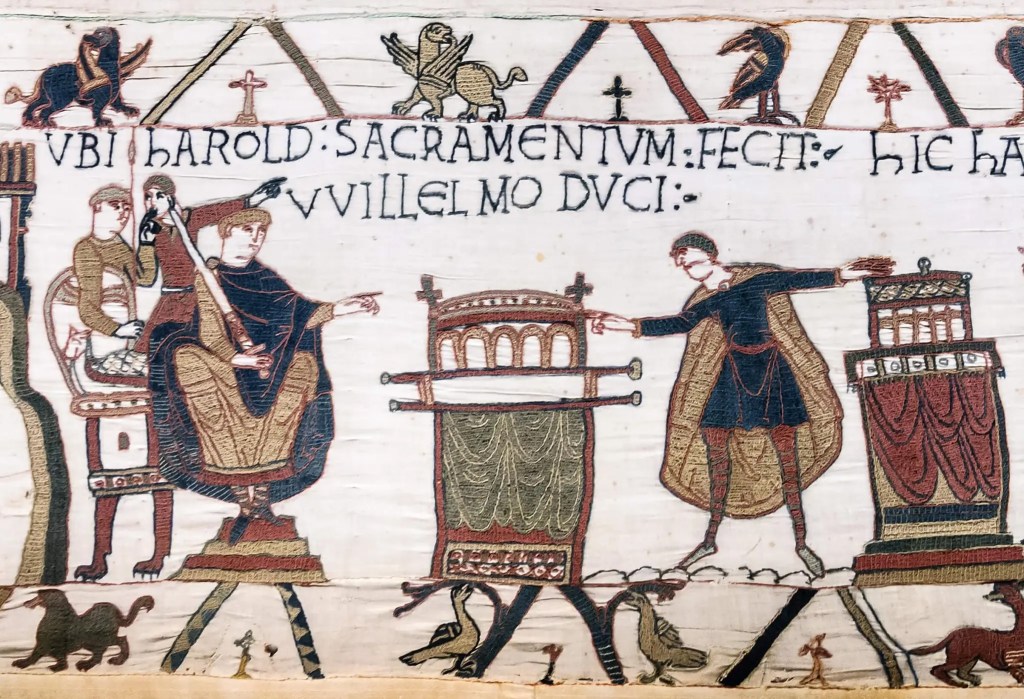
Harold Godwinson, also known as Harold II, was the last Anglo-Saxon king of England before the Norman Conquest. He reigned for less than a year, from January to October 1066, but his reign was marked by a series of significant events that shaped the course of English history. In this article, we will take a closer look at the life and legacy of Harold Godwinson.
Key Facts about Harold Godwinson
- Harold Godwinson, also known as Harold II, was the last Anglo-Saxon king of England before the Norman Conquest.
- Harold was born in Wessex, England, in 1022 or 1023, the second son of Godwin, who was an influential noble and the Earl of Wessex.
- Harold’s rise to power was not without controversy, as he was accused of kidnapping the wife of a Welsh prince in 1051.
- Harold was chosen by the English nobility to succeed King Edward the Confessor, and he was crowned king on January 6, 1066.
- Harold’s reign was challenged by two other claimants to the throne: Harald Hardrada, the King of Norway, and William, Duke of Normandy, who emerged victorious at the Battle of Hastings and marked the end of Anglo-Saxon rule in England.
Early Life and Career
Harold was born in Wessex, England in 1022 or 1023. His father, Godwin, was an influential noble who had risen to become the Earl of Wessex, the most powerful earldom in England. Harold was the second son of Godwin and his wife Gytha Thorkelsdóttir. He had several brothers and sisters, including Sweyn, Tostig, and Edith.
Harold grew up in a family that was intimately involved in the politics of England. His father and his brothers were close advisors to King Edward the Confessor, who ruled England from 1042 to 1066. Harold himself served as an earl and military commander in his own right, and he was known for his bravery and leadership on the battlefield.
Harold’s rise to power was not without controversy, however. In 1051, he was accused of kidnapping the wife of a Welsh prince and was forced to flee to Ireland to avoid punishment. He later returned to England and regained the king’s favor, but the incident would haunt him for years to come.
Accession to the Throne
In 1066, King Edward the Confessor died without a clear heir to the throne. Harold’s brother Tostig had been banished from England a year earlier, and another claimant, William, Duke of Normandy, had his own designs on the English crown. Harold was chosen by the English nobility to succeed Edward, and he was crowned king on January 6, 1066.
Harold’s reign was immediately challenged by two other claimants to the throne. The first was Harald Hardrada, the King of Norway, who invaded England with a large army in September 1066. Harold defeated Hardrada and his army at the Battle of Stamford Bridge on September 25, but he suffered heavy losses in the process.
The second challenger was William, Duke of Normandy, who had been promised the English throne by King Edward years earlier. William invaded England with his own army in October 1066, and he met Harold’s forces at the Battle of Hastings on October 14. Harold was killed in the battle, and William emerged victorious.
Legacy
Harold’s reign was short and tumultuous, but it had a lasting impact on English history. His defeat at the Battle of Hastings marked the end of Anglo-Saxon rule in England and the beginning of Norman rule. The Normans brought with them a new language, culture, and political system that would shape England for centuries to come.
Despite his defeat, Harold is remembered as a courageous and capable leader who fought to defend his country against foreign invaders. He was also a devout Christian who was known for his piety and generosity. In the years following his death, some members of the English church venerated him as a martyr and a saint.
Harold Godwinson was a significant figure in English history who played a pivotal role in the events leading up to the Norman Conquest. While his reign was short and marked by tragedy, his legacy lives on in the memories of those who remember him as a courageous and honorable king who fought to defend his people and his country.
Cultural Depictions of Harold Godwinson
There have been various cultural depictions of Harold Godwinson, including in literature, film, and television. Some of the most notable examples include the play “Harold” by Alfred Tennyson, which portrays Harold as a tragic hero who is ultimately betrayed by his own people.
Locations Related to Harold Godwinson
- Waltham Abbey, where Harold was buried before his body was moved to the church of Saint Clement Danes in Westminster.
- Battle Abbey in East Sussex, the site of the Battle of Hastings where Harold was famously killed by an arrow to the eye.
- Stamford Bridge, a village in East Riding of Yorkshire, where Harold defeated Harald Hardrada in the Battle of Stamford Bridge just a few days before the Battle of Hastings.
- Bosham, a village in West Sussex, where Harold is said to have set sail for Normandy to negotiate with William, Duke of Normandy, who was also claiming the throne of England.
- Westminster Abbey in London, where Harold was crowned King of England on January 6, 1066, following the death of King Edward the Confessor.
 London visitor