
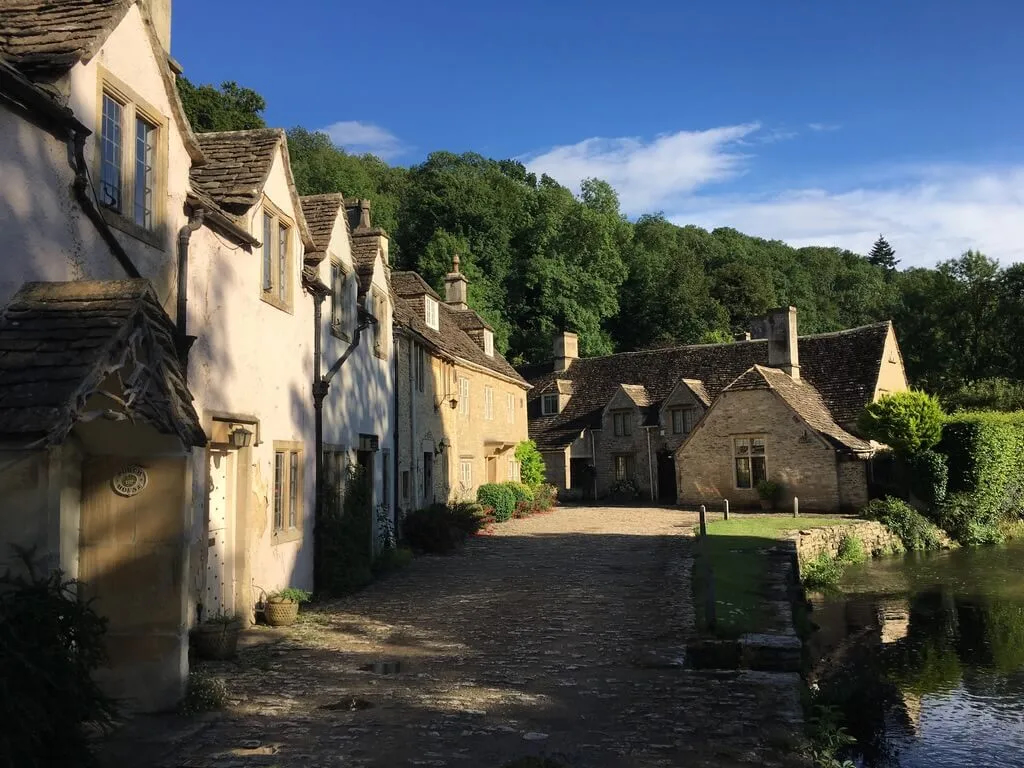
Nestled amidst the idyllic landscapes of the English countryside, the English cottage stands as an enduring symbol of charm, warmth, and tradition. With their quaint appearance and rich history, these cottages have captured the imagination of many, embodying a sense of rural tranquility and timeless beauty. In this exploration, we delve into the concept of the English cottage, unraveling its essence and diversity through various vernacular types.
The English cottage is more than just a dwelling; it represents a way of life deeply rooted in the rural landscapes of England. Historically, cottages were the homes of agricultural workers, farmers, and laborers, reflecting the simplicity and functionality required for rural living. Over time, they evolved into symbols of rustic elegance, characterized by their thatched roofs, timber frames, and picturesque gardens.
For me, the perfect English cottage reflects what it means to be in the English countryside. When we travel, we love to stay in cottages in the countryside. There’s a certain type of peace and serenity you get in the English countryside that makes me so blissfully happy. You will find, too, that the definition of a ‘cottage’ is flexible. What some people think of as a cottage might just be a house, a parsonage, or a small manor, but they can also be cottages. Often, the idea of a cottage is in the eye of the beholder (and owner).
One of the most iconic features of English cottages is their architectural style, which varies across different regions of the country. From the charming thatched roofs of the Cotswolds to the whitewashed walls of Cornwall, each region boasts its own unique interpretation of the English cottage.
Here are a few examples of English vernacular cottages (and this is not an exhaustive list).
The Cotswold Cottage
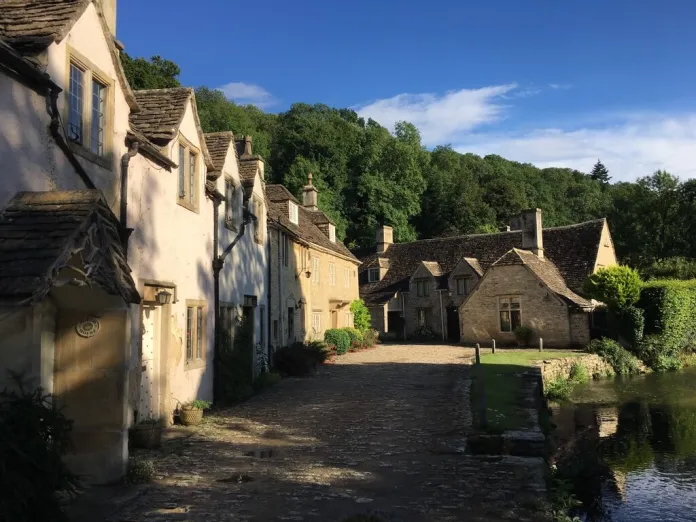
Nestled in the rolling hills of the Cotswolds, Cotswold cottages epitomize the quintessential English countryside charm. Characterized by their honey-colored limestone walls, steeply pitched roofs, and mullioned windows, Cotswold cottages exude timeless elegance. Often adorned with climbing roses and quaint gardens, these cottages offer a glimpse into a bygone era of rural tranquility.
The Thatched Cottage
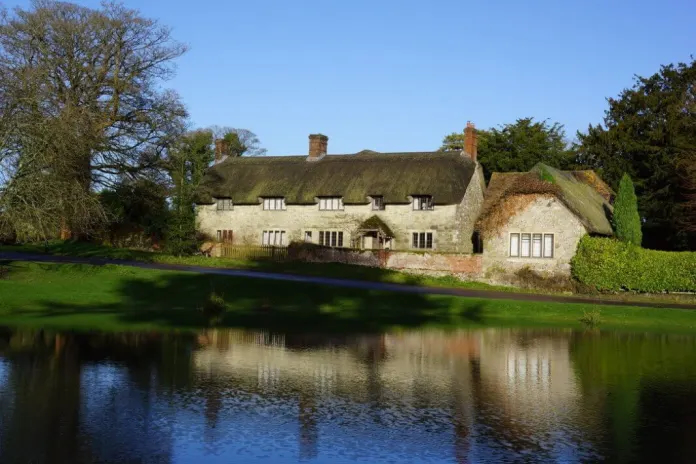
Thatched cottages evoke a sense of whimsy and nostalgia with their distinctive roofs made from straw or reeds. Found in various regions across England, thatched cottages are revered for their cozy interiors and rustic charm. The intricate craftsmanship of thatched roofs adds to their appeal, providing insulation and protection from the elements while exuding a rustic allure that is hard to resist.
The Tudor Cottage
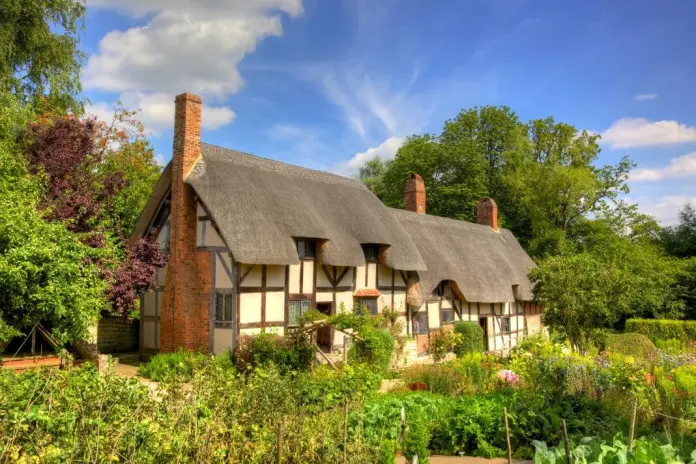
Tudor cottages are characterized by their timber-framed structures, featuring exposed beams and intricate woodwork. Originating from the Tudor period in the 16th century, these cottages reflect a rich architectural heritage influenced by medieval craftsmanship. With their half-timbered facades and leaded windows, Tudor cottages exude historic charm and timeless appeal, offering a glimpse into England’s storied past.
The Chocolate Box Cottage
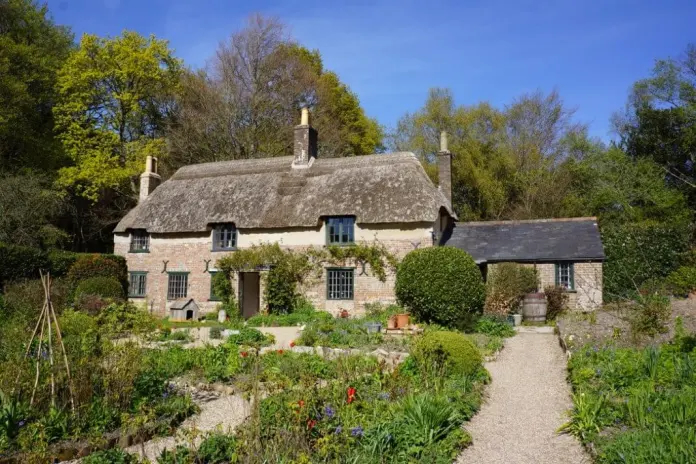
Often referred to as “chocolate box cottages,” these picturesque dwellings epitomize the postcard-perfect image of English country living. With their colorful gardens, thatched roofs, and quaint picket fences, chocolate box cottages evoke a sense of nostalgia and romance. Found in villages and rural hamlets across England, these cottages are beloved for their storybook charm and photogenic appeal.
The Coastal Cottage
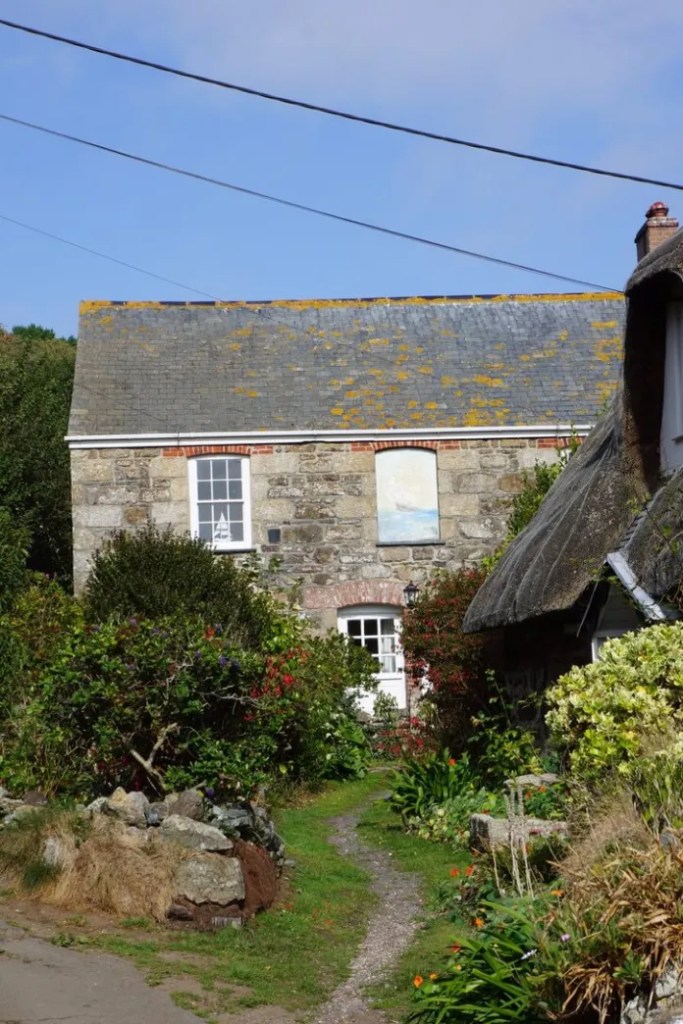
Perched along the rugged coastlines of England, coastal cottages offer a different interpretation of the English cottage aesthetic. Characterized by their weather-beaten exteriors, panoramic views, and proximity to the sea, coastal cottages exude a distinct sense of maritime charm. From quaint fishing cottages in Cornwall to elegant seaside retreats in Devon, these cottages offer a serene escape amidst the beauty of the coastline.
Despite their regional variations, English cottages share a common thread of simplicity, elegance, and connection to the land. Whether nestled in the heart of the countryside or overlooking the sea, these cottages embody a sense of place and heritage that resonates with people around the world.
The concept of the English cottage transcends mere architecture; it is a symbol of tradition, craftsmanship, and rural beauty. From the timeless charm of thatched roofs to the historic allure of Tudor timber frames, each type of English cottage offers a unique glimpse into the rich tapestry of England’s architectural heritage. As these cottages continue to inspire and enchant, they remind us of the enduring appeal of simplicity, authenticity, and the timeless beauty of rural life.
 London visitor