
One of the most important symbols of the Crown’s authority and wealth, the Crown Jewels of the United Kingdom have a long, interesting, and sometimes controversial past. These objects have been part of royal ceremonies for centuries, most often in the coronation of kings and queens. What’s more, the Crown Jewels aren’t just a few accouterments, but represent over 100 objects, including crowns, tiaras, necklaces, rings, sceptres, orbs, and more. There are also different items for the Sovereign, the Prince/Queen Consort, and the Prince/Princess of Wales. It’s a lot for us to cover in a simple article such as this, so we’ll try to focus on the most important elements.
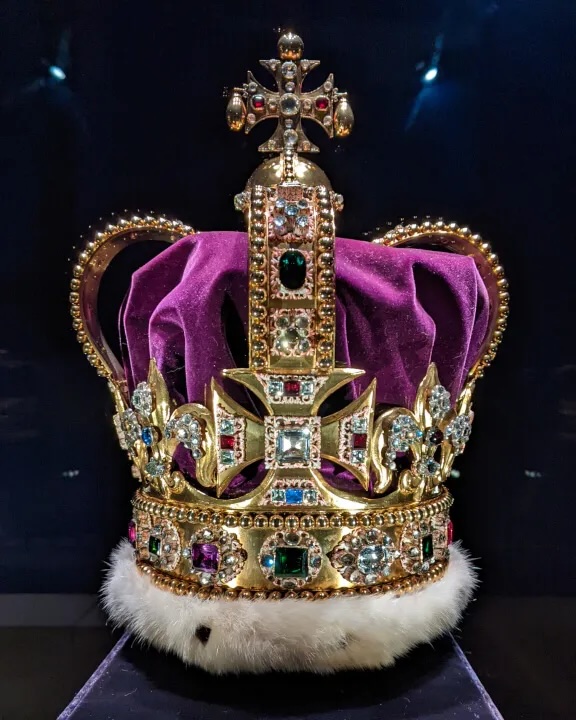
To that end, it’s worth noting that the Crown Jewels used for the coronation are the most important and well-known. The Coronation Regalia, as they’re known, include items such as St. Edward’s Crown, the Imperial State Crown, the Sovereign’s Sceptre with Cross, the Sovereign’s Orb, and the Coronation Spoon. St. Edward’s Crown has been part of the Crown Jewels since 1661 and is used for the actual crowning of the new Sovereign. Despite the name, it was actually made for King Charles II after the previous golden crown was melted down by the Parliamentarians after the English Civil War. Since St. Edward’s Crown is only used for the actual crowning, the Imperial State Crown is the one the monarch wears when he/she leaves Westminster Abbey. The Imperial State Crown contains some of the most famous jewels in the collection, such as the Black Prince’s Ruby, the Stuart Sapphire, and the Cullinan II Diamond. The Cullinan Diamond has a particularly controversial history as it was mined in South Africa and is seen by some as a symbol of British Imperialism.
The next three important items help to convey the authority of the new Sovereign. The Sovereign’s Sceptre is a staff that conveys royal authority and, since the Medieval Period, has been topped with a cross as a symbol that the Sovereign is God’s chosen instrument. The Sovereign’s Sceptre contains another of the Cullinan Diamonds, the Cullinan I, which is the largest of the stones cut from the original. The Sovereign’s Orb is another Christian symbol of royal authority and is meant to remind the Sovereign that their power comes from God. The orb has been a part of the Crown Jewels since Queen Mary II needed her own regalia for her joint investiture with co-monarch King William III. Lastly, the Coronation Spoon is one of the oldest items in the Crown Jewels and dates back to the 12th Century. It was saved from destruction by the Parliamentarians by an official who’d been in charge of King Charles I’s wardrobe and sale of his effects. The spoon is used to anoint the monarch with holy oil, further cementing his/her divine authority.
In addition to these items, the Prince/Queen Consort also has their own crown, including the State Crown of Mary of Moderna, St. Mary’s Crown (made for Mary of Teck in 1910), and Queen Elizabeth’s Crown that was made for Elizabeth, the Queen Mother. Prince Philip wore his own coronet for the coronation of Queen Elizabeth II in 1953. The Prince of Wales also has his own coronet, with the first one made for King George II’s eldest son, Prince Frederick of Wales, in 1727. These items are normally only used at Royal Coronations. The most recent version is the Coronet of Charles, Prince of Wales, which was made for Prince Charles in 1972 after the abdicated King Edward VIII took the previous coronet with him.
The Crown Jewels are kept under armed guard within the Tower of London, and some of them can be seen by visitors who go on the tour. Many of the jewels that are not part of the Coronation Regalia are still used for other state functions, such as the State Opening of Parliament, and will be replaced with an “In Use” sign when the Sovereign is utilizing them. So if you see the sign-out, you may miss out on seeing some of the most beautiful jewels in the world, but can be excited to know that something special is going on right at that moment.
 London visitor