
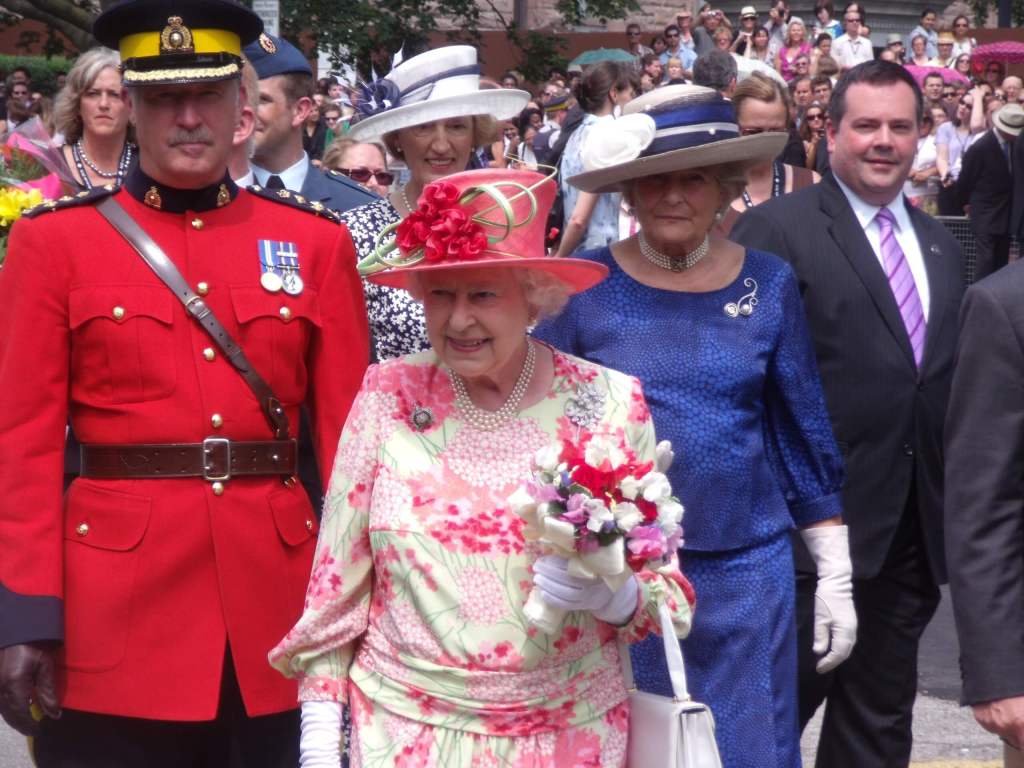
“Hey, ladies in waiting—we’re waiting!” Well, now that I’ve gotten that joke out of my system, it’s time for us to explore a position at court that has been important for centuries. The job of a lady-in-waiting has been part of European royal custom since it was first referenced in 9th Century France and, within two hundred years, spread across the English Channel (along with the Normans). From the Middle Ages to the modern era, ladies-in-waiting acted as personal assistants to female royals, doing everything for queens and princesses, from playing music to dressing them.
Historically, “ladies-in-waiting” was a catch-all term for a group of women, each with their own titles and responsibilities. Sitting at the top of the ladies-in-waiting hierarchy was the Mistress of the Robes, the senior female assistant to the Queen. Then you had the Lady of the Bedchamber and Women of the Bedchamber. Any unmarried ladies-in-waiting were referred to as “Maids of Honor,” a term you might know from weddings. A lady-in-waiting could be compared to the equerry for the Sovereign, though unlike the equerry, ladies-in-waiting have traditionally been noblewomen rather than military officers. Today, however, it is not necessary for a woman to come from a noble family to serve a queen or princess, and sometimes they are simply relatives of the women they serve.
A queen or princess normally appoints their own ladies-in-waiting, though in times past, the decisions were heavily influenced by their parents, relatives, or husband. The total number of them could vary at any given point based on their mistress’s needs. During Queen Elizabeth II’s reign, she normally had a total of six, with the chef amongst them being Lady Susan Hussey, who started out answering correspondence to Queen Elizabeth. Lady Hussey worked her way up to being the Queen’s right-hand woman and served as a lady-in-waiting for over 60 years until the monarch’s death in 2022.
It should be pointed out, however, that ladies-in-waiting are not servants but more confidants for the queen or princess. In modern times, they assist with responding to letters, looking after their mistress’s clothing and jewelry, traveling with them, providing advice, and offering a sympathetic ear. Ladies-in-Waiting are normally unpaid and spend a great deal of time with the queen or princess, less formal than the equerry but no less time-consuming. Lady Hussey even served as Prince William’s godmother, showing how integral and intimate this person can be with the queen.
The less formal nature and responsibilities of the position are perhaps best reflected in the changes that Queen Camilla has made to the role since becoming Queen Consort. Rather than use the term “ladies-in-waiting,” Camilla has opted for the more progressive term “Queen’s Companions.” Queen Camilla chose six of her friends to serve as companions, assisting her in her public duties but not as ever-present as Queen Elizabeth’s ladies-in-waiting were for her. They will also not be required to handle correspondence or administrative duties such as managing the Queen Consort’s calendar. The previous ladies-in-waiting are going to become “ladies of the household” and will serve King Charles III instead of the Queen Consort.
Certainly, this position has changed over time from the selection process for a lady-in-waiting to her individual responsibilities. As evidenced, Queen Camilla has already made significant changes that could have lasting repercussions for when Princess Catherine becomes Queen Consort. Catherine may also make her own changes as the role of a lady-in-waiting continues to modernize and adapt to present needs. Whatever the future holds for ladies-in-waiting, they are certain to continue their responsibility of being a royal woman’s closest confidants and most valuable assistants.
 London visitor