
6. Mark Lane
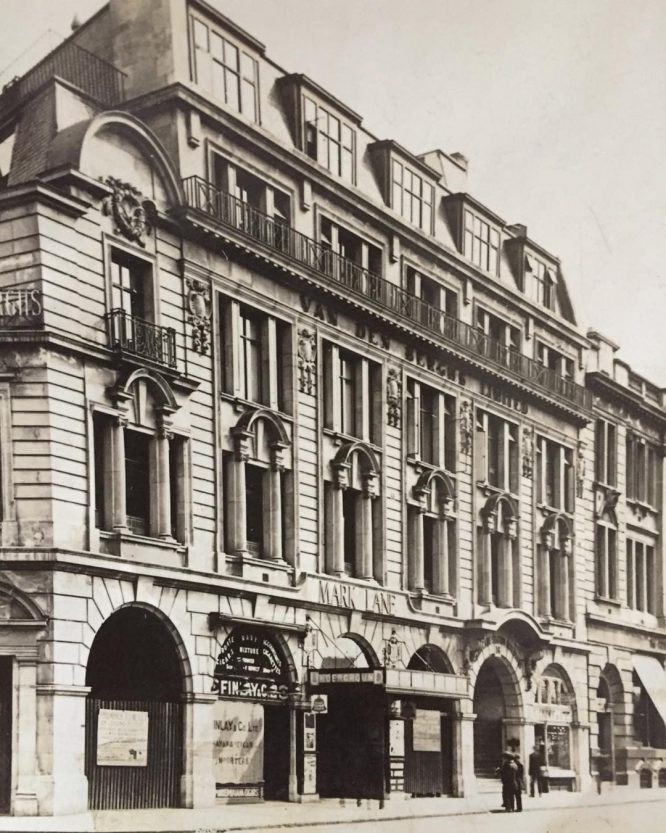
Another confusing bit of history here, one born out of the marriage of the Metropolitan Railway and the District Railway (see if you can guess which Tube lines they became…), which completed the so-called inner circle: now the modern Circle line.
Mark Lane was opened in 1884, to replace a short-lived station to the east known as Tower of London station, which operated for two glorious years before it was decided the site needed a larger station.Mark Lane was then renamed Tower Hill station in 1946, which is no relation to the modern Tower Hill Tube station – they are (unsurprisingly, given the shenanigans we’ve witnessed thus far) completely different stations that were built next to one another. It was eventually closed in 1967 due to the influx of passengers and the impossibility of expansion. The coup de grace? The Tower Hill station we use today actually uses the same site of the original Tower of London station – yup, the very same one Mark Lane was built to replace. It’s at this point that you begin to suspect the Underground is trolling us, TBH.

You can still see part of Mark Lane today, especially if you frequent the All Bar One on Byward Street. An old entrance to Mark Lane is hidden in one of the arches next door, sealed off by a gate (although if you look on Google Maps, the gate has been somewhat alarmingly left open…).
You can still see part of Mark Lane today, especially if you frequent the All Bar One on Byward Street. An old entrance to Mark Lane is hidden in one of the arches next door, sealed off by a gate (although if you look on Google Maps, the gate has been somewhat alarmingly left open…).
7. Ongar
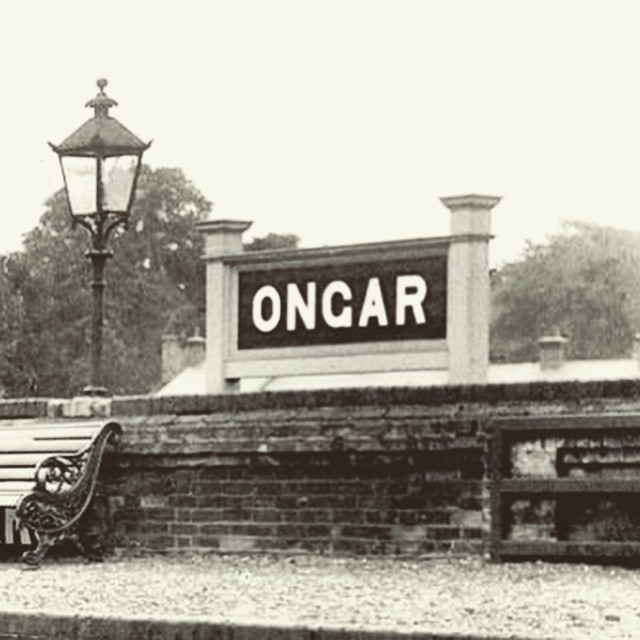
Ongar has had a strange old existence as abandoned Tube stations go, with both a pre- and post-Underground life. From opening in 1865, it was under the control of the Great Eastern Railway, and mainly used to ferry agricultural products from the farmlands of Essex to the fringes of London. In 1949, it was poached by the Underground and became the easternmost point of the Central line – although British Rail continued to run steam trains on the line until it was electrified in 1957.

The Central line beyond Epping wasn’t especially busy, with Ongar’s neighbour Blake Hall being the least used station on the entire network – reportedly just six passengers a day by the time it closed in 1981. Ongar finally got the chop in 1994 due to cost-cutting measures and low usage, but has lived on as the northern terminus of the extremely cute Epping-Ongar railway, which reopened in 2012 after a previous stint from 2004-2007. It’s one of the few abandoned Tube stations which still welcomes trains, and with four steam trains in operation on the line, it’s one we’d advise you visit!
8. Brompton Road
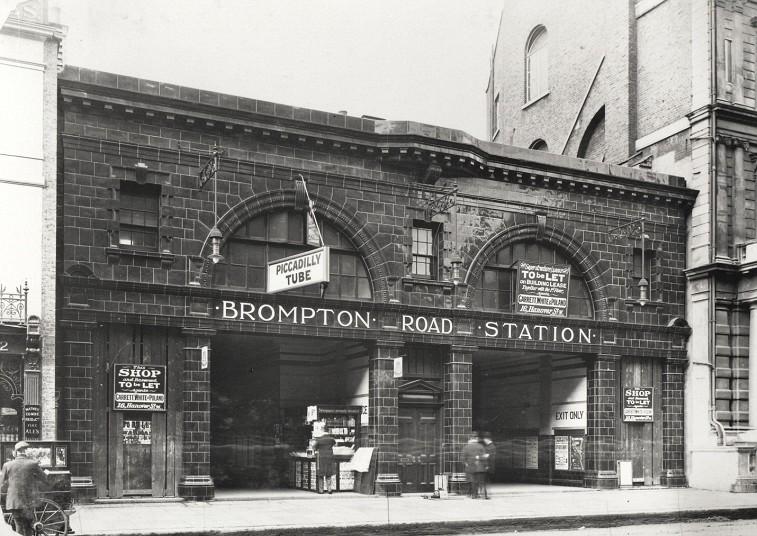
There’s just something about the Piccadilly line and abandoned Tube stations, because here’s a fourth one. Once nestled between Knightsbridge and South Kensington, it suffered a similar fate to Down Street, in that it was too close its neighbours to ever be truly successful. When the General Strike hit in 1926, Brompton Road shut down for five months, and eventually closed in 1934 after the modernisation of Knightsbridge station.
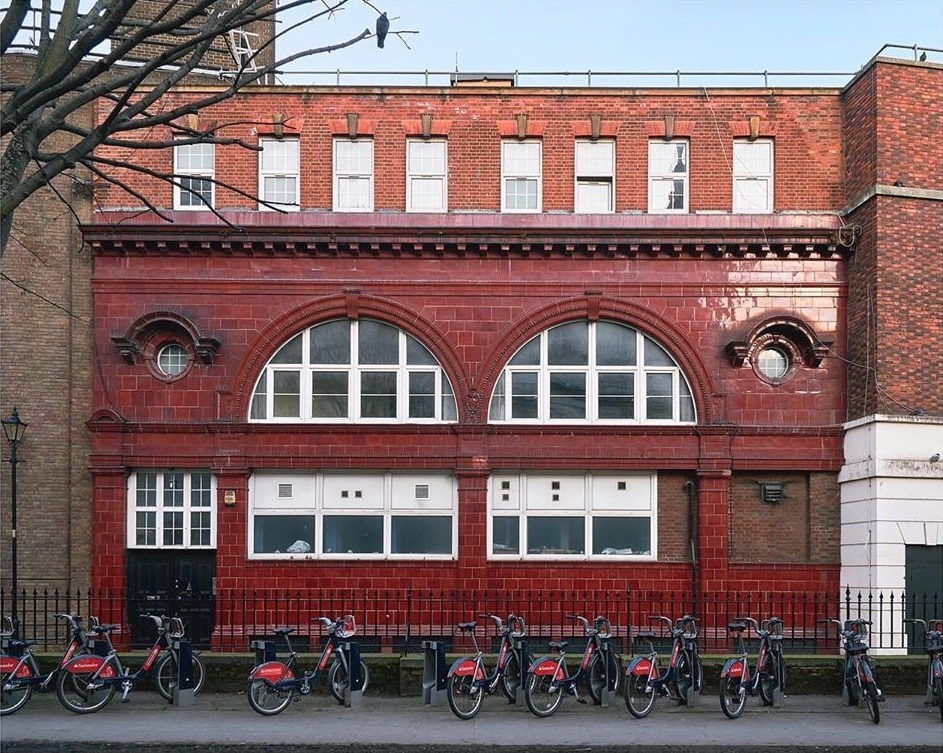
By the time of the Second World War, Brompton Road had been pressed into service as a Ministry of Defence site, with the upper levels serving as the command centre of the 26th London Anti-Aircraft Brigade (the platforms were bricked up around the same time, so there’s little to see from a modern Piccadilly line trip). Though you can still see the side entrance and bespoke tiling from Cottage Place, Brompton Road has suffered a fate sadly known to many London historical sites: being converted into fancy flats.
9. British Museum
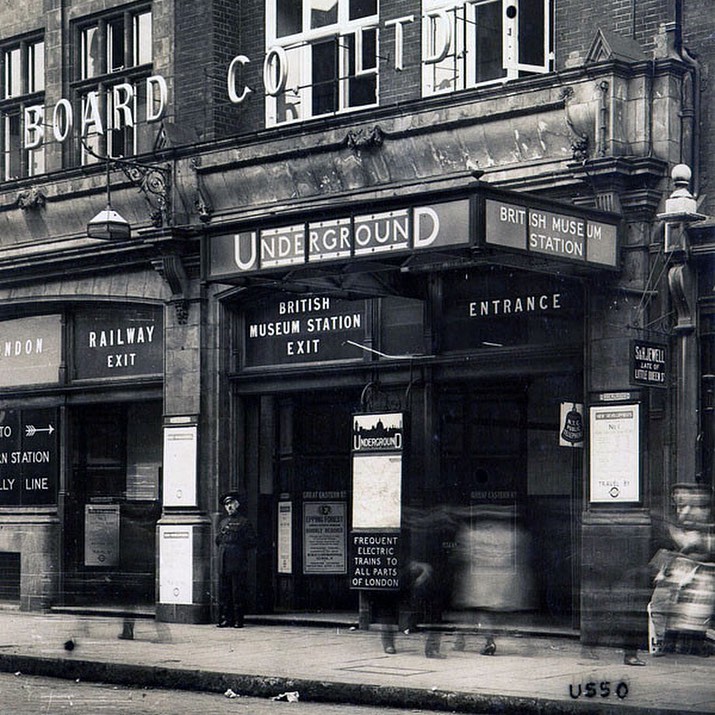
Time for a crossover episode now, as the old British Museum stop is the only one of our abandoned Tube stations to also appear on our list of London’s most haunted Tube stations. Spooky stuff, indeed, but first, a little history.
British Museum station stood on the opposite side of High Holborn to the modern Holborn Tube station, and was opened in 1900. British Museum was run by the Central London Railway, and Holborn was run by the Great Northern, Piccadilly, and Brompton Railway, and whilst the two would ideally have been connected, they weren’t, due to tunnel alignment problems arising from the latter’s route to another of London’s now abandoned Tube stations: Aldwych, once again ruining things for everyone.
The low-key rivalry meant, in a Highlander-esque twist, there could be only one, and since Holborn was the better connected station, British Museum shut in 1933 – with Holborn joining the Central line the following day. Possibly in an act of retribution, the ghost of the Egyptian god Amun-ra is said to haunt British Museum, with a rumoured tunnel giving him access from the museum to the trains – one which he supposedly used in 1935 to kidnap two women from Holborn station. Very unlikely, but still quite bone-chilling, so maybe avoid this one if you ever go in search of the city’s abandoned Tube stations…
10. Marlborough Road

Off to the Metropolitan line now, where we could have picked from three abandoned Tube stations: Lord’s, Marlborough Road, and the original Swiss Cottage. All were formerly on the Metropolitan line between Finchley Road and Baker Street, and all closed in 1939-1940 when a new stretch of the Bakerloo opened up a route to Stanmore (now the northern end of the modern Jubilee line), thus easing congestion on the line.
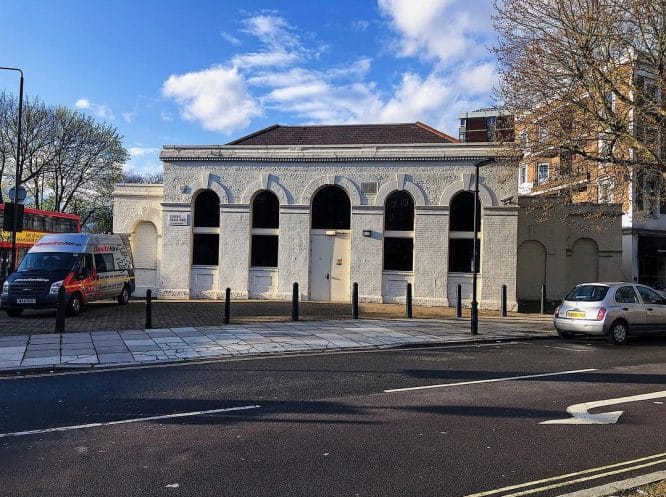
Only Marlborough Road still stands today, a fairly blank building on the corner of Finchley Road and Queen’s Grove. Now used as a power substation to support the newer S stock Metropolitan line trains, I think I preferred it in its previous guise as a Chinese restaurant.
11. Charing Cross

Yes, Charing Cross is not technically one of the city’s abandoned Tube stations. Not all of it, at least. But like Aldwych, you’re likely to have seen the deserted parts of this one on the silver screen, so we just had to include it. The history of Charing Cross station is a tangled web which includes dalliances with Embankment station, the takeover of the Bakerloo’s Trafalgar Square station, and the takeover of a Northern line station known as Strand – which, just to make matters more murky, is not anything to do with Aldywch’s past life as Strand station. Blimey.

Charing Cross joined the Jubilee line in 1979, and acted as the southern terminus of the line until 1999. Plans were afoot to extend the line to Lewisham from an early stage, so Charing Cross was never intended as the final stop – indeed, the tunnels continue almost as far as Aldwych, which gives you an idea of where the route would have headed. However, as the Docklands and the East End began a regeneration in the 1980s, the decision was taken to reroute the line from Green Park (the stop before Charing Cross), and curve it south of the river to Waterloo, London Bridge, and back out towards Greenwich and Stratford.
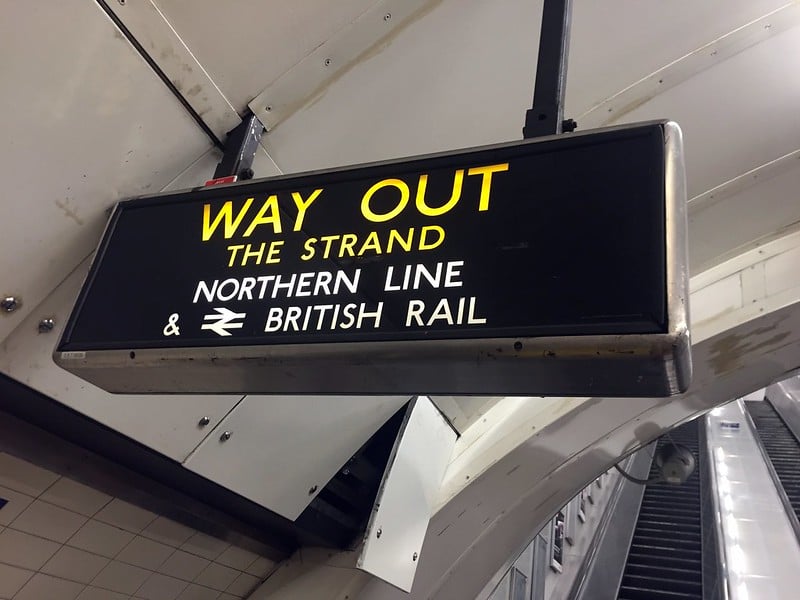
This left Charing Cross’ Jubilee platforms out in the cold, but the station’s loss is our gain; since it’s been shuttered for only 20 years, the platforms are both modern and well-preserved, making it an excellent filming location. The likes of 28 Weeks Later, Skyfall, Creep, and Spooks have all been filmed down here, giving the place a nice job in the afterlife of an abandoned Tube station.
 London visitor