
5. Margaret fell in love with an older man who may or may not have been married at the start of their relationship
Unlike her sister Elizabeth, Margaret was under no immediate pressure to marry. In her early twenties, she began a relationship with her father’s equerry, Group Captain Peter Townsend – a man 16 years her senior. Townsend had two children with his wife, Rosemary Pawle, and was considered – at least by royal standards – a commoner on a modest income. For the young princess, their relationship was her first experience of romantic love.
Although Margaret’s relationship with Peter Townsend is frequently referred to as an ‘affair’, it is not clear when they started their romance. Townsend divorced in 1952, and some sources suggest that he didn’t become close to Margaret until after the death of her father, King George VI, on 6 February 1952.

6. Margaret chose her “duty to the Commonwealth” over marrying for love
Margaret’s relationship with Townsend was revealed to the public when an eagle-eyed journalist spotted the princess affectionately plucking a piece of lint from Townsend’s jacket during the Queen’s coronation at Westminster Abbey in 1953.
Later that year, in April 1953, Townsend proposed to the 22-year-old princess. Because Margaret was under the age of 25 at the time – and because she was so closely linked to the line of succession – the Queen’s consent to the marriage was required by the Royal Marriages Act of 1772. Faced with an impossibly difficult decision – and with varying pressures weighing down on her – Elizabeth asked Margaret to wait for a few years.
The princess and Townsend agreed to the request, planning to marry when Margaret turned 25. But just two years later, on 31 October 1955, Margaret released the following statement:
“I would like it to be known that I have decided not to marry Group Captain Peter Townsend. I have been aware that, subject to my renouncing my rights of succession, it might have been possible for me to contract a civil marriage.
“But mindful of the Church’s teaching that Christian marriage is indissoluble, and conscious of my duty to the Commonwealth, I have resolved to put these considerations before any others.”
Had the Queen decided to stop Margaret from marrying Townsend? Not necessarily. (Although if the Netflix series The Crown is to be believed, Elizabeth had told her sister that she would no longer be a member of the family if she went ahead with the marriage.)
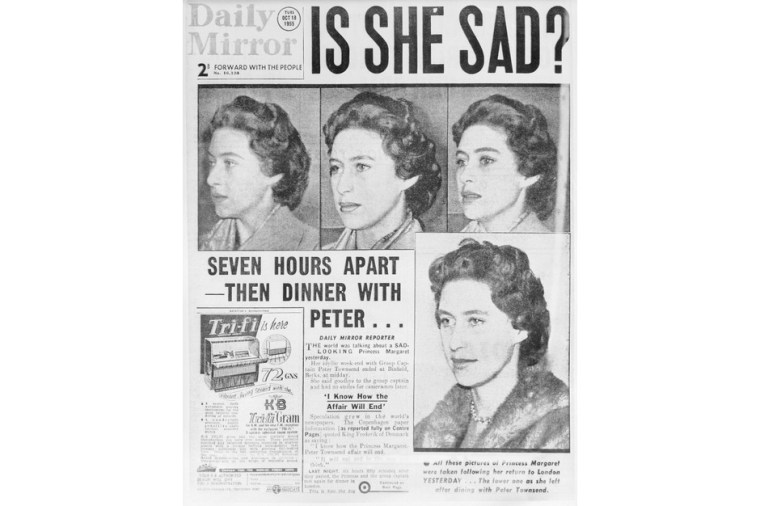
Papers released at the National Archives in 2004 show that the Queen and the then-prime minister Anthony Eden had drawn up a plan that would have permitted Margaret and Townsend to wed. There was, however, a ‘small’ catch: Margaret, and any children produced through the marriage, would be removed from the line of succession. The final draft of the proposal was produced on 28 October 1955, just three days before Margaret announced that she would not be marrying Townsend.
As Townsend himself put it, in his 1978 autobiography Time and Chance: “She could have married me only if she had been prepared to give up everything – her position, her prestige, her privy purse. I simply hadn’t the weight, I knew it, to counterbalance all she would have lost.”
7. An estimated 300 million people watched Margaret marry Antony Armstrong-Jones…
In February 1960, Margaret announced her engagement to photographer Antony Armstrong-Jones. The revelation surprised the media, who speculated that Margaret accepted the proposal shortly after learning that her former flame Peter Townsend intended to marry a 19-year-old Belgian woman named Marie-Luce Jamagne.
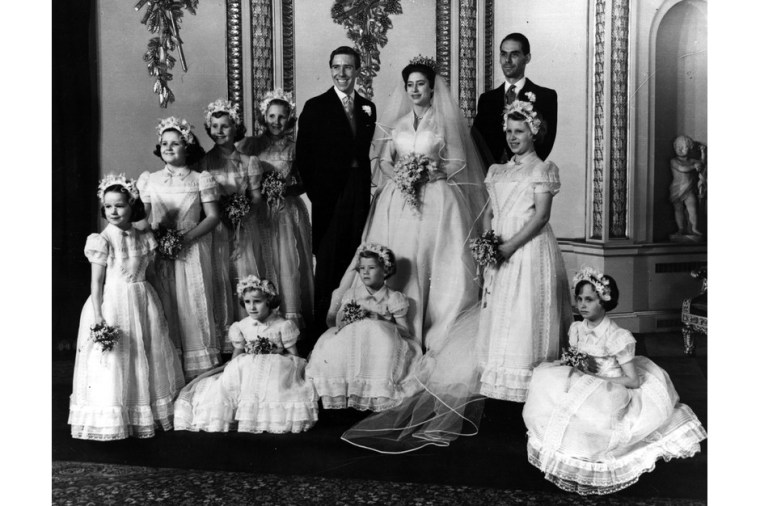
Three months later, on 6 May 1960, Margaret and Armstrong-Jones exchanged vows in a spectacular ceremony at Westminster Abbey. It was the first British royal wedding to be broadcast on television, and an estimated 300 million people tuned in to watch the occasion. Some 2,000 guests were invited, including the former prime minister Winston Churchill, Queen Ingrid of Denmark, and the king and queen of Sweden.
8. … and their wedding cost a staggering £86,000
In comparison to the nuptials of Elizabeth II and Prince Philip, which took place during the post-war austerity of 1947, Margaret’s wedding was a lavish affair. Featuring 20 wedding cakes, a 60-foot floral arch and a dress made from more than 30-metres of fabric, the event reportedly cost £26,000 in total, with the honeymoon – a six-week jaunt on the royal yacht Britannia – adding an additional £60,000 to the bill. Following the honeymoon, the newlyweds moved into apartments at Apartment 1A, Kensington Palace. They went on to have two children: David, born on 3 November 1961, and Sarah, born on 1 May 1964.
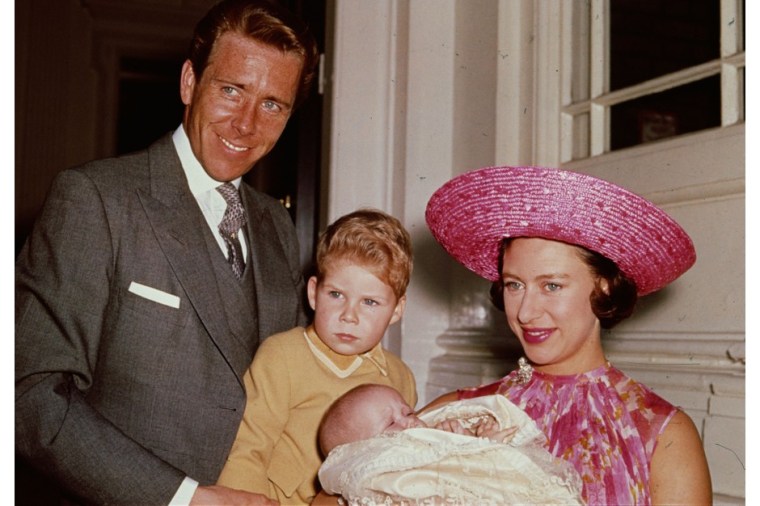
Margaret’s marriage ended in 1976 when her affair with another man, Roddy Llewellyn, was made public. The biographer Christopher Warwick has since suggested that Margaret’s most enduring legacy was establishing public acceptance of royal divorce. Her relationship history was a sad one, he wrote, but it did help make the choices of her sister’s children – three of whom divorced (Prince Charles, who married Lady Diana Frances Spencer in 1981 and divorced her in 1996; Princess Anne, who married Captain Mark Phillips in 1973 and divorced him in 1992; and Prince Andrew, Duke of York, who married Sarah Ferguson in 1986 and divorced her in 1996) – easier than they otherwise might have been.
Princess Margaret died on 9 February 2002 at the age of 71 at The King Edward VII Hospital after suffering a stroke and developing heart problems.
 London visitor