
In 1888, Jack the Ripper committed a series of murders in the east end of London that shocked the world. The killings spawned hundreds of theories, books and films, each trying to solve the crimes which, to this day, remain a mystery.
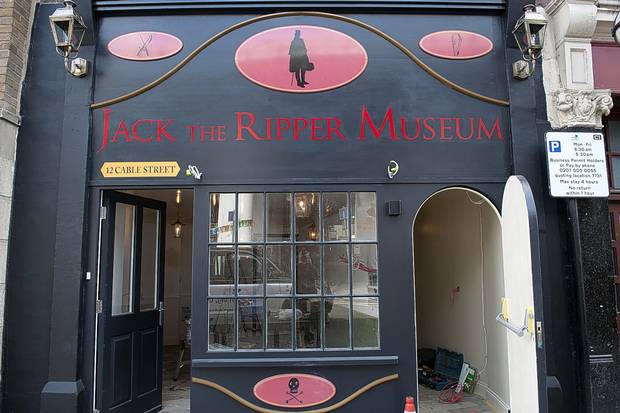
Jack the Ripper Museum, situated in a historic Victorian house in the heart of Whitechapel, tells the full story of the Jack the Ripper murders. Step back in time to the London of 1888, the greatest city in the world, where the greatest unsolved crimes of all time took place.
As you explore the museum, you will discover everything there is to know about the lives of the victims, the main suspects in the murders, the police investigation and the daily life of those living in the east end of London in 1888. Once you have all the clues, will you be able to solve the mystery of Jack the Ripper?
As you make your way up the stairs, you’ll see details of each murder recorded on the walls. The victims’ names, ages and murder locations are shown, along with newspaper reports and illustrations of the crimes.
FIRST FLOOR
Mitre Square — 30 September 1888
The most notorious day in Ripper history
In front of you are two waxwork figures. One is of Catherine Eddowes, the second woman to die on 30th September and the other is of Police Constable Watkins, who discovered her dead body. You will see a worker’s cart under the street light. Carts like this were used to move the bodies of the murdered women to the morgue. One of the morgues used to store Jack the Ripper’s victims was only a few streets away from where you stand now. On the wall, you can see a replica of original graffiti that was left at the murder scene.
SECOND FLOOR
Ripper’s Sitting Room
Here we see how Jack might have lived and where he planned his crimes.
Read newspaper clippings written in 1888 which chart the progress of the serial killer’s hideous crimes. Hanging over the fire you can view an original drawing by Jack the Ripper prime suspect, Walter Sickert. Is she sleeping? Or is there something more sinister going on?
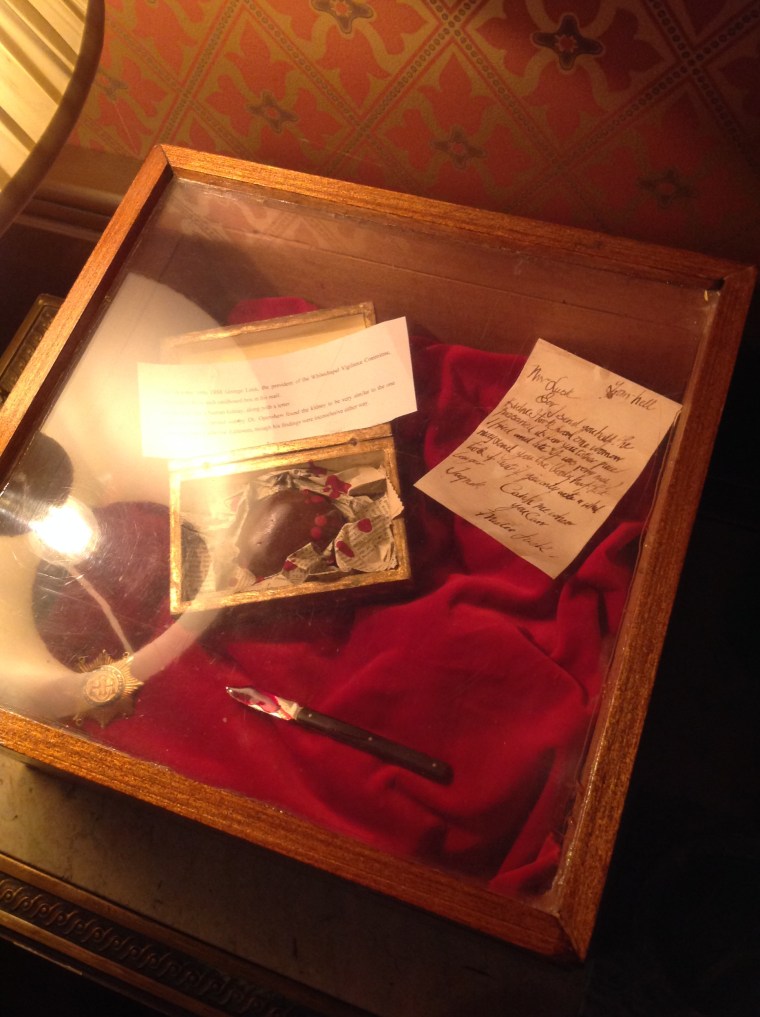
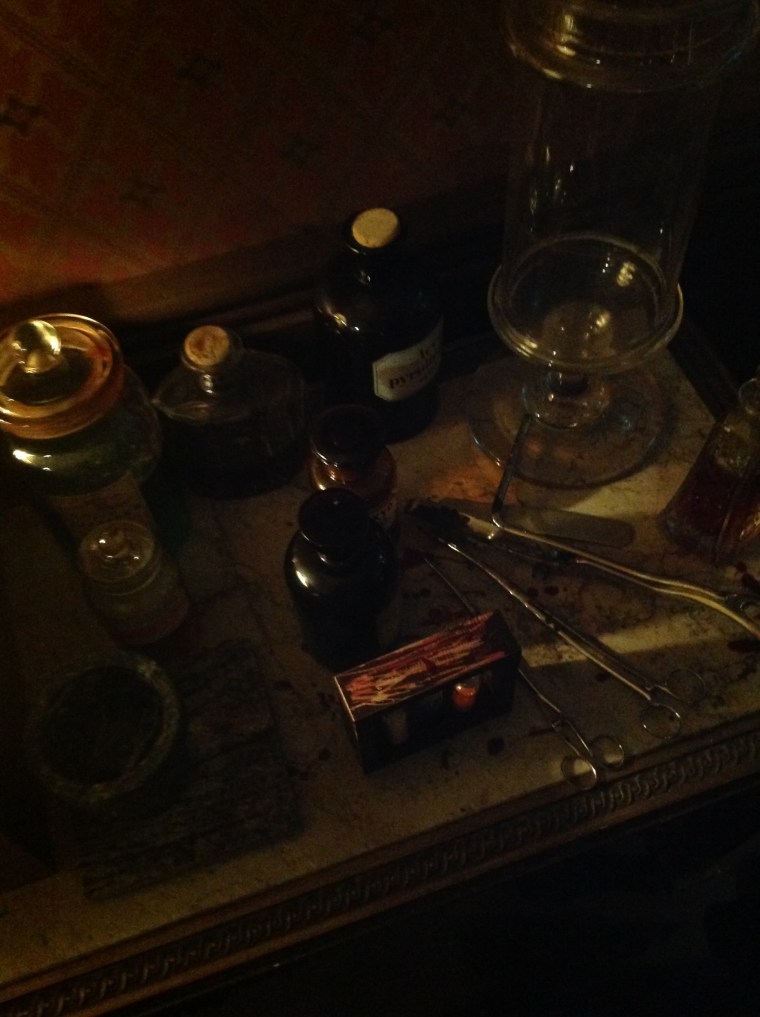
On the table, you will find medical instruments, poison, drug bottles and a skull belonging to the killer. At the desk, medical books on surgery and dissection are displayed, along with a letter addressed “From Hell”, which may have been written by Jack. A doctor’s bag, which contains knives similar to those used to kill and mutilate the Ripper’s victims is on the floor by the desk.
THIRD FLOOR
Police Station
Here you will find all the evidence and profiles of the suspects.
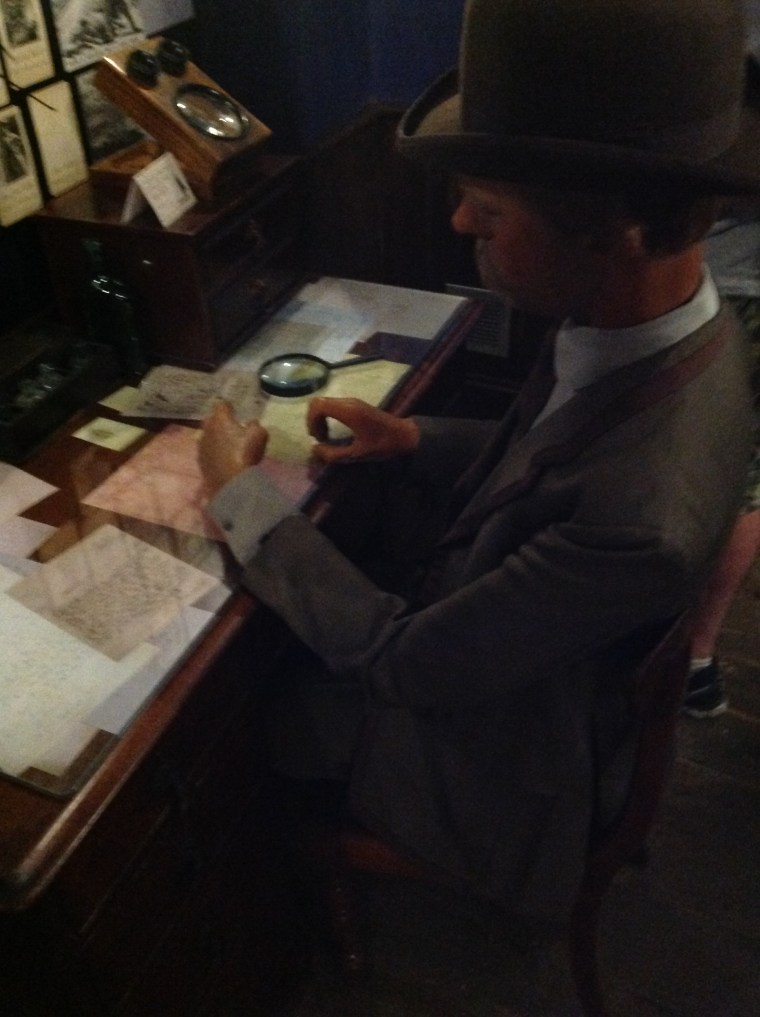
A crime board shows the sites of the murders and the evidence the police collected. In the display case is the actual whistle Police Constable Watkins blew to call for help when he found Catherine Eddowes mutilated body in Mitre Square. Also see Police Constable Watkins’ notebook, handcuffs and truncheon he was carrying that day – one of the rarest Ripperologists collections of recent times. By the desk is a waxwork of Chief Inspector Abberline, the detective in charge of leading the hunt for the Ripper in 1888.
FOURTH FLOOR
Victim’s Bedroom
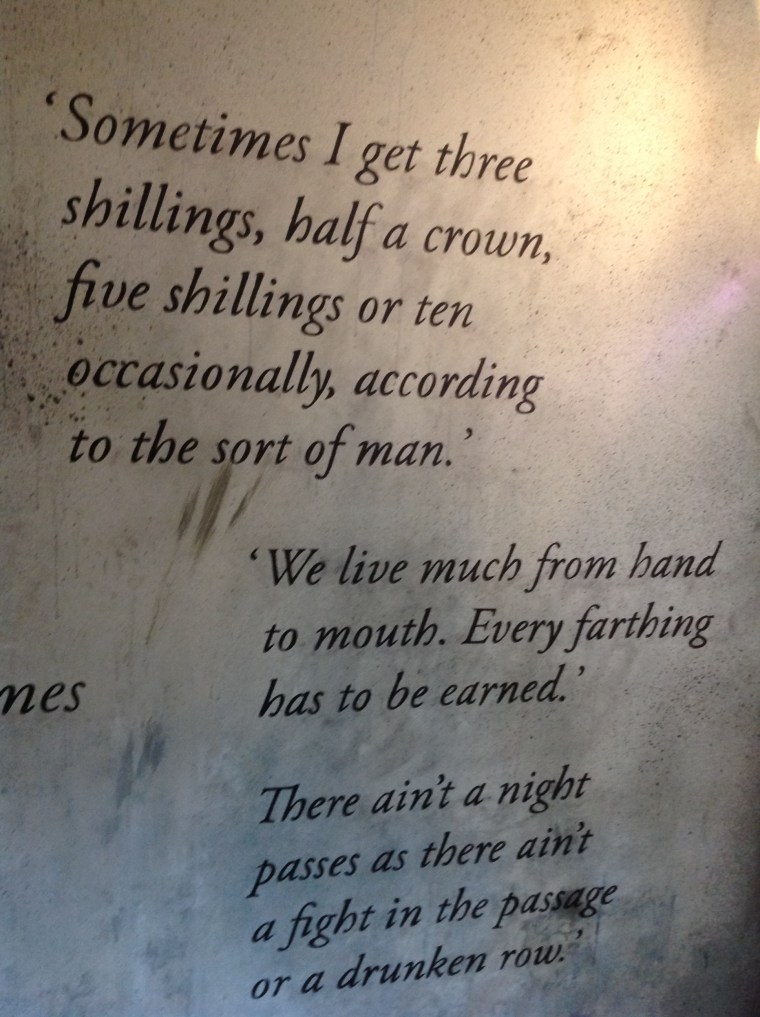
Some women in the 1800’s lived in dreadful conditions
Jack the Ripper’s victims would have lived in rooms just like this one, in one of London’s most poverty-stricken areas.
A tiny metal bed with a straw mattress was all the comfort these women would have enjoyed.
Gin was often the drink of choice, with a bottle costing a few pence. Rare photos of the victims can be seen on the wall.
In the display case are original Victorian bonnets. These would have been worn by women to cover their hair, which would have rarely been washed.
BASEMENT
The Mortuary
The violence of Jack the Ripper’s crimes still shock us today
On the walls you will see original autopsy photos of the horrific murders which some viewers may find disturbing – please view these with discretion and respect for the victims.
The body of Elizabeth Stride was taken to the parish mortuary of St George-in-the-East. The building, moments from where you stand now, was once a chapel. On the far wall is a Victorian stained glass window from the mortuary. Next to the stained glass window are drawers that were used to store the bodies of the dead until they were collected for burial.
Some of the murdered women had no families to collect their remains. They were buried in mass paupers’ graves, their last resting place left unmarked.
SO MUCH TO EXPLORE
Shop & Information Centre
We may have started you think.. Who was the Ripper?
Our shop has books, DVD’s and information to help you, further explore, the history of the time, the area where the victims lived and the clues that he left.
Ask our knowledgeable staff how you can continue to explore the stories from the 1800’s.
 London visitor